

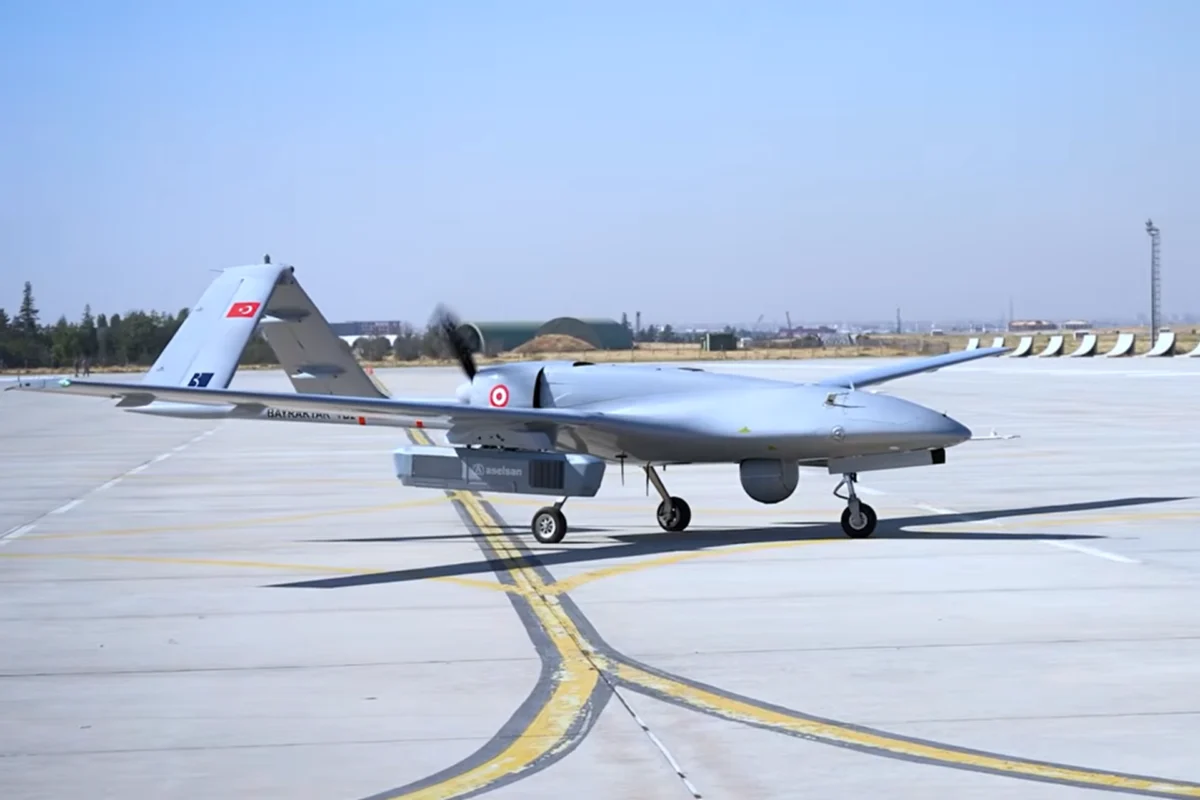
KONYA, Turkey – In a display of technical prowess that promises to redefine the tactical utility of medium-altitude, long-endurance (MALE) unmanned aerial vehicles (UAVs), Turkish defense giant ASELSAN successfully demonstrated a suite of advanced electronic warfare (EW) and radar pods integrated onto the Bayraktar TB2 platform. The demonstration, held on September 18, 2026, in Konya, Turkey, served as a high-stakes showcase for defense delegations from 18 nations, signaling a shift in how small, cost-effective drones can perform missions previously reserved for specialized, multi-million-dollar crewed aircraft.
The systems showcased—the ANTIDOT 2ES 100 electronic support pod, the ANTIDOT 2EA 200 electronic attack pod, and the FULMAR 200 synthetic aperture radar (SAR) pod—represent a significant leap in ASELSAN’s miniaturization and integration capabilities. By enabling the TB2 to conduct Suppression of Enemy Air Defenses (SEAD) missions, ASELSAN is effectively democratizing electronic warfare, providing global operators with a powerful tool to neutralize modern anti-access/area-denial (A2/AD) environments.
The Technological Core: ANTIDOT and FULMAR Integration
The demonstration centered on a collaborative tactical scenario involving two Bayraktar TB2 platforms. In the first aircraft, the ANTIDOT 2ES 100 and ANTIDOT 2EA 200 operated in tandem, while the second TB2 carried the FULMAR 200 SAR pod. By networking these assets, the drones functioned as a cohesive electronic warfare cell, capable of identifying, geolocating, and neutralizing threats in real-time.
The ANTIDOT Suite: Electronic Support and Attack
The ANTIDOT 2ES 100 acts as the "eyes and ears" of the system. During the demonstration, the pod successfully detected and geolocated an active radar emitter. Once the target’s position was fixed, this data was seamlessly handed off to the ANTIDOT 2EA 200 electronic attack pod. This system then initiated a directed electromagnetic response, effectively masking the TB2’s presence and allowing the aircraft to maneuver within the target area without triggering early warning systems or being locked onto by ground-based interceptors.
The FULMAR 200: Precision Imaging
While the ANTIDOT suite managed the electronic spectrum, the FULMAR 200 SAR pod provided the visual intelligence required to confirm targets. The electronic support pod identified a secondary emitter and passed the coordinate data to the FULMAR 200, which subsequently generated high-resolution synthetic aperture radar imagery. This cross-sensor integration allowed for the rapid conversion of raw electronic intelligence (ELINT) into actionable imagery, even under adverse weather conditions or at night, where traditional electro-optical/infrared (EO/IR) sensors might struggle.
A Chronology of Innovation
The September 2026 demonstration in Konya did not occur in a vacuum. It was the culmination of an aggressive development cycle spearheaded by ASELSAN to expand the mission profile of the Bayraktar platform series.
- June 2026: ASELSAN first showcased the ANTIDOT pair mounted on the larger, carrier-capable Bayraktar TB3. At the time, the company described the integration as a "world first" for a drone of that class, demonstrating the modularity of the pods.
- July 2026: Both the ANTIDOT series and the FULMAR radar pods were presented at the Farnborough International Airshow. This international debut aimed to generate interest among global export partners, highlighting the scalability of the technology across different airframes.
- September 18, 2026: The Konya demonstration marked a pivotal milestone: the first time the ANTIDOT systems were tested against real-world radar targets while deployed on the Bayraktar TB2. It was also the first public demonstration of the electronic warfare and radar suites operating in a fully integrated, multi-aircraft collaborative environment.
Strategic Implications for SEAD Missions
Suppression of Enemy Air Defenses (SEAD) has historically been the domain of sophisticated, crewed platforms like the F-16CJ Fighting Falcon or the EA-18G Growler. These missions are inherently dangerous, requiring aircraft to fly into the reach of enemy radar systems to jam or destroy them.
Democratizing Electronic Warfare
The transition of these capabilities to the Bayraktar TB2—an aircraft with a significantly smaller radar cross-section and lower operational cost than traditional fighter jets—is transformative. By utilizing the TB2, air forces can now conduct SEAD operations with minimal risk to human pilots and at a fraction of the financial cost. If a drone is lost, the mission failure is operational rather than catastrophic.
Global Export Potential
With the Bayraktar TB2 already in service with at least 36 countries, the market for this upgrade is substantial. Existing operators do not need to invest in new airframes to gain electronic warfare capabilities; they can theoretically retrofit their current TB2 fleets with the ANTIDOT and FULMAR pods. This provides an immediate force-multiplier effect for smaller nations that cannot afford a dedicated fleet of specialized electronic warfare aircraft.
Technical Analysis and Supporting Data
While ASELSAN has kept the specific technical parameters—such as frequency bands and power output—classified, the implications of their integration are clear. The use of podded systems suggests a modular design philosophy, allowing the TB2 to swap missions based on the theater of operation.
| System | Primary Function | Tactical Utility |
|---|---|---|
| ANTIDOT 2ES 100 | Electronic Support | Passive detection and geolocation of radar emitters. |
| ANTIDOT 2EA 200 | Electronic Attack | Jamming and suppression of enemy radar systems. |
| FULMAR 200 | SAR/Radar Imaging | All-weather, high-resolution imagery for target verification. |
The ability of these systems to "talk" to one another via the drone’s data link demonstrates an advanced level of system integration. By passing targeting data from the ES pod to the EA pod, ASELSAN has minimized the latency between threat detection and response, a critical factor in surviving in contested electromagnetic environments.
Official Responses and Industry Outlook
ASELSAN’s leadership has framed the September demonstration as a testament to Turkey’s growing sovereignty in the defense technology sector. While company officials refrained from identifying the specific radar systems used as targets, the successful results were presented as definitive proof of concept.
"The integration of ANTIDOT and FULMAR onto the TB2 platform is not merely an upgrade; it is a fundamental shift in the tactical paradigm," said a spokesperson for the company. "By enabling our users to conduct complex SEAD operations with affordable, readily available drone technology, we are ensuring that they can maintain an edge in an increasingly digital and contested battlefield."
Defense analysts observing the demonstration noted that the integration of these pods addresses one of the primary weaknesses of the TB2: its vulnerability to modern integrated air defense systems (IADS). By providing the TB2 with the ability to "blind" enemy radars, ASELSAN has effectively extended the operational life and relevance of the platform for the next decade.
Conclusion: A New Era for MALE UAVs
The September 2026 demonstration in Konya marks the end of an era where electronic warfare was the exclusive province of top-tier military powers with large, expensive air forces. ASELSAN’s success in integrating sophisticated podded EW and radar systems onto the Bayraktar TB2 proves that even medium-sized drones can perform high-end electronic intelligence and attack missions.
As the global landscape of warfare shifts toward a greater reliance on unmanned systems and electronic dominance, the ability to rapidly field and deploy such capabilities will be a decisive factor. For the 18 nations that witnessed the demonstration, the message is clear: the rules of the game have changed. The Bayraktar TB2, already a symbol of modern drone warfare, has now evolved into a formidable instrument of electronic superiority, capable of standing its ground in the most challenging combat environments.
 Azzam Bilal Chamdy