

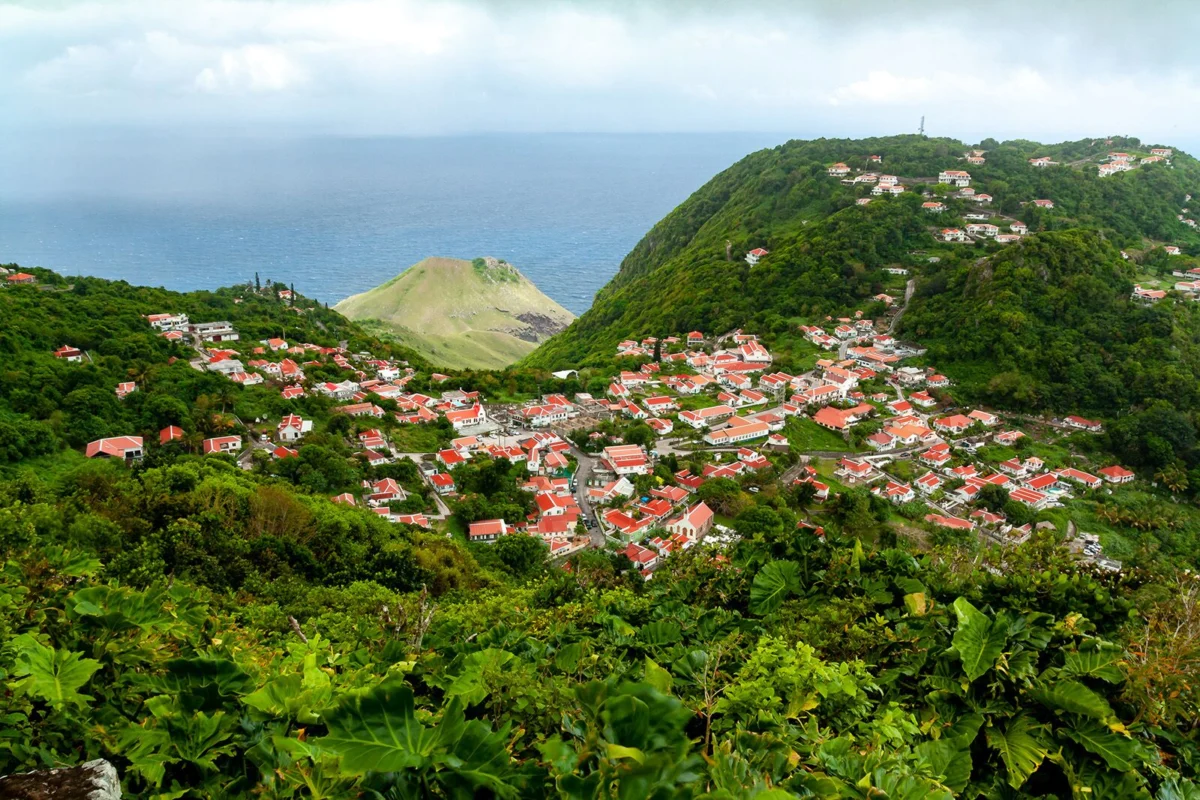
In an era defined by mass tourism, where sprawling all-inclusive resorts and cruise ship terminals often reshape the cultural and environmental fabric of Caribbean destinations, one island stands in quiet, defiant contrast. Saba, a tiny volcanic outcrop in the Caribbean Netherlands, has cultivated a reputation as the “Unspoiled Queen.” By intentionally limiting development and prioritizing ecological stewardship, the island offers a rare glimpse into a sustainable future—one where tourism serves the community rather than consuming it.
The Geography of Preservation
Saba’s identity is inextricably linked to its rugged, mountainous terrain. Rising abruptly from the deep blue of the Caribbean Sea, the island is a marvel of verticality. With a third of its landmass protected as national parkland—a network encompassing the Mount Scenery National Park, the Saba National Marine Park, and the vast Saba Bank National Park—the island has successfully staved off the over-development that has transformed its neighbors.
"What makes Saba special is its natural beauty, the dramatic landscapes, and the fact that development has remained relatively small-scale and in character with the island," explains Tom Brokke, a Senior National Park Officer with the Saba Conservation Foundation. "The small boutique hotels and locally owned businesses actually add to that identity rather than taking away from it. Keeping it that way is a deliberate choice."
Chronology: A History of Resilience
The story of Saba is one of self-reliance. Perhaps the most iconic symbol of this ethos is "The Road." Decades ago, outside engineers declared it impossible to construct a paved route across the island’s steep, volcanic topography. Undeterred, the people of Saba took matters into their own hands. Without formal engineering training, local residents began building the road by hand in the 1940s, a Herculean labor that spanned nearly two decades before its completion in 1963.
Today, this singular artery connects the Juancho E. Yrausquin Airport—home to the world’s shortest commercial runway—to the village of Windwardside. Navigating these hairpin turns offers a visceral reminder of the island’s challenging geography, a feature that effectively acts as a natural barrier to the type of massive tourism infrastructure found elsewhere in the region.
Supporting Data: Nature Above and Below
Saba’s allure for the eco-conscious traveler lies in its diverse ecosystems. For those who enjoy terrestrial exploration, the island boasts 20 distinct hiking trails. The jewel in the crown is Mount Scenery, the highest point in the Kingdom of the Netherlands, reaching over 2,900 feet. A trek along the Mas’Cohones Trail illustrates the island’s remarkable climatic shifts; hikers transition from dry, cactus-studded scrubland into lush, misty cloud forests within the span of a single afternoon.
The marine life surrounding the island is equally protected. Since 1987, the Saba National Marine Park has served as a sanctuary for biodiversity. Unlike many reefs in the Caribbean that have suffered from bleaching or overfishing, the waters off Saba are vibrant. Divers and snorkelers, often guided by local operators like Sea Saba, frequently encounter sea turtles, nurse sharks, and schools of reef fish weaving through volcanic rock formations. This commitment to conservation is not merely performative; it is a vital part of the island’s economic engine, drawing visitors who value pristine natural experiences over artificial luxury.
The Cultural Fabric: Keeping Traditions Alive
While the landscape draws the eye, the people of Saba define the soul of the island. Tom Brokke notes, "It is also the people who make the island special. I don’t think a camera can really capture what it feels like to actually live here."
This is nowhere more evident than in the preservation of "Saba lace," or drawn threadwork. In the 1870s, as the island’s men were largely away at sea, the women of Saba developed a thriving mail-order lace industry that sustained the local economy for decades. Known as "The Island of Lace," Saba maintains this heritage through the dedication of local artisans like Peggy Barnes. Barnes, one of the few remaining "Lace Ladies," continues to teach the craft for free to the next generation, ensuring that the skill survives into the digital age.
Similarly, artisan Marie Petit is leading a revival of traditional plaiting—the art of weaving dried palm fronds into functional and decorative items. By sourcing materials locally and reviving techniques that were nearly lost, Petit is bridging the gap between historical necessity and contemporary creative practice.
Official Perspectives and Economic Implications
The economic model of Saba is a masterclass in controlled growth. With only five hotels on the entire island, the tourism sector operates on a model of high value rather than high volume. Accommodations, such as the family-run Juliana’s Hotel, adhere strictly to the traditional Saban architectural code: white walls, red shingled roofs, and green-and-white or red-and-white shutters with gingerbread trim.
This adherence to tradition is not merely aesthetic; it is an economic strategy. By maintaining the island’s character, Saba attracts a specific demographic—travelers who are willing to pay for authenticity, comfort, and environmental integrity. The integration of local agriculture into the hospitality sector—exemplified by the fresh ingredients served at establishments like Tropics Cafe, The Hideaway, and Brigadoon—keeps capital circulating within the community.
Navigating the Unspoiled Queen
Reaching Saba requires patience, which serves as an initial filter for the type of visitor the island attracts. There are no direct commercial flights to the island. Travelers must first fly to St. Maarten and then take a 15-minute flight via Winair or a 90-minute ferry crossing. While the ferry can be turbulent, the anticipation of arriving at such a remote outpost is part of the experience.
Upon arrival, the lack of sprawling resorts means that visitors are encouraged to engage directly with the island’s culture. Whether it is dining on fresh lobster caught within the Saba Bank, sipping craft cocktails at the Colibri Cafe, or exploring the Heritage Center in Windwardside, the experience is intimate and unhurried.
Implications for Global Tourism
Saba serves as a compelling case study for small island states worldwide. In a globalized market, many destinations face the "commodification trap," where the very qualities that attract tourists are destroyed by the infrastructure required to host them. Saba has avoided this by:
- Legislative Protection: Ensuring a significant portion of land and water is permanently off-limits to heavy development.
- Cultural Continuity: Actively subsidizing and teaching traditional crafts to younger generations.
- Infrastructure Restraint: Accepting that the geography of the island is a limit to be respected, not an obstacle to be overcome by paving over natural wonders.
As the travel industry continues to evolve, Saba remains a beacon of how tourism can coexist with preservation. The island proves that luxury does not have to be synonymous with excess, and that the most "exclusive" destinations are often those that choose to remain small, authentic, and fiercely protective of their natural and cultural heritage.
For the modern traveler, a trip to Saba is more than a vacation; it is a lesson in the power of restraint. It is a reminder that some of the most beautiful places on Earth are those that have chosen to remain exactly as they are. Whether trekking through the cloud forest of Mount Scenery or watching a master artisan weave a palm bird, visitors leave with something far more valuable than a souvenir—they leave with a respect for a community that has successfully prioritized its identity over the bottom line.
 Lina Hope
  Iffa Jayyana
  Nana Muazin