

Executive Summary: A Unified Voice for a Greener Future
The International Ecotourism Society (TIES) recently concluded an extensive global survey aimed at capturing the current landscape, challenges, and future trajectory of the ecotourism industry. By gathering 971 viable responses from professionals across 91 countries, the study serves as a critical temperature check for a sector that is no longer a niche market, but a rapidly expanding pillar of the global economy.
The findings are overwhelmingly optimistic: the vast majority of industry stakeholders believe that ecotourism is experiencing a period of unprecedented growth. From the bustling corridors of North American tourism firms to conservationists in Nepal and Montenegro, the consensus is clear—the world is seeking a more sustainable way to travel. This report synthesizes the data collected, outlines the hurdles identified by experts, and maps out the strategic priorities for the coming decade.
Chronology of the Inquiry
The initiative was launched in response to a growing need for empirical data to support the anecdotal evidence of ecotourism’s expansion.
- Launch Phase: TIES distributed the survey via its newsletter, targeting members and friends within the global tourism profession. The objective was to identify how the industry defines its own success and where it identifies its greatest systemic failures.
- Data Collection Phase: Over the course of the survey period, participation surged across all seven continents. While the United States provided the largest volume of responses, the geographic diversity was notable. Contributions were received from Sudan, the Palestinian territories, Israel, Venezuela, Bhutan, Montenegro, Bosnia and Herzegovina, Nepal, Côte d’Ivoire, and Iran, among 80 other nations.
- Analysis Phase: Upon reaching 971 validated responses, TIES researchers began the process of categorization. While 90% of respondents easily identified their industry segment based on pre-defined choices, the feedback prompted a re-evaluation of how the industry perceives its own multidisciplinary nature, with many calling for the ability to select multiple segments.
- Synthesis Phase: The final synthesis of data—including the identification of linguistic needs, growth projections, and operational challenges—was compiled to inform the organization’s strategic plan for the remainder of the year and beyond.
Supporting Data: Mapping the Ecotourism Landscape
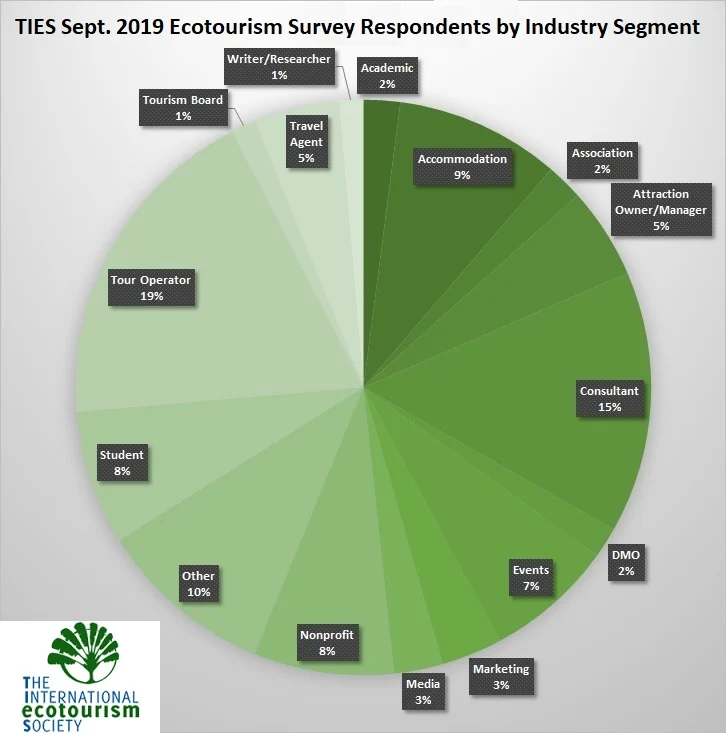
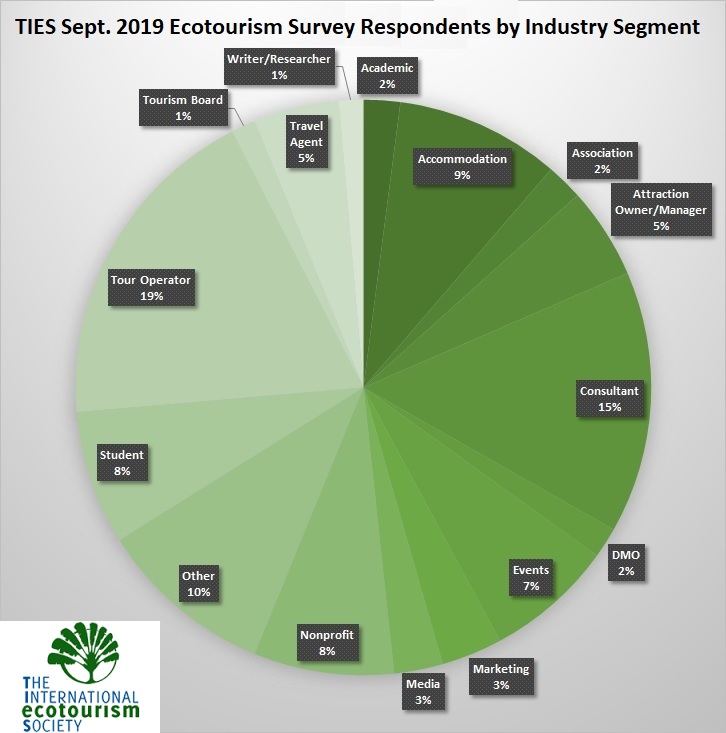
Industry Segmentation
The survey utilized a detailed breakdown of industry roles to determine who exactly is driving the ecotourism agenda. The resulting data set reveals a heavy concentration of tour operators and consultants. Interestingly, the survey noted a lower-than-anticipated participation rate from academics. Given that academics constitute a significant portion of the TIES membership base, this disparity offers a point of reflection for the society regarding how it engages with the research-heavy side of the industry.
Growth Projections: The "Unstoppable" Trend
Perhaps the most striking metric to emerge from the survey is the industry’s perception of growth. When asked about the current velocity of ecotourism, fewer than 0.5% (only 4 out of 971) suggested that the sector was slowing down.
This sentiment aligns with broader market research from industry giants like Booking.com, which has consistently reported that modern travelers are prioritizing sustainable options at a record pace. The data suggests that ecotourism is not merely a temporary trend, but a fundamental shift in the global travel economy.

Linguistic Demands and Inclusivity
A significant portion of the survey was dedicated to the "reach" of TIES. Respondents were clear: to truly champion ecotourism, the society must break down language barriers.
- Spanish: Identified as the highest priority, with a majority of respondents emphasizing that ecotourism development in Spanish-speaking nations is both robust and critical.
- French and Mandarin: These languages were also highly recommended. The request for Mandarin is particularly noteworthy, given the low volume of respondents from China, signaling an industry-wide desire to engage with the burgeoning Chinese ecotourism market.
- Global Reach: In total, 39 other languages were proposed, underscoring the truly international nature of the movement.
Official Perspectives: Challenges and Barriers
While the outlook is positive, the survey did not shy away from the harsh realities of modern tourism. Respondents provided a candid, at times somber, account of the obstacles hindering progress.
The Shadow of "Overtourism"
Many participants highlighted that while demand for ecotourism is growing, the supply chain remains fraught with systemic issues. The primary challenges identified include:
- Institutional Greed and Overdevelopment: A recurring theme was the concern that the "eco" label is being co-opted by entities that prioritize profit over conservation, leading to greenwashing.
- Regulatory Hurdles: Respondents cited significant difficulties with obtaining permits and navigating the complex financing landscape for sustainable projects.
- The "Traveler Gap": A point of intense concern was the lack of infrastructure that allows travelers to book ecotourism experiences fairly and transparently. There is a clear market failure in connecting the conscious consumer with the authentic, responsible operator.
- Climate Change: Beyond the operational challenges, the physical impact of climate change on the destinations themselves—ranging from coral bleaching to forest loss—was cited as a fundamental threat to the industry’s long-term viability.
Strategic Implications: What Comes Next?
The final section of the survey asked participants to weigh in on what TIES should prioritize. The results were unexpected and have fundamentally shifted the organization’s roadmap for the coming years.
The Hierarchy of Needs
- Education (41%): The clear frontrunner. The industry is signaling that it needs more training, better knowledge sharing, and a standardized approach to what "ecotourism" actually means.
- Conservation and Partnerships (18%): A focus on climate change and the practical application of conservation efforts remains a core pillar for the membership.
- Ecodestinations (14%): There is a demand for TIES to serve as a directory or curator of national ecotourism offerings, helping to highlight legitimate destinations by country.
- Publications (11%) and Social Media (9%): These platforms are seen as vital tools for dissemination, though they are secondary to the primary need for education.
Notably, traditional industry focuses—such as policy advocacy, UN partnerships, and internal membership growth—ranked significantly lower. This suggests that the TIES membership is less interested in institutional politics and more focused on practical, ground-level change.
TIES’ Commitment to Action
In light of these findings, TIES has already begun to pivot. The organization is actively reaching out to partners in the education sector to develop curricula and training programs that address the identified knowledge gaps. Furthermore, the push for multilingual support—starting with a comprehensive rollout of Spanish-language content across its digital platforms—is officially underway.
This transition serves as a bridge to future linguistic expansions, ensuring that the society’s resources are accessible to practitioners in every corner of the globe.
Conclusion: A Future of Optimism
The 2019 TIES Industry Survey stands as a testament to the resilience and vision of the ecotourism community. Despite the daunting reality of climate change and the structural hurdles of a profit-driven tourism industry, the collective sentiment remains one of professional optimism.
The industry is no longer in a "wait and see" phase. It is in a "build and expand" phase. By focusing on education, improving the transparency of booking systems, and bridging the linguistic divide, stakeholders are laying the groundwork for a future where travel does not just sustain the environment, but actively contributes to its restoration.
As TIES moves forward with its new strategic objectives, it carries the mandate of nearly 1,000 professionals who believe that the best way to see the world is to protect it. The path ahead is challenging, but for the global ecotourism sector, it is the only path worth taking.
For more information on the findings or to join the ongoing dialogue, visit The International Ecotourism Society.
 Raul Delapena Setiawan
  Basiran
  Layla Zulfa