

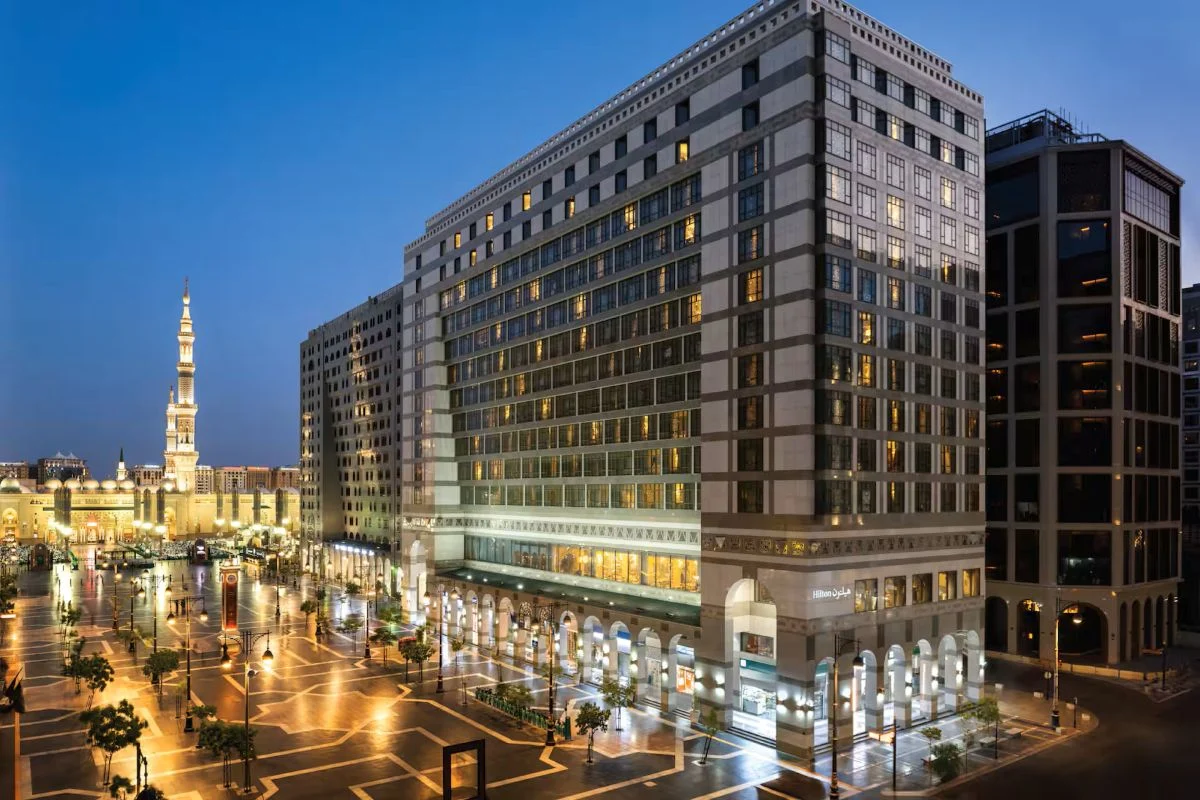
After years of aggressively planting its most prestigious flags across the shifting sands of Saudi Arabia, Hilton Worldwide is recalibrating its growth engine. Having successfully established a formidable footprint of ultra-luxury and premium properties, the hospitality giant is now signaling a pivot toward the underserved mid-market segment. For Simon Vincent, Hilton’s president for Europe, Middle East, and Africa (EMEA), the next chapter of the Saudi Arabian hospitality story will not be written by gold-leafed lobbies and five-star resorts, but by the practical, scalable efficiency of mid-market brands and regional franchises.
The Evolution of a Kingdom’s Hospitality Landscape
For the better part of the last decade, the narrative of Saudi Arabian tourism has been defined by "giga-projects." From the Red Sea Global developments to the ambitious luxury retreats within AlUla, the focus has been on world-class opulence designed to attract the global elite and signal the Kingdom’s emergence as a premier leisure destination under the Vision 2030 framework.
Hilton has been at the forefront of this movement. Its portfolio in the region is a "who’s who" of high-end hospitality: Conrad, Waldorf Astoria, and Curio Collection by Hilton have populated the urban centers of Riyadh, Jeddah, and the burgeoning coastal hubs.
"We’ve got Conrads, Waldorfs, Hiltons, Curios, and DoubleTrees coming out of our ears over there," Simon Vincent remarked in a recent interview with Skift. The statement, while informal, underscores a strategic reality: the luxury market in Saudi Arabia is reaching a point of saturation, or at the very least, a level of maturity where further expansion requires a different approach.
A Historical Blueprint: The Turkish Model
To understand Hilton’s future in the Kingdom, one must look at its past in Turkey. Vincent draws a direct parallel between the current Saudi market and Hilton’s multi-decade trajectory in Turkey, which began with the iconic Hilton Istanbul Bosphorus in 1955.
Following that initial luxury breakthrough, Hilton did not simply continue building palaces. Instead, it systematically expanded into the provincial hinterlands and secondary industrial cities. By deploying brands like Hilton Garden Inn and Hampton by Hilton, the company captured the burgeoning domestic business traveler and the growing middle class. Today, with over 100 hotels across Turkey, Hilton’s dominance is built on the ubiquity of its mid-market offerings rather than the prestige of its flagship properties.
"They are the best hotels in most of those towns and cities," Vincent noted. "It might be a mid-market hotel, but it’s an international standard." This is the precise philosophy Hilton intends to export to the Saudi provinces. As the Kingdom diversifies its economy beyond oil, the growth of domestic tourism and the influx of foreign investment into secondary cities—such as Dammam, Al Khobar, and various regional hubs—will necessitate a supply of high-quality, reliable, and standardized accommodation that the mid-market segment is uniquely positioned to provide.
Chronology: From Giga-Projects to Grassroots Expansion
2016–2019: The Foundation of Luxury
When Vision 2030 was first unveiled, Hilton focused on securing prime real estate in Riyadh and Jeddah. These years were marked by high-profile signings for Waldorf Astoria properties and full-service Hilton hotels aimed at the luxury business and leisure traveler.
2020–2023: Portfolio Diversification
Recognizing the government’s push for tourism, Hilton began introducing lifestyle and upper-upscale brands like Curio Collection and Canopy. This period was characterized by "experience-led" hospitality, designed to cater to a younger, more design-conscious demographic.
2024 and Beyond: The Mid-Market Pivot
The current phase represents a shift toward mass-market scalability. Hilton is now actively courting local developers to build Hampton and Hilton Garden Inn properties in secondary cities, aiming to capture the volume of travelers moving between the Kingdom’s industrial zones and regional tourism attractions.
Supporting Data: The Economic Imperative for Mid-Market Growth
The shift in strategy is backed by fundamental shifts in the Saudi demographic and economic profile. According to data from the Saudi Ministry of Tourism, the country aims to attract 150 million visitors annually by 2030. While the high-end luxury resorts are essential for international marketing, they represent only a fraction of the total room inventory needed to accommodate such a massive surge.
The "Gap" in the Market
Current market analysis suggests that while the ultra-luxury segment is well-served, there is a "missing middle."
- Business Travel: As Saudi Arabia pushes for the decentralization of its economy, companies are moving operations to regional hubs. These business travelers require efficient, tech-forward, and cost-effective lodging—the bread and butter of the Hampton brand.
- Domestic Tourism: The growth of the Saudi middle class, combined with initiatives like the "Saudi Summer" campaigns, has created a domestic travel market that prioritizes value and brand reliability over bespoke luxury.
- Franchise Scalability: Mid-market hotels are significantly cheaper and faster to build than luxury properties. For local developers, a Hampton by Hilton offers a quicker return on investment (ROI) and lower operational complexity, making it an attractive proposition for regional investors.
Official Responses and Corporate Strategy
Hilton’s leadership team emphasizes that this shift is not an abandonment of luxury, but an exercise in portfolio balance. "It’s the mid-market we want to build out, and that’s how, very often, markets evolve," Vincent explains.
The strategy relies heavily on a "franchise-first" model. By partnering with local Saudi firms who understand the nuances of regional secondary markets, Hilton can expand its footprint without the heavy capital expenditure associated with managed luxury hotels. This allows the company to rapidly increase its total room count—a key metric for shareholders—while maintaining the brand standards that Hilton is known for globally.
Industry analysts note that Hilton’s move is a proactive defense against the influx of regional players and boutique hotel chains that are also vying for a slice of the mid-market pie. By leveraging the strength of the Hilton Honors loyalty program—which boasts millions of members—the company provides an immediate competitive advantage to any mid-market property it flags.
Implications: What This Means for the Saudi Hospitality Industry
1. Standardization of the Provincial Experience
The entry of global mid-market brands will likely force independent, local hoteliers to upgrade their services or risk obsolescence. As Hampton and Garden Inn properties become the benchmark for "standard" quality in secondary cities, the overall quality of hospitality in the Kingdom will rise.
2. A Boost for Domestic Tourism
By making international-standard accommodation more accessible and affordable, Hilton is indirectly supporting the Kingdom’s goal of keeping travel spending within its borders. A Saudi family traveling from Riyadh to a provincial historic site is more likely to choose a familiar, reliable Hampton over a generic local guesthouse.
3. The Shift in Development Focus
Investors who previously ignored the "less glamorous" secondary cities are now looking at them with renewed interest. The promise of a Hilton-managed or franchised hotel provides a layer of institutional credibility that can help secondary cities attract further infrastructure investment.
4. Competitive Pressure on Other Brands
Competitors like Marriott (with its Fairfield and Aloft brands) and IHG (with Holiday Inn and Holiday Inn Express) are also aggressively expanding in the region. Hilton’s public pivot to the mid-market sets the stage for a "war of the brands" in the secondary city segment, which will likely result in better pricing and improved amenities for the average traveler.
Conclusion
Hilton’s strategic pivot in Saudi Arabia is a masterclass in market lifecycle management. By moving from the "prestige phase" to the "expansion phase," the company is positioning itself to be the dominant force in the Kingdom’s hospitality sector for the long term.
While the Waldorf Astorias and Conrads of the world will continue to serve as the crown jewels of Hilton’s Saudi portfolio, the real growth—and perhaps the real profit—will come from the thousands of rooms in the Hampton and Hilton Garden Inn pipeline. As Simon Vincent suggests, the evolution of a market is rarely linear; it is a process of broadening one’s base to ensure that the brand is not just a destination for the elite, but a staple for the everyday traveler.
In the high-stakes, fast-moving landscape of Saudi Arabia’s Vision 2030, Hilton has recognized that while luxury captures the headlines, the mid-market captures the country.
 Ali Ikhwan
  Evan Lee Salim
  Nana Wu