

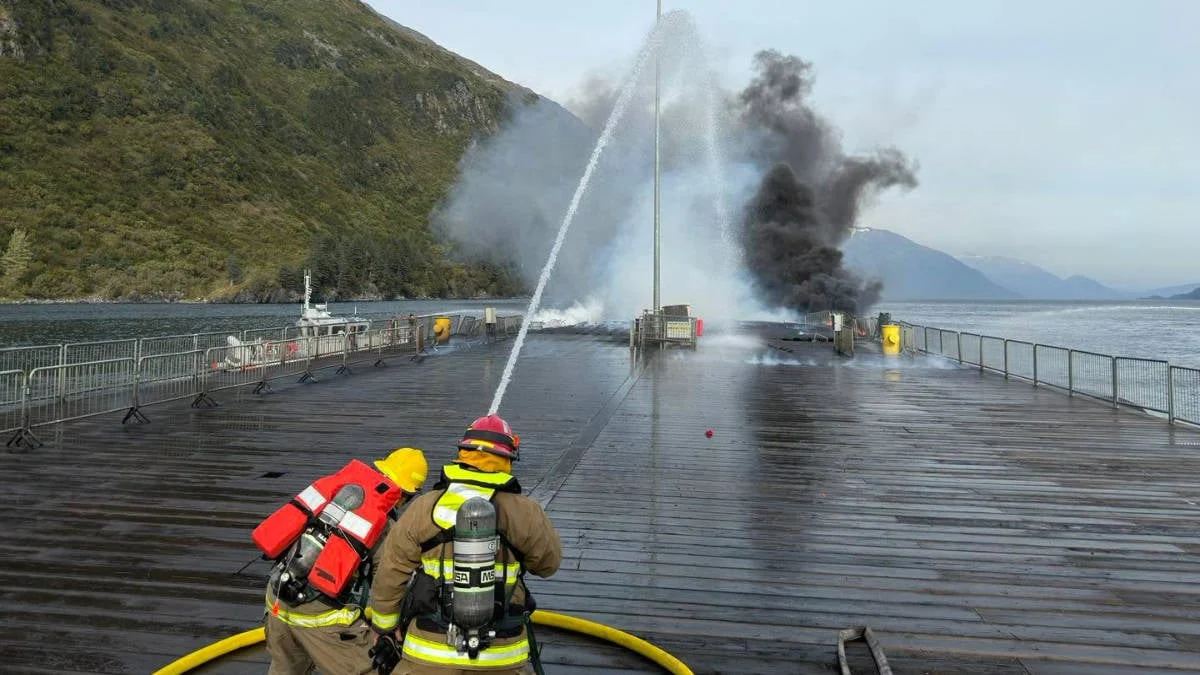
WHITTIER, Alaska — In what delivers a severe blow to Norwegian Cruise Line Holdings (NCLH), regional tourism operators, and travelers planning voyages to the Last Frontier, the newly constructed dock at the Chugach Glacier Gateway Cruise Terminal has been officially declared a "total loss."
The devastating determination was announced on Wednesday, September 16, 2026, by the Alaska State Fire Marshal’s Office, coming just two days after a catastrophic, multi-hour blaze consumed the state-of-the-art maritime infrastructure. The incident has sent shockwaves through the Alaskan cruise industry, raising immediate questions regarding regional port capacity, environmental safety, and the logistical roadmap for the upcoming 2027 cruise season.
Main Facts: The Devastation at Whittier
The fire, which erupted on Monday, September 14, 2026, targeted a crown jewel of Whittier’s modern maritime infrastructure. The Chugach Glacier Gateway Cruise Terminal—a high-profile, $80 million joint venture between Norwegian Cruise Line Holdings and the Huna Totem Corporation—was designed to elevate the passenger experience in Prince William Sound. First welcoming its inaugural ships in September 2024, the facility boasted a modern double-berth dock and an expansive terminal building tailored to accommodate large-scale cruise operations.
Now, the future of the multi-million-dollar asset hangs in the balance. According to state fire officials, the structural integrity of the pier has been fundamentally compromised, rendering the dock entirely unusable.
Fortunately, despite the scale of the disaster, no human injuries were reported. However, the financial and logistical fallout is immense. The fire not only gutted the pier infrastructure but also heavily damaged the Klondike Express, a prominent local day-tour vessel operated by Phillips Cruises & Tours, which was moored at the terminal at the time of the outbreak.
While cruise lines and local authorities scramble to adapt, the incident highlights critical infrastructure vulnerabilities in remote Alaskan ports—specifically regarding emergency water access and rapid-response capabilities.
Chronology of the Disaster: How the Fire Unfolded
The timeline of events on Monday, September 14, illustrates a desperate, hours-long battle waged by local and regional emergency responders against punishing logistical hurdles.
- 10:55 AM (Monday, September 14): The fire is first noticed at the Chugach Glacier Gateway Cruise Terminal dock. Thick, dark plumes of smoke begin billowing over the Whittier waterfront, immediately drawing the attention of port workers and local residents.
- 11:15 AM: Emergency services are fully mobilized. Whittier Fire & EMS responds rapidly, backed by mutual aid from Girdwood Fire and Rescue and other nearby municipal emergency units.
- 11:30 AM: The cruise ship Norwegian Jade, which was docked nearby, initiates emergency protocols. To avert potential catastrophe, the ship’s crew and harbor pilots rapidly maneuver the vessel away from the burning pier, anchoring it safely out of harm’s way.
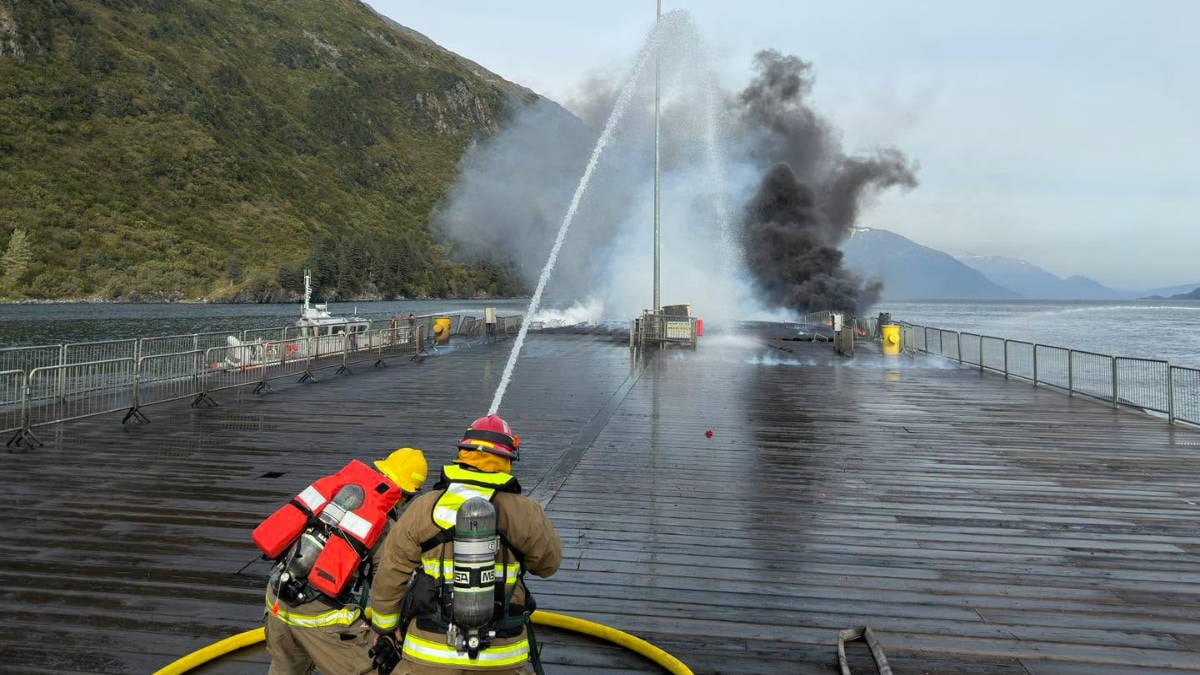
- 12:00 PM – 4:00 PM: Firefighters encounter a critical infrastructure deficit: there is no working fire hydrant located near the newly built dock. Emergency crews are forced to improvise, deploying one primary fire engine and two water tenders to shuttle water continuously and fight the aggressively spreading flames from land and sea.
- Overnight (Monday into Tuesday): The U.S. Coast Guard, alongside local fire crews, maintains a relentless overnight watch. Firefighting vessels apply constant cooling boundaries to prevent reignition.
- 12:30 AM (Tuesday, September 15): Following hours of intensive suppression efforts, the U.S. Coast Guard officially declares the fire fully extinguished.
- Wednesday, September 16: Following initial structural inspections, the Alaska State Fire Marshal’s Office formally declares the Chugach Glacier Gateway Cruise Terminal dock a "total loss."
Supporting Data and Operational Impact
The destruction of the Whittier pier strikes at the heart of NCLH’s Alaskan operations. The Chugach Glacier Gateway Cruise Terminal was constructed with a priority scheduling agreement designed to exclusively serve ships within the NCLH family, encompassing Norwegian Cruise Line, Oceania Cruises, and Regent Seven Seas Cruises. Other major industry players, such as Princess Cruises and Holland America Line, traditionally utilize Whittier’s older Cruise Terminal 1 but maintained the option to leverage the new double-berth dock as regional congestion required.
Key Infrastructure and Vessel Metrics:
- Terminal Cost: $80 million investment completed in 2024.
- Ownership Structure: Partnership between Norwegian Cruise Line Holdings and Huna Totem Corporation.
- Affected Tour Vessel: Klondike Express (Phillips Cruises & Tours), sustaining severe structural damage while empty.
- Displaced Cruise Ship: Norwegian Jade, forced to relocate embarkation operations to Cruise Terminal 1, located approximately 1.5 miles away from the disaster site.
- Distance to Backup Infrastructure: Cruise Terminal 1 stands ready to absorb diverted traffic, though with significantly constrained double-berth capacity.
Official Responses and Investigations
As the smoke clears, multiple state, federal, and corporate entities have launched comprehensive investigations into both the cause of the fire and its broader environmental and operational fallout.
The State Fire Marshal Investigation
The origin of the blaze remains shrouded in mystery. Austin McDaniel, a spokesperson for the Alaska Department of Public Safety, confirmed that the Alaska State Fire Marshal’s Office is spearheading an active investigation to pinpoint the exact ignition source. As of late September, no definitive cause has been established, and forensic teams are awaiting safe site access to comb through the charred remains of the pier.
U.S. Coast Guard Environmental Assessments
Given the maritime location of the fire and the presence of fuel, hydraulic fluids, and synthetic materials, federal environmental protection is a top priority. Teams from U.S. Coast Guard Sector Western Alaska and the U.S. Arctic deployed immediately to conduct rigorous pollution assessments and marine casualty investigations.
According to Coast Guard reports, initial observations right after the fire identified a "small sheen" on the water surrounding the pier. Fortunately, due to prompt containment and natural tidal action, the sheen quickly dissipated. Subsequent environmental monitoring has confirmed that no significant long-term pollution or hazardous chemical runoff has impacted the pristine waters of Prince William Sound.
Corporate Stakeholder Stance
The Huna Totem Corporation, which co-owns the facility, released brief statements indicating that executive and engineering teams are currently on-site assessing the structural devastation. Because the assessment phase is in its infancy, corporate leadership has not yet released formal projections regarding rebuilding timelines, insurance claims, or capital expenditure requirements for a future reconstruction project.
Implications for Future Cruises: What Travelers Need to Know
With the 2026 Alaska cruise season rapidly drawing to its seasonal close, the immediate logistical fallout is manageable, but the long-term shadow cast over the 2027 season is a growing concern for travel advisors and cruise lines alike.
Finishing the 2026 Season
Whittier’s 2026 cruise calendar features only a sparse handful of remaining port calls. The final scheduled vessel of the season is Regent Seven Seas Cruises’ luxurious 750-guest Seven Seas Explorer, which is slated to arrive in Whittier on Monday, October 5, 2026. Because it is the sole ship scheduled in port that day, port authorities have confirmed that Seven Seas Explorer can seamlessly transition to using legacy Cruise Terminal 1 without causing scheduling bottlenecks or passenger processing delays.
The 2027 Season Outlook
The real uncertainty lies ahead in May 2027, when the new Alaska cruise season traditionally roars back to life.
- May 4, 2027: Coral Princess is scheduled to make Whittier’s very first cruise call of the new year.
- May 9, 2027: Oceania Cruises’ Oceania Riviera is slated as the first NCLH family vessel to return to the port.
- May 17 & May 19, 2027: Norwegian Jade and Seven Seas Explorer are scheduled for major turnarounds in Whittier.
As of press time, none of the affected cruise lines—Norwegian Cruise Line, Oceania Cruises, or Regent Seven Seas Cruises—have issued formal announcements detailing itinerary modifications or terminal reassignments for 2027. However, industry insiders suggest that port operations will inevitably pivot toward funneling all Whittier-bound traffic through the older Cruise Terminal 1 while structural engineering teams evaluate whether the Chugach Glacier Gateway dock can be salvaged or must be entirely demolished and rebuilt from the pilings up.
For travelers holding reservations for Alaskan itineraries starting or ending in Whittier in 2027, cruise operators advise monitoring official communications channels. While embarkation logistics may experience temporary adjustments, cruise lines are expected to maintain their regional commitments, relying on Whittier’s remaining legacy infrastructure to keep passengers moving smoothly into the heart of Alaska’s majestic wilderness.
 Evan Lee Salim
  Pevita Pearce
  Basiran