

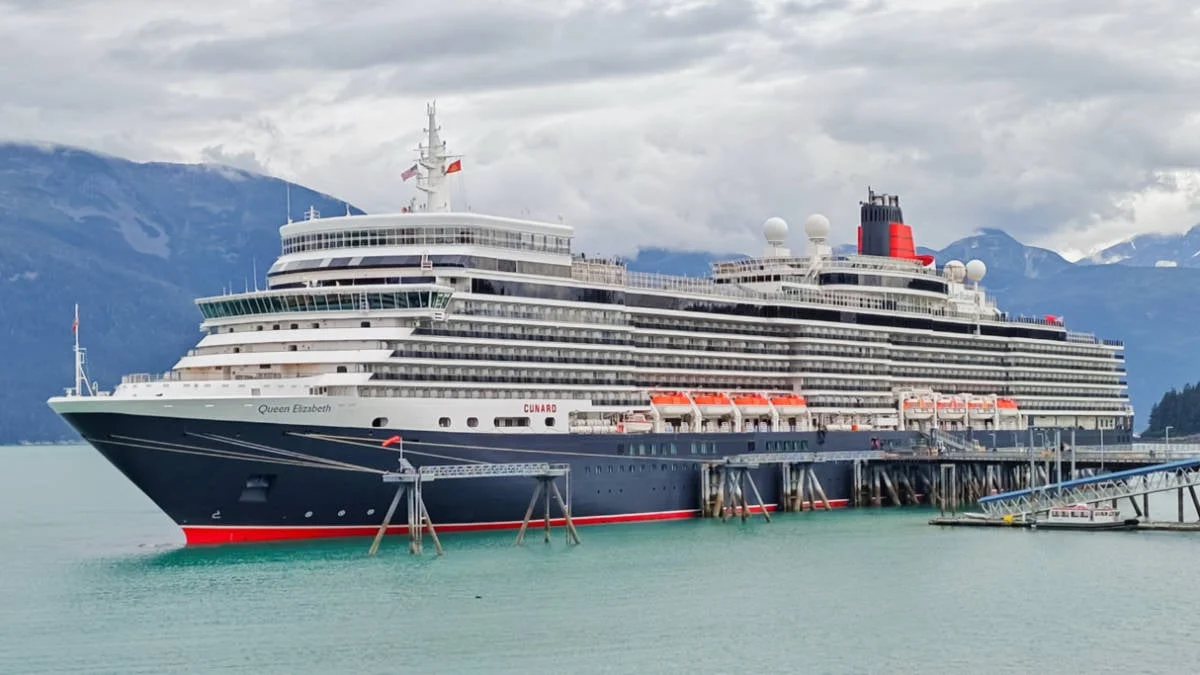
SEATTLE, WASHINGTON — Passengers booked aboard the final Alaska sailing of the 2026 season for Cunard Line’s Queen Elizabeth experienced an unexpected, extended stay in Washington state this week. What was supposed to be a prompt afternoon departure from the Port of Seattle turned into a multi-day logistical ordeal after essential mechanical maintenance forced a more than 24-hour delay.
The 2,081-passenger luxury vessel was originally scheduled to cast off from Pier 91 at 4:30 p.m. on September 17. However, owing to unforeseen technical hurdles necessitating immediate intervention, the voyage has been severely disrupted. While Cunard has maintained a full schedule of onboard activities to keep guests occupied during the dockside wait, the ripple effects of the delay threaten to alter the scenic itinerary originally promised to travelers looking forward to glaciers and frontier towns.
Main Facts
The core of the disruption centers on an unscheduled maintenance window that caught both passengers and port authorities by surprise.
- The Vessel: Queen Elizabeth, a Vista-class luxury cruise ship operated by the storied British cruise line Cunard, with a guest capacity of 2,081.
- The Route: A 7-night roundtrip voyage departing from Seattle, slated to visit Ketchikan, Juneau, and Victoria, alongside scenic cruising in Alaska’s dramatic Endicott Arm. This voyage also serves as the first leg of an extended 28-night itinerary stretching from Seattle down to Miami via the Panama Canal.
- The Delay: Originally slated to depart at 4:30 p.m. on Wednesday, September 17, the departure was initially pushed to 9:00 p.m., then delayed further to 5:00 p.m. on Thursday, September 18.
- The Cause: Unspecified "essential routine maintenance" managed by the ship’s technical crew while docked.
- The Significance: This sailing marks the final Alaska voyage of the 2026 season for the Queen Elizabeth, bringing a close to Cunard’s deployment of the ship in the Pacific Northwest for the year.
Chronology of Events: How the Delay Unfolded
The unfolding situation aboard the Queen Elizabeth was pieced together through a combination of official passenger notifications and firsthand accounts shared on social media platforms, including Reddit.
Wednesday, September 17: Boarding and Initial Notices
As passengers arrived at Pier 91 to board the ship for their much-anticipated journey north, they were met not with celebratory embarkation speeches, but with cabin letters detailing a change of plans. Initially, guests were informed that the 4:30 p.m. departure time would be pushed back slightly to 9:00 p.m. to accommodate necessary technical tasks.
However, as engineers assessed the scope of the work, it became clear that the evening departure would be impossible. Later in the evening, the ship’s captain made a public address to the vessel, followed by a formal letter delivered to every stateroom. The notice stated that the ship would remain in port overnight, pushing the targeted departure time to 5:00 p.m. the following day.
The Midnight Berth Shuffle
Compounding the maintenance delay was a Port of Seattle scheduling conflict. To accommodate the arrival of another vessel at Pier 91, the Queen Elizabeth was instructed to vacate its primary berth late Wednesday evening.
According to Cunard’s letter to guests, the ship was scheduled to pull away from the pier at 9:00 p.m., head out into open waters, and return to dockside by 7:30 a.m. the following morning. Yet, passengers quickly realized reality diverged from the paperwork.
Rather than heading out to sea, the luxury liner executed a delicate, highly localized maneuver. Travelers watching from their balconies reported that the ship crept slowly westward along the pier before coming to a halt at an alternate berth a mere few feet away.
"We were to move to another berth at 9 pm to make way for an arriving ship. We moved very slowly a few feet, but then stopped," one guest noted online. Another passenger added, "We are in a different berth now. The captain said our original berth was needed for a larger vessel… A Royal Caribbean ship is in our original spot and we moved one berth to the west."
While Cunard’s documentation omitted the identity of the incoming vessel, port scheduling records for the Port of Seattle indicate that Royal Caribbean’s Voyager of the Seas was slated for Pier 91 on September 18, necessitating the spatial reallocation.
Thursday, September 18: An Unexpected Day in Seattle
With the ship securely moored at its new berth, guests were placed under a unique set of parameters for the day. While passengers were confined to the vessel overnight for security and customs reasons, they were granted permission to disembark and explore Seattle during daylight hours on Thursday.
Cunard ensured that life onboard continued with minimal friction, running a full schedule of enrichment lectures, theatrical performances, and dining options. Nevertheless, a strict all-aboard time of 4:00 p.m. was enforced ahead of the rescheduled 5:00 p.m. departure bell.
Supporting Data and Operational Context
The timing of this mechanical hiccup could hardly have been worse for Cunard’s seasonal logistics. The Pacific Northwest cruise market operates on razor-thin turnaround times, particularly as autumn approaches and regional weather patterns grow increasingly volatile.
The 2026 Alaska Season Wrap-Up
Cruise Hive previously reported that Cunard had heavily invested in the region for the 2026 season, scheduling a robust deployment of 15 roundtrip Alaska cruises departing exclusively from Seattle. These itineraries ranged dynamically in length from 7 to 12 nights, designed to capture the lucrative luxury adventure demographic.
The current voyage represents the grand finale of this multi-month deployment. Following its return to Seattle on September 24, the ship was scheduled to pivot immediately toward warmer climes, embarking on a sprawling 28-night repositioning voyage down the Pacific Coast, through Central America via the Panama Canal, and onward to Miami.
Port Logistics and Vessel Movements
The Port of Seattle is one of the busiest cruise hubs on the West Coast, managing overlapping turnarounds for major lines including Holland America, Carnival, Princess, and Royal Caribbean. Pier 91 (Smith Cove Cruise Terminal) serves as a major anchor for these operations.
When a vessel like the Queen Elizabeth experiences a catastrophic scheduling extension, it creates a cascading domino effect on berth management. The quick sidestep executed by the Cunard ship highlights the intricate choreography required by port authorities to manage multimillion-dollar floating hotels within tightly constrained urban waterfronts.
Official Responses and Communication
Cunard Line has managed the PR crisis with a steady stream of written communication to its passengers, though the company has maintained strict discretion regarding the precise nature of the technical fault.
The Silence on Specifics
Despite requests for clarification from guests and maritime observers, Cunard has declined to elaborate on what specific mechanical systems failed or what maintenance was required. Cruise lines routinely categorize such work under broad umbrellas like "routine essential maintenance" or "technical troubleshooting" to prevent public speculation, protect proprietary engineering data, and manage liability.
Industry analysts note that propulsion issues, hotel services infrastructure failures, or regulatory safety equipment certifications are common culprits behind sudden dockside holds. Because safety at sea is paramount—governed by strict international maritime conventions—port state control officers and classification societies will not clear a vessel to sail until all systems are verified to be fully operational.
Passenger Management
To their credit, Cunard’s hotel management team activated contingency protocols swiftly. Standard operating procedure in extended dockside delays involves maintaining full access to all onboard amenities, complimentary dining, and open bars where appropriate, alongside assistance for guests who had arranged independent shore excursions in Seattle for Thursday morning.
Furthermore, the cruise line has proactively communicated with passengers regarding the broader itinerary implications. In subsequent letters issued on September 18, Cunard warned travelers that further adjustments to the voyage would likely be necessary to compensate for the lost time.
Implications for the Remainder of the Voyage
The loss of an entire calendar day at the start of a 7-night cruise introduces immediate operational friction that cannot be easily bypassed by simply sailing faster.
Port Call Adjustments
September 18 was originally engineered as a full sea day, designed to give the ship ample time to steam northward along the Inside Passage toward Southeast Alaska. By remaining anchored in Seattle until the evening of the 18th, the Queen Elizabeth faces a severe deficit in nautical miles covered.
While the ship’s first scheduled port call remains Ketchikan—where the vessel is due to arrive on the morning of September 19—subsequent stops such as Juneau, Victoria, or the scenic cruising grounds of Endicott Arm hang in the balance. Maritime observers point out that cruise lines forced into such scenarios usually have to shorten port times, alter port orders, or cancel secondary stops altogether to ensure the vessel can make its final return to Seattle on September 24.
The Extended Grand Voyage Segment
For the subset of travelers booked not just on the 7-day Alaska loop, but on the comprehensive 28-night journey to Miami, the delay is less disruptive to the overall vacation length—since the ultimate return date to Seattle on September 24 remains fixed—but it alters the rhythm of the trip’s opening chapter. These guests must contend with a compressed Alaskan experience before the ship turns its bow southward.
Cunard’s Pledge of Transparency
Cunard representatives have assured guests that leadership is actively reviewing the ship’s speed capabilities and weather windows. A follow-up advisory was promised to all passengers late on September 18, detailing any concrete revisions to the ports of call for the remainder of the week.
As the Queen Elizabeth finally clears the Puget Sound and heads toward the open Pacific, passengers will be watching the horizon—and their daily programs—closely, hoping that the rest of their historic final Alaska voyage of 2026 sails into smoother waters.
 rifanmuazin
  Pevita Pearce
  Basiran