

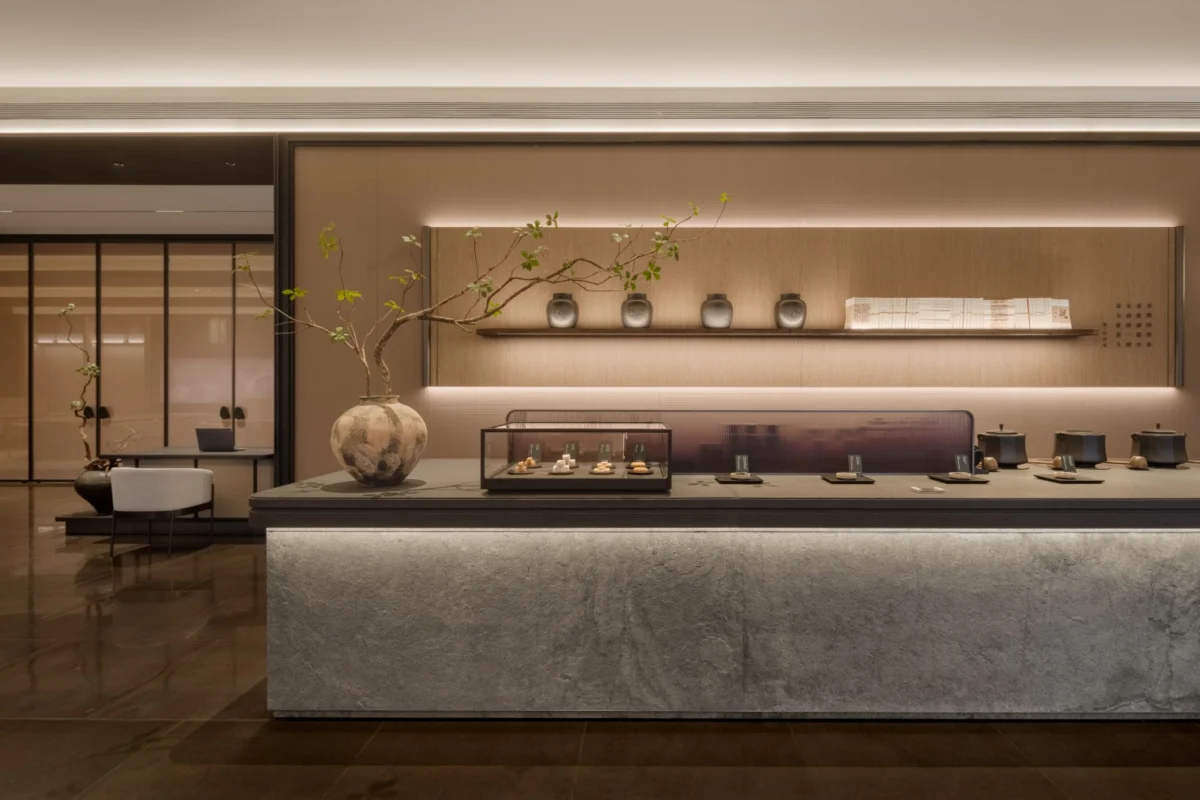
In the competitive landscape of global hospitality, the definition of "premium" is undergoing a profound shift. For decades, the industry standard for luxury was defined by Western tropes: gilded lobbies, formal service, and an abundance of decorative opulence. Today, however, a new philosophy is emerging from the East. H World Group, a titan in the global lodging sector, is challenging the status quo with its latest brand, Grand Ji Hotel—a concept that prioritizes emotional resonance, cultural grounding, and the radical luxury of silence.
By synthesizing ancient Chinese aesthetics with cutting-edge operational efficiency, H World Group is attempting to prove that a truly premium experience is not about how much is provided, but how well the guest’s fundamental human needs—for rest, privacy, and connection—are met.
The Core Philosophy: Redefining Premium Through Minimalism
At its heart, Grand Ji Hotel represents a departure from the "more is more" ethos. Kuang Ming (Ray) Chou, the founder of Vermilion Zhou Design Group and the chief designer at H World Group, describes the shift as a move toward quality over quantity. "Premium guests today don’t necessarily want more," Chou explains. "They want better."
The brand is anchored by five natural elements—water, clouds, tea, pine, and stone. Rather than using these as mere surface-level motifs, the hotel integrates them into the structural fabric of the guest experience. Water symbolizes adaptability and softness; pine evokes the familiarity of landscape; and tea is treated as a foundational ritual rather than a beverage. By grounding the hotel in these cultural touchstones, H World aims to create an environment that feels less like a corporate product and more like a curated, living space.
Chronology: From Concept to Scale
The journey of Grand Ji Hotel is a testament to H World’s agility. While the brand is still in its nascent stages, the infrastructure supporting it has been decades in the making.
- Foundation: H World Group spent years mastering the mid-scale and economy markets with brands like JI Hotel and Hanting, establishing a global footprint of over 13,000 properties.
- Conceptualization (2023–2024): H World leadership identified a gap in the upper-midscale market for a brand that could cater to a modern Chinese demographic seeking cultural identity without sacrificing international-standard comfort.
- Launch (Mid-2026): By the end of June 2026, the brand had successfully opened its first two pilot properties, boasting a total of 441 rooms.
- The Pipeline (Current): The company is currently executing a rapid expansion plan, with 18 additional properties in the development pipeline, signaling a strong commitment to scaling the brand while maintaining strict quality control.
Supporting Data: The Weight of Operational Scale
H World Group’s ambition for Grand Ji Hotel is backed by arguably the most formidable supply chain and technological infrastructure in the hospitality industry. As of the second quarter of 2026, the group operated a staggering 13,539 hotels with over 1.3 million rooms.
The success of the Grand Ji concept relies heavily on this massive scale. H World utilizes a "one brand, one design" philosophy, which ensures that a traveler in Harbin experiences the same architectural integrity and sensory calm as a guest in Sanya. To achieve this, the company leverages modular design: many interior components are manufactured in controlled factory environments, shipped to the site, and installed with surgical precision. This not only maintains aesthetic consistency but also drastically reduces the maintenance overhead for franchisees.
Furthermore, the company’s upper-midscale portfolio—which includes Grand Ji—has seen a 13% year-over-year growth in China, reflecting a broader consumer trend toward elevated domestic travel experiences.
The Role of Technology: Disappearing Interfaces
One of the most striking aspects of the Grand Ji model is the "invisible" role of technology. In many modern hotels, technology is forced upon the guest—complex touchscreens, unnecessary smart-room features, and automated kiosks that create a clinical atmosphere.

At Grand Ji, technology is intended to act as a silent facilitator. Features such as mobile-based room access, voice-activated controls, and autonomous delivery robots are present, but they are designed to solve specific pain points rather than serve as flashy gimmicks. A robot delivering bottled water is not just a technological demonstration; it is a mechanism to protect guest privacy by eliminating the need for a staff member to enter the room.
"I don’t want technology to become the main character," Chou notes. "It should disappear beside you." By automating the mundane, the brand frees up human staff to focus on genuine hospitality—the pouring of tea, the greeting of guests, and the maintenance of a calm atmosphere.
Official Perspectives: A "Chinese Renaissance" in Hospitality
The emergence of Grand Ji Hotel is being framed by H World as part of a wider "Chinese Renaissance." The goal is not to force Chinese symbols onto a Western hotel structure, but to re-examine what it means to host in a contemporary Chinese context.
"A hotel is a small version of a culture," says Chou. "It is how you live, how you eat, how you welcome people, and how you keep distance." This focus on "distance" is a key differentiator. Recognizing that privacy is a premium commodity in a crowded world, the hotel utilizes light partitions to create psychological separation in public areas like the lobby and breakfast room. It is a design choice that respects the guest’s need for personal space without isolating them from the vibrancy of the hotel environment.
Implications for the Future of Global Hospitality
The success of Grand Ji Hotel carries significant implications for the future of the global hotel industry.
- The Rise of Culturally-Specific Luxury: Grand Ji suggests that the next generation of luxury is not about mimicking the Four Seasons or Ritz-Carlton, but about offering an authentic, culturally rooted experience that speaks to the specific needs and values of the target demographic.
- Modular Efficiency as a Luxury Standard: By using factory-made components to ensure brand consistency, H World is demonstrating that high-end design does not have to be handcrafted and inefficient. This model could disrupt the high-end market by making premium design more scalable and, therefore, more profitable for operators.
- The "Quiet" Trend: As the world becomes increasingly noisy and hyper-connected, hotels that market themselves as "sanctuaries of silence" are likely to gain significant market share. Grand Ji’s focus on acoustic design and sensory restraint is a response to a global burnout epidemic, positioning the brand as a wellness-oriented choice for the weary traveler.
Conclusion: A New Standard
Grand Ji Hotel is in its early stages, yet it presents a compelling case for a new hotel model. It is a high-stakes experiment in whether a massive, global hotel chain can successfully execute an artisanal, hyper-focused, and culturally nuanced experience at scale.
If H World Group can maintain the delicate balance between its vast technological infrastructure and the quiet, human-centric design philosophy championed by Ray Chou, it will not only redefine the premium market in China but also provide a blueprint for other international hotel groups. In an industry often cluttered by excess, the "Grand Ji" approach suggests that the ultimate luxury may simply be the space to breathe, the silence to rest, and the quiet comfort of a well-told cultural story.
As the brand moves from two properties to twenty and beyond, the industry will be watching to see if the "Art of Stillness" can truly be replicated across thousands of rooms. For now, it stands as a bold, sophisticated, and undeniably modern contribution to the global hospitality landscape.
 Asep Darmawan
  Evan Lee Salim
  Nana Wu