

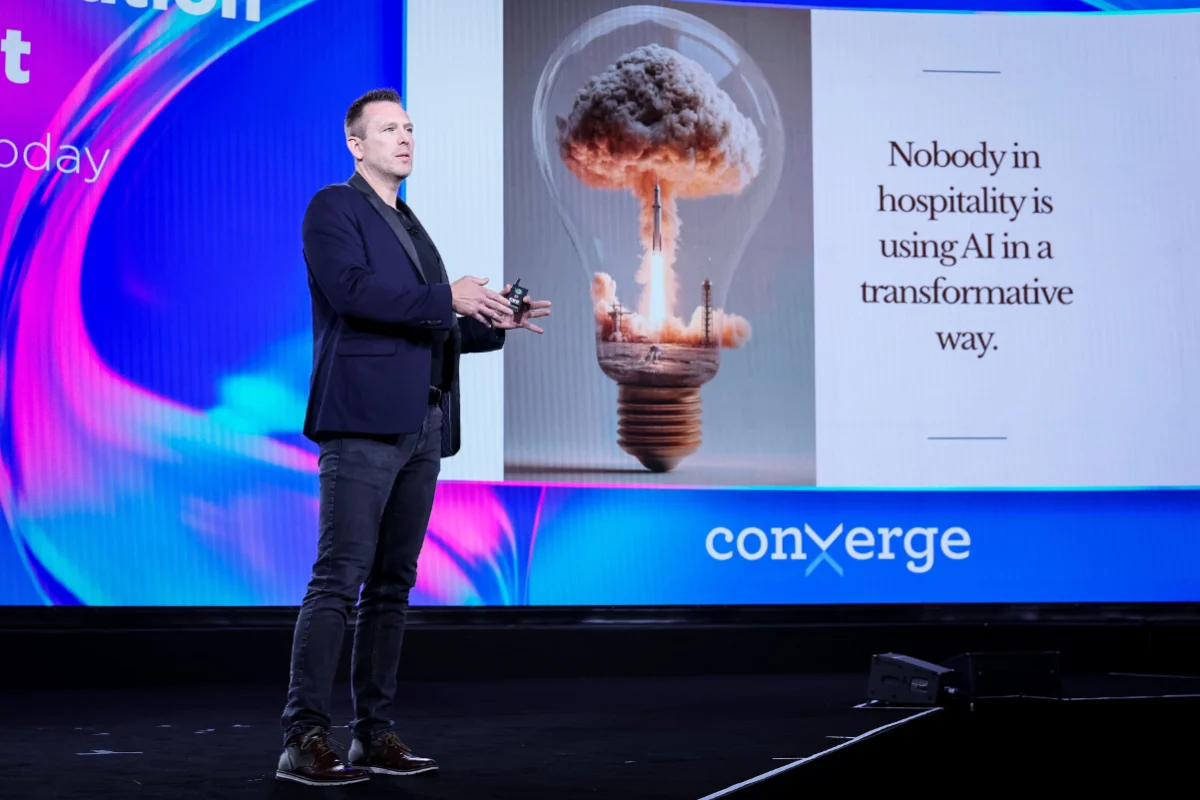
In an industry long defined by high-touch service and human-centric operations, a seismic shift is underway. Sloan Dean, the former CEO of Remington Hospitality—one of the largest third-party hotel management firms in the United States—has announced his departure from the traditional playbook. Dean is officially launching AI Hospitality Group (AIHG), a startup that aims to fundamentally redefine the economics of hotel management through the aggressive deployment of agentic artificial intelligence.
The Dallas-based venture, which has already secured $7.5 million in seed funding led by Kevin Novak’s venture firm, Rackhouse, represents a bold experiment: Can the hospitality industry trade labor-intensive workflows for machine-led efficiency without sacrificing the "guest experience"?
The Genesis of AIHG: A Strategic Pivot
For years, Dean sat at the helm of Remington Hospitality, managing a vast portfolio of properties and navigating the complexities of human-led hotel operations. During his tenure, he observed a recurring friction point: the ballooning cost of labor versus the static nature of operational margins.
The birth of AIHG is not merely an attempt to "digitize" hotels, but to re-engineer them from the ground up. By utilizing agentic AI—systems capable of autonomous decision-making and task execution—Dean intends to replace legacy management systems that have remained largely unchanged for decades. Since June, the startup has been quietly stress-testing its operational model across three undisclosed properties, refining the AI’s ability to handle everything from procurement and revenue management to housekeeping coordination and guest communication.
Chronology: From Remington to the AI Frontier
The transition from traditional management to the AI-centric model did not happen overnight. The timeline of this evolution highlights a shift from executive leadership to entrepreneurial disruption:
- Pre-2024: Sloan Dean solidifies his reputation as a transformative leader at Remington Hospitality, scaling operations and driving significant growth in the third-party management space.
- Early 2024: Dean begins drafting the blueprint for AIHG, identifying specific bottlenecks in hotel operations that are ripe for automation.
- June 2024: AIHG initiates design and integration work at three pilot hotels, testing the efficacy of agentic AI in real-world scenarios.
- Late 2024 (Projected): AIHG is slated to officially assume the management of its first cohort of properties, signaling the startup’s transition from a design firm to an active operator.
- September 2026: Official debut of AIHG, supported by a $7.5 million seed round, setting the stage for aggressive expansion into the independent, full-service hotel sector.
The Math of Automation: Supporting Data
The core value proposition of AIHG is as much mathematical as it is technological. In the hospitality sector, gross operating profit (GOP) margins typically hover between 33% and 39%, depending on the property’s scale, brand, and local market dynamics.
Dean’s thesis is built on the pursuit of a 500-basis-point (5%) improvement in GOP margins. While a 5% increase may seem incremental to an outsider, in the hotel management business, it is transformative. For an asset owner, this shift can equate to millions of dollars in additional valuation and cash flow.
Breaking Down the Margin Expansion
AIHG’s data—gathered from its months of pilot testing—suggests that the margin improvement is driven by three primary vectors:
- Labor Optimization: Moving away from static scheduling toward AI-driven labor deployment that adjusts to real-time occupancy and guest demand.
- Procurement Efficiency: Utilizing predictive algorithms to manage inventory and procurement, reducing waste and optimizing supply chain costs.
- Revenue Management: Implementing dynamic, AI-driven pricing engines that react to market volatility faster than human-led teams, capturing yield that is often lost in traditional, delayed response cycles.
"The design work at three hotels so far shows that 500 basis points of improvement is not only possible; it’s an achievable baseline," Dean noted during the launch announcement.
Official Responses and Industry Reception
The investment from Rackhouse, led by industry veteran Kevin Novak, provides a vote of confidence that carries significant weight in the venture capital community. Novak’s background in identifying high-growth, technology-enabled platforms suggests that AIHG is being viewed as more than just a "management company." It is being valued as a technology platform that happens to operate hotels.
Industry analysts have responded with a mix of cautious optimism and intense curiosity. While AI-driven chatbots and automated check-ins have become commonplace, AIHG’s proposal to automate the management layer of a hotel is a significant step further. Critics point to the inherent volatility of hospitality—where a disgruntled guest or an unexpected maintenance crisis can derail the most sophisticated algorithms. However, proponents argue that by offloading the "mundane" operational decisions to AI, human staff are liberated to provide a higher level of personalized service, potentially improving guest satisfaction scores alongside financial performance.
Implications for the Hospitality Landscape
The emergence of AIHG signals a broader transition in the hospitality industry—a shift from the "era of headcount" to the "era of compute."
1. The Death of Legacy Management?
Traditional hotel management companies rely on a pyramid structure of human oversight. If AIHG proves successful, the competitive pressure on traditional operators will intensify. Investors will begin to demand that their management partners demonstrate similar tech-enabled efficiency, potentially forcing an industry-wide consolidation or a rapid digital transformation of existing firms.
2. The Talent Shift
If AI is performing the logistical heavy lifting, the role of the General Manager (GM) and their staff will evolve. The future hotelier will likely be less of an administrator and more of a "tech supervisor" or "experience architect." This could lead to a massive retraining requirement across the hospitality workforce, as the demand for traditional administrative skills wanes in favor of tech-literacy and interpersonal intelligence.
3. The "Independent" Advantage
AIHG is currently targeting independent, full-service hotels. These properties are often the most underserved by legacy management companies, which prioritize large-scale brand standards. By providing independent owners with the same, or superior, AI-powered back-end infrastructure that a major global brand offers, AIHG could create a new tier of competitive, high-performance independent hotels.
4. The Data Moat
As AIHG manages more properties, its proprietary datasets will grow. The more hotels the company operates, the "smarter" its AI becomes, creating a powerful network effect. This data moat will likely serve as the company’s greatest asset, potentially allowing it to outperform traditional competitors not just in margin, but in guest retention and market intelligence.
Conclusion: A High-Stakes Bet on the Future
Sloan Dean’s pivot from Remington to AIHG is a clear indicator of where the smart money is heading. The hospitality industry has long been a laggard in the digital transformation race, often hiding behind the excuse that "personal service cannot be digitized."
AIHG is challenging that narrative. By suggesting that technology can facilitate a more human experience—by removing the friction of bureaucracy and inefficient labor—Dean is positioning his firm at the vanguard of a new, leaner, and more profitable generation of hospitality.
As the company prepares to take over its first set of properties later this year, all eyes will be on the balance sheets. If the 500-basis-point promise holds, the traditional hotel management model may find itself on the brink of obsolescence, replaced by the silent, efficient, and relentless logic of agentic AI. The future of hospitality, it seems, will not be written in guest books, but in code.
 Nana Muazin
  Muslim
  Evan Lee Salim