

There is a quiet, persistent environmental crisis hiding in plain sight within every outdoor gear store on the planet. It exists in the aisles of high-end fleece jackets, technical mid-layers, and durable shells. To the average consumer, the display looks uniform—a sea of reliable, sleek, professional black. But to the supply chain managers and textile engineers behind these garments, that display is a chaotic mosaic of inefficiency.
Walk into any well-stocked retailer and compare two black fleeces from competing brands under bright, professional-grade lighting. While they may look identical at a glance, hold them side-by-side, and the illusion shatters. They are different. They are the result of separate, siloed dye batches, distinct chemical formulas, and redundant industrial processes.
This is the "Black Problem," and for the first time, a collaboration between outdoor apparel veteran Haglöfs and material science giant Polartec is aiming to dismantle this absurdity through a new initiative: Standard Issue Black™.
The Anatomy of the Problem: Why Black Isn’t Just Black
To understand the scale of this environmental oversight, one must first look at the industrial chemistry of synthetic textiles. Polyester, the backbone of the modern outdoor industry’s mid-layer market, is inherently hydrophobic. Unlike cotton or wool, which have a natural affinity for water-based dyes, polyester repels moisture.
To color polyester, manufacturers must utilize disperse dyes. This is a high-energy, high-intensity process where the fabric is submerged in a pressurized aqueous bath heated to 130°C or higher. This process forces dye molecules into the polymer structure of the fiber itself.
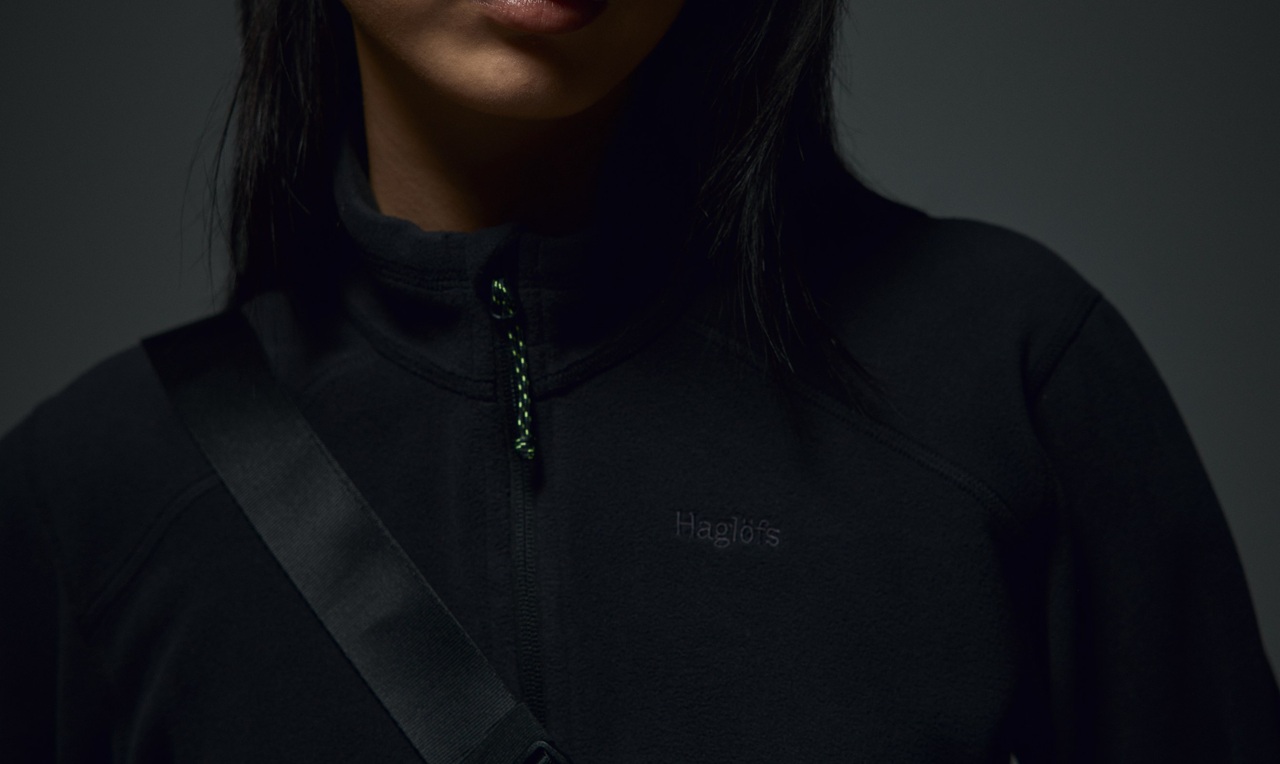
Black is, by necessity, the most demanding shade in the color spectrum. Achieving a "true" neutral black requires the layering of multiple disperse dye molecules, each contributing to the final depth of the hue. This necessitates more chemistry, more fixation cycles, longer heat exposure, and significantly higher water consumption.
The textile industry is currently responsible for approximately 20% of global industrial water pollution, with dyeing and finishing operations representing the lion’s share of that impact. A single kilogram of dyed polyester can require anywhere from 30 to 150 liters of water. Because black is the most chemically intensive color, it consistently sits at the highest end of that environmental cost spectrum. The absurdity lies in the fact that thousands of independent brands are running these massive, polluting cycles individually to produce shades of black that are, for all practical purposes, indistinguishable to the end-user.
Chronology of a Disruption: From Capsule to Standard
The path to Standard Issue Black™ began not with a spreadsheet, but with a piece of art—or, more accurately, a piece of advocacy.
The Black Capsule Project
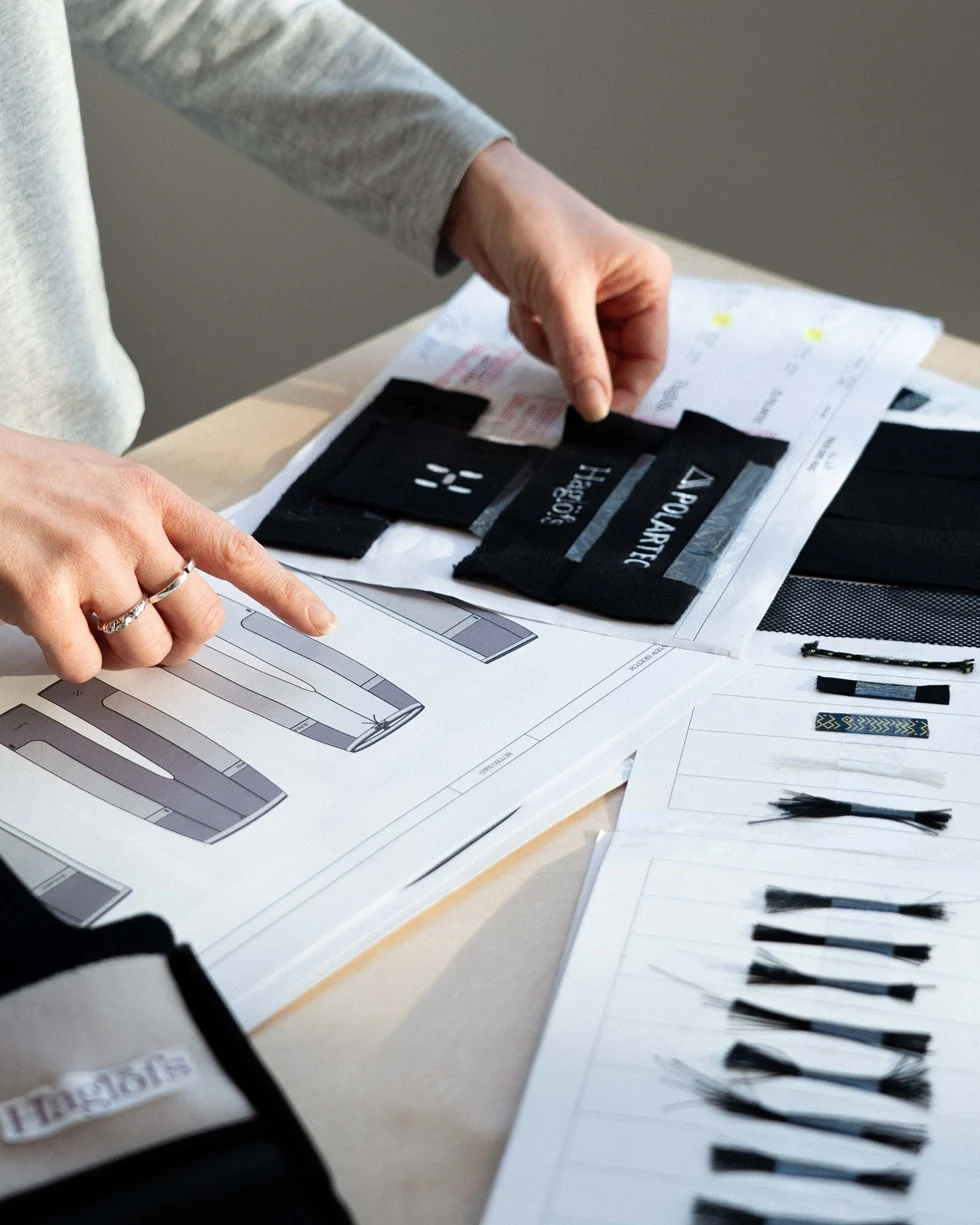
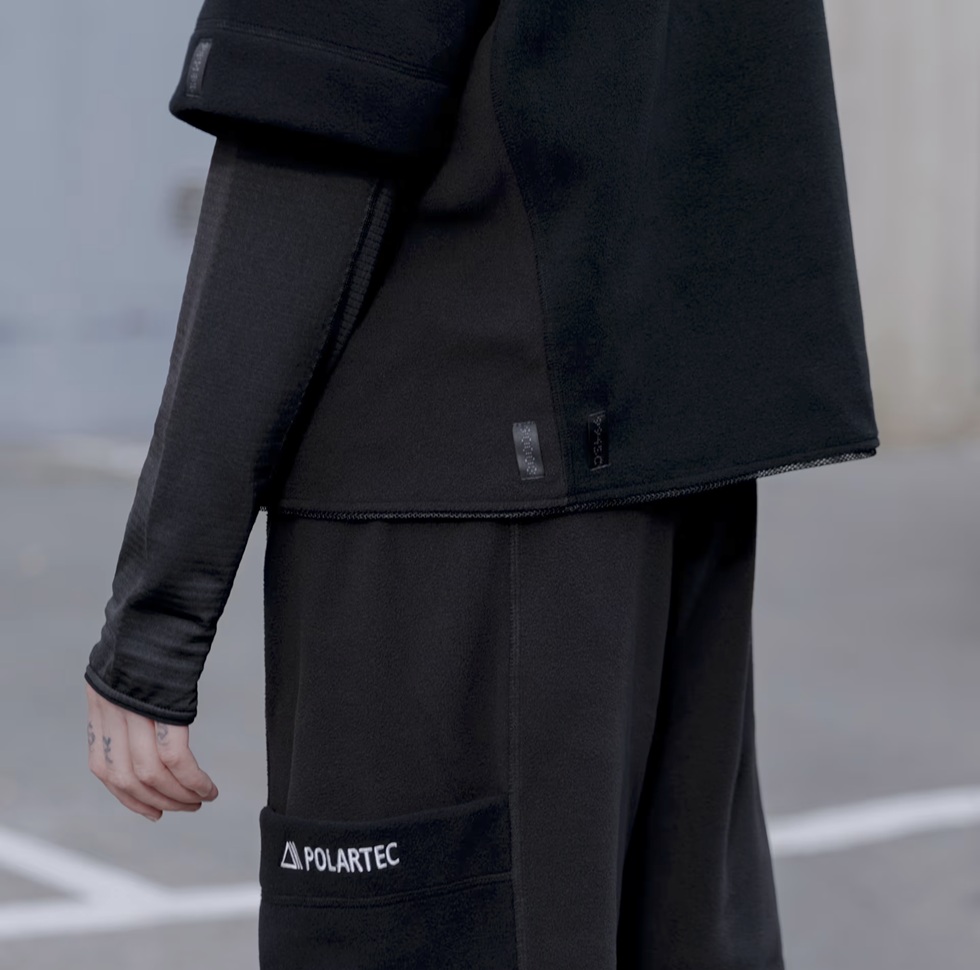
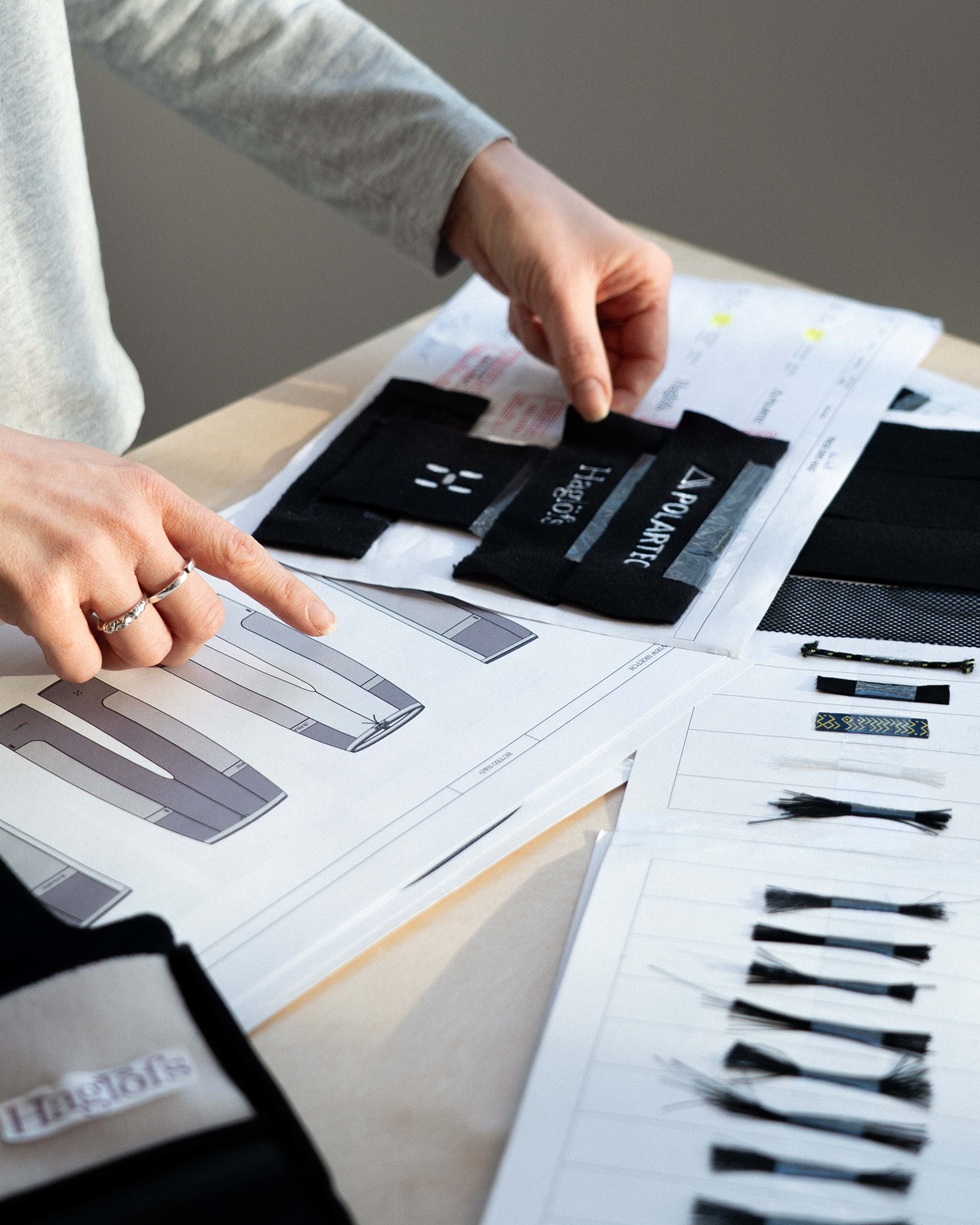
Haglöfs first signaled this shift with the launch of the Black Capsule Collection. This limited-run series featured a Project Tee, a beanie, a scarf, and a pant, all constructed from disparate leftovers of black Polartec fleece. The garment design was provocative: each panel was stitched together from different batch-dyed fabrics.
Every single panel on these garments carried a woven label stamped with its original color batch number. It was a visual manifesto. By showing that one garment could be composed of three or four "different" blacks, Haglöfs made the invisible visible. It forced the industry to confront the reality that they were commissioning redundant, marginally different shades at a massive cost to the environment.
The Shift to Scalability
Following the success of the Black Capsule, Haglöfs and Polartec moved to transition from a conceptual statement to an industrial standard. They agreed on a single, optimized shade of black—a "universal" black—that could be manufactured at scale.
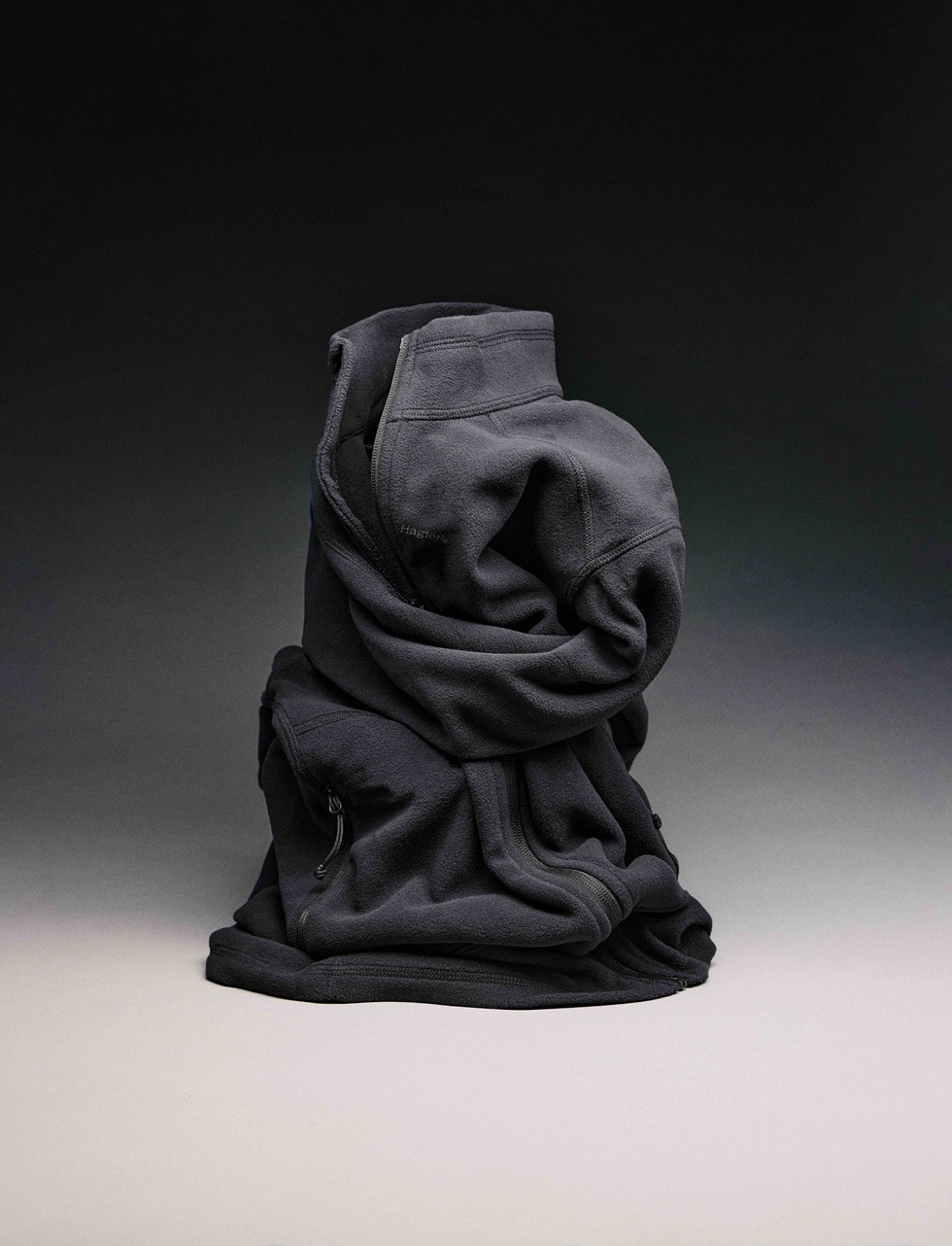
By mid-2026, this concept moved into full implementation. The Buteo Mid II Jacket served as the first mass-market product to utilize this new standard. By integrating it into a high-volume bestseller rather than a limited-edition curiosity, the brands signaled that Standard Issue Black™ was intended to be the new baseline for functional apparel, not a greenwashed marketing gimmick.
The Minimum Order Quantity (MOQ) Trap
A significant driver of this environmental waste is the operational reality of "Minimum Order Quantities" (MOQs). Dye houses operate on economies of scale; to run a cost-effective cycle, they require several hundred kilograms of fabric at a minimum.
When brands act as silos, they each place their own orders for their own proprietary "brand black." If a brand’s volume doesn’t meet the dye house’s threshold, they pay a premium. More importantly, this creates a fragmented ecosystem where dozens of brands commission dozens of nearly identical recipes. Each recipe requires its own lab development, its own quality control approvals, and its own chemical setup.
The waste is not found in a single, malicious decision. It is found in the aggregate of thousands of "rational" business decisions that, when combined, create an irrational, highly wasteful collective outcome. Standard Issue Black™ seeks to resolve this by consolidating these batches into one massive, industry-wide run.
Supporting Data: The Arithmetic of Efficiency
While independent verification is the gold standard for sustainability, the internal data provided by Haglöfs offers a compelling glimpse into the potential for change. By shifting to a consolidated dyeing process, the company reports:
- Water Consumption: An estimated 50% reduction in water usage per kilogram of fabric.
- Energy Consumption: A minimum 20% reduction in energy output, attributed to fewer heating cycles and a more efficient, high-volume dye bath process.
- Chemical Footprint: By reducing the need for proprietary lab testing and chemical formulation for every individual client, the overall toxicity and chemical waste associated with the dyeing process are significantly lowered.
These figures represent a pivot toward what industrial engineers call "batch consolidation," a strategy that is well-understood in the chemical industry but notoriously underutilized in the fashion sector due to the competitive nature of brand identity.
Official Responses and the "Creativity" Counter-Argument
The most common pushback against standardization is the fear that it will stifle design innovation. If every brand uses the same black, will the shelves become a homogenous blur of uniformity?
Eva Weiss, Head of Design and R&D at Haglöfs, argues the opposite. "Standardization doesn’t have to limit creativity. With the right framework, it gives us the freedom to work together in the same creative direction and make a bigger impact. Having one defined black simplifies the design process, and brands could still differentiate themselves through other colors, cuts, and design elements."
Weiss points to the industry’s historical adoption of YKK zippers as a perfect parallel. Decades ago, the outdoor industry moved toward a limited set of high-quality zipper systems. Today, the presence of a YKK zipper is considered a mark of quality, yet no one argues that this standardization has killed the creativity of jacket design. By removing the "black" variable from the list of competitive differentiators, designers are actually freed to focus on what matters: technical fit, superior hardware, and sustainable construction.
The Implications: Is the Industry Ready?
The potential for Standard Issue Black™ to redefine industry standards is immense, yet it faces the hurdle of institutional inertia. The outdoor industry is no stranger to sustainability initiatives that fail to gain traction because they lack broad-based adoption.
The "Green Premium" often dictates that if a sustainable choice is more expensive, it will fail. However, Standard Issue Black™ sidesteps this entirely. Because it relies on economies of scale, the cost is neutral—or potentially even lower—than the fragmented status quo.
The challenge is not economic; it is structural. It requires brands to stop viewing "owning" their specific shade of black as a competitive advantage. It asks them to acknowledge that in the modern era, the most sustainable, efficient, and forward-thinking move is to share the burden of production.
As the Buteo Mid II Jacket rolls out across global markets, it serves as the ultimate test case. If other major players in the outdoor space see the efficacy of this standard, we may look back at the "Black Problem" as the last vestige of an era where competition blinded the industry to the obvious, simple, and necessary solutions right in front of them.
Standard Issue Black™ does not ask the outdoor industry to stop the machine. It simply asks the industry to run it with a little more intelligence—and a lot less waste.
 rifanmuazin
  Nana Muazin
  Suro Senen