

There is a problem hiding in plain sight in every outdoor gear store on earth. It sits on the racks, folded in neat stacks, and displayed on mannequins. It is arguably the most popular color in the history of technical apparel, yet its ubiquity masks a systemic inefficiency that is as staggering as it is avoidable.
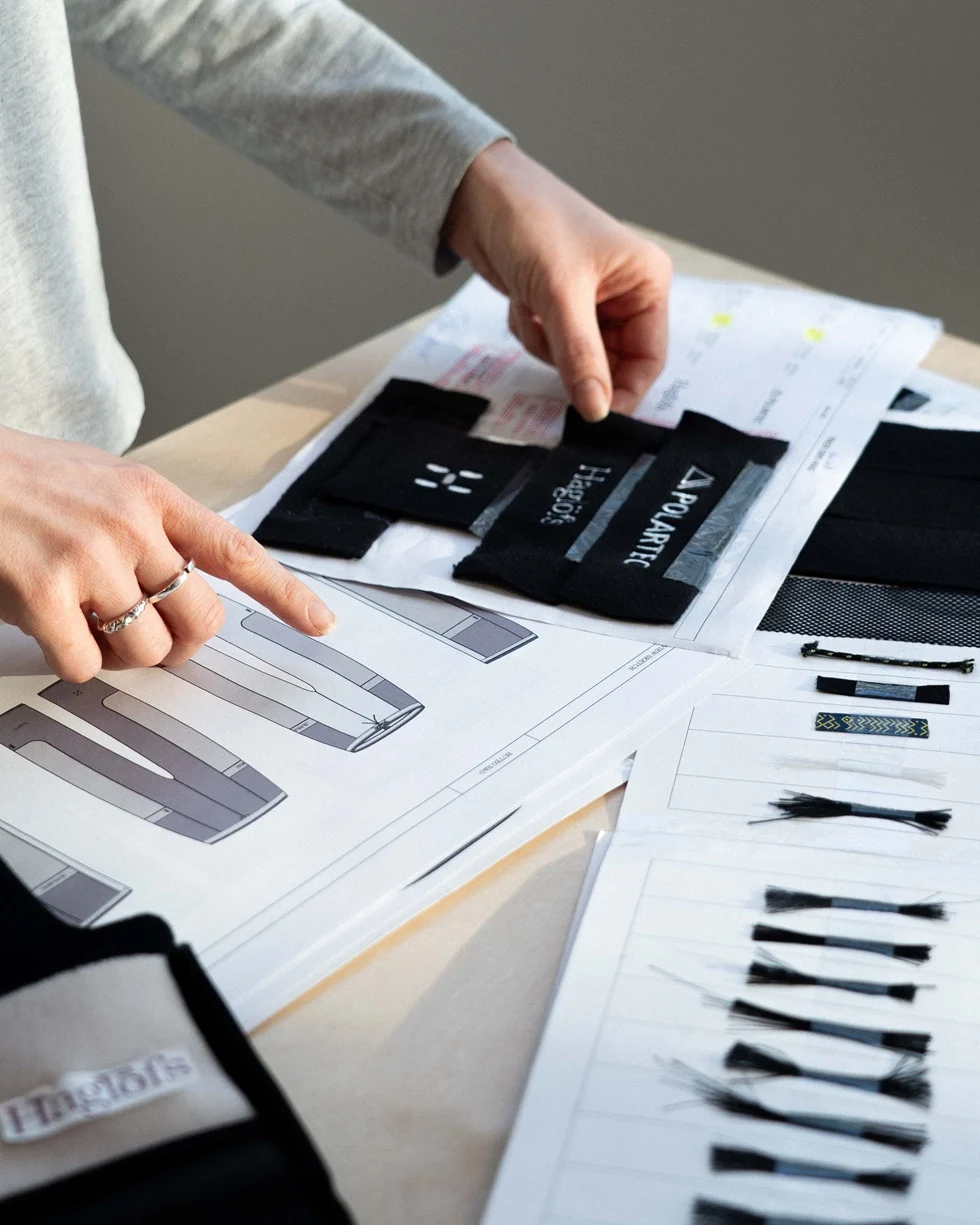
Walk the fleece aisle of any well-stocked retailer, and you will see it. Dozens of versions of the color black hang side by side. They appear identical at a glance, yet they are marginally different—a nuance that only becomes apparent when you hold two swatches together under high-intensity, color-calibrated light.
These are not intentional design choices. They are the artifacts of a fragmented, hyper-competitive, and environmentally taxing global supply chain. Haglöfs and Polartec, two titans of the outdoor industry, have identified this "hidden" problem. Together, they have launched Standard Issue Black™, a radical attempt to unify the industry’s most consumed color to slash water, energy, and chemical waste.
The Anatomy of the Problem: Why Black is Not Just Black
To understand why "black" has become a sustainability bottleneck, one must first look at the chemistry of synthetic textiles. The outdoor industry relies heavily on polyester fleece for mid-layer insulation. Unlike natural fibers such as cotton or wool, which have a high affinity for water-based dyes and can be processed at relatively low temperatures, polyester is hydrophobic. It is essentially plastic, designed to repel water—which makes it notoriously difficult to color.
The Energy-Intensive Reality of Disperse Dyes
Coloring polyester requires "disperse dyes," a specialized class of chemistry applied under extreme conditions. To force these dye molecules into the polymer structure of the fiber, manufacturers must use high-pressure vessels at temperatures typically exceeding 130°C.
Black is the most demanding color in the spectrum. Achieving a deep, consistent, and neutral shade of black requires a complex layering of multiple dye molecules. Each added layer requires its own fixation cycle, its own chemical bath, and, consequently, its own massive consumption of water and energy.
The textile industry is responsible for approximately 20% of global industrial water pollution, with dyeing and finishing operations accounting for the lion’s share of that impact. A single kilogram of dyed polyester can require between 30 and 150 liters of water. Black sits at the extreme end of that range, consuming the most resources for a result that is, for all practical purposes, indistinguishable from the black used by a competitor down the street.
Chronology: From Concept to Implementation
The journey toward Standard Issue Black™ began not with a factory report, but with a piece of art—or, more accurately, an act of "subversive" design.
- The Diagnostic Phase: Haglöfs and Polartec began auditing their internal production cycles, looking for areas of aggregate waste. They realized that every brand was independently commissioning its own shade of black.
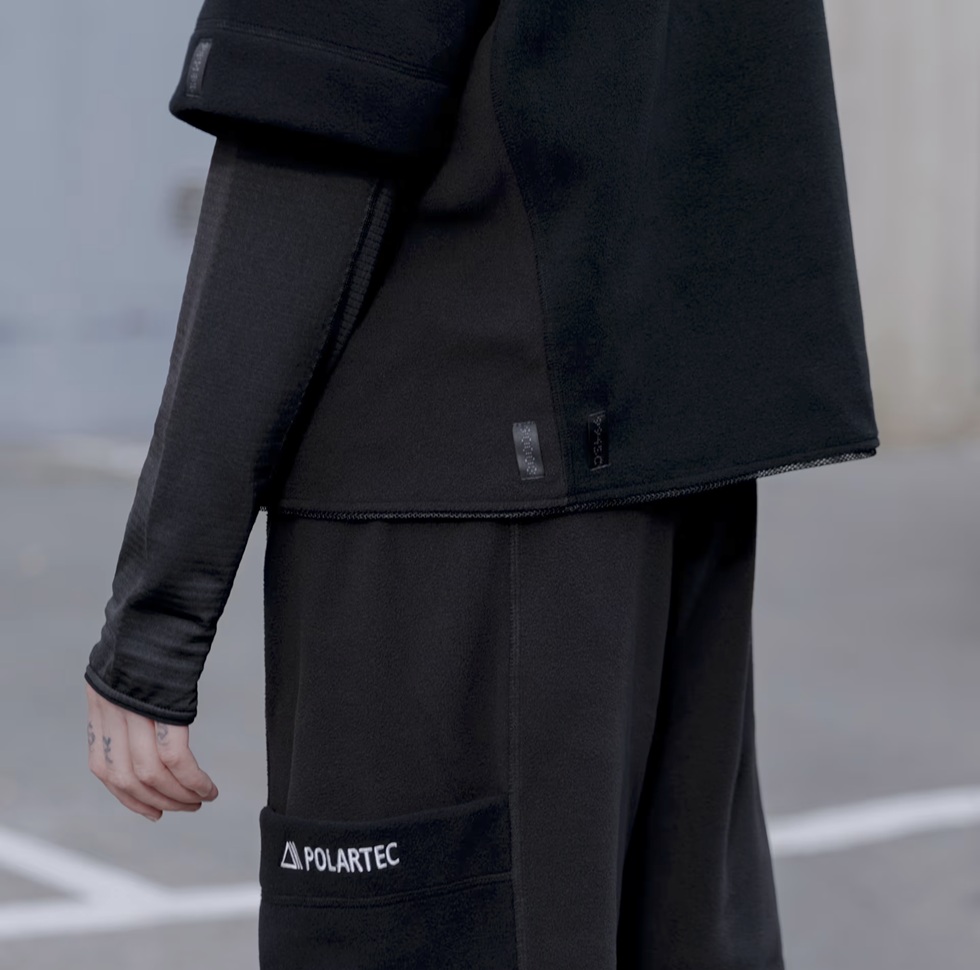
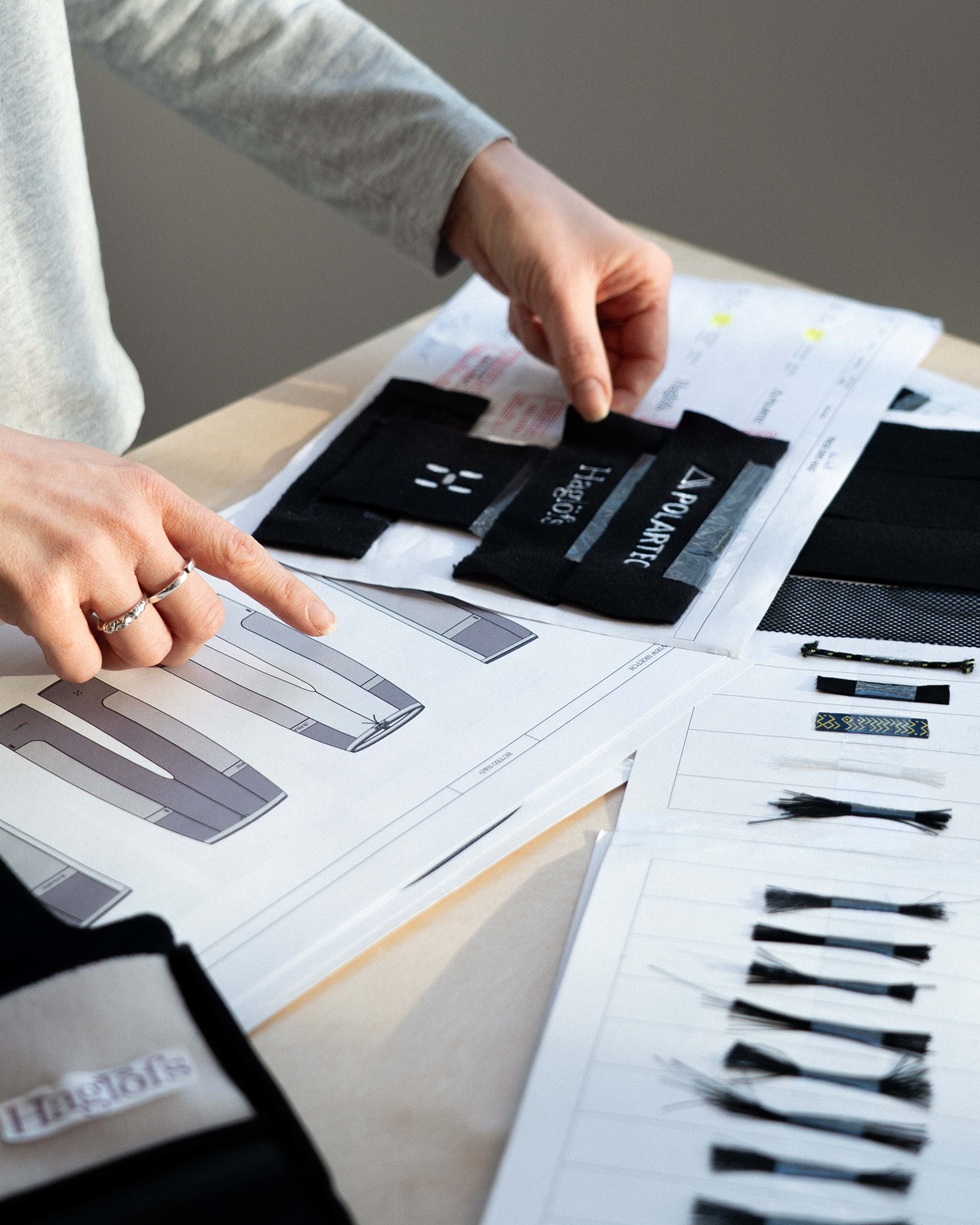
- The Black Capsule (2025/2026): To prove their point, Haglöfs launched the "Black Capsule" collection. They gathered leftover black fleece from various production runs and stitched them together into a single "Project Tee." On this garment, every panel featured a woven label detailing its specific batch number. The message was clear: these panels were all "black," yet they were all products of different, inefficient, and redundant dye processes.
- The Standardization Agreement (Late 2026): Recognizing that individual action was insufficient, the two companies agreed on a single, high-performance shade of black. They opened this formula to the entire industry, removing proprietary barriers.
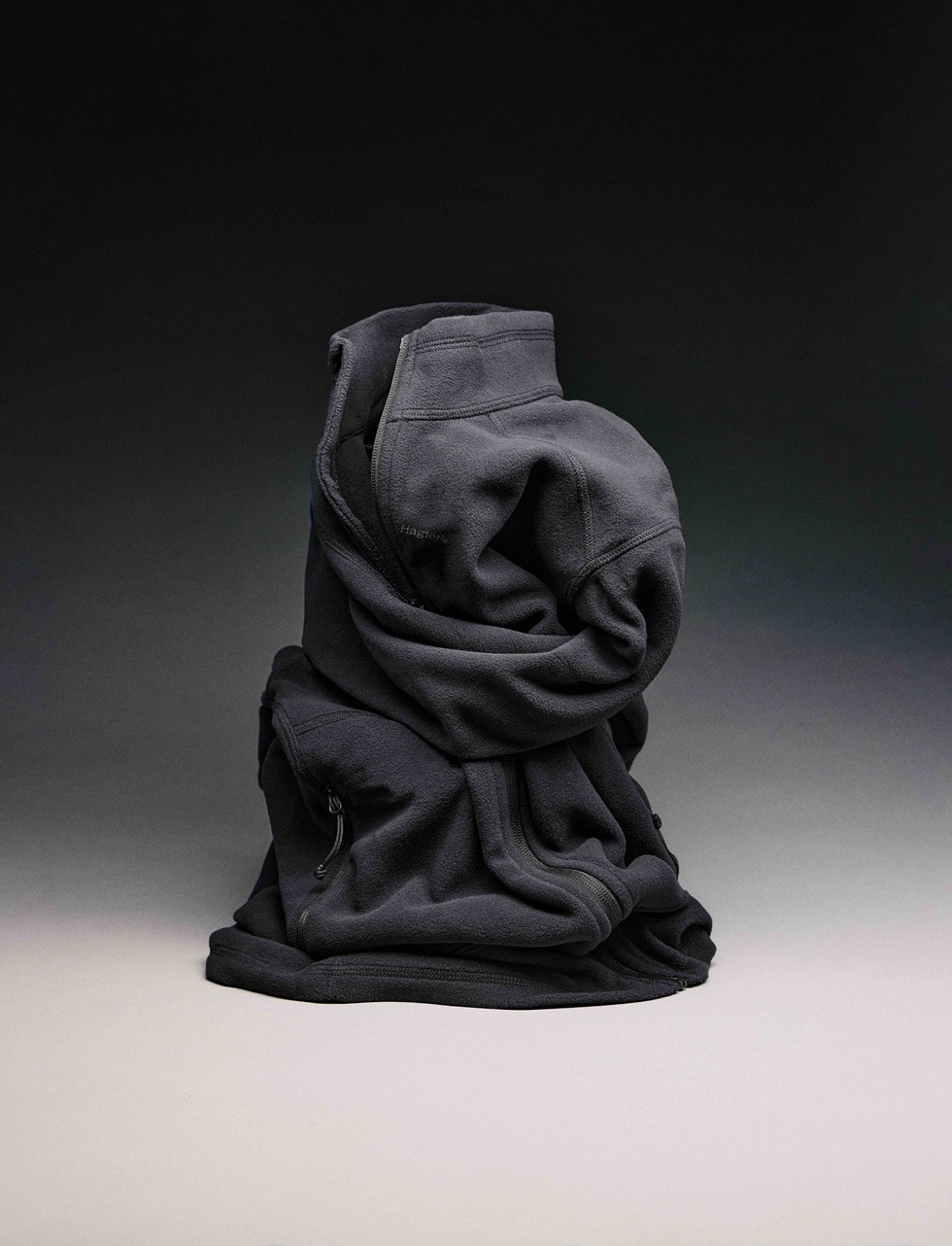
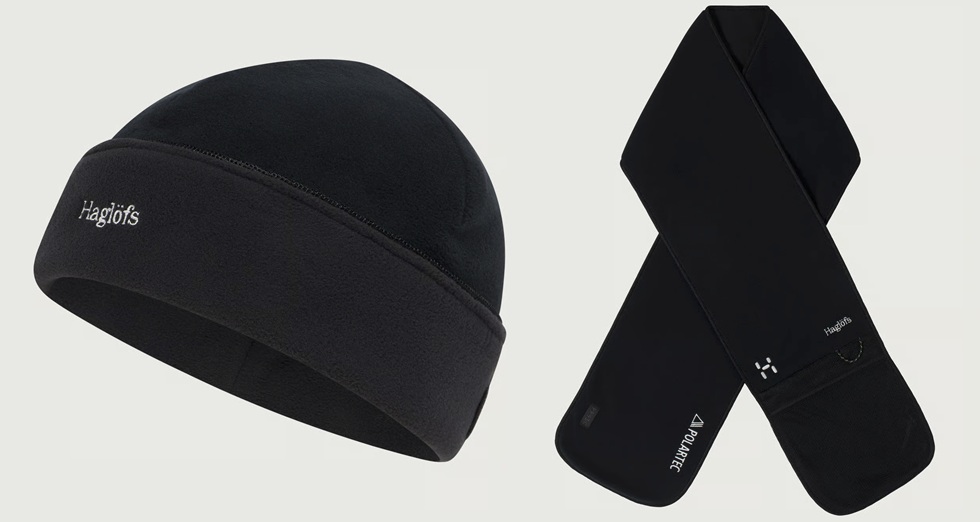
- The Buteo Implementation (FW26): Haglöfs debuted the Buteo Mid II Jacket, their first high-volume commercial product built using the standardized black. This was a critical shift; by moving from a niche concept to a best-seller, they signaled that the standard was ready for mass-market adoption.
Supporting Data: The Arithmetic of Efficiency
The environmental argument for Standard Issue Black™ is built on the concept of economies of scale. When dozens of small, independent dye batches—each requiring its own recipe development, lab testing, and chemical prep—are consolidated into a single, massive production run, the gains are not just incremental; they are compounding.
The Efficiency Gains
According to Haglöfs’ internal production assessments, the shift to a standardized black yields:
- Over 50% reduction in water consumption: By eliminating the need to wash out and re-prepare dye vats for slightly different shades of black, the water footprint is slashed.
- At least 20% reduction in energy consumption: Fewer start-up cycles and more efficient, sustained high-volume runs significantly lower the carbon intensity of the dyeing process.
While these figures are company-supplied, the underlying chemistry of industrial dyeing supports the logic. In a traditional model, a brand might order 500kg of fabric, requiring a full dye-house setup. If 50 brands do this separately, the total energy "overhead" for those setups is wasted 50 times over. By pooling that demand, the industry effectively removes the "setup penalty" from the environmental ledger.
Official Responses: Breaking the "Creative" Myth
The most frequent objection to standardizing color is the "Creativity Question." Designers often argue that if every brand uses the same black, the industry will lose its ability to differentiate.
However, industry leaders are pushing back on this notion, arguing that black has never been a primary source of creative distinction in outdoor gear.
"Standardization doesn’t have to limit creativity," says Eva Weiss, Head of Design and R&D at Haglöfs. "With the right framework, it gives us the freedom to work together in the same creative direction and make a bigger impact. Having one defined black simplifies the design process, and brands could still differentiate themselves through other colors, cuts, and design elements."
The YKK Parallel
To put the issue in perspective, proponents point to the standardization of hardware. Decades ago, the outdoor industry effectively standardized on YKK zipper systems. The presence of a YKK zip is now seen as a sign of quality, not a lack of creative vision. No one argues that YKK has stifled the design of jackets; rather, it has allowed designers to focus their energy on ergonomics, fit, and technical performance—areas where the consumer actually experiences value.
Standard Issue Black™ aims to position color in the same light: as a functional, high-quality base that allows designers to stop worrying about the chemistry of the fabric and start focusing on the construction of the gear.
The Implications: Why Inertia is the Final Frontier
If the economics are neutral to positive, and the environmental case is irrefutable, why hasn’t this happened sooner? The answer lies in "institutional inertia"—the same force that keeps the fashion industry anchored to outdated, carbon-heavy supply chains.
The outdoor industry is no stranger to sustainability initiatives, but many have historically failed because they relied on a "green premium"—a higher cost passed on to the consumer. Standard Issue Black™ sidesteps this trap entirely. It is not a premium product; it is a more efficient way of manufacturing the same product.
The Future of the Standard
The success of this initiative will ultimately depend on whether other brands are willing to sacrifice a small degree of supply-chain autonomy for a larger, collective good. The industry currently operates under a "silo" mentality, where brands guard their supply chains as proprietary competitive advantages.
The Buteo Mid II jacket is currently serving as a litmus test. If it succeeds commercially, it will demonstrate that consumers are either indifferent to the shade of black or supportive of the standard.
Ultimately, Standard Issue Black™ is not asking the industry to "stop the machine" of global production. It is asking the industry to do less—less redundant chemistry, less wasted water, and less artificial differentiation. By simply harmonizing the most basic element of their inventory, brands like Haglöfs and suppliers like Polartec are proving that the most radical sustainability breakthroughs aren’t always about inventing new technology. Sometimes, they are simply about noticing the absurd inefficiencies we’ve become too accustomed to seeing.
As the FW26 season unfolds, the question remains: is the rest of the outdoor industry ready to look at the color of their own shelves and admit that "black" is a spectrum we no longer need to exhaust ourselves to create?
 rifanmuazin
  Suro Senen
  Evan Lee Salim