


By The Savvy Backpacker Editorial Desk
For decades, the ritual of touching down at a European airport involved an immediate hunt for a local storefront selling physical SIM cards, or bracing for exorbitant international roaming charges from domestic carriers. Today, that friction is rapidly disappearing. Thanks to the widespread adoption of embedded electronic SIM (eSIM) technology, travelers can connect to European mobile carriers before they even board their flights.

However, transitioning from a plastic chip to a digital profile introduces a new set of choices, technical quirks, and regional caveats. This comprehensive guide breaks down everything modern travelers need to know to secure high-speed mobile data across Europe efficiently and economically.
The Evolution of Travel Connectivity: Main Facts and Core Concepts
At its core, an eSIM is a fully digital version of the traditional physical SIM card. Rather than opening a phone’s casing with a delicate metal tool and inserting a tiny piece of plastic, users install a digital profile via a QR code or an application. This allows travelers to connect to a foreign cellular network instantly upon arrival.

The shift toward eSIMs aligns with hardware trends, particularly in North America. Apple’s iPhone 14, iPhone 15, and subsequent generations sold in the United States have completely eliminated the physical SIM card slot, relying entirely on dual eSIM capabilities. While physical SIM slots remain common on devices sold elsewhere globally, the telecommunications industry is marching toward an all-digital future.
For travelers, the primary advantage is convenience. Users can pre-purchase data plans from third-party providers, receive instant digital delivery via email, and maintain their home carrier’s physical SIM or primary eSIM active simultaneously. This dual-SIM functionality ensures that critical security messages—such as two-factor authentication (2FA) codes from banks or flight delay alerts—continue to arrive on the user’s primary number without interruption.

Chronology of the Transition: From Roaming Fees to Digital Profiles
- The Pre-2017 Era: Travelers crossing European borders faced aggressive roaming fees every time they entered a new country, turning simple smartphone usage into a financial gamble.
- The EU Roaming Regulation (June 2017): The European Union officially outlawed mobile data roaming fees within member states. This legislative milestone meant that any data plan purchased within an EU country could be used seamlessly across all other member nations without extra penalties.
- The Rise of Third-Party eSIMs (2019–2022): As smartphone manufacturers quietly integrated eSIM hardware into flagship devices, independent digital-first providers like Holafly and retail platforms like SimOptions emerged, bypassing traditional retail brick-and-mortar storefronts entirely.
- The eSIM-Only iPhone Shift (2022–Present): Apple’s removal of the physical SIM tray in U.S. iPhone models forced a rapid acceleration in consumer awareness and software adaptation, culminating in operating system updates—such as Apple’s iOS 17.4—that streamlined automated eSIM installation and activation.
Supporting Data: Comparing International Roaming vs. Prepaid eSIMs
Reliable mobile data is no longer a luxury for European travelers; it is an operational necessity. Modern European infrastructure relies heavily on digital integration. Paper train tickets have been replaced by QR codes; navigation relies on real-time traffic data; restaurant menus require smartphone scans; and ridesharing services, public transit schedules, and digital payments are tied directly to an active internet connection.
While domestic carriers in the United States, Canada, and Australia offer international add-on packages, the cost disparity compared to prepaid regional eSIMs is stark.
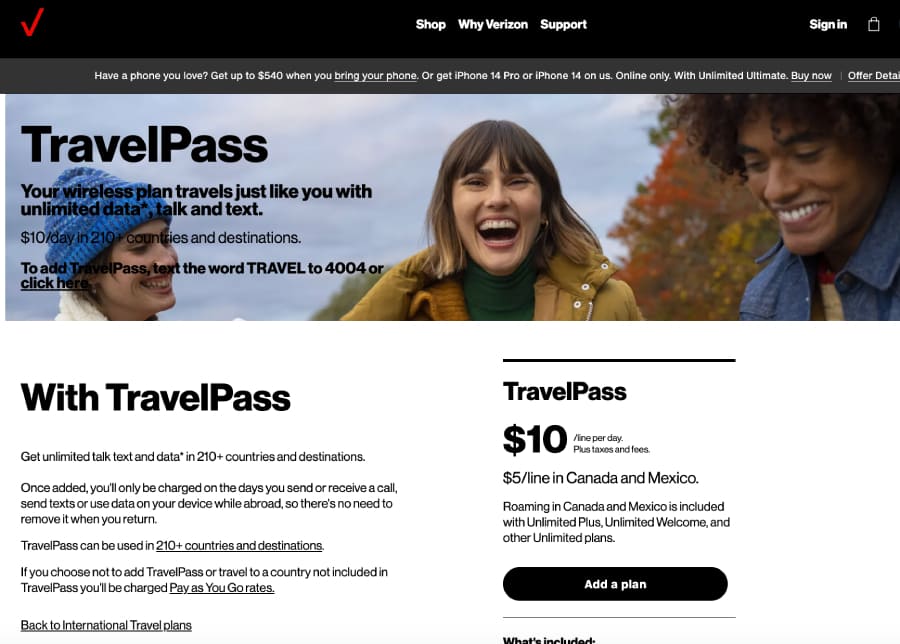
Major Carrier International Plans
- AT&T International Day Pass: Charges $10 per calendar day of use. Alternatively, their monthly Passport plan costs $70 for 2GB or $140 for 6GB, followed by severe overage fees of $30 per gigabyte.
- Verizon International Day Pass: Mirrors the $10/day structure but automatically throttles users to glacial 3G speeds after exhausting 2GB of high-speed data in a single day.
- T-Mobile: Often includes international data on higher-tier plans, but speeds are frequently throttled down to 2G after reaching a total cap (typically 5GB), rendering services like Google Maps or email frustratingly slow unless an expensive high-speed add-on is purchased.
The Prepaid eSIM Alternative
By contrast, third-party prepaid eSIM providers offer robust packages that cost roughly $2 to $5 per day, delivering up to five times the value of traditional carrier day-passes without hidden overage charges.
Official Options and Top eSIM Providers for Europe
Because EU regulations allow cross-border data usage without roaming penalties, a plan purchased from a French provider can be used freely in Italy, Germany, Spain, and beyond. However, coverage quality, data caps, and validation periods vary significantly among providers.

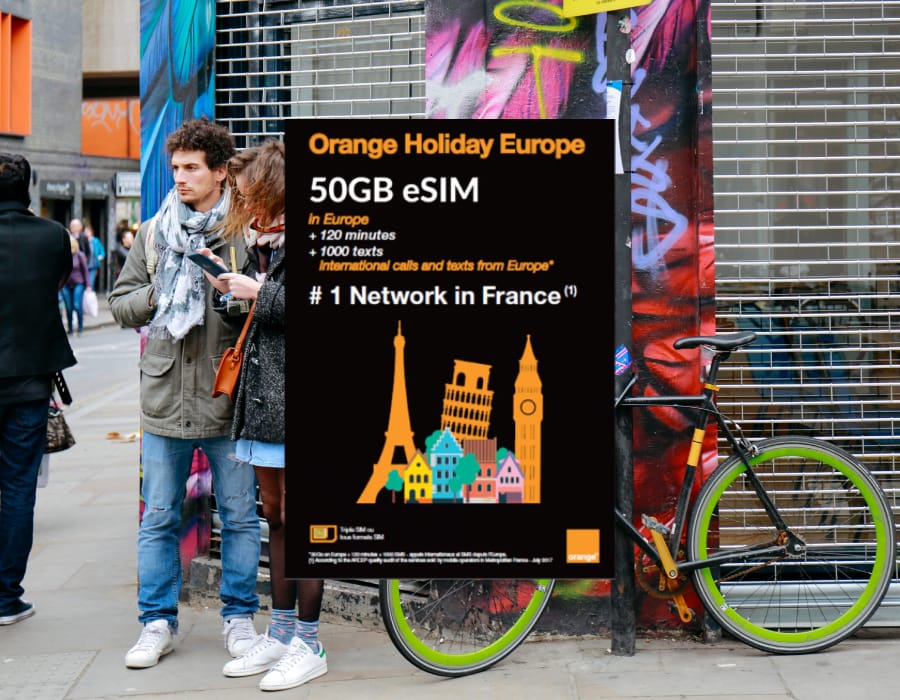
1. Orange Holiday Europe eSIM (30GB & 50GB Plans)
Operated by Orange, one of Europe’s largest telecommunications networks, these plans offer top-tier network speeds and comprehensive coverage.
- Features: Includes a French phone number, unlimited voice calls, and text messaging within Europe, plus mobile hotspot capabilities.
- Drawbacks: The standard 30GB and newer 50GB packages are typically valid for 14 to 28 days upon activation, making them ideal for standard vacations but less suited for extended multi-month journeys.
2. Holafly Unlimited Data eSIM
For heavy data users who do not want to monitor gigabyte consumption, Holafly provides flexible duration plans ranging from 1 to 90 days with unlimited data.
- Features: Highly customizable trip lengths and consistent high-speed connections across multiple European destinations.
- Drawbacks: Most Holafly unlimited plans restrict or limit mobile hotspot (tethering) usage, meaning the data is intended strictly for the primary device on which it is installed.
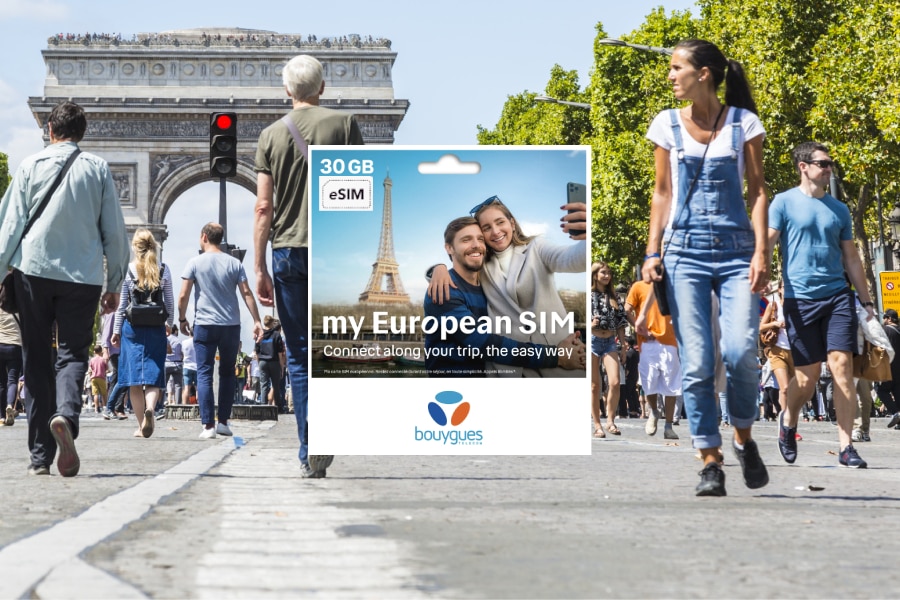
3. Bouygues My European eSIM
Another heavyweight from the French telecommunications market, Bouygues offers a competitive alternative tailored for longer itineraries.
- Features: Standard 30GB data allowance paired with a 30-day validity window and unlimited European calls.
4. SimOptions (Smart Comfort X & Regional Aggregators)
SimOptions acts as an official marketplace for various international providers. Budget-conscious travelers often opt for lightweight data-only options like the Smart Comfort X plan (offering smaller data pools around 5GB), which connects to local partner networks like O2 in Germany or WIND in Italy.

Regional Implications and Technical Caveats
While the European digital landscape is largely unified, travelers must navigate a few crucial exceptions before deploying an eSIM strategy.
The Non-EU Outliers: Switzerland and the United Kingdom
Because Switzerland is not a member of the European Union, European roaming regulations do not automatically apply. While major network-backed plans like those from Orange include Swiss coverage, budget or "international" eSIM aggregators frequently exclude Switzerland or charge separate fees. Similar regulatory evaluations surrounding post-Brexit telecommunications agreements mean travelers should always carefully review the specific country list included in the fine print of any chosen eSIM plan.
Device Compatibility
Travelers must verify two hardware prerequisites before purchasing:
- Carrier Unlock Status: The smartphone must be officially unlocked by the domestic home carrier. Phones locked to a specific carrier via software will reject foreign eSIM profiles.
- Device Support: Essentially all iPhones manufactured since 2019 and the vast majority of Android devices released since 2020 possess native eSIM compatibility.
Step-by-Step Implementation: How to Activate Your European eSIM
- Purchase in Advance: Buy the eSIM online prior to departure while connected to a stable home Wi-Fi network. The provider will immediately email a confirmation containing a setup link and a QR code.
- Install the App or Profile: Scan the QR code using the target smartphone or follow the instructions to install the carrier’s companion application.
- Withhold Full Activation: Crucial Step: Do not complete the final activation steps until arriving at your European destination. Most prepaid data plans initiate their 14- to 30-day validity countdown the exact moment the service activates on a network.
- Connect Upon Arrival: Turn on the eSIM line once touching down abroad, ensuring data roaming is enabled specifically for the travel eSIM while keeping the primary home line configured to prevent unintended roaming charges.
By understanding the technical landscape, bypassing costly domestic carrier fees, and selecting a reputable regional provider, modern travelers can ensure seamless, high-speed connectivity throughout their European journey.
 Suro Senen
  Ammar Sabilarrohman
  Pevita Pearce