

This article originally appeared on Matador Network’s behind-the-scenes Substack newsletter, where our editorial team shares the inside secrets of professional travel.
For the occasional traveler—those who hop on a plane once or twice a year for a summer vacation or a holiday visit—loyalty programs are largely irrelevant. In these instances, the "best" strategy is simple: buy the cheapest fare, collect whatever stray miles land in your account, and move on. However, for those who spend a significant portion of their lives at 30,000 feet, the landscape shifts dramatically.
If you are flying at least once a month, your loyalty—or lack thereof—is the single greatest factor in determining whether your travel budget yields actual value or mere frustration. As a travel editor, I have spent years testing the limits of credit card sign-up bonuses, point-transfer schemes, and airline status tiers. While the internet is rife with "travel hackers" suggesting you spread your spending across a dozen different programs to chase the highest introductory offer, the reality for the frequent, but not constant, traveler is much simpler: monogamy pays.
Main Facts: The Power of Consolidation
The golden rule of modern travel rewards is that fragmentation is the enemy of value. Unless you are a "road warrior" flying ten or more segments every single month, there is no strategic advantage to juggling points across multiple airlines or hotel brands.
When you dilute your travel spend, you dilute your potential for rewards. By consolidating your loyalty within one major airline network—in my case, United Airlines and the Star Alliance—you reach the "value threshold" much faster. This is the point at which your accumulated miles translate into tangible benefits: free international flights, hotel stays, and, on rare occasions, that elusive upgrade to the front of the plane.
The strategy is built on three pillars:
- Selection: Choosing a hub-based airline that covers your most common routes.
- Integration: Using a co-branded credit card for all recurring monthly expenses to boost base-point earnings.
- Consistency: Resisting the urge to book a cheaper, non-aligned flight, even when the temptation is strong.
Chronology of a Strategy: From Novice to Optimized Traveler
My own journey into loyalty optimization began out of necessity. Living in Palisade, Colorado, I rely on the Grand Junction Regional Airport (GJT). Because Denver (DEN) serves as a major hub for United Airlines, it became the logical anchor for my travel life.

Years ago, I joined the MileagePlus program simply because it was the most practical choice for my geography. Over time, I realized that my general flight path—GJT to DEN to my final destination—was a secret weapon. Because United’s tier status is partially calculated on the number of "flight segments," that extra leg to and from Denver on every trip acted as a force multiplier, pushing me toward higher status levels significantly faster than a direct-flight traveler might experience.
The most aggressive "hack" I ever executed was timed perfectly with a major life event: the birth of my daughter. I applied for a high-yield rewards card just weeks before her arrival. By routing all the out-of-pocket medical expenses associated with childbirth through that card, I hit the sign-up bonus threshold effortlessly. A few months later, those points allowed me to fly my newly grown family to Mexico for a five-day getaway—an experience paid for entirely by necessary, unavoidable expenses.
Supporting Data: By the Numbers
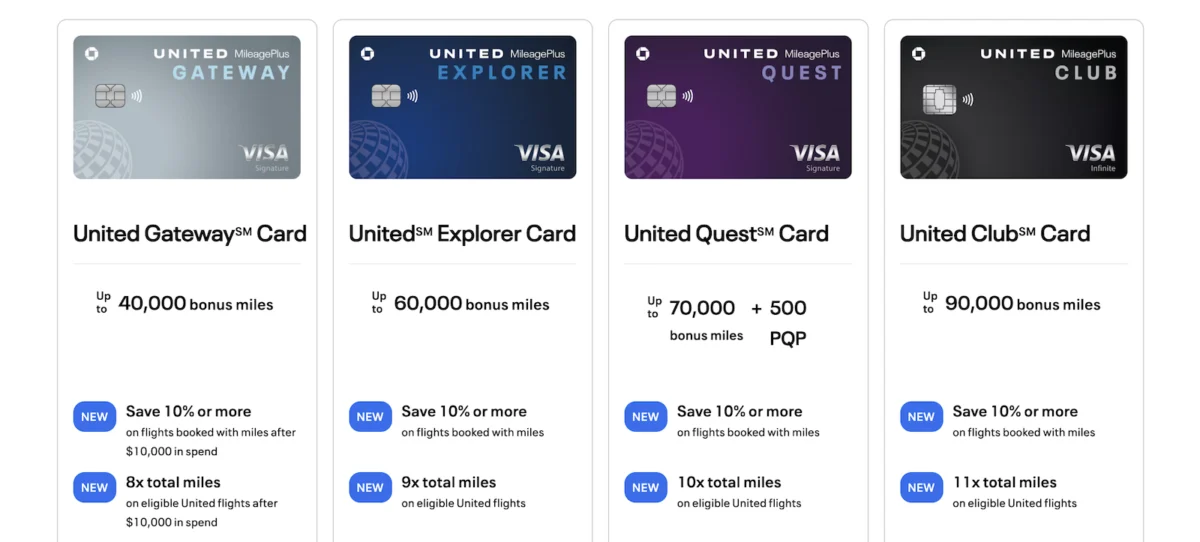
To understand why this strategy works, one must look at the math. I hold the United MileagePlus Explorer card and use it for almost every transaction over $20, including utilities, insurance, and recurring subscriptions.
- Monthly Earnings: I typically accumulate between 3,000 and 15,000 miles per month, depending on travel volume and category spending (restaurants and travel bookings offer higher multipliers).
- Annual Yield: On average, I accumulate approximately 150,000 United miles annually.
- Monetary Value: At a conservative valuation, this equates to roughly $1,500 to $2,000 in annual travel value. This isn’t just "points"—it is effectively a two-thousand-dollar raise on my annual travel budget, which I deploy for upgrades, offset rideshares, or extra flights.
The key to this system is financial discipline. I treat my credit card like a debit card, paying off the statement balance in full every single month. If you fail to do this, the interest payments will quickly negate any value gained from the points. A 20% APR on an unpaid balance renders your "free" flight significantly more expensive than just buying a ticket in the first place.
Official Responses and Industry Perspectives
Airline loyalty programs have faced increased scrutiny in recent years as they move toward dynamic pricing models. In the past, earning a free flight was a straightforward calculation based on distance. Today, airlines like United, Delta, and American use complex algorithms to determine the cost of a "saver" award ticket.
Industry experts note that while programs have become more complex, the "status" benefits have actually become more valuable for the average user. Benefits like priority boarding, free checked bags, and lounge access provide a "quality of life" improvement that is often overlooked in favor of just chasing "free miles."
As a professional traveler, I have found that while I rarely get upgraded to first class (it took a decade of loyalty to receive my first one), the "soft" benefits—never paying for a checked bag, skipping the long lines at the gate, and having a sanctuary in the lounge during a layover—have a cumulative value that exceeds the price of a single, shiny flight upgrade.

Implications for the Modern Traveler
The most significant implication of this strategy is the shift from "chasing deals" to "investing in the ecosystem." By staying within the Star Alliance, I have access to a global network of partners. This was most evident on a recent trip from San Francisco to Istanbul.
I had been stacking my United points for a specific purpose: to upgrade the long-haul leg of the journey on Turkish Airlines. Because I hadn’t been splitting my loyalty across three different airlines to chase the "flashiest" bonus of the month, I had enough points to secure that business class seat. Had I spread those points around, I would have had a negligible balance in three different accounts—enough for nothing.
When to Break the Rules
A strategy is only useful if it remains flexible. There are specific situations where I intentionally break my own rules:
- Geographic Absurdity: If a positioning flight requires an extra six hours of travel just to stay within the United network, I will book the direct flight on a competitor. Time is a non-renewable currency.
- Financial Gaps: If the only reasonable route to an international destination is via a non-aligned carrier, I book it.
- The "Non-Star" Exception: If a low-cost carrier is offering a fare that is 70% cheaper than the legacy carrier, the cost-benefit analysis shifts. Loyalty is not a religion; it is a tool.
Conclusion: The Long Game
The allure of the "travel hack" is the promise of something for nothing. But the reality is that the most sustainable rewards come from intentional, long-term commitment. By aligning your spending and your travel patterns with a single, robust ecosystem, you stop being a passenger and start being a partner.
You may not be flying in first class every week, but you will be moving through the airport with a level of comfort and efficiency that the "cheapest fare" crowd will never experience. And when that long-haul, business-class upgrade finally comes through? That’s just the dividend on a decade of smart choices.
See you at the gate, in line for Boarding Group 2.
 Raul Delapena Setiawan
  Iffa Jayyana
  Reynand Wu