

Africa, the cradle of humanity, possesses a historical depth that stretches far beyond the conventional narratives found in most global history curricula. From the mysterious stone calendars of South Africa to the sprawling medieval metropolises of Zimbabwe and the coastal sultanates of Tanzania, the continent is a tapestry of civilizations that shaped the human experience. This report examines ten significant archaeological sites, providing a comprehensive overview of their historical context, current preservation status, and the logistical realities of visiting these monuments to human ingenuity.
1. The Nok Caves, Togo: A Sanctuary of Resistance
Main Facts: Situated within the rugged cliff faces of Northern Togo, the Nok Caves served as a vital refuge for the Moba people during the 18th and 19th centuries.
Chronology & Context: During this period, the Moba faced existential threats from the neighboring Tchokossi, who engaged in the systematic kidnapping of Moba individuals to trade with European slave merchants for firearms and horses. The name "Nok"—translating to "hidden" in the Moba language—is a testament to the site’s tactical utility.
Supporting Data: The caves currently house 134 ancient granary vessels and fragments of weaponry. Unfortunately, extensive looting in the post-colonial era has stripped the site of many of its original artifacts.
Implications: The site remains a powerful symbol of resistance against the trans-Atlantic slave trade. Travelers can access the site via Tandjouare, though it remains an off-the-beaten-path destination requiring local guidance and navigation through challenging terrain.
2. Volubilis, Morocco: The Roman-African Nexus
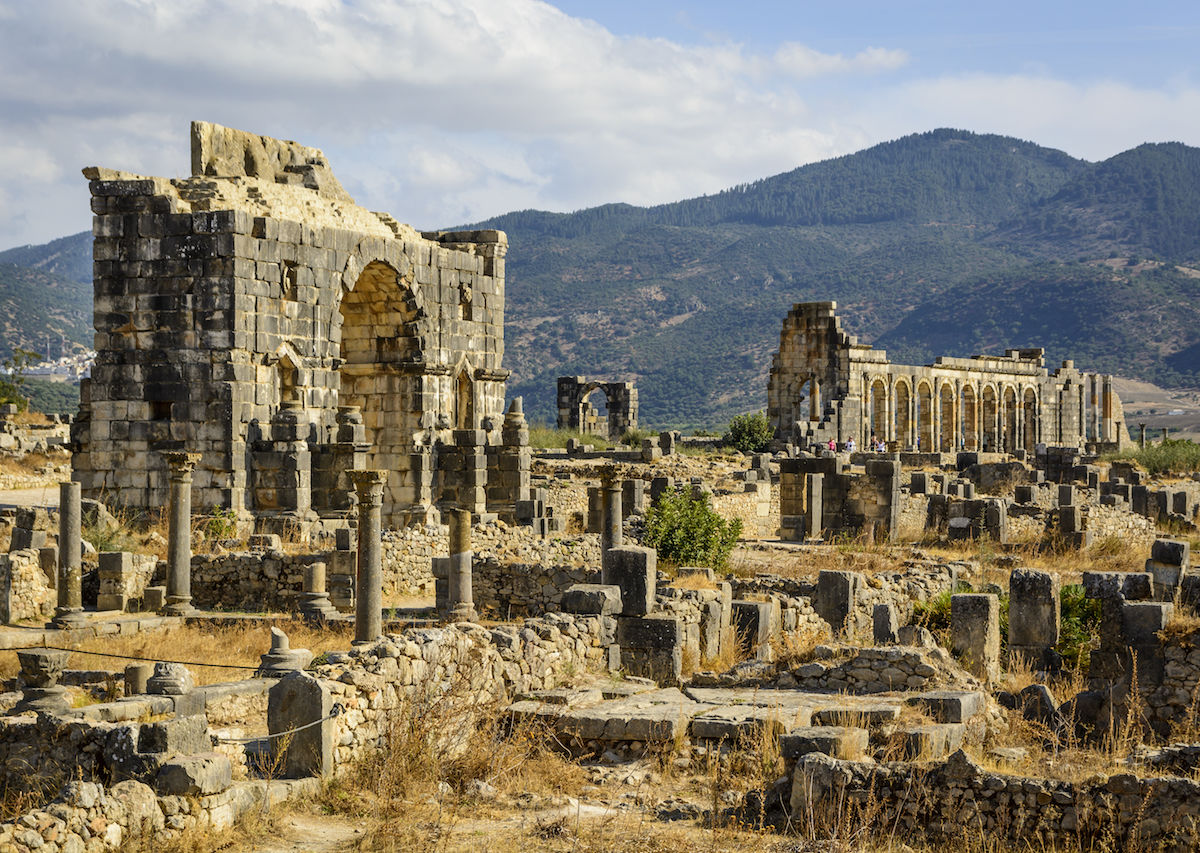
Main Facts: A UNESCO World Heritage site since 1997, Volubilis stands as a pristine example of urban evolution from High Antiquity through the Islamic era.
Chronology: Founded in the 3rd century BC, the city reached its peak under Roman rule before transitioning through various cultural influences, including African and Christian aesthetics.
Supporting Data: Only 50% of the site has been excavated. Notable structures include the elite mansions, which feature remarkably preserved floor mosaics—some of the finest in North Africa.
Official Stance: UNESCO recognizes the site as an "exceptionally well-preserved" example of a Roman colonial town. Visitors are encouraged to utilize private transport from Meknes or Fez, as public transit does not service the site directly.
3. The Great Zimbabwe & Khami Ruins: The Medieval Empires
Main Facts: Great Zimbabwe served as the capital of a powerful kingdom between the 11th and 15th centuries. It once housed 18,000 residents across 1,700 acres. Following its decline, the Khami ruins emerged as the new capital, flourishing between 1450 and 1650.
Chronology: Great Zimbabwe represents the pinnacle of Iron Age architecture, defined by its "dry-stone" technique—construction without mortar. Khami refined this style, introducing intricate chevron and checkered masonry.
Supporting Data: Great Zimbabwe is the largest collection of ruins in sub-Saharan Africa, featuring three primary sectors: the Hill Complex, the Valley Complex, and the Great Enclosure. Khami holds the distinction of having the longest decorated wall in the region.
Implications: These sites challenge historical biases that once falsely attributed these structures to non-African origins. Today, they stand as monuments to indigenous architectural mastery and centralized state governance.
4. Adam’s Calendar, South Africa: The Prehistoric Enigma
Main Facts: Often called the "African Stonehenge," this site consists of a series of monoliths arranged in a circular pattern, discovered by a pilot in 2003.
Chronology: Estimates suggest the stones are over 75,000 years old, potentially making them the oldest man-made structure on Earth.
Supporting Data: Known as Inzalo Y’langa ("Birthplace of the Sun") by local shamans, the site is recognized for its functional celestial alignment. It served as a center for sacred ceremonies well into the 20th century.
Official Responses: While mainstream archaeology continues to debate the exact human involvement versus natural formation, the site is protected and accessible via guided tours, providing a focal point for researchers of ancient astronomy.
5. Kilwa Kisiwani, Tanzania: The Swahili Sultanate
Main Facts: Located on an island off the Tanzanian coast, Kilwa Kisiwani was the epicenter of the Kilwa Sultanate, which dominated the Swahili coast from the 13th to the 15th centuries.
Chronology: The island rose to prominence as a trade hub connecting Africa with the Indian Ocean trade network.
Supporting Data: The site features the Great Mosque—the oldest standing mosque on the East African coast—and the palace of Husuni Kubwa, once the largest structure in sub-Saharan Africa.
Implications: Visiting requires government permits and local guides from Kilwa Masoko. The site provides a vital look into the cosmopolitan nature of medieval Africa, where African, Arab, and Indian cultures converged.
6. Luxor Temple, Egypt: The Open-Air Museum
Main Facts: Located on the east bank of the Nile, the Luxor Temple was constructed around 1400 BC for the worship of Amun Ra.
Chronology: The temple was a collaborative project spanning several Pharaohs, including Amenhotep III, Tutankhamun, and Rameses II. In the Roman era, it served as a military fortress.
Supporting Data: The site remains remarkably intact. Due to the extreme desert heat, the site is illuminated at night, allowing for a cooler, more immersive exploration experience.
7. The Ruins of Aksum, Ethiopia: A Lost Superpower
Main Facts: Aksum was once the most powerful state between the Roman Empire and Persia, positioned at the crossroads of three continents.
Chronology: The ruins, spanning the 1st to the 13th centuries AD, include monolithic obelisks and royal tombs.
Supporting Data: The Great Stele, which fell during construction, is one of the largest monolithic structures ever attempted by human hands, measuring 108 feet in length.
Implications: Aksumite culture was one of the first in the world to adopt Christianity as a state religion. The site serves as a vital record of African engagement with global geopolitics in antiquity.
8. Laas Geel, Somalia: The Dawn of Expression
Main Facts: Located near Hargeisa, these rock alcoves contain some of the oldest cave paintings in the Horn of Africa, dating back to 9,000–3,000 BC.
Chronology: While local inhabitants have known of the site for centuries, it only achieved international recognition in 2002.
Supporting Data: The paintings depict cattle in ceremonial attire, giraffes, and domesticated dogs, offering a rare glimpse into the Neolithic pastoralist societies of the region.
Official Responses: Due to the political climate, access is highly restricted. Visitors must obtain permits and secure private, armed military escorts, underscoring the precarious nature of heritage preservation in conflict-affected regions.
9. Gedi Ruins, Kenya: The Sacred Swahili Settlement
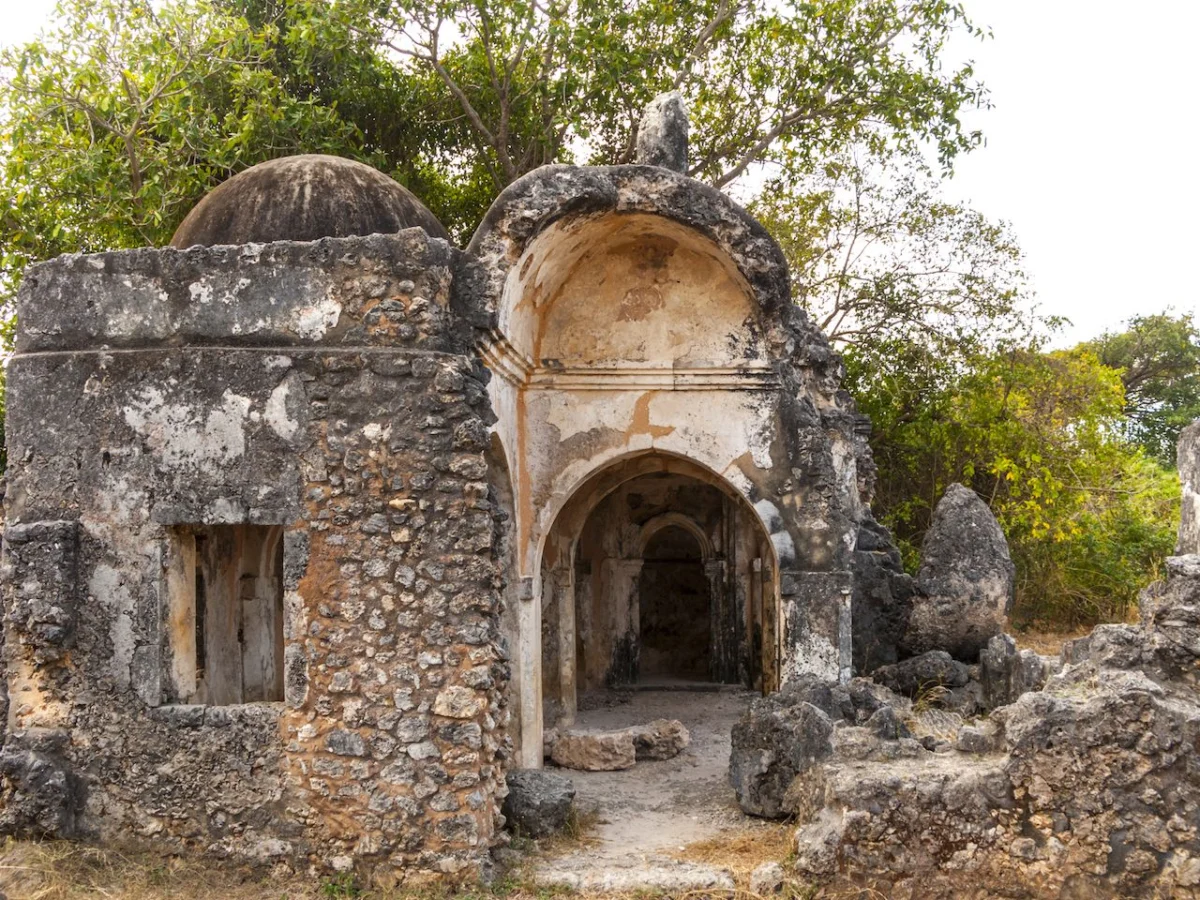
Main Facts: The Gedi Ruins are the remains of a medieval Swahili-Arab coastal town nestled within the Arabuko-Sokoke Forest.
Chronology: The city was abandoned in the 17th century for reasons that remain a subject of archaeological debate, ranging from water shortages to regional conflict.
Supporting Data: The site is enclosed by dual walls, protecting a palace, mosque, and coral-brick houses. Local Giriama communities consider the site sacred, believing it to be protected by ancestral spirits.
Implications: The site is a haven for biodiversity, hosting monkeys and rare bird species, making it an essential destination for both history enthusiasts and conservationists.
10. Leptis Magna, Libya: The Roman Jewel
Main Facts: Leptis Magna is widely regarded as one of the most spectacular Roman archaeological sites in the Mediterranean.
Chronology: Founded in the 7th century BC and integrated into the Roman Empire in 46 BC, it was the birthplace of Emperor Septimius Severus.
Supporting Data: The site includes a massive amphitheater, forum, and harbor, all preserved in remarkable detail.
Implications & Warnings: Despite its historical significance, the current geopolitical instability in Libya necessitates extreme caution. Travelers must consult their home country’s state department travel advisories, as the region remains high-risk due to civil unrest and security concerns.
Conclusion: The Responsibility of Preservation
The diversity of Africa’s archaeological sites—ranging from the subterranean retreats of Togo to the majestic stone towers of Zimbabwe—offers a profound counter-narrative to those who underestimate the complexity of Africa’s past. However, these sites face twin threats: the physical degradation caused by climate and time, and the human threats of looting and geopolitical instability.
For the modern traveler, visiting these sites is more than tourism; it is an exercise in cultural stewardship. By adhering to local regulations, hiring authorized guides, and respecting the sacred nature of these spaces, we ensure that these echoes of history remain audible for generations to come.
 Raul Delapena Setiawan
  Nila Kartika Wati
  Reynand Wu