

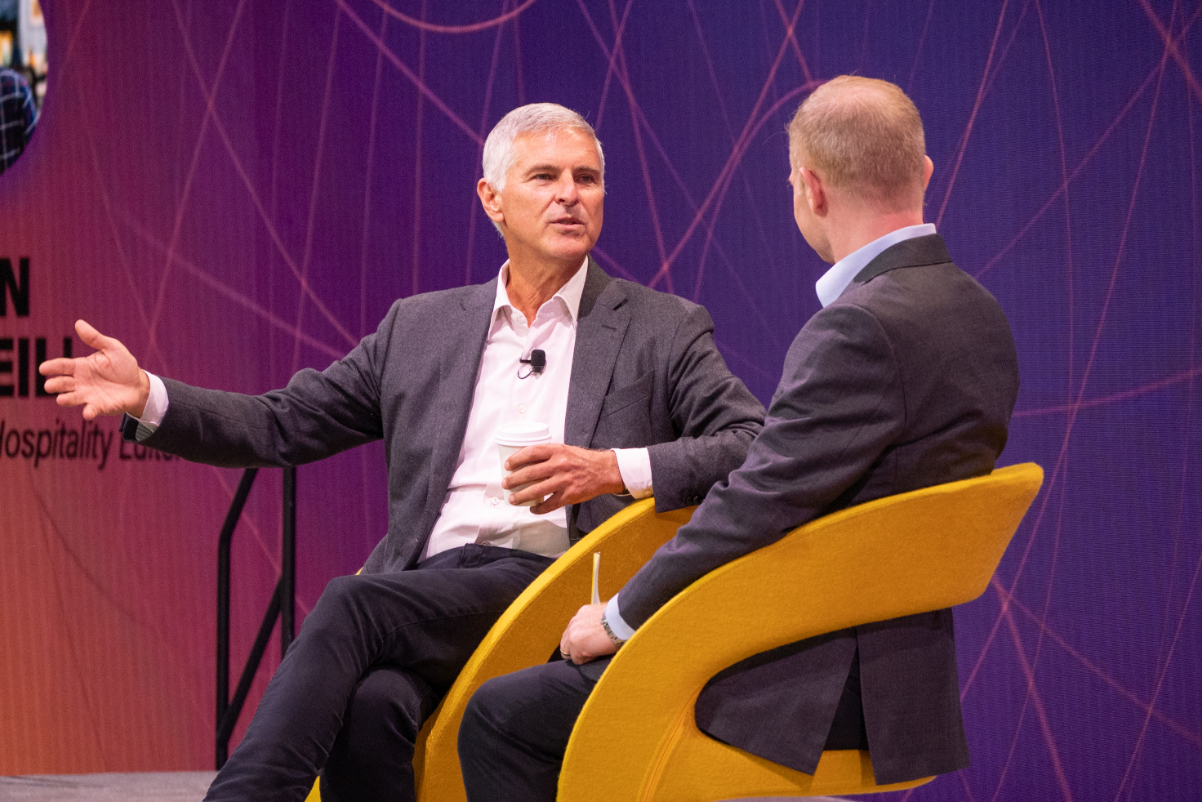
In the high-stakes world of global hospitality, the question of "how many brands is too many?" has become a central point of debate among investors, analysts, and industry incumbents. For Hilton Worldwide Holdings, the answer currently stands at 28—a sprawling, diverse ecosystem that ranges from the budget-conscious Spark by Hilton to the ultra-luxury allure of Waldorf Astoria.
During a recent appearance on The Angle podcast, Hilton CEO Chris Nassetta addressed the persistent critique that the company is suffering from "brand bloat." Rather than viewing the portfolio as a chaotic sprawl, Nassetta framed the company’s current structure as a surgically precise, data-driven response to the fragmented demands of modern travelers and hotel owners.
The Core Argument: Restraint Amidst Proliferation
Nassetta’s primary defense of Hilton’s current portfolio is one of relative modesty. In an industry where competitors have aggressively pursued mergers and acquisitions to capture market share, Hilton has opted for a more organic, albeit systematic, expansion.
"Our core competitors have like 38, 42, 45," Nassetta noted during the podcast, contrasting Hilton’s 28 brands against the larger portfolios maintained by industry giants such as Marriott International, Accor, and Hyatt.
For Nassetta, the strategy is not about chasing sheer volume; it is about filling "white space" in the market. Each brand addition is vetted through a rigorous analytical framework designed to identify gaps where customer loyalty programs are under-leveraged or where specific owner requirements remain unmet. By maintaining a smaller total count than its rivals, Hilton argues that it preserves brand clarity and operational efficiency—two factors that often erode when a hospitality conglomerate becomes too large.
Chronology: Building the Modern Hilton Portfolio
To understand Hilton’s current stance, one must look at the evolution of the company over the last decade. Following its spin-offs of Park Hotels & Resorts and Hilton Grand Vacations in 2017, Hilton transformed from a capital-intensive real estate owner into a capital-light franchise machine.
The Foundation (Pre-2015)
For much of its history, Hilton was defined by its namesake flag and a handful of legacy brands like Conrad and DoubleTree. The growth was steady but traditional. However, as the travel market began to segment—with travelers demanding more specialized experiences ranging from "lifestyle" boutiques to extended-stay options—the company realized that a one-size-fits-all approach was losing ground to local, independent, and specialized competitors.
The Expansion Phase (2015–2020)
During this period, Hilton began to accelerate its brand launches. The introduction of brands like Tru by Hilton was a direct response to the mid-scale market, designed to compete with brands like La Quinta and Choice Hotels. This period also saw the expansion into the lifestyle segment, a move aimed at younger, affluent travelers who viewed traditional, cookie-cutter hotels as outdated.
The Current Epoch (2021–Present)
Post-pandemic, the strategy shifted toward "micro-segmentation." The launch of Spark by Hilton—a premium economy brand—was designed to capture travelers who previously drifted toward independent motels or lower-tier competitors. This phase has been characterized by an obsessive focus on data, ensuring that every new flag added to the roster has a clear "reason for being" that doesn’t cannibalize the existing portfolio.
Supporting Data: The Economics of Niche Branding
The most compelling argument Nassetta presented during his defense was not based on brand sentiment, but on cold, hard financial performance. According to Hilton’s internal metrics, every one of its brands with at least 100 open properties currently outperforms the local competitive set in terms of Revenue Per Available Room (RevPAR).
RevPAR as the North Star
RevPAR is the industry’s primary metric for success, measuring both occupancy and average daily rate. Hilton’s ability to outperform competitors suggests that its strategy of segmentation is working. By tailoring a specific brand—such as Home2 Suites or Canopy—to a specific demographic, the company creates a product that is more attractive to both guests and property developers.
The "Cannibalization" Myth
Critics often argue that launching 28 brands leads to cannibalization, where Hilton hotels end up competing against one another for the same guest. Nassetta countered this by suggesting that Hilton’s data models are designed to prevent such overlap. "They don’t steal business from other hotels in the [Hilton] system," he argued. Instead, the brands are designed to capture segments that were previously unreachable by the company’s existing flags, thereby expanding the total addressable market rather than shrinking the share of existing assets.
The Role of Artificial Intelligence: Fixing the Guest Experience
While brand architecture occupies much of the executive strategy, Nassetta emphasized that the "next lever" for growth is not just adding more flags, but leveraging artificial intelligence (AI) to improve the "in-the-moment" guest experience.
Proactive Problem Solving
For years, the hospitality industry has relied on reactive service—a guest complains, and a staff member fixes the issue. Nassetta envisions an AI-integrated future where the hotel anticipates problems before they happen. For example, if a property management system detects a recurring issue with a specific room’s HVAC system or if a guest has a preference for a specific room location, AI can automate the resolution or proactively upgrade the guest before they even check in.
Operational Efficiency for Owners
AI is also poised to transform the back-of-house operations. By utilizing predictive analytics, Hilton aims to help owners manage labor costs, energy consumption, and supply chain logistics more effectively. In a high-inflation environment, the ability to shave even a percentage point off operating costs is a major selling point for Hilton when courting new property owners.
Implications for the Hospitality Industry
The implications of Hilton’s strategy extend far beyond its own bottom line. The success of its 28-brand model serves as a blueprint for the entire travel sector.
1. The Death of the "Generalist" Hotel
Hilton’s strategy suggests that the era of the generic hotel is coming to an end. Travelers now demand hyper-specialization—a hotel that fits their specific psychological and financial needs. This trend is forcing smaller, independent hotel groups to either consolidate or face obsolescence.
2. The Power of the Loyalty Ecosystem
The true engine behind 28 brands is the Hilton Honors loyalty program. Each brand acts as a funnel, bringing new members into the ecosystem. Once a guest is in the Hilton "tent," the company can leverage data to move them up the value chain—from a budget-conscious stay at Spark to a luxury experience at Waldorf Astoria.
3. Investor Pressure and the Franchise Model
Because Hilton operates primarily as a franchisor, its relationship with property owners is paramount. By offering a diverse "menu" of brands, Hilton provides developers with more options to fit specific real estate footprints. This diversity makes the Hilton brand family highly attractive to institutional investors who want to diversify their own hospitality holdings.
Conclusion: A Measured Future
As Hilton continues to refine its portfolio, the critique of "brand sprawl" is likely to persist. However, the data provided by Nassetta paints a picture of a company that is not expanding for the sake of ego, but for the sake of market capture.
The integration of AI and the continued focus on RevPAR outperformance suggest that Hilton is pivoting away from the "growth at all costs" mentality of the past. Instead, it is moving toward a more sophisticated model where every brand serves as a specialized tool in a larger, data-driven machine. Whether the number of brands hits 30, 35, or stabilizes where it is, the goal remains the same: ensuring that regardless of why a guest is traveling or what their budget might be, there is a Hilton-branded door for them to walk through.
In the eyes of leadership, this is not sprawl—it is the modern architecture of global hospitality.
 Reynand Wu
  Lina Hope
  Basiran