

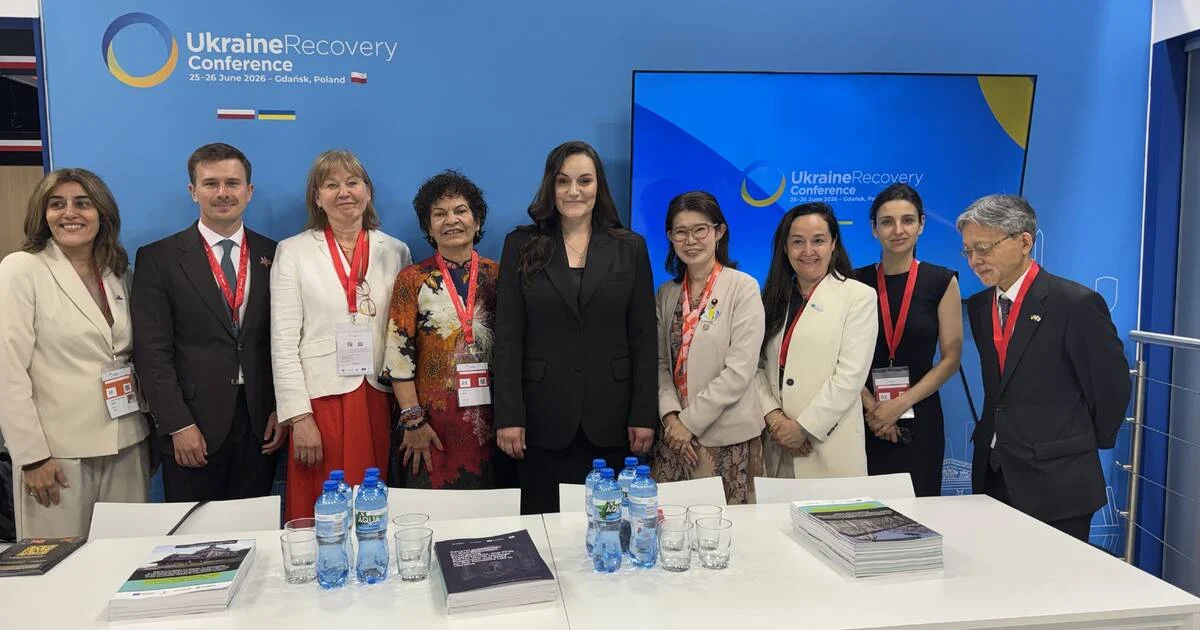
GDAŃSK, Poland – In a move described as a cornerstone for the future of cultural resilience, UNESCO formally unveiled a comprehensive, multi-layered suite of strategic tools designed to protect and manage Ukraine’s World Heritage sites on June 25, 2026. Presented during the high-profile Ukraine Recovery Conference (URC) in Gdańsk, the initiative represents a major shift from reactive emergency measures to a proactive, structured framework for long-term cultural survival in active conflict zones.
This handover marks the culmination of a rigorous three-year collaboration between UNESCO, the Ukrainian Ministry of Culture, and key international advisory bodies. It serves as both a lifeline for Ukraine and a global blueprint for the protection of heritage under the shadow of modern warfare.
The Strategic Framework: Bridging Emergency and Reconstruction
The suite of tools provided to Ukrainian authorities is not merely theoretical; it is an operational, field-oriented toolkit designed to be deployed immediately. The framework addresses the full lifecycle of heritage management—from the immediate mitigation of blast damage and fire hazards to the complex, long-term governance required for reconstruction.
A Tripartite Collaboration
The development of these tools was driven by a coalition of expertise. UNESCO worked in tandem with:
- ICOMOS (International Council on Monuments and Sites): Providing technical expertise on architectural preservation and structural integrity in damaged environments.
- ICCROM (International Centre for the Study of the Preservation and Restoration of Cultural Property): Focusing on scientific restoration methodologies and risk management training.
- The Ukrainian Network: More than 150 local heritage professionals, whose boots-on-the-ground experience informed the practical utility of every guideline.
Financial backing for this ambitious project was provided by the Government of Japan, a consistent champion of cultural safeguarding in crisis-prone regions.

Chronology: From Crisis Response to Strategic Implementation
To understand the weight of this announcement, one must look back at the trajectory of UNESCO’s involvement in Ukraine since the escalation of the conflict.
- Early 2023: Recognizing that standard conservation protocols were insufficient for wartime, UNESCO initiated a series of technical consultations with Ukrainian heritage managers. The objective was to adapt the Culture in Emergencies (CURE) Framework to the specific hazards of the conflict.
- Mid-2024: Pilot programs were tested at several high-risk sites. These pilot initiatives focused on “First Aid” for cultural property—securing stained glass, reinforcing roofs, and digitizing archives that were at immediate risk of destruction.
- Late 2025: The draft guidelines were refined through intensive workshops involving local site managers and international legal experts, ensuring they complied with the 1972 World Heritage Convention while remaining flexible enough to handle the volatility of the frontline.
- June 25, 2026: Formal handover at the Ukraine Recovery Conference in Gdańsk, transitioning the tools from a “developmental project” to “national policy.”
Tactical Implementation: Protecting Icons of Humanity
The guidelines are tailored to the unique vulnerabilities of Ukraine’s most prized heritage. Two specific areas of focus illustrate the depth of the intervention:
1. Emergency Preparedness for Sacred Sites
For sites like the Saint-Sophia Cathedral and Related Monastic Buildings in Kyiv and the Wooden Tserkvas of the Carpathian Region, the framework provides specific protocols for:
- Blast Mitigation: Engineering recommendations for installing protective shielding without damaging historical fabric.
- Fire Suppression: Advanced risk analysis models that account for the disruption of municipal water supplies and power grids during missile strikes.
- Coordination: Establishing clear communication lines between site guards, emergency services, and local governments to ensure that if a strike occurs, the response is synchronized rather than chaotic.
2. The Odesa Recovery Roadmap
The Historic Centre of Odesa, which has suffered significant damage due to its proximity to the Black Sea conflict, has been granted a dedicated, specialized management plan. This plan integrates:
- Governance Reform: Streamlining decision-making between municipal authorities and heritage agencies to expedite repairs.
- The "Desired State of Conservation": A critical roadmap that defines the specific markers, indicators, and timelines required to move Odesa off the "List of World Heritage in Danger." This is not just a conservation document; it is a political instrument designed to signal to the international community that the city is on a path to recovery.
Official Perspectives: The Value of International Solidarity
The handover was marked by a series of statements emphasizing that this initiative is not merely about physical stone and mortar, but about the continuity of the Ukrainian nation.
"This initiative demonstrates the value of sustained international cooperation," a UNESCO spokesperson remarked during the ceremony. "Thanks to the support of Japan and the collaboration of all partners, UNESCO has been able to develop tools that not only support Ukraine but also provide valuable reference models for other countries facing crisis situations worldwide. We are setting a new standard for how the world treats heritage in the 21st century."
Ukrainian officials echoed this sentiment, highlighting that the ability to manage their own heritage during a time of existential threat is a profound expression of sovereignty. By moving from a state of “waiting for help” to “executing a strategic plan,” the Ukrainian Ministry of Culture has asserted that culture remains a vital pillar of the nation’s identity, regardless of the intensity of the conflict.
Implications: The Future of Cultural Diplomacy
The release of these tools has profound implications for international law, global heritage management, and the future of recovery efforts in Ukraine.
Building Resilience as a Policy
The framework moves away from the traditional model of “post-conflict reconstruction.” Instead, it adopts a “resilience-first” approach. By embedding risk management into daily operations, the framework ensures that even as the war continues, the damage to heritage is minimized. It acknowledges that in a modern conflict, there is no “after-the-war” moment for heritage—the protection must be continuous.
A Model for Global Application
The methodologies developed for Ukraine—specifically the integration of digital documentation with manual structural reinforcement—are already being studied by international experts for application in other conflict zones, such as those in the Middle East and the Horn of Africa. UNESCO’s success in Ukraine creates a scalable template for the CURE Framework, ensuring that if another nation’s history comes under fire, the international community will not have to start from scratch.
The Financial Imperative
The challenge now lies in implementation. UNESCO has issued a formal call to Member States and private donors to provide the technical and financial support necessary to scale these tools. Providing the manuals is the first step; funding the labor, the specialized equipment, and the training of the next generation of Ukrainian conservators is the second.
Conclusion: Heritage as a Pillar of Peace
As the Ukraine Recovery Conference in Gdańsk drew to a close, the mood was one of tempered optimism. The tools handed over by UNESCO are more than just documents; they are a declaration that history is worth fighting for.
By investing in the protection of World Heritage in Ukraine today, the international community is doing more than preserving buildings. It is affirming its collective commitment to the values underpinning the World Heritage Convention: that humanity’s shared history is a bridge to peace, a driver of sustainable development, and an essential component of post-conflict healing.
As the recovery process continues, these guidelines will serve as a constant reminder that even in the darkest hours of conflict, the preservation of culture remains an act of defiance, a statement of resilience, and a prerequisite for the future. The work in Ukraine is now officially governed by a framework that prioritizes the past to secure the future, ensuring that when the conflict ends, the soul of the nation remains intact.
 Asep Darmawan
  Evan Lee Salim
  Jia Lissa