

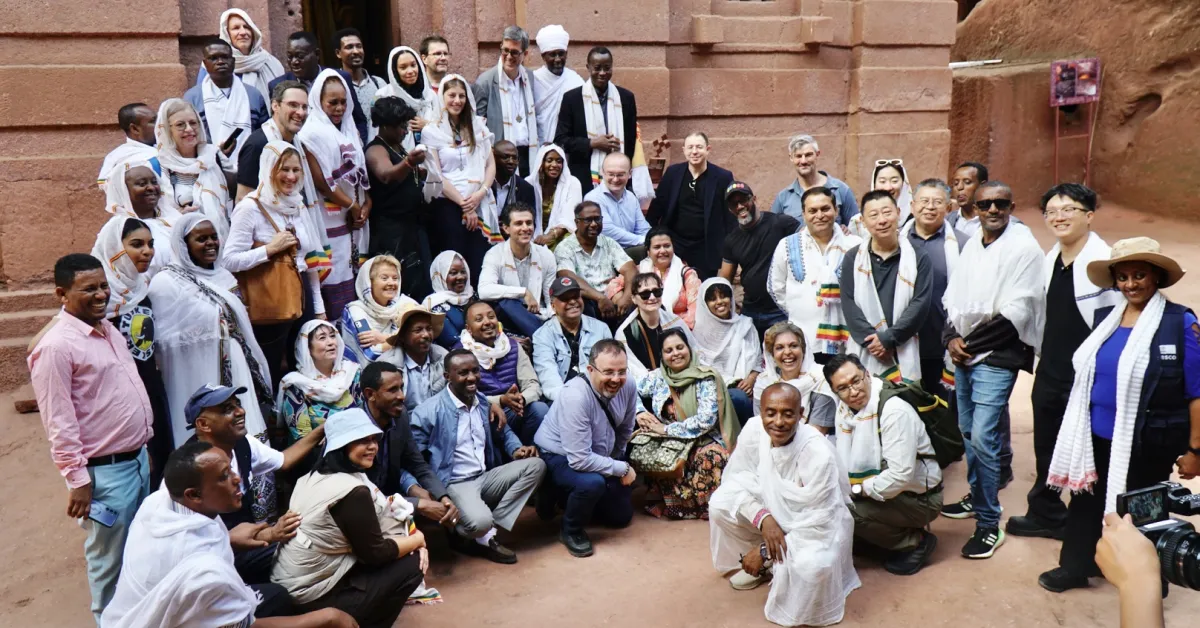
LALIBELA, ETHIOPIA — As the sun crested the Lasta Mountains on the morning of July 3, 2026, over 70 representatives from more than 40 nations and international organizations stood in silent awe before the Bete Giyorgis (Church of St. George). Carved deep into the volcanic tuff of the Ethiopian highlands, the structure—a cruciform masterpiece—served as the backdrop for a landmark diplomatic mission aimed at bridging the gap between historical preservation and modern international cooperation.
Described by visiting ambassadors as “out of this world,” the Rock-Hewn Churches of Lalibela were the focus of a high-level two-day symposium and field visit. Organized by the UNESCO Addis Ababa Liaison Office in collaboration with the Ethiopian Ministry of Tourism and a coalition of regional and international stakeholders, the event underscored a singular, urgent truth: the preservation of human heritage is not merely an academic pursuit, but a vital instrument of international diplomacy and collective identity.
Main Facts: The “New Jerusalem” in the Clouds
The Rock-Hewn Churches of Lalibela are more than architectural curiosities; they are a profound manifestation of 13th-century spiritual fervor. Inscribed on the UNESCO World Heritage List in 1978, the site comprises 11 monolithic churches, masterfully hewn directly from living volcanic rock.
Commissioned by King Gebre Mesqel Lalibela, the site was conceived as a “New Jerusalem,” intended to provide Ethiopian Christians with a pilgrimage destination closer to home than the Holy Land. The engineering feat is staggering: the builders did not construct these churches; they liberated them from the earth, carving downward into the basaltic scoria to create complex subterranean networks, trenches, and courtyards.
The site is divided into two primary clusters, separated by a channel symbolizing the Jordan River. These include the massive Bete Medhane Alem—often cited as the largest monolithic church in the world—and the intricate Bete Mariam, adorned with ancient frescoes. Today, these structures are not relics of a forgotten era; they are "living heritage," functioning daily as active sites of worship, pilgrimage, and intense cultural expression for the Ethiopian Orthodox Tewahedo Church.
Chronology: A Two-Day Diplomatic Pilgrimage
Day One: The Ascent and the Architecture
The visit commenced on July 3, with the diplomatic delegation arriving in the historic town of Lalibela. The first day was dedicated to an immersive exploration of the site’s topography. Under the guidance of heritage experts and local custodians, the participants traversed the network of tunnels and trenches that connect the churches.
The delegation spent significant time studying the structural integrity of Bete Amanuel and Biete Qeddus Mercoreus. These structures, while resilient, face the unrelenting pressures of erosion and environmental shifts. During this leg of the visit, the focus remained on the craftsmanship—the realization that these builders possessed an advanced understanding of geology, drainage, and structural balance that remains a subject of intense study by modern architects.
Day Two: Dialogue, Community, and Sustainability
The second day shifted from observation to deliberation. The morning session brought together religious leaders, local administrators, and international development partners. This dialogue was designed to peel back the layers of the “living heritage” challenge: how to maintain a site that is simultaneously a delicate archaeological treasure and a bustling center of religious life.
The delegation engaged in roundtable discussions concerning the Sustainable Lalibela Project, an initiative bolstered by the Government of France. These discussions focused on balancing the influx of tourism with the spiritual privacy required by the clergy and the socio-economic needs of the local Lalibela community.
Supporting Data: The Magnitude of the Challenge
The preservation of Lalibela is a logistical and scientific endeavor of the highest order. Data provided during the summit highlighted several critical vectors of concern:
- Structural Vulnerability: Due to the porous nature of the volcanic rock, the churches are susceptible to micro-fractures caused by fluctuating humidity and rainfall.
- Environmental Stewardship: The Sustainable Lalibela Project has identified the need for advanced protective shelters that provide adequate ventilation while shielding the porous stone from direct exposure to the elements.
- Economic Integration: Local data indicates that the site is the primary engine of the Lalibela regional economy. Balancing the preservation of the physical fabric with the necessity of hosting thousands of pilgrims during festivals like Timkat requires meticulous site management.
- Capacity Building: The joint effort between the Ethiopian Heritage Authority and international partners aims to train a new generation of local conservators, shifting the reliance from foreign technical aid to indigenous, long-term expertise.
Official Responses: A Unified Front
The weight of the delegation’s presence was matched by the gravity of their declarations.
The UNESCO Representative to Ethiopia stated during the opening remarks: “Lalibela is not merely an Ethiopian treasure; it is a human treasure. By bringing together over 40 embassies, we are signaling that the protection of such sites is a global responsibility. When we safeguard Lalibela, we are safeguarding the narrative of human ingenuity.”
A Senior Official from the Ethiopian Ministry of Tourism emphasized the government’s role: “The partnership between the Ethiopian Orthodox Tewahedo Church, the Amhara Regional Government, and our international partners is the backbone of our strategy. We are moving toward a model where heritage conservation acts as a catalyst for sustainable development, ensuring that the local community is the primary beneficiary of the site’s global prestige.”
The French Delegation, speaking on behalf of the Sustainable Lalibela Project, highlighted the collaborative nature of the effort: “France remains committed to the technical and financial support of this site. The engineering challenges here are unique, and we are learning as much from the Ethiopian tradition of conservation as we are contributing in terms of modern technology.”
Implications: The Future of Cultural Diplomacy
The gathering in Lalibela serves as a template for future cultural diplomacy. In an era where global tensions often dominate the headlines, the focus on cultural heritage provides a neutral, unifying ground. The implications of this visit are threefold:
1. Cultural Diplomacy as Conflict Resolution
By focusing on shared heritage, nations that may be at odds on political issues find common cause in the preservation of human history. The presence of such a diverse array of diplomatic representatives suggests that cultural heritage is being increasingly viewed as a pillar of "Soft Power" and international stability.
2. The Shift to "Living Heritage" Management
The Lalibela experience is forcing a re-evaluation of how international bodies like UNESCO manage World Heritage sites. Traditional, museum-like preservation is insufficient for sites that are still in use. The Lalibela model advocates for a participatory approach, where the religious community is not a stakeholder alongside the experts, but the primary authority in decision-making.
3. A Call to Action for Future Generations
The final communique issued at the conclusion of the visit emphasized a “collective commitment.” This implies a long-term financial and technical framework that extends beyond current diplomatic cycles. The participants acknowledged that the preservation of the Rock-Hewn Churches is a race against time—specifically against climate change and the erosion of time-honored traditional knowledge.
Conclusion: The Everlasting Resonance
As the diplomats departed Lalibela, the monolithic churches remained, as they have for eight centuries, carved into the silence of the Ethiopian landscape. The visit did not just result in promises of funding or technical cooperation; it fostered a profound, shared understanding of what it means to be a steward of history.
In the final assessment, the Lalibela initiative serves as a reminder that the most significant structures are those that hold the collective memory of humanity. Whether through the lens of architectural brilliance, religious devotion, or international diplomacy, the churches of Lalibela continue to command the world’s attention. They remind us that while empires rise and fall, the stones we shape with faith and vision have the power to endure, connecting the past to the future in a silent, subterranean dialogue that transcends borders and beliefs.
 Asep Darmawan
  Jia Lissa