

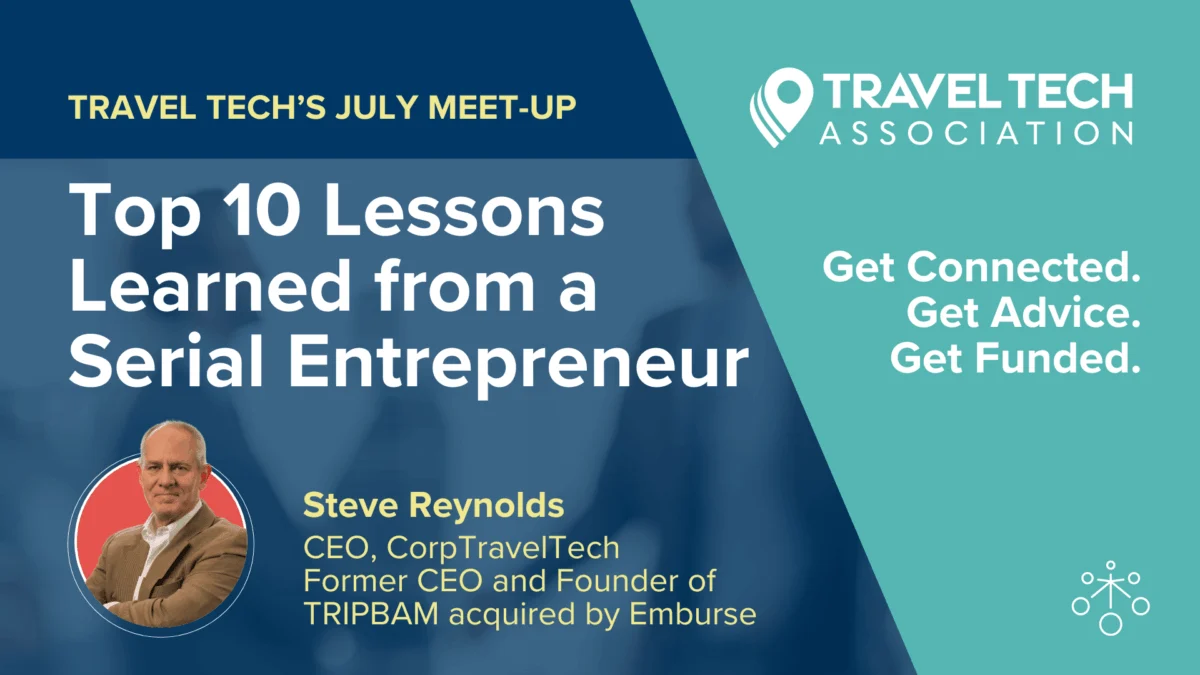
Washington, D.C. — Thursday, July 30, 2026 — In an era defined by rapid digital transformation and shifting consumer behaviors, the travel technology landscape is undergoing a profound metamorphosis. As startups scramble to gain a foothold in a competitive, post-pandemic market, the Travel Tech Association (Travel Tech) has stepped in to provide a critical bridge between legacy expertise and nascent innovation. This week, the organization hosted its highly anticipated July Start-Up Member Meet-Up, featuring a keynote session with Steve Reynolds, a seasoned veteran with over 40 years of experience in building, scaling, and exiting travel technology powerhouses.
Reynolds, the founder and former CEO of TRIPBAM and the current CEO of CorpTravelTech, offered a masterclass in entrepreneurship that went far beyond textbook theory. For the startups in attendance, the session served as both a strategic roadmap and a sobering reality check, underscoring the complexities of modern travel commerce.
The Core Pillars of Entrepreneurial Success
The central thesis of Reynolds’ presentation was that in the high-stakes world of travel technology, the product is rarely the only thing being sold. Investors, he argued, are buying into the human capital behind the code.
The Founder as the Product
Reynolds emphasized that for early-stage companies, the distinction between the business plan and the founder is often blurred. "Investors evaluate the founder and the team with the same, if not greater, rigor than they apply to the business model," he noted.
According to Reynolds, the four non-negotiable traits of a successful founder are:
- Authenticity: The ability to communicate the mission without the "salesy" veneer that often plagues pitches.
- Self-Awareness: A clear understanding of one’s own limitations and the humility to hire individuals who fill those specific gaps.
- Attention to Detail: In the travel industry, where margins are thin and logistics are complex, small oversights can lead to catastrophic failure.
- Visionary Salesmanship: The ability to articulate a clear, compelling, and reachable vision for the future of travel.
Financial Strategy: The "SAFE" Path
A significant portion of the session was dedicated to the mechanics of fundraising. Reynolds urged founders to simplify their capital structures early on. He advocated for the use of Simple Agreements for Future Equity (SAFE) documents, which allow startups to raise capital without the immediate need for complex valuations or the dilution of control that comes with traditional priced equity rounds.
"Don’t complicate the early days with unnecessary legal friction," Reynolds advised. "Keep it clean, keep it fast, and focus on the product-market fit."
Chronology: Four Decades of Travel Innovation
To understand the weight of Reynolds’ advice, one must look at the timeline of his career—a career that has spanned the evolution of the travel industry from the mainframe era to the rise of AI-driven personalization.
- The Early Years (1980s – 1990s): Reynolds entered the industry during the nascent stages of digital distribution. He witnessed the transition from manual, agency-led bookings to the initial rise of GDS (Global Distribution Systems).
- The Mid-Career Pivot (2000s): As the internet democratized travel, Reynolds moved into leadership roles, focusing on the friction points of corporate travel management.
- The TRIPBAM Era (2013 – 2023): As founder of TRIPBAM, Reynolds tackled the problem of "hotel rate shopping," creating a platform that automated the process of re-booking at lower rates. This period marked his transition from a corporate executive to a serial entrepreneur who understood the "pain points" of corporate buyers.
- The Present (2024 – 2026): Now at the helm of CorpTravelTech, Reynolds is focused on the integration of AI and data-driven insights into the travel ecosystem, advising the next generation of founders on how to build sustainable, high-growth businesses.
Supporting Data: The Current State of Travel Tech
The travel technology sector is currently experiencing a "flight to quality." According to recent market analysis provided during the Travel Tech event, startup investment in travel tech has shifted from a "growth at all costs" model to a "path to profitability" mandate.
The B2B Advantage
Reynolds made a strong case for B2B (Business-to-Business) models over consumer-facing applications. B2B travel tech, he noted, benefits from:
- Higher Customer Retention: Once a solution is integrated into a corporate workflow, it becomes a "sticky" necessity rather than a discretionary luxury.
- Predictable Revenue Streams: SaaS-based revenue models provide the cash flow predictability that investors currently demand.
- Lower Customer Acquisition Costs (CAC): Targeted sales to corporate buyers are often more cost-effective than broad-spectrum digital marketing aimed at individual consumers.
Cash Flow Positivity
Perhaps the most tactical advice of the afternoon was Reynolds’ insistence on cash flow positivity. "Before you go out to raise millions in venture capital, prove that your unit economics work," he said. "If you can show that you are cash-flow positive, you are no longer asking for a favor—you are negotiating from a position of power. You get to dictate the terms, not the investors."
Official Responses and Industry Outlook
The event, hosted by the Travel Tech Association, highlighted the growing necessity for a unified industry voice. As startups face increasing regulatory scrutiny—ranging from data privacy laws to antitrust concerns regarding travel distribution—the association acts as a critical intermediary.
The Role of Travel Tech Association
"Our goal is to foster an ecosystem where innovation doesn’t just survive; it thrives," said a representative from the Travel Tech Association. "Sessions like those led by Steve Reynolds provide our members with the candid, practical insights that are rarely discussed in public forums. By connecting our startups with industry legends, we ensure that the next generation of travel leaders is equipped with the wisdom of the past."
The Association’s mandate—to promote competition and innovation through advocacy and cross-sector collaboration—is more relevant than ever. As travel technology begins to intersect with complex public policy, companies that fail to understand the regulatory landscape are finding themselves at a disadvantage.
Implications: The Road Ahead for Startups
The implications of Reynolds’ session for the broader travel tech community are clear: the era of the "untested dreamer" is ending, and the era of the "disciplined builder" is upon us.
1. Shift in Investor Expectations
Investors are no longer interested in speculative technology. They are looking for companies that solve tangible, expensive problems within the travel supply chain. Startups should prepare for deeper due diligence, where the team’s operational history is scrutinized as heavily as the platform’s codebase.
2. Operational Discipline as a Competitive Edge
In a crowded market, the startups that succeed will be those that prioritize operational efficiency from day one. This means meticulous financial tracking, clear communication with investors, and a relentless focus on solving the specific, high-value problems of corporate travel managers.
3. The Power of Community
The success of the July Meet-Up highlights a growing trend of collaboration within the industry. By sharing "war stories" and best practices, startups are reducing the collective learning curve. As Reynolds noted, "The travel industry is a small world. Your reputation for execution is your greatest asset."
Conclusion: A Call to Action
For those who were unable to attend the session, the Travel Tech Association is offering exclusive access to the top 10 takeaways from Steve Reynolds’ presentation. These insights represent a synthesis of decades of industry evolution and provide a roadmap for navigating the volatile, yet rewarding, world of travel technology.
As the industry continues to evolve, the distinction between those who succeed and those who vanish will likely come down to their ability to adapt to these core principles: authenticity, financial discipline, and a deep understanding of the B2B landscape.
The Travel Tech Association invites all emerging startups to join their growing community, access these vital resources, and contribute to the future of the travel ecosystem. By building a network of informed, capable, and ambitious entrepreneurs, the Association is ensuring that the next chapter of travel technology will be defined by stability, innovation, and sustainable growth.
About Travel Tech Association
The Travel Tech Association (Travel Tech) stands as the unified voice for the travel technology ecosystem. Representing enterprise leaders, growth-stage companies, and emerging innovators, Travel Tech advocates for public policies that champion competition and innovation. Through regulatory intelligence and cross-sector collaboration, the organization is committed to shaping a resilient, technology-enabled future for travelers worldwide.
For media inquiries or to schedule an interview with a Travel Tech spokesperson, please contact Jessica Matthias at [email protected].
 Jia Lissa
  Lina Irawan
  Lina Hope