

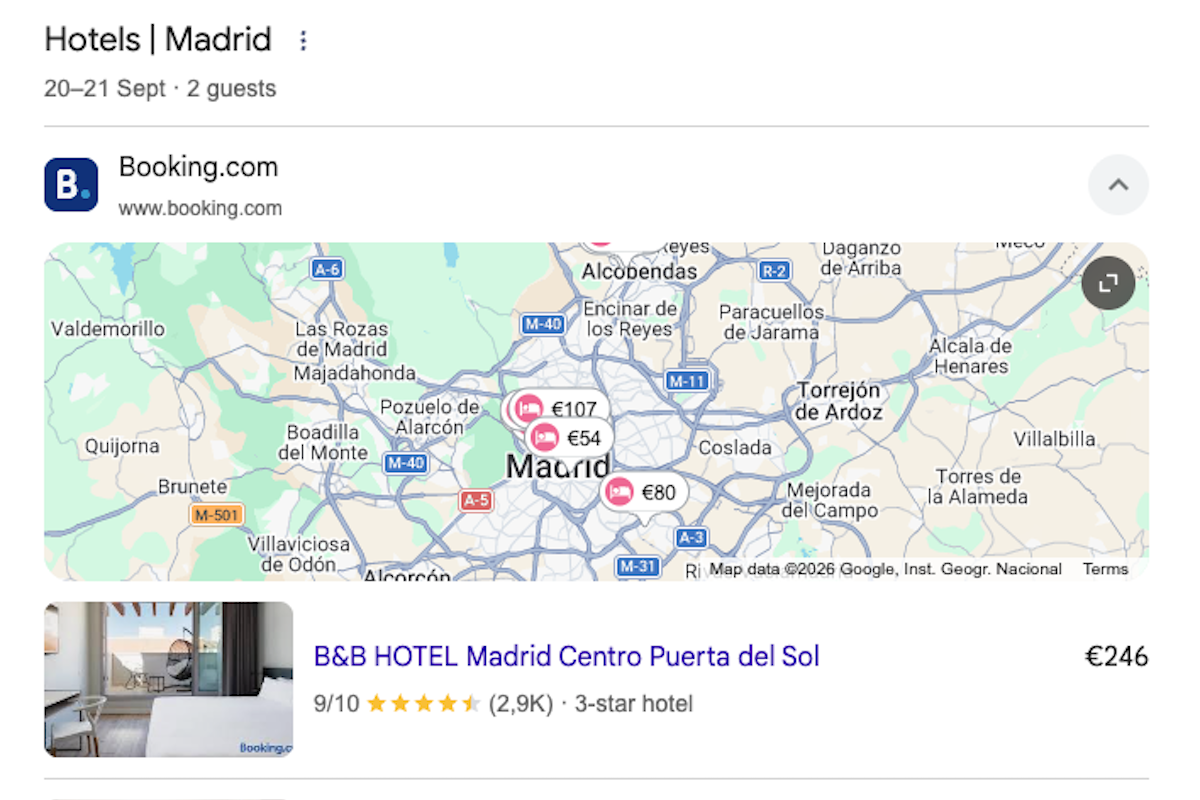
In a significant shift for the digital travel landscape, Google has overhauled its hotel and flight search interfaces for European users this week. The changes, which introduce a bifurcated display system, represent the latest chapter in the tech giant’s ongoing struggle to comply with the European Union’s stringent Digital Markets Act (DMA) and broader antitrust enforcement actions. By altering how travel inventory is surfaced, Google is attempting to balance its dominant market position with the regulatory requirement to foster a more competitive ecosystem for online travel agencies (OTAs) and direct service providers.
Main Facts: The New Interface Architecture
The core of Google’s update involves a fundamental restructuring of its search results page (SERP) for travel-related queries—specifically flights, hotels, and restaurants—within the European Economic Area (EEA). Users searching for accommodation or transit now encounter a dual-tier display system designed to provide greater transparency and choice.
The new layout consists of two distinct modules:
- The Aggregator Unit: This section features a curated stack of third-party platforms. Companies like Booking.com, Agoda, and Expedia are displayed in a list format. In the current iteration, the top-ranked provider is expanded by default, allowing users to view specific inventory without immediately leaving the Google ecosystem. Clicking these listings directs the user to the respective third-party site to complete the booking process.
- The Supplier Unit: This section prioritizes direct-provider listings. Individual hotels, boutique properties, and airlines are given dedicated space, allowing them to present their offerings without the intermediation of a travel aggregator.
This design is a departure from Google’s previous “Google Travel” interface, which historically favored a more integrated, Google-controlled booking flow. By creating a visible separation between aggregators and suppliers, Google is addressing long-standing complaints from industry competitors who argued that the search engine leveraged its massive traffic volume to prioritize its own products over those of third-party partners.
Chronology: A Multi-Year Regulatory Tug-of-War
The roots of this update stretch back nearly a decade, marking a long-term transition from unchecked search dominance to a highly regulated environment.
- 2017 – The Shopping Fine: The European Commission imposed a record-breaking €2.42 billion fine on Google, alleging that it abused its dominance as a search engine by giving illegal advantages to its own comparison-shopping service. This served as the blueprint for future investigations into other verticals, including travel.
- 2019 – Increased Scrutiny on Travel: The European Commission began investigating whether Google was unfairly favoring its own hotel and flight search tools, effectively squeezing out competition from dedicated travel platforms.
- 2022 – The Digital Markets Act (DMA): The European Parliament passed the DMA, a landmark piece of legislation aimed at "gatekeeper" companies. The Act explicitly forbids platforms from favoring their own services in search results, a move specifically targeted at Google’s integration of travel, shopping, and local business features.
- 2023 – Compliance Negotiations: Throughout the year, Google engaged in intensive consultations with the European Commission to define what "fair, reasonable, and non-discriminatory" access to travel search looks like.
- 2024 – The Rollout: Following a series of iterative tests, Google formally deployed the aggregator and supplier unit architecture across European markets, ensuring that users in countries like Spain, France, and Germany see the new format when searching for hotels or flights.
Supporting Data: The Economic Stakes of Travel Search
The travel industry is one of the most lucrative segments for search engine advertising. According to industry reports, travel-related queries account for a massive percentage of Google’s search revenue.
- Market Share: Google Search remains the entry point for over 70% of all travel bookings worldwide. Even with the rise of social media and dedicated travel apps, the "Google Search" box remains the primary top-of-funnel tool for the average traveler.
- The Cost of Acquisition: For OTAs like Booking Holdings and Expedia Group, Google’s search ranking is a "make-or-break" factor. Before these changes, many OTAs complained that Google’s "Travel" widget effectively acted as a "tax," forcing them to bid higher on ads just to appear below the fold of Google’s own flight and hotel tools.
- Conversion Rates: Early data suggests that the new layout may lead to higher traffic for direct hotel websites. By giving "Supplier Units" equal billing, smaller providers that previously struggled to compete with the massive marketing budgets of large OTAs may see a slight increase in direct-to-website conversions.
Official Responses and Stakeholder Perspectives
The industry reaction to these changes has been cautiously measured, reflecting a mixture of relief and skepticism.
Google’s Stance:
Google maintains that its changes are designed to improve user experience while adhering to legal requirements. A Google spokesperson stated, "We have worked constructively with the European Commission to ensure that our search results provide users with the best information while providing a fair playing field for travel providers of all sizes." The company emphasizes that the changes are part of a broader commitment to openness and interoperability.
The Competitor Perspective:
OTAs have historically been the loudest critics of Google’s travel dominance. Many executives within the OTA space, speaking anonymously, have welcomed the change but noted that "the devil is in the details." The primary concern remains the "real estate" of the page. If the aggregator and supplier units are pushed too far down the page, or if the "sponsored" listings remain dominant, the impact on competition could be negligible.
The Regulatory View:
Margrethe Vestager, the EU’s Executive Vice-President for A Competition, has consistently signaled that the EU will not take Google’s word for it. "We are monitoring the implementation of these changes closely," a representative for the Commission noted. The EU has made it clear that if these new units are deemed to be "cosmetic" rather than "substantive," further enforcement actions and potential fines—which can reach up to 10% of global annual turnover—could follow.
Implications: What This Means for the Future of Travel
The implications of this update extend far beyond the European market.
1. The End of the "Google Travel" Monolith
For years, Google has been building a "walled garden" around travel bookings. This mandate effectively cracks that wall, forcing Google to act more like a conduit for other businesses rather than the business itself. This shift might be the beginning of a move toward a more decentralized travel search experience.
2. A Shift in Direct Booking Strategy
Hotels and airlines are the biggest potential beneficiaries of these changes. By being elevated in the "Supplier Unit," direct providers have a unique opportunity to capture customers who prefer to avoid the complexities of third-party bookings. Expect to see hotel chains ramp up their "Book Direct" campaigns, leveraging these new search tools to drive traffic to their proprietary websites where they can avoid commission fees paid to OTAs.
3. Regulatory Precedent for Global Markets
The European Union has a track record of setting the "gold standard" for tech regulation—often referred to as the "Brussels Effect." With the DMA in full force, it is highly probable that other jurisdictions, such as the United States (where the Department of Justice is currently engaged in high-profile antitrust litigation against Google), will look to this model. If the European experiment proves successful in increasing competition without degrading user experience, U.S. regulators may push for similar "aggregator/supplier" splits in American search results.
4. The Challenge of User Experience (UX)
While regulators are happy, the user experience is arguably more cluttered. Where a user once saw a single, unified search interface, they are now presented with multiple, distinct modules. Google’s biggest challenge moving forward will be ensuring that these compliance-driven changes do not lead to "choice paralysis" or a decline in search satisfaction, which could prompt users to shift their behavior toward other platforms like TikTok or Instagram for travel inspiration.
Conclusion
The transformation of Google’s travel search results in Europe is a watershed moment for the intersection of antitrust law and digital commerce. It marks the transition of the search engine from an all-encompassing service provider back to its roots as a neutral directory. While the immediate impact on booking volumes is yet to be seen, the structural changes ensure that the playing field is now—at least in theory—more level. As the digital economy continues to evolve under the watchful eye of the European Commission, Google must navigate the delicate balance of maintaining its utility to users while satisfying a regulatory environment that is increasingly intolerant of digital gatekeeping. Whether this change creates a more vibrant, competitive travel market or merely adds another layer of complexity to the booking journey remains the central question for the industry in the coming months.
 Basiran
  Pevita Pearce
  Evan Lee Salim