

The modern billionaire’s definition of wealth has undergone a tectonic shift. As flashier European hot-spots yield to a culture of discretion, the world’s most powerful tech moguls, finance titans, and C-suiters are trading crowded beaches and gilded hotel corridors for the deep, silent expanses of the global wilderness. Welcome to the era of the high-end adventure lodge.
Main Facts: The Rise of the Experiential Wilderness Sanctuary
For decades, the global elite signaled their success through a predictable circuit of sun-drenched coastlines and manicured alpine resorts. St. Barts, the South of France, St. Moritz, and Courchevel served as the default playgrounds for wealth. Today, however, a profound cultural recalibration is underway among ultra-high-net-worth travelers (UHNWIs). Discretion is in; ostentatious flaunting of wealth is out.
At the vanguard of this movement are ultra-luxury wilderness lodges. Nestled deep within untouched environments—ranging from the sub-zero plateaus of the Arctic Circle to the fjords of Scandinavia, the remote backcountry of Iceland, and the untamed landscapes of New Zealand and Botswana—these properties reject standardized corporate hospitality in favor of total immersion, radical privacy, and profound psychological restoration.
In places like Riksgränsen, Sweden’s northernmost ski resort located 125 miles shy of the Arctic Circle, a new breed of traveler converges every winter. With a permanent population hovering around 60, this remote village is accessible via a 17-hour sleeper train from Stockholm and features winters so severe that even snowmobiles can be lost to deep snowdrifts. Yet, this untamed frontier has become a coveted sanctuary for finance magnates and tech giants who bypass traditional ski lifts for 360-degree heli-skiing across 2,000 square miles of off-piste powder.

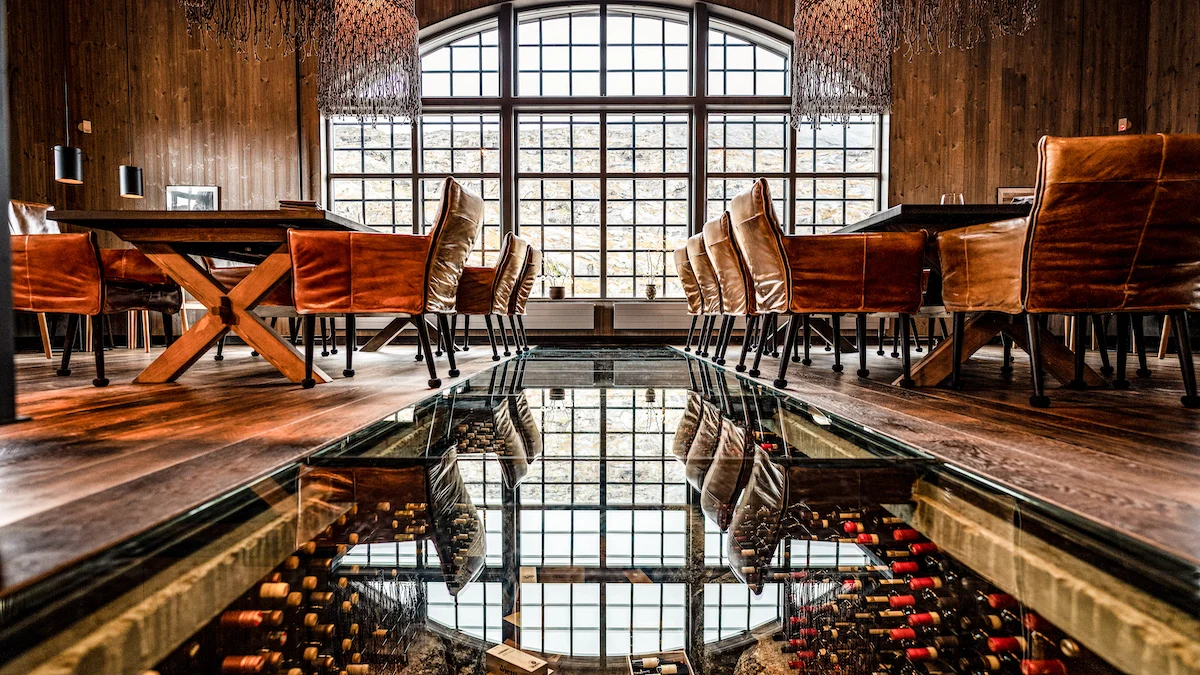
Rather than checking into a gilded palace bearing the marquee of a legacy hospitality brand, these elite travelers seek refuge in properties like the Niehku Mountain Villa—a 14-room lodge where rates average $730 a night, full buyouts cost $11,000 nightly, and the cellar houses 3,000 bottles of rare wine, including prized vintages from Romanée-Conti.
Chronology: From Noughties "Glamping" to the Post-Pandemic Wilderness Boom
To understand the current appetite for high-end wilderness sanctuaries, one must look at the evolution of adventure travel over the past two decades:
- The Late 2000s: The seed of remote luxury was planted with the advent of "glamping." Initially popularized as high-end tented camps in Africa and North America, this movement proved that travelers were willing to trade indoor plumbing and city conveniences for front-row seats to nature, provided a baseline of comfort was met.
- 2011: Industry pioneers Chad and Blake Pike launched Eleven Experience by renovating Scarp Ridge Lodge, a backcountry ski retreat in Colorado. This set a new benchmark for converting rugged, historic infrastructure into world-class adventure properties—a trajectory that later birthed properties like Deplar Farm in northern Iceland.
- 2020–2021 (The Post-Pandemic Pivot): According to financial analyses from institutions like Deutsche Bank Wealth Investment, the global pandemic served as the ultimate catalyst for the luxury lodge boom. Confined to urban centers and craving space, investors flooded the market with capital earmarked for "experience-rich assets."
- 2023–2025: A massive influx of independent luxury nature retreats and safari camps debuted globally. Concurrently, legendary hideaways began expanding their footprints. Notably, in December 2025, Finnish Lapland welcomed the ultra-exclusive Octola II Ultra Lodge, cementing the Nordics as the epicenter of Arctic elite travel.
Supporting Data: The Economics of Seclusion and Experiential Real Estate
The shift toward remote luxury is underpinned by hard economic data and shifting real estate metrics across global markets:
- The Nordic Expansion: In Finland alone, spanning from Lakeland to Finnish Lapland, over a dozen luxury lodges have opened since the pandemic. Properties such as Balder Lodge, Aino Private Island Hotel, Skyra Retreat, and Octola II report robust forward-booking schedules, with many winter seasons booked out well in advance.
- Alpine Real Estate Premiums: The European property market offers a clear parallel to this trend. According to reports from UBS, international demand for second holiday homes and chalet-style wilderness properties has driven alpine real estate prices far above historical averages. Towns like Verbier and Gstaad have surged in valuation, rivaling St. Moritz as the most expensive tourist enclaves in Switzerland.
- The Cost of Absolute Privacy: While standard room rates at elite lodges generally range from $700 to upwards of $1,500 per night, full buyouts—which have become the preferred booking method for media moguls, tech founders, and family offices—frequently command $11,000 to tens of thousands of dollars per night. This investment grants total exclusivity over vast acreage, private staff, specialized wilderness guides, and tailored longevity and wellness programming.
Official Responses: What Industry Leaders and Insiders Are Saying
The transformation of high-end travel has not gone unnoticed by top-tier hospitality executives and luxury travel advisors, who view this shift as a permanent structural change rather than a passing fad.

"The category is having a moment," says Lindsay Messina, co-founder of Fioraé Luxury Travel. "The rise of luxury lodges is a very exciting shift in high-end travel. For those who’ve already experienced top hotels many times over, they crave something more immersive, intimate, and rooted in place. A lodge isn’t a building type—it’s a feeling of being completely immersed in a place. Once clients experience it, they often don’t want to go back."
Major hospitality brands are actively adapting to this consumer demand. Joachim Jacob, general manager of Four Seasons Megève in the French Alps, notes:
"Across Europe, there is clearly growing demand for experiential luxury and nature-led hospitality. Travelers are increasingly drawn to destinations that combine exceptional service with outdoor experiences, wellness, and a strong sense of place. It is no longer simply about accommodation. It is about the emotional value of the experience and the sense of belonging it creates."
Founders of these remote sanctuaries emphasize that true luxury in the 21st century is defined by sensory deprivation from urban noise rather than sensory overload from manmade excess. Janne Honkanen, founder of Octola in Finnish Lapland, reflects on this philosophy:

"Octola was built around the idea that true luxury is privacy, silence, space, and a genuine connection with nature. We didn’t want to build just another luxury hotel, which are increasingly standardized now. For us, luxury is not about excess. It’s about exclusivity, authenticity, and the freedom to experience one of the world’s last great wildernesses."
Echoing these sentiments, luxury travel advisor Jason Squatriglia, founder of Your Favorite Travel Agent and a Robb Report Travel Master, highlights the psychological drivers behind the trend:
"In a hyperconnected world, we need to disconnect to reconnect. The modern traveler is beginning to circle back to the reality that time is their greatest asset—privacy is non-negotiable. By replacing the same overexposed vacations in the South of France or St. Barts with more remote destinations, they’re able to guarantee themselves maximum privacy while ensuring the same levels of safety and luxury."
Implications: The Future of Global Luxury Hospitality
The pivot toward remote, wilderness-based luxury lodges carries profound implications for the broader travel, real estate, and hospitality sectors:

- The Pivot of Legacy Brands: Traditional urban and beachside hotel giants—including Four Seasons, Aman, and One&Only—can no longer rely solely on their classic resort portfolios. To capture market share from high-net-worth travelers, these legacy brands are aggressively expanding into private residences, remote villas, and experiential lodges.
- Redefining Wellness and Longevity: The modern luxury lodge model integrates high-performance wellness seamlessly into wilderness exploration. Facilities now routinely feature authentic Nordic saunas operated by certified aufgussmästare, advanced cryotherapy, holistic nutrition driven by local foraging, and personalized physical conditioning led by elite mountaineers and free-ride champions (such as Robert Gustafsson at Niehku Mountain Villa).
- Sustainability as a Prerequisite: Operating in fragile ecosystems like the Arctic Circle or the Scottish Highlands requires an intimate balancing act. High-end lodges are increasingly engineered with minimal ecological footprints, utilizing renewable energy, sustainable local sourcing, and strict guest-cap numbers to preserve the very wilderness that attracts elite travelers in the first place.
- The Death of Ostentatious Consumption: The cultural currency among the global elite has shifted from what one owns to where one can escape. As Johan "Jossi" Lindblom, co-founder of Niehku Mountain Villa, observes of Europe’s northern frontiers: "This is Europe’s last wilderness, and we make it accessible. Our purpose comes from our own thirst to bring meaning to why we travel."
Ultimately, the rise of the luxury wilderness lodge signals the maturation of the global traveler. In a world defined by constant connectivity, digital noise, and public exposure, the ultimate luxury is no longer being seen at the most exclusive club—it is having the rarest, most breathtaking corners of the earth entirely to oneself.
 Basiran
  Sagoh
Sagoh  Raul Delapena Setiawan