

By Financial News Desk
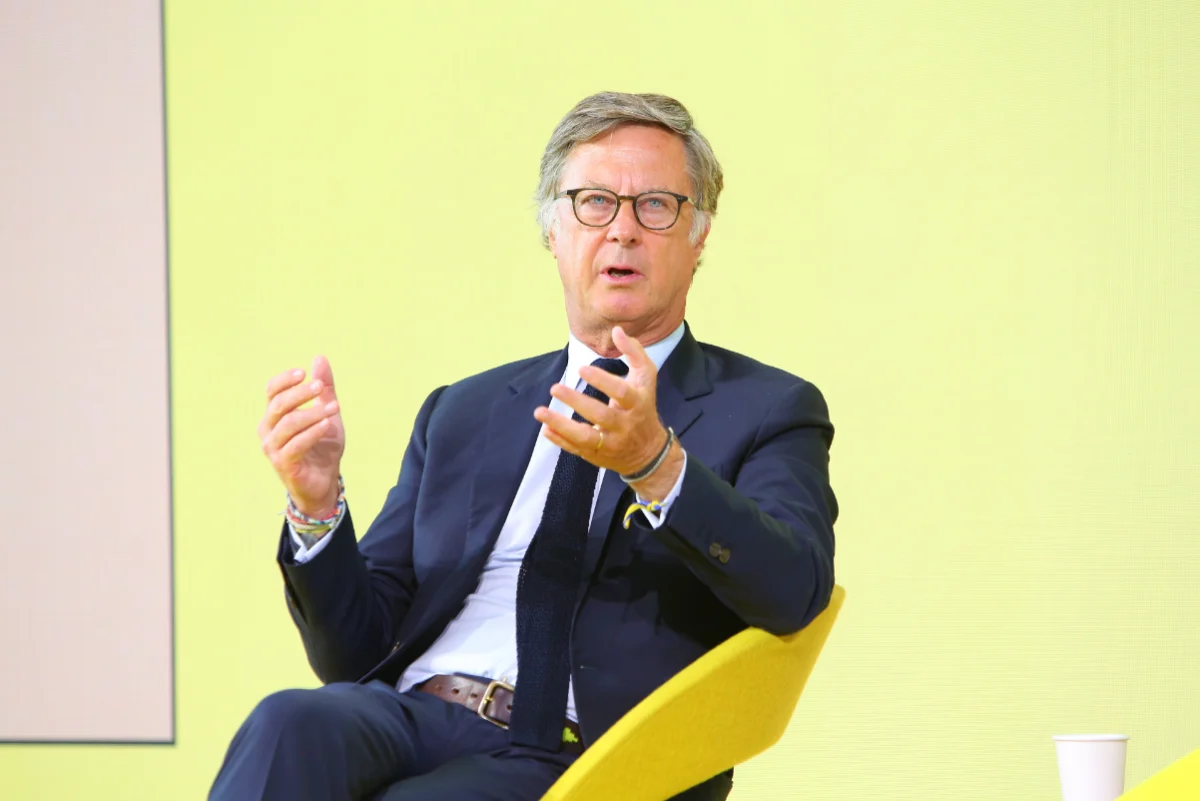
At the Skift Global Forum 2026 in New York, the air was thick with anticipation as Sébastien Bazin, the long-standing Chairman and CEO of Accor, stepped onto the stage. For months, the hospitality industry has been fixated on a singular, high-stakes question: What is the future of Ennismore, the luxury-lifestyle powerhouse in which Accor holds a controlling 62% stake? As Bazin addressed the audience, he offered a candid glimpse into the internal deliberations of one of the world’s most influential hotel groups, confirming that while expansion into the United States remains the primary objective, the financial mechanism to achieve that growth remains an open, complex debate.
Main Facts: The Ennismore Conundrum
The core of the matter is simple in ambition but gargantuan in execution. Accor views Ennismore—the entity housing brands like The Hoxton, SLS, Mondrian, and SO/—as its most potent weapon to capture the lucrative North American lifestyle market. However, the path to dominance requires significant capital injection.
As of late September 2026, Accor is operating under an self-imposed deadline to determine the strategic direction of its stake in the joint venture. Analysts have placed a wide valuation range on Ennismore, estimating its worth between $3.4 billion and $5.8 billion should it pursue an Initial Public Offering (IPO). Bazin, however, remains hesitant about the traditional public markets. "It’s a very complex decision to make," Bazin noted during the forum. "Yes, we can be listed, but it has a lot of drawbacks to being listed."
The primary alternative, which Bazin openly acknowledged, is for Accor to double down on its commitment by injecting further capital into the entity directly, effectively bypassing the scrutiny and volatility of the public markets.
Chronology: A Path to the Present
To understand the urgency of Bazin’s current position, one must look at the trajectory of the Ennismore-Accor partnership.
- 2021: The Birth of a Giant. Accor and Ennismore finalized their joint venture, combining Accor’s lifestyle brands with Ennismore’s founder Sharan Pasricha’s portfolio. The goal was to create the world’s largest and fastest-growing lifestyle hospitality company.
- 2023–2024: Scaling Up. Ennismore proved to be a resounding success, outperforming traditional hotel segments by tapping into the "experience economy" and attracting a younger, affluent demographic.
- Late 2025: The IPO Rumors Begin. As market conditions for hospitality IPOs fluctuated, rumors began to swirl that Accor was preparing an exit or a spin-off to unlock shareholder value.
- Q3 2026: The Decision Deadline. Accor management communicated that a final decision regarding the capital structure of the joint venture would be reached by the end of September 2026.
- September 2026: Skift Global Forum. Bazin’s appearance marks the most public confirmation of the internal debate, signaling that while the strategy is set, the financial engineering is still in flux.
Supporting Data: The Value of Lifestyle
The financial stakes are immense. Lifestyle hospitality—characterized by boutique aesthetics, immersive programming, and high-margin food and beverage offerings—has been the primary driver of RevPAR (Revenue Per Available Room) growth for Accor.
Valuation Metrics
Analysts have struggled to pin down a precise valuation for Ennismore due to its rapid integration of new properties and the fragmented nature of the luxury-lifestyle market. A $3.4 billion valuation is seen as a conservative baseline, whereas a $5.8 billion figure reflects the potential of the brand’s pipeline in North America.
The U.S. Imperative
The U.S. market represents the "Holy Grail" for European hotel groups. While Accor is a dominant force in Europe and the Middle East, its footprint in the U.S. has historically been modest compared to giants like Marriott or Hilton. Ennismore’s portfolio—specifically its design-led, culturally relevant brands—is seen as the perfect "Trojan Horse" to win over the American traveler. According to internal metrics, demand for lifestyle-centric stays in key U.S. cities like New York, Los Angeles, and Miami has surged by 18% year-over-year, outpacing traditional luxury accommodations.
Official Responses and Executive Philosophy
Sébastien Bazin is known for his philosophical approach to leadership. At the forum, he emphasized that the decision is not merely about money, but about the "soul" of the brands.
"There’s only one ambition," Bazin stated. "Ennismore is so successful, double [down]."
His skepticism regarding an IPO centers on the loss of control and the quarterly pressures of public reporting, which he believes can stifle the long-term, creative vision required for lifestyle hospitality. By keeping the company private or under the Accor umbrella, Bazin suggests the group can maintain the "founder-led" agility that made Ennismore successful in the first place.
"If we list, we are beholden to the market," Bazin hinted. "If we invest ourselves, we remain beholden to our guests and our creative vision."
Implications: The Road Ahead
The implications of Accor’s upcoming decision will ripple across the global hospitality landscape.
For Investors
If Accor chooses to inject more capital, it signals a strong belief in the "asset-light" model of the future, where the company focuses on brand management rather than property ownership. However, this may put pressure on Accor’s own balance sheet, potentially impacting dividend payouts or share buyback programs in the short term.
For the Lifestyle Hospitality Sector
Should Ennismore remain private under Accor, it cements the trend of consolidation in the lifestyle space. Smaller, independent boutique brands may find it increasingly difficult to compete with the sheer scale and distribution power of an Ennismore-Accor entity that is fueled by deep-pocketed, internal capital.
For the U.S. Market
The U.S. expansion will likely see an aggressive acquisition strategy. If the capital issue is resolved, expect Ennismore to target key U.S. metropolitan hubs for rapid brand proliferation. This could mean a shift in the American hospitality landscape, with more "European-style" lifestyle hotels becoming the standard in secondary and tertiary U.S. cities.
Conclusion: The Final Countdown
As the end of September approaches, the industry watches with bated breath. Sébastien Bazin is playing a high-stakes game of chess. On one side of the board is the immediate liquidity and market validation of an IPO; on the other is the preservation of creative autonomy and strategic control.
Bazin’s language at the Skift Global Forum suggests he is leaning toward the latter, viewing Ennismore not as a financial asset to be traded, but as the cornerstone of Accor’s future relevance. Whether the capital comes from a public offering or an internal infusion, one thing is certain: Ennismore is about to embark on a period of unprecedented expansion in the United States, and Accor intends to be the one holding the reins.
For now, the French executive’s open-handed gesture onstage—a visual metaphor for his transparency—underscores the weight of the decision. Accor has the vision, the brands, and the market opportunity. Now, it just needs to decide how much it is willing to pay to own the future of luxury travel.
 Reynand Wu
  Azzam Bilal Chamdy
  Nila Kartika Wati