

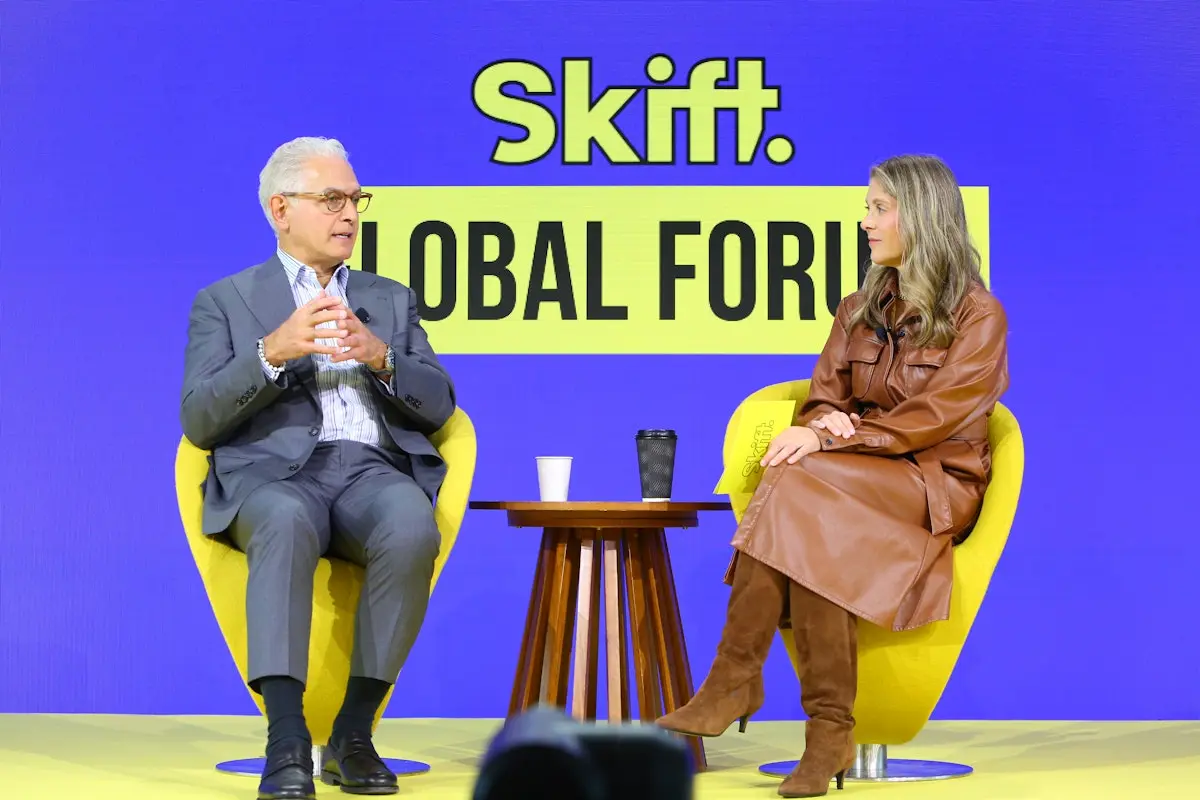
In the high-stakes world of global hospitality, the divide between hotel brands and hotel owners is often marked by friction. Brands seek expansive loyalty and standardized guest experiences, while owners prioritize bottom-line returns and operational efficiency. However, Mark Hoplamazian, the long-standing Chairman, President, and CEO of Hyatt Hotels Corporation, believes that Hyatt’s unique DNA—forged in seven decades of ownership—provides a bridge across this traditional divide.
In a recent appearance at the Skift Global Forum, moderated by Editor-in-Chief Sarah Kopit, Hoplamazian articulated a philosophy that challenges the conventional wisdom of the hotel industry. By framing Hyatt not merely as a management company, but as an organization that inherently understands the burdens of capital investment, he argued that the company is uniquely positioned to drive both guest loyalty and owner profitability.
The Core Philosophy: An Owner’s Mindset
For 67 of its 70 years in existence, Hyatt functioned as the largest owner of its own hotel assets. While many competitors pivoted years ago toward an "asset-light" model—shedding real estate to focus purely on management fees—Hyatt has maintained a perspective deeply rooted in the realities of property ownership.
According to Hoplamazian, this historical anchor is not a liability; it is the company’s greatest strategic advantage. "Most hotel companies talk about owner value," Hoplamazian noted. "But our history shapes a fundamentally different set of decisions."
At the heart of this difference is an alignment of incentives. When a company is an owner, it feels the pain of operational inefficiencies and the strain of capital expenditure cycles. Consequently, when Hyatt makes a strategic decision, it does so through the lens of a stakeholder who has "skin in the game." This ethos was on full display recently when the company underwent a massive, systemic technological overhaul.
Chronology of a Tech Transformation: The Great Migration
In an industry where technological upgrades are notorious for ballooning budgets and "pass-through" costs billed directly to property owners, Hyatt’s recent digital transformation stands as a case study in corporate responsibility.
Phase 1: Identifying the Friction
Hyatt identified that its legacy systems—the backbone of its reservation, check-in, and property management functions—were becoming a bottleneck. To deliver the personalized, high-touch experiences that define the Hyatt brand, the company required a more agile, integrated digital environment.
Phase 2: The Simultaneous Pivot
Instead of a piecemeal rollout that might have caused years of operational disruption, Hyatt embarked on a daring strategy: replacing all four of its core hotel operating systems simultaneously. This was an unprecedented move in the hospitality sector, where even minor system updates often trigger significant downtime and staff confusion.
Phase 3: Financial Absorption
Perhaps the most significant aspect of this project was the financial structure. Rather than offloading the development and implementation costs onto its global network of hotel owners, Hyatt opted to absorb the entire cost.
"We did that without sending a bill for even one penny to any of our owners," Hoplamazian stated during his session. By shielding its partners from the financial burden of this upgrade, Hyatt ensured universal adoption and, more importantly, fostered a culture of trust that is rare in the franchising world.

Supporting Data: Efficiency and Value Creation
The results of this investment extend beyond mere goodwill; they represent a tangible increase in operational efficiency. By streamlining these core systems, Hyatt achieved a 40% reduction in costs related to its property management systems (PMS).
This 40% savings is not just a statistical milestone; it represents a significant improvement in the margin for every hotel owner in the Hyatt portfolio. In an era of rising labor costs, energy spikes, and fluctuating travel demand, the ability to lower overhead through technological efficiency is a powerful lever for owner profitability.
Furthermore, this investment serves as a foundation for "customer loyalty." When systems are seamless, staff spend less time wrestling with software and more time interacting with guests. This shift in focus is the true engine of the Hyatt value proposition: better systems lead to better service, which leads to higher guest satisfaction and, ultimately, superior returns for property owners.
Official Responses and Strategic Implications
The strategy articulated by Hoplamazian suggests a shift in the power dynamics of the hospitality industry. By demonstrating that the brand is willing to invest in the infrastructure that supports its owners, Hyatt is effectively differentiating itself from competitors who treat owners as a source of revenue rather than as partners in a shared venture.
The "Partner-First" Strategy
In the broader industry context, the relationship between franchisors and franchisees has become increasingly strained. Many brands have been criticized for "fee creep," where new mandatory brand standards are introduced without providing the necessary tools to make those standards profitable. Hyatt’s move to absorb the cost of the tech transition acts as a counter-narrative to this trend.
Implications for Future Growth
This approach also has significant implications for Hyatt’s future expansion. In a crowded market, owners have a choice of which flag to fly. A brand that minimizes the "cost of entry" and ongoing operational friction is inherently more attractive to developers and private equity groups. By positioning itself as an owner-friendly operator, Hyatt is likely to see higher retention rates of its current owners and increased interest from potential new partners looking for stability in an unpredictable market.
What to Watch: The Next Frontier
As Hyatt continues to evolve, several key areas will be critical to observe:
- Technological Maturity: Now that the four core systems have been replaced, how will Hyatt leverage this unified data architecture to create even more personalized guest experiences? The ability to utilize this data to drive direct bookings and ancillary revenue will be the next litmus test for the success of the investment.
- Owner Relations: Will other global hotel conglomerates be forced to follow suit, or will they continue to rely on the traditional model of passing technological costs down the line? If Hyatt’s model proves to be more profitable, it could trigger a competitive race to offer better value to owners.
- Global Scaling: The challenges of implementing such systems are magnified in international markets with varying regulatory environments and local infrastructure limitations. Scaling the success of this project to Hyatt’s growing international footprint will be a major operational challenge.
Conclusion: A Long-Term View in a Short-Term Market
The hospitality industry is often obsessed with quarterly results, RevPAR (Revenue Per Available Room) metrics, and stock price volatility. However, Mark Hoplamazian’s leadership style suggests that the most successful companies are those that take a longer, more deliberate view.
By treating its 70-year history as a cornerstone of its modern identity, Hyatt has managed to align the interests of the corporation, the hotel owners, and the guests. The decision to absorb the costs of a massive technological upgrade is more than just a smart financial maneuver; it is a declaration of philosophy. In a business built on the transient nature of a night’s stay, Hyatt is betting that stability, partnership, and long-term investment are the keys to enduring success.
As the industry looks toward the future of travel, the "Hyatt model"—characterized by high-level integration, shared financial risk, and a deep, historical understanding of the ownership experience—provides a compelling blueprint for how a brand can thrive by prioritizing the very people who own the keys to the buildings.
 Nila Kartika Wati
  Asro
Asro  Nana Wu