

By Industry Correspondent
New York City — September 24, 2026
The relationship between global hotel management companies and the real estate investors who own the properties has long been characterized by a delicate, often fraught, tension. As rising operational costs, labor shortages, and shifting consumer expectations put pressure on bottom lines, the friction over management fees and service charges has reached a fever pitch.
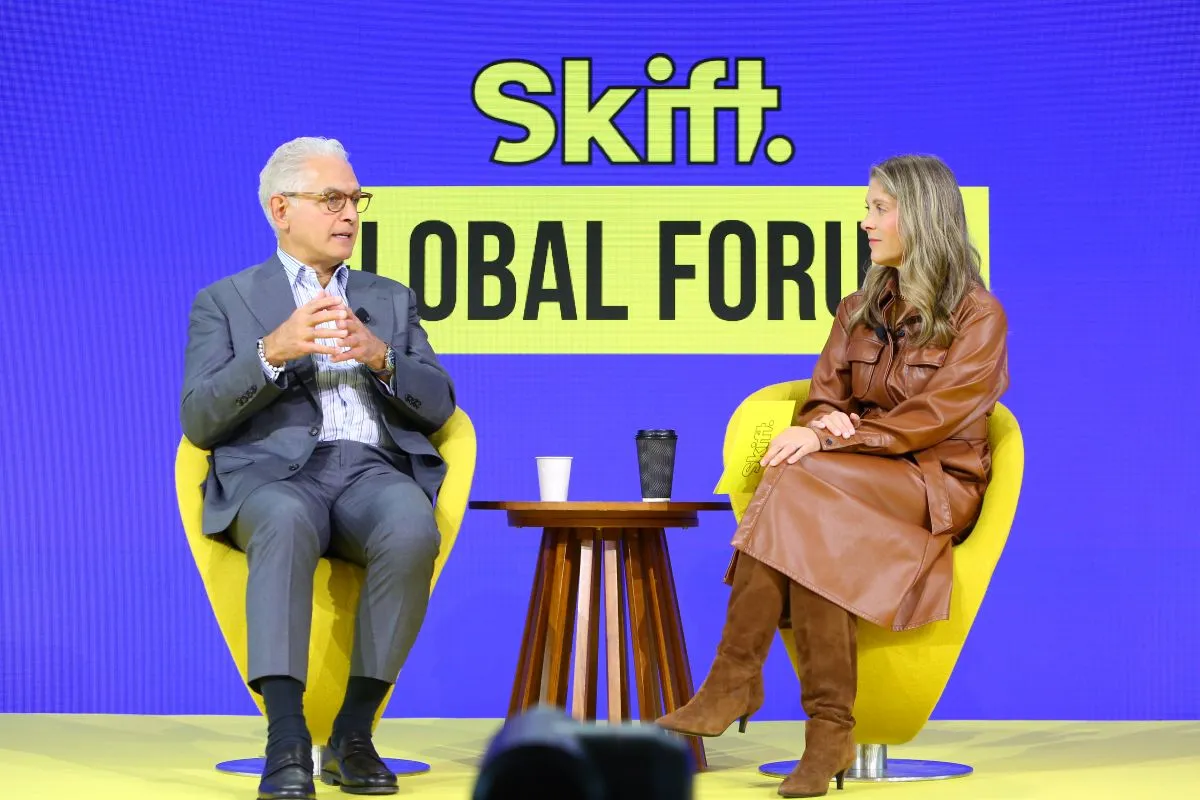
However, at the 2026 Skift Global Forum in New York City, Hyatt Hotels Corporation Chairman, President, and CEO Mark Hoplamazian argued that the solution to this industry-wide malaise is not merely contractual—it is philosophical. For Hyatt, the path forward is defined by a singular, deep-rooted concept: "the owner’s mindset."
Main Facts: Bridging the Divide
The core of the current industry dispute involves hotel owners—the investment firms and real estate trusts that hold the deeds to physical assets—challenging major hotel groups over what they perceive as excessive management fees, complex cost structures, and a perceived lack of transparency.
Hoplamazian’s address emphasized that Hyatt is uniquely positioned to address these grievances because, for the vast majority of its seven-decade history, the company functioned as an owner first and a manager second. By framing its management strategy through the lens of asset ownership, Hyatt claims to mitigate the adversarial nature of the brand-owner relationship. The company’s strategy centers on radical transparency, operational efficiency, and a willingness to share its internal proprietary strategies with third-party partners.
A Chronological Perspective: From Asset-Heavy to Strategic Partner
To understand why Hyatt is currently navigating this friction differently than its peers, one must look at its historical trajectory.
The Foundation (1957–2010s)
For 67 of its nearly 70-year history, Hyatt was arguably the most significant owner of its own real estate. This "asset-heavy" model meant that Hyatt’s executives felt the same economic volatility as their partners. When market conditions dipped, Hyatt’s own balance sheet suffered immediately. This period of ownership instilled a culture of frugality and operational precision that remains embedded in the company’s DNA today.
The Pandemic Catalyst (2020)
The true test of this philosophy arrived during the COVID-19 pandemic. As the global hospitality industry ground to a halt, the survival of the brand became inextricably linked to the survival of the individual asset. Hyatt’s leadership recognized that if they could not demonstrate how to operate under extreme duress, they would lose the trust—and the properties—of their owners.
The Pivot to Partnership (2021–2026)
Following the recovery, Hyatt pivoted to an "asset-light" strategy, but it did so while maintaining the operational habits of an owner. By 2026, the company had successfully transitioned its internal knowledge base into a consulting-style partnership model. The decision to open their internal "playbook" to firms like Host Hotels & Resorts—the largest lodging REIT in the world—marked a turning point in how brand-owner relationships are managed.
Supporting Data: The Efficiency Transformation
The strength of the "owner’s mindset" is best illustrated by the drastic operational shifts Hyatt implemented during the most uncertain months of the pandemic.
Occupancy Break-Even Analysis
During his keynote, Hoplamazian revealed internal data that underscored the company’s commitment to efficiency:
- Pre-Crisis Baseline: Hyatt’s initial assessment for its larger, full-service properties suggested a break-even occupancy level of approximately 43%. In a stable market, this was sustainable. In a pandemic, it was catastrophic.
- The Six-Month Sprint: Through a combination of labor model restructuring, aggressive cost-cutting in non-essential services, and a re-engineering of the guest experience, the company successfully reduced the break-even occupancy level to 22%.
- Long-Term Impact: This reduction was not merely a temporary fix. Many of the operational efficiencies identified during that 180-day window remain in place today, significantly boosting the EBITDA margins for owners even as occupancy rates have normalized.
Official Responses and Strategic Transparency
The most striking revelation from the Skift Global Forum was the detail regarding Hyatt’s relationship with Host Hotels. When the crisis hit, rather than protecting its internal operational data as proprietary trade secrets, Hyatt invited Host Hotels to its corporate headquarters.
The "Open Playbook" Initiative
"We handed over the full playbook," Hoplamazian noted. This transparency served two functions:
- Trust Building: It signaled to the owner that Hyatt’s interests were fully aligned with the asset’s profitability.
- Collaborative Problem Solving: By showing Host Hotels exactly how Hyatt arrived at its cost-cutting conclusions, the owner was able to provide feedback and oversight that made the final strategy more effective.
Industry analysts suggest this is a departure from the "black box" approach often taken by larger hotel groups, where owners are frequently kept in the dark regarding how management fees are calculated or how operational budgets are justified.
Implications for the Future of Hospitality
The industry is currently at a crossroads. As interest rates fluctuate and the cost of capital remains high, hotel owners are increasingly scrutinizing every line item on their monthly statements.
1. The Death of the "Passive Owner"
The era of the passive hotel owner is ending. Owners are demanding more input into brand standards and operational budgets. Hyatt’s approach suggests that the successful brands of the future will be those that treat their owners as "co-operators" rather than mere landlords.
2. Operational Agility as a Value Proposition
Hyatt is betting that its ability to scale down costs—and scale back up—will be the primary differentiator in attracting capital. If a brand can prove it can maintain profitability at 22% occupancy, it becomes a significantly more attractive partner than a competitor that requires 40% occupancy to keep the lights on.
3. The "Eat Your Own Cooking" Mandate
Hoplamazian’s mantra—"you have to eat your own cooking every day"—is likely to become a benchmark for investor relations. Owners are no longer content with being told that fees are "industry standard." They are looking for management companies that have "skin in the game" or, at the very least, a demonstrated history of managing assets as if the management company were the one writing the check.
Conclusion
The dialogue at the 2026 Skift Global Forum serves as a bellwether for the hospitality sector. While the industry is recovering, the scars of the last few years remain. Hyatt’s move to emphasize an "owner’s mindset" is more than just a public relations tactic; it is a defensive and offensive maneuver designed to secure their position as the preferred manager for the world’s most significant hotel assets.
By choosing transparency over obfuscation, and operational rigor over bureaucratic stagnation, Hyatt is attempting to rewrite the contract between brands and owners. Whether this strategy will be adopted by competitors remains to be seen, but for now, it stands as a compelling argument for a more collaborative, owner-centric future in global hospitality.
As the industry continues to evolve, the brands that thrive will likely be those that can prove, without a shadow of a doubt, that they are not just managing hotels—they are protecting investments as if they were their own.
 Asro
Asro  Laily UPN
  Layla Zulfa