

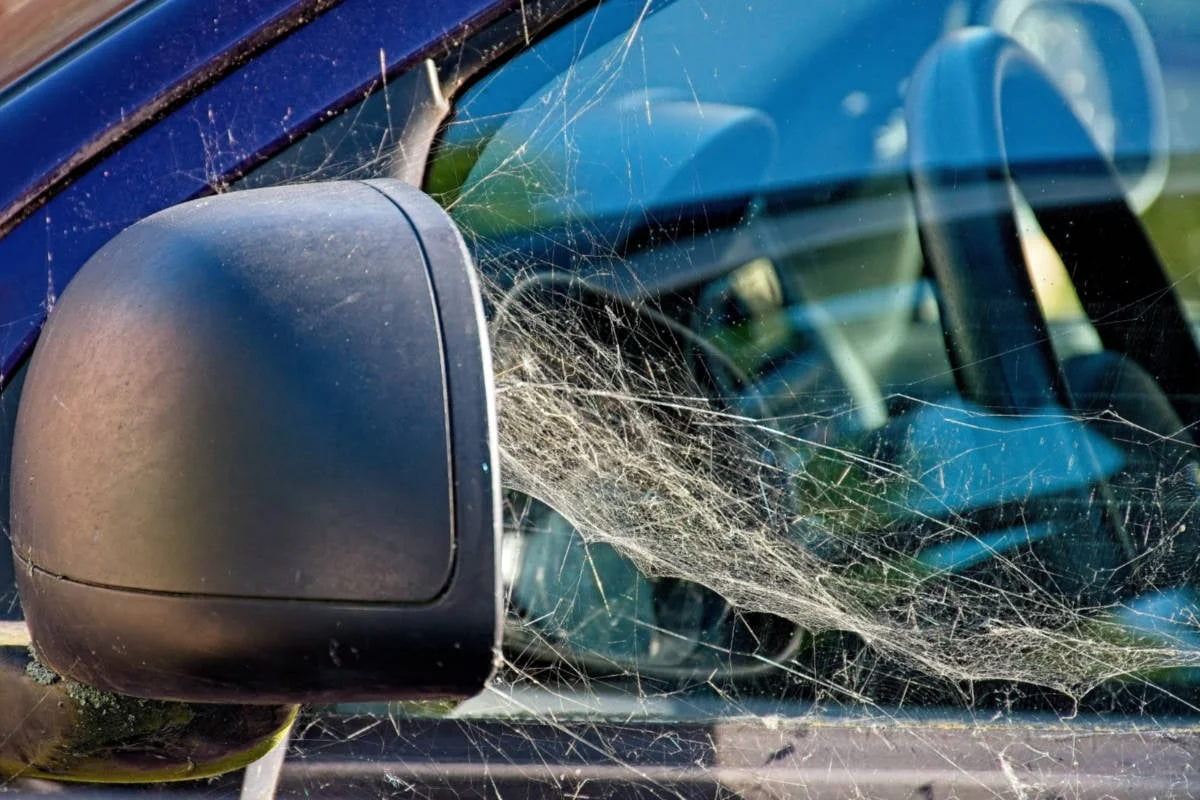
GALVESTON, Texas — The conclusion of a dream Caribbean vacation is supposed to be a time of relaxation, fond memories, and a smooth transition back to reality. However, for a group of unsuspecting travelers returning from a Royal Caribbean cruise at the Port of Galveston, the final leg of their journey devolved into an arachnophobic nightmare. Instead of simply packing their bags, clearing customs, and driving home, these passengers were greeted by a shocking and thoroughly unwelcome sight: hundreds of tiny, newly hatched baby spiders crawling all over the interiors and exteriors of their parked vehicles.
The bizarre incident, which has since gone viral among local community groups and travel forums, highlights an unexpected hazard of leaving vehicles unattended in coastal Texas during the early autumn months. While the infestation did not originate aboard the cruise ship or within the state-of-the-art cruise terminal itself, it has left travelers shaken, scratching at phantom itches, and aggressively rethinking their parking arrangements for future sailings.
Main Facts
The strange phenomenon came to light thanks to Donnie L. Broussard, a local Uber driver with seven years of experience transporting cruise passengers to and from the Port of Galveston. On Sunday, September 20, Broussard took to the popular "Galveston Talk" Facebook group to share an account of a fare that was anything but ordinary.
According to Broussard, he picked up two male passengers from a cruise parking lot designated for Royal Caribbean guests. Upon getting into the vehicle, the men explained why they had been delayed and visibly shaken: when they opened the doors to their parked car, they discovered it completely overrun by a massive wave of tiny, newly hatched spiders.
"They get in and tell me they went to get in their car and it is infested with spiders," Broussard wrote in his social media post. "They showed me pictures, and it was crazy—little spiders everywhere. And a few other people in the lot had the same thing in their cars."
Realizing his passengers could not safely drive their vehicle in that condition, Broussard stepped in to assist. He detoured and drove the distressed cruisers to a nearby Walmart—located just five miles from Royal Caribbean’s Cruise Terminal 10—so they could purchase heavy-duty pesticide and cleaning supplies to clear out the arachnid invaders before attempting the drive home.
While Broussard did not publicly disclose the specific cruise ship the passengers had debarked from, local maritime records indicate that Royal Caribbean currently homeports two major vessels at the Port of Galveston: the Mariner of the Seas and the Symphony of the Seas. Mariner of the Seas typically operates shorter 4- and 5-night itineraries to Costa Maya and Cozumel, Mexico, while the massive Symphony of the Seas handles longer 6- to 8-night sailings to popular destinations like Perfect Day at CocoCay, Nassau, Roatan, and various Mexican ports.
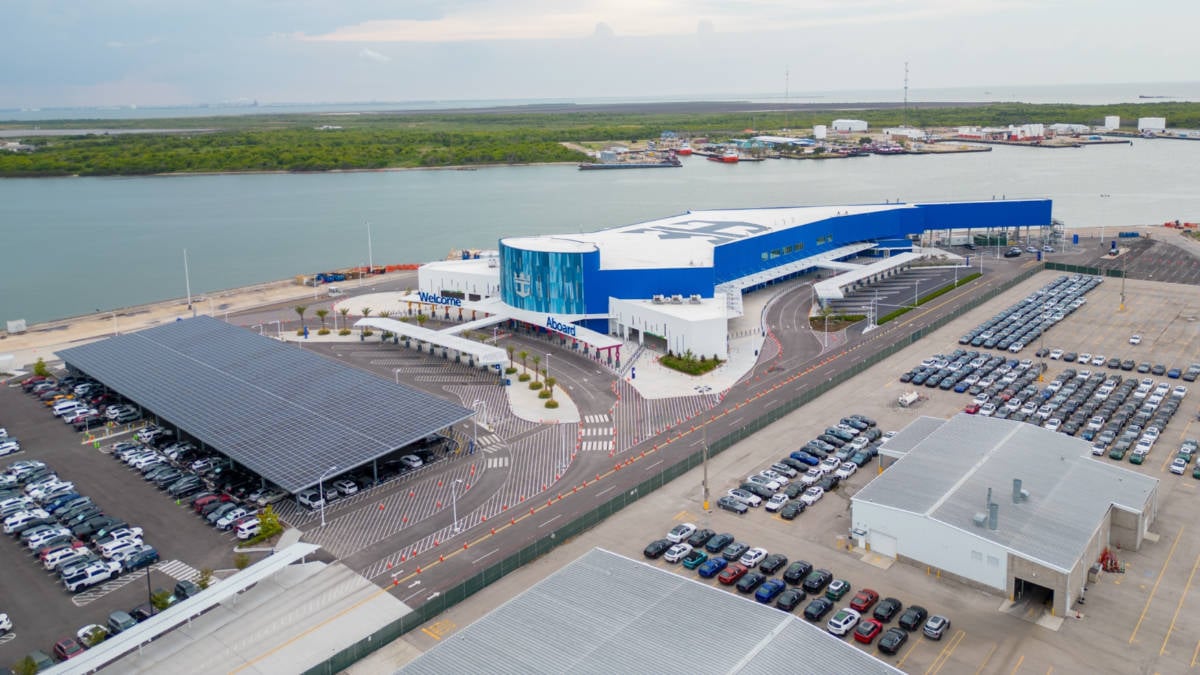
Crucially, authorities and industry experts have stressed that the spider infestation had nothing to do with Royal Caribbean Cruise Line or the Port of Galveston’s terminal facilities. Cruise lines and port authorities exercise operational control over passenger processing and shipboard environments, but long-term parking lots in the surrounding area are typically managed by third-party private operators or local independent companies, over which the cruise lines have no direct oversight.
Chronology of Events
To understand how a vehicle can transform into a temporary nursery for hundreds of arachnids, experts point to a precise convergence of biology, weather, and timing.
- The Departure (Late August / Early September): The affected travelers drove to Galveston, parked their vehicles in an open-air lot near the port, boarded their Royal Caribbean cruise ship, and set sail for the Caribbean. Unbeknownst to them, an adult female spider—likely seeking a sheltered, warm, and undisturbed environment—had previously deposited an egg sac on or near the vehicle.
- The Incubation Period (While at Sea): Over the course of the 4-to-8-day cruise, the vehicle sat completely idle under the hot, humid Texas sun. This microclimate provided ideal conditions for the egg sac to mature. Depending on the species and ambient moisture levels, the gestation period can range from a few weeks down to just days.
- The Hatching (Just Prior to Debarkation): Right around the time the passengers’ cruise was coming to an end, the egg sac ruptured. Hundreds of microscopic spiderlings emerged simultaneously.
- The Discovery (Debarkation Day): As the passengers returned to the parking lot and unlocked their cars, they were met with a living carpet of tiny spiders weaving web strands across dashboards, side mirrors, windshields, and upholstery.
- The Rescue (September 20, 2026): Donnie Broussard picks up the stranded passengers, documents the bizarre event with photographs, and drives them to a local retail store to secure pest control supplies, eventually sharing the story online to warn fellow travelers.
Supporting Data & Ecological Context
Texas is home to a staggering diversity of wildlife, and the Lone State State boasts nearly 1,100 distinct species of spiders, according to data from USA Spiders. While encountering a massive swarm of insects or arachnids can trigger instant panic, local entomologists note that the timing of this incident aligns perfectly with regional ecological patterns.
Why September is "Spider Season" in Texas
In Texas, the months of September and October mark a peak period for spider reproduction and dispersal. Many common species synchronize their hatching cycles to take advantage of the transition into early fall. When spiderlings emerge from an egg sac en masse—sometimes numbering in the hundreds from a single casing—they engage in a behavior known as "ballooning."
During ballooning, tiny spiderlings release fine strands of silk into the air. The wind catches these silk threads, lifting the microscopic travelers high into the atmosphere and carrying them across neighborhoods, fields, and parking lots to colonize new territories.
Vehicles left stationary under trees, near grassy areas, or in open-air coastal lots provide an irresistible, stable structure for egg-laying females. The painted metal and rubber surfaces absorb heat, while the relative isolation of a parked car ensures the egg sacs remain undisturbed until hatching day.
Should Travelers Be Worried About Venom?
Understandably, drivers who encounter sudden swarms of spiders worry about dangerous bites. However, experts reassure the public that out of the roughly 1,100 spider species residing in Texas, only two are considered medically significant: the black widow and the brown recluse.
The vast majority of the tiny spiderlings found crawling across the Galveston parking lot vehicles were harmless orb-weavers, jumping spiders, or nursery web spiderlings. These common varieties pose zero threat to humans and lack the mouthparts or venom potency to cause harm. Furthermore, baby spiders at this stage are primarily focused on survival, dispersal, and finding tiny insects to eat rather than confronting large mammals.
Official Responses and Industry Reactions
While neither Royal Caribbean nor the Port of Galveston holds jurisdiction over private or third-party parking facilities, the viral nature of the incident has prompted discussions regarding parking lot maintenance and pest control measures in the region.
Port-adjacent parking facilities in Galveston—spanning multi-level garages, fenced gravel lots, and grassy expanses—frequently deal with coastal wildlife, including seagulls, rodents, and insects. However, mass spider hatchings inside locked vehicles are remarkably rare.
Representatives from local third-party parking providers have not issued a formal statement regarding this specific event, but pest control professionals operating in Galveston County note that outdoor lots during September require proactive management. Regular clearing of overhanging tree branches, weed removal, and eco-friendly perimeter treatments can drastically reduce the likelihood of spiders utilizing parked cars as nurseries.
Implications for Future Cruisers
For the cruising community, the Galveston spider incident has introduced a whole new item to the pre-cruise mental checklist. Fear of spiders, scientifically known as arachnophobia, is one of the most common phobias in the world. For travelers already managing the logistics of luggage, traffic, and flight schedules, the thought of returning to an infested vehicle is nothing short of terrifying.
In the comment sections of Broussard’s viral Facebook post, dozens of upcoming cruisers expressed anxiety over where they should leave their vehicles during their next voyage.
"Which parking lot? We are going on a cruise and don’t want to park there," one concerned commenter wrote.
Another user shared a validating personal anecdote, proving that the phenomenon, while rare, can happen anywhere organic matter and vehicles intersect: "I was parked in my grandparents’ backyard overnight under a tree. The next morning I opened the door and thousands of, it seemed, tiny spiders were everywhere!"
Despite the high "creep factor" involved, travel experts and pest control specialists offer comforting advice: baby spiders do not stay long. Because their primary biological drive at the hatching stage is to balloon and disperse away from their birthplace, they will quickly scatter if given the chance.
For travelers heading out on future cruises from Galveston or other coastal ports, experts recommend a few simple preventative steps:
- Choose Covered Parking: Whenever possible, opt for covered garages or valet parking services over open-air dirt, gravel, or tree-lined lots.
- Inspect Before Loading: Do a quick visual sweep of your car’s exterior—particularly around side mirrors, wiper blades, and door frames—before unlocking and opening the doors.
- Keep Windows Sealed: Ensure all windows and sunroofs are completely closed before leaving the vehicle for an extended period.
- Pack Bug Spray: Keeping a small can of multi-purpose insect spray in your luggage or travel bag can offer immediate peace of mind should you encounter any unexpected wildlife upon your return.
While the passengers on that September sailing certainly had a messy and stressful end to their vacation, they ultimately managed to clear their vehicles and hit the road. For everyone else heading down to Galveston for a Royal Caribbean getaway, the episode serves as a bizarre reminder that nature in the Lone Star State always finds a way to make an impression—even in a parking lot.
 Jia Lissa
  Ammar Sabilarrohman
  Asep Darmawan