

Main Facts: The Silent Landscape of La España Vaciada
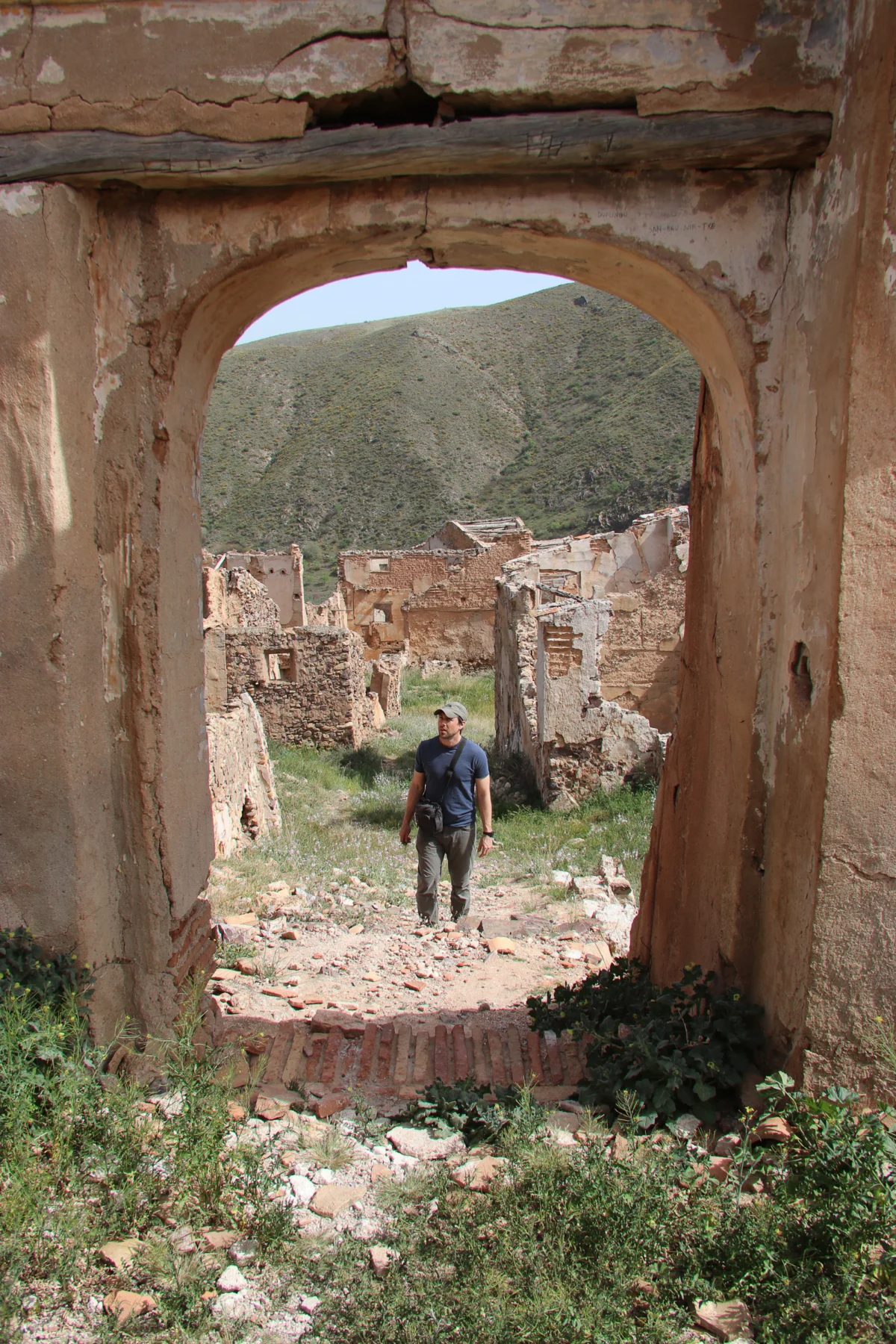
In the rugged, windswept province of Teruel, Spain, the village of Las Casillas de Bezas stands as a poignant monument to a modern demographic shift. Here, the silence is not empty; it is filled with the rhythmic swooping of swallows that have claimed crumbling stone dwellings as their own. This is not an isolated phenomenon. Across Spain, an estimated 3,000 villages have been abandoned, left to the slow reclamation of nature.
This mass migration from rural landscapes to urban centers, a process sociologists call La España Vaciada (The Emptied Spain), is part of a broader European trend. As agrarian economies collapse and the youth gravitate toward the opportunities of Madrid, Barcelona, Paris, or Berlin, the rural heartlands are undergoing a radical transformation. What was once cultivated farmland and bustling stone-walled hamlets is returning to a state of "the future wild"—a landscape defined by spontaneous reforestation and the return of biodiversity that had been suppressed for centuries.
Chronology: From Agrarian Roots to Urban Migration
To understand the current state of rural Europe, one must look at the timeline of the 20th and 21st centuries.
- 1950s–1970s: The Great Migration: Following the post-war industrial boom, Europe experienced a massive internal migration. Spain, specifically, saw millions of people leave their small, isolated villages in favor of industrial hubs where manufacturing and service jobs were plentiful.
- 1980s–1990s: Agricultural Consolidation: As European Union agricultural policies began to favor large-scale, mechanized farming, the small, subsistence-based plots that supported these villages became economically unviable. The "middle-aged" generation began to leave, leaving behind an aging population.
- 2000s: The Tipping Point: The final generation of traditional rural dwellers began to pass away, leading to a surge in properties with no heirs interested in maintaining remote, crumbling infrastructure.
- 2010s–Present: The Era of Rewilding: The lack of human presence has allowed nature to take over. Unchecked growth of scrubland, the return of predators like wolves and lynx, and the collapse of stone walls have created new corridors for wildlife, marking a shift from human-managed land to "rewilded" wilderness.
Supporting Data: The Scale of the Exodus
The statistics surrounding the depopulation of the European countryside are staggering. According to the European Commission’s report on rural development, nearly 50% of the EU’s territory is classified as rural, yet these areas are increasingly fragile.
- Demographic Collapse: In provinces like Teruel, the population density is lower than that of the Scottish Highlands or parts of the Siberian tundra, earning it the nickname "the Spanish Lapland."
- Abandoned Infrastructure: Estimates from the Spanish National Statistics Institute (INE) suggest that there are over 3,000 villages currently uninhabited. Some are for sale for as little as €50,000, yet buyers remain scarce due to the lack of infrastructure, internet, and essential services.
- Biodiversity Trends: Satellite imagery analyzed by the European Environment Agency shows that forested land in these depopulated zones has increased by nearly 15% over the last three decades, as abandoned pastures naturally regenerate into woodlands.
Official Responses: Between Preservation and Resignation
Governments are caught in a difficult paradox. On one hand, there is the desire to preserve cultural heritage and prevent the total erasure of rural identity. On the other, the economic reality of providing high-speed internet, medical care, and road maintenance to a handful of residents in a remote village is increasingly prohibitive.
The Spanish Ministry of Ecological Transition has launched initiatives aimed at "combating depopulation," including tax incentives for families willing to move to rural zones and the expansion of the "Digital Rural" program, which seeks to bring fiber-optic internet to the most isolated regions.
However, local mayors and advocacy groups, such as the Teruel Existe (Teruel Exists) movement, argue that these measures are "too little, too late." They point out that unless there is a fundamental shift in how the state views rural sustainability—moving away from traditional farming subsidies toward green energy investment and remote-work infrastructure—the decline will be irreversible.
Implications: The Future Wild
The implications of this massive rural abandonment are profound, touching on ecology, sociology, and national identity.
1. The Ecological Renaissance
The most immediate effect of depopulation is the "green lung" effect. As human-induced erosion and overgrazing cease, local ecosystems are recovering. Researchers have noted a rise in the population of raptors, wolves, and wild boars in areas that were previously heavily grazed. This "passive rewilding" serves as a natural carbon sink, though conservationists warn that without human management, the risk of catastrophic wildfires increases, as deadwood and scrub build up without the grazing animals that once kept them in check.
2. The Loss of Cultural Memory
When a village is abandoned, it is not just the stone houses that disappear; it is the folklore, the local dialects, the agricultural techniques, and the history of a people. The "emptying" of Spain represents a fracture in the national narrative. The architecture of these villages—often centuries-old stone masonry—is rotting into the soil, erasing the evidence of how humans lived, adapted, and survived in these harsh environments for generations.
3. The New Rurality: A Potential Pivot?
Is there hope for a return? Some believe the "post-COVID" era, which has normalized remote work, could be a turning point. A new generation of "digital nomads" is beginning to look at these abandoned villages not as ghosts of the past, but as opportunities for a high-quality, low-cost life. However, this "gentrification of the wild" brings its own challenges, as the influx of urbanites often clashes with the remaining traditional agricultural communities.
Conclusion: A Landscape in Flux
Standing in the center of Las Casillas de Bezas, the duality of the situation becomes clear. The swallows darting through the broken windows are not mourning the loss of the village; they are thriving in the vacuum left by humans.
The depopulation of the European countryside is perhaps the most significant structural change to the continent in the last century. It is a slow-motion transformation that forces us to question our relationship with the land. Are we meant to dominate the landscape, or are we merely temporary tenants? As the modern world pivots toward urban density, the abandoned villages of Spain and beyond serve as a reminder that nature is patient. It waits for the noise to die down, the traffic to cease, and the last human to walk away. And then, slowly, it begins to move back in.
The future of these villages will likely not be a return to the past, but a new, hybrid existence. Whether through state-sponsored renewal or the organic arrival of a new, tech-savvy generation, the countryside is at a crossroads. For now, the swallows remain the only permanent residents, holding court in the quiet, stone-walled halls of a disappearing world. The challenge for Europe is to decide if it will watch the silence grow, or find a way to re-inhabit the wild before the past is completely reclaimed by the earth.
 Nana Muazin
  Azzam Bilal Chamdy
  Jia Lissa