

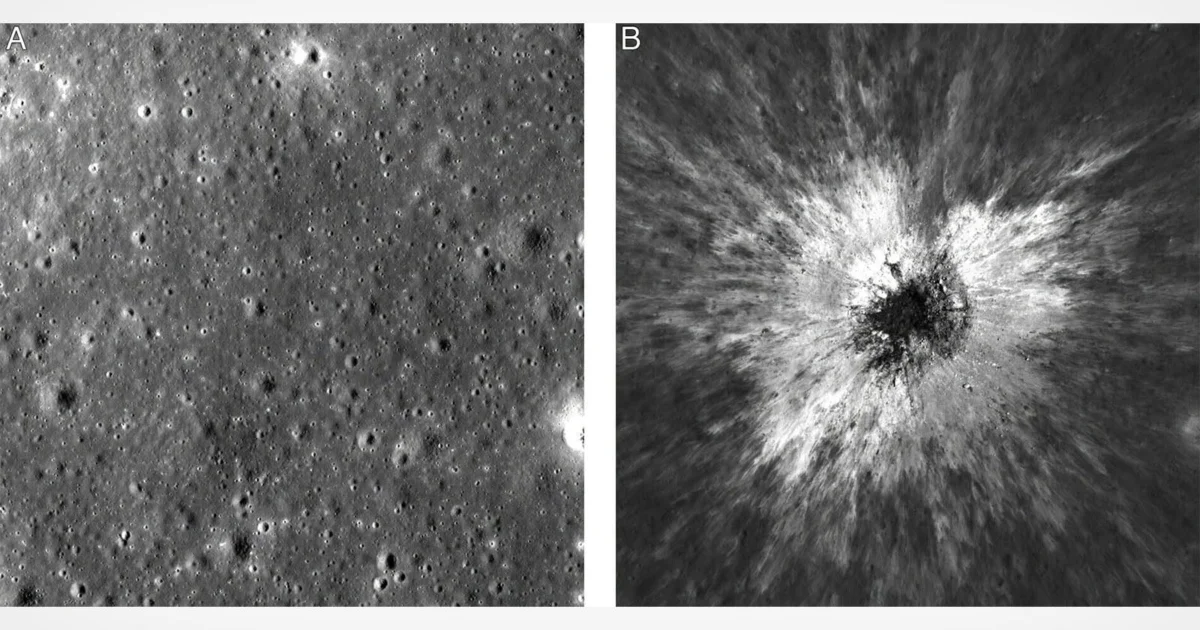
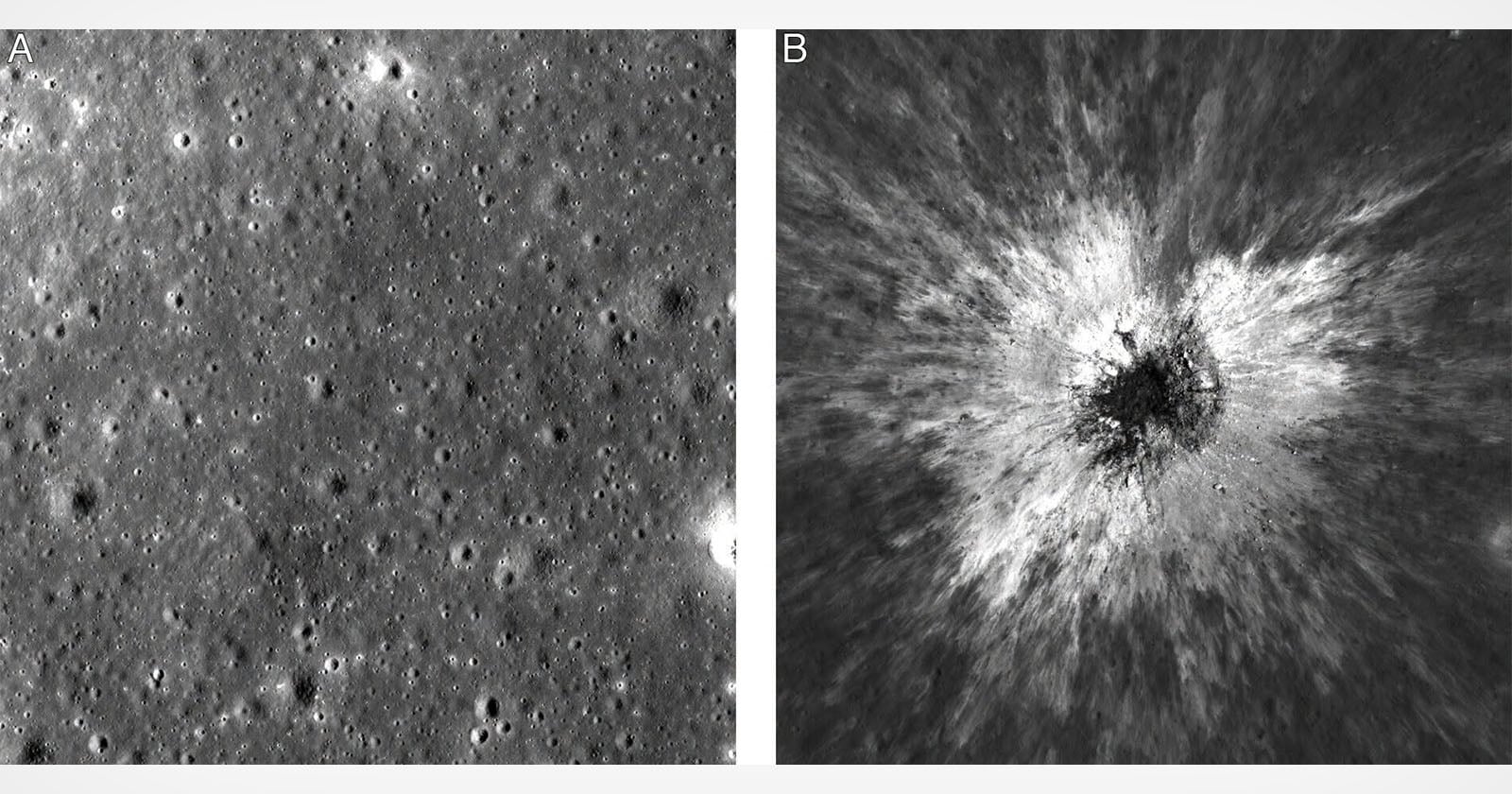
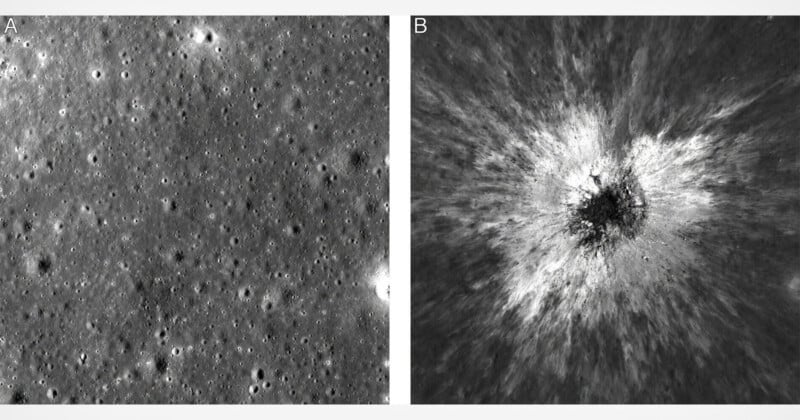
WASHINGTON — In a monumental find for planetary science, NASA researchers have published comprehensive before-and-after imagery of a massive, newly formed crater on the lunar surface. The discovery offers an unprecedented view of the raw destructive power unleashed when a large celestial body collides with a rocky world.
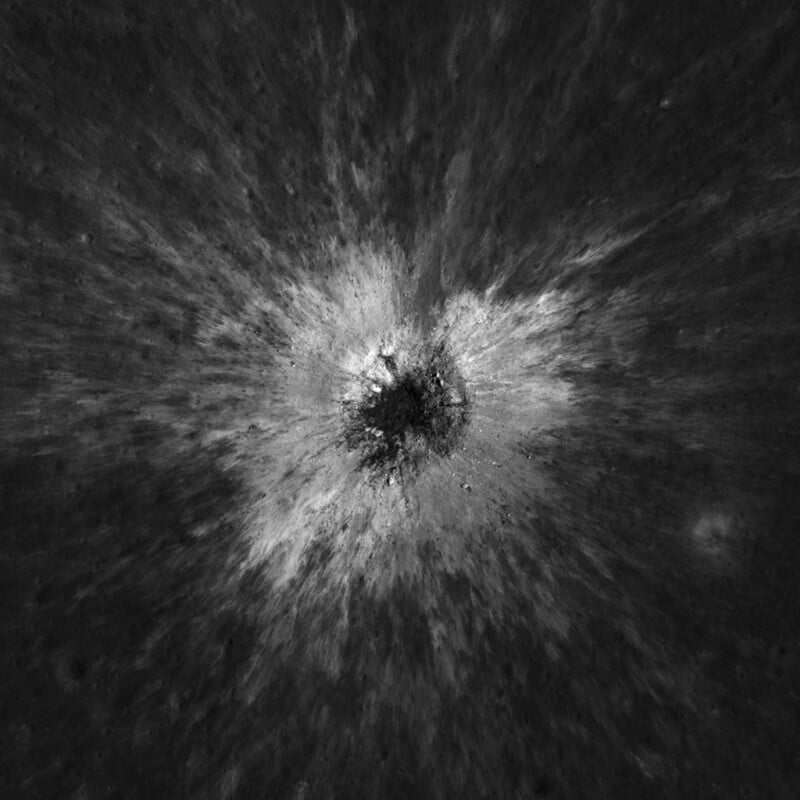
Named the McGetchin crater in honor of Thomas McGetchin—a distinguished former director of Houston’s Lunar and Planetary Institute—the massive depression measures approximately 728 feet (222 meters) across and plunges roughly 141 feet (43 meters) deep. It now stands as the largest newly formed impact crater ever identified by NASA’s long-running Lunar Reconnaissance Orbiter (LRO).
According to research teams publishing their findings in two separate papers in the journal Science Advances, an impact capable of carving out a feature of this magnitude occurs on the Moon only once every hundred years.
Main Facts: Anatomy of a Rare Lunar Impact
The birth of the McGetchin crater represents a goldmine for scientists who study impact mechanics—the fundamental geological process that shapes nearly all solid bodies in the solar system.
- Dimensions: Spanning 728 feet in diameter and 141 feet in depth, McGetchin is roughly three times wider than the previous record-holder for a newly formed impact crater discovered by the LRO.
- The Impact Force: The event did more than just gouge the ground. The kinetic energy of the collision blasted pulverized rock, dust, and debris across more than 60 miles (nearly 100 kilometers) of the surrounding lunar terrain, creating a striking "ejecta blanket" featuring bright radiating rays.
- Geological Setting: The crater sits strategically near the boundary dividing the Moon’s darker, basalt-rich volcanic plains (maria) and its brighter, rugged highlands. This unique location allows geologists to study how a singular impact alters two distinctly different types of geological terrain simultaneously.
- A Pristine Specimen: Most lunar craters are millions or billions of years old, heavily weathered by millions of subsequent micro-impacts, solar wind, and thermal fracturing. McGetchin is exceptionally rare because researchers possess high-resolution images of the exact location taken both before and after the strike, providing an unblemished "control group" for planetary scientists.
Chronology: How the Discovery Unfolded
Despite the sheer scale of the collision, the event occurred without human witnesses. Telescopes on Earth and orbital observatories in deep space failed to capture the flash of the impact in real-time. Piecing together the timeline of the event required meticulous detective work by NASA scientists.
Spring 2024: The Unseen Collision
Between April 11 and May 22, 2024, a rogue fragment of an asteroid or an extinct comet—likely several stories tall—slammed into the near side of the Moon. Traveling at hypervelocity speeds, the object instantly vaporized upon impact, excavating millions of tons of lunar regolith and reshaping the landscape in a fraction of a second.
May 2024: The Initial Clue
During a routine data-quality check of imagery streaming back from the LRO, mission researcher Robert Wagner noticed something out of the ordinary. A regional map displayed an anomalous bright patch encircled by a dark halo—visual shorthand for a freshly disturbed surface where underlying, unweathered material had been hurled across older topsoil.
"I just stopped, dropped everything, and started looking into what that spot was," Wagner recalled in a NASA blog post.
August 2025 to Early 2026: Confirmation and Verification
While wide-angle LRO images flagged the anomaly early on, the sheer volume of data collected by the spacecraft meant that definitive confirmation took time. It wasn’t until August 2025 that researchers cross-referenced the coordinates and realized they were looking at a massive new crater. Subsequent orbital passes captured targeted, high-resolution close-ups of the site, confirming the discovery and culminating in formal publication and public announcement in early 2026.
Supporting Data and Comparative Analysis
The discovery of the McGetchin crater bridges a vital observational gap in modern planetary astronomy. For decades, scientists have relied on theoretical models to estimate how often space rocks of various sizes strike the Moon and how those impacts alter the surface topography.
Until now, most newly documented craters found by orbital assets like the LRO have been relatively small—pitting marks measuring only a few dozen feet across, typically generated by spent rocket boosters or smaller meteoroids. (In fact, earlier this year, LRO imaging confirmed a separate, artificial crater carved into the lunar surface by a discarded SpaceX rocket stage.)
The McGetchin event shatters previous observational baselines. By comparing pre-impact topography with post-impact deformation, researchers can calculate the exact volume of displaced material, analyze the mechanics of ejecta ray formation, and refine models of impact shock physics. This data is increasingly critical as space agencies worldwide plan permanent human settlements on the Moon, where infrastructure must be shielded from or designed to withstand unpredictable surface hazards.
Official Responses and Scientific Perspectives
The scientific community has responded to the discovery with profound enthusiasm, dubbing the event a once-in-a-lifetime opportunity to witness planetary evolution in action.
"This event constitutes a statistically rare, effectively once-in-a-lifetime observation," the study authors wrote in Science Advances.
Tyler Powell, the lead author of one of the companion studies, emphasized that while orbital data is revolutionary, it represents only half of the equation. In an interview with Space.com, Powell noted that future exploratory efforts—whether crewed or robotic—should prioritize visiting the site.
"Observations from the surface would be really valuable because they would allow us to correlate what we see and map from orbit with small-scale changes to surface texture, the distribution of ejected material, and other properties that can only be studied in detail from the surface," Powell explained. "This would improve our understanding of many aspects of the impact cratering process."
Implications for Future Lunar Exploration
As NASA, commercial spaceflight companies, and international space agencies look toward sustained human presence on the Moon under initiatives like the Artemis program, understanding the current impact flux is more than an academic exercise.
The Moon lacks a thick atmosphere, meaning it offers no protection against incoming space debris—ranging from microscopic micrometeoroids to massive asteroid fragments like the one that formed the McGetchin crater. Knowing that major impacts of this scale occur roughly once a century gives mission planners vital statistical benchmarks for assessing risks to lunar habitats, solar arrays, communication arrays, and astronauts working on the surface.
Furthermore, the dual nature of McGetchin’s location—straddling the boundary between the ancient, dark mare basalts and the bright, anorthosite-rich highlands—provides a natural laboratory. Future lunar geologists on the ground will be able to study how shockwaves propagate through chemically distinct types of crust, yielding insights that apply not only to the Moon, but to impact craters found across Mars, Mercury, and the icy moons of the outer solar system.
For now, the McGetchin crater serves as a stark reminder of the dynamic, volatile nature of our solar system—a silent scar on the lunar face that captured a fleeting, violent moment in time and preserved it for science to decode.
 Evan Lee Salim
  Asep Darmawan
  Nana Wu