

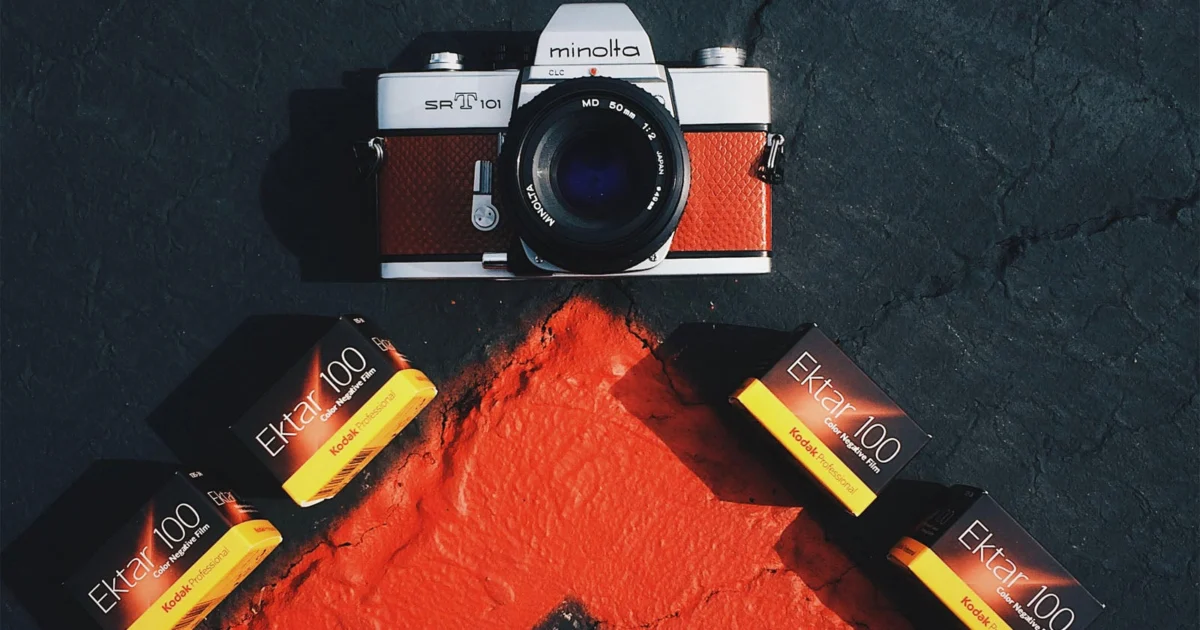
Introduction: The Heavyweight of Color Negative Film
In the modern renaissance of analog photography, few emulsions command as much respect, debate, and loyalty as Kodak Ektar 100. As one of the undisputed heavyweights of the contemporary color film market—sharing shelf space and mindshare with Kodak’s legendary Portra lineup—Ektar 100 occupies a distinct and vital niche. It is widely celebrated by landscape and fine-art photographers for its ultra-fine grain, punchy contrast, and exceptionally vivid color saturation.
While the film market has seen immense volatility over the last two decades, including the tragic loss of iconic emulsions like Kodachrome and the periodic scarcity of slide films like Fuji Velvia, Kodak Ektar 100 has emerged as a steadfast anchor for photographers seeking rich, saturated, and highly detailed analog imagery. This comprehensive examination explores the historical evolution of the Ektar name, its technical characteristics, its behavior in long-exposure and pinhole photography, and its lasting implications for the broader film community.
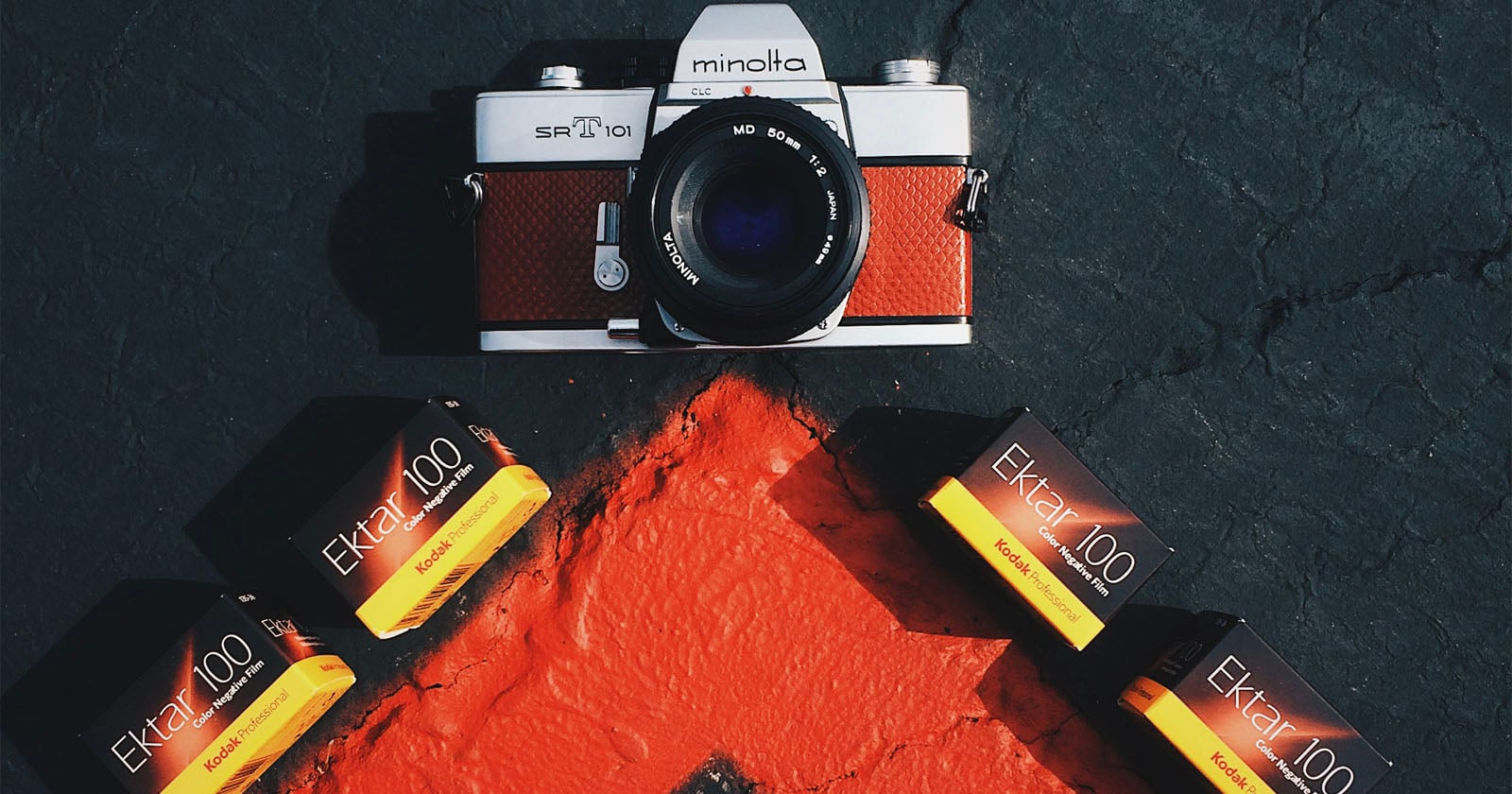
Main Facts: What Defines Kodak Ektar 100?
At its core, Kodak Ektar 100 is a slow-speed (ISO 100), daylight-balanced color negative film designed for photographers who prioritize sharpness, color brilliance, and seamless enlargements over speed.
Key Technical Characteristics:
- ISO Rating: 100, making it ideal for bright daylight conditions, studio setups, or long exposures.
- Grain Structure: Marketed by Kodak upon its 2008 re-introduction as having the "finest grain of any color negative film in the world." Practical application—even under high-magnification camera scanning on medium and large format—confirms that individual grain particles are remarkably difficult to discern.
- Color Profile: Delivers high color saturation and deep, poppy contrast. It serves as a direct color-negative counterweight to the softer, more natural skin tones and muted palettes of the Portra series, while offering a viable analog alternative to discontinued or scarce transparency films like Fuji Velvia.
- Format Availability: Released initially in 35mm (135) format in September 2008, Kodak quickly expanded availability to medium format (120) and large format sheet film sizes, including 4×5 and 8×10.
Chronology: From Optical Engineering to Modern Emulsion
To fully appreciate Kodak Ektar 100, one must trace a fascinating timeline that spans nearly a century, evolving from a pinnacle of optical engineering into a celebrated chemical formula.
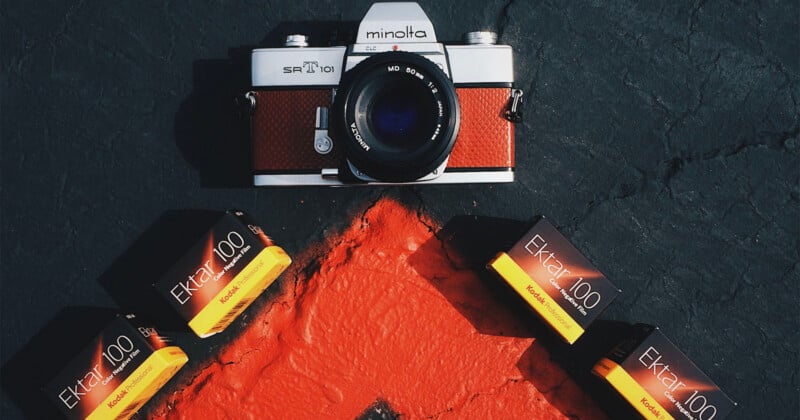
The 1930s–1960s: The Golden Age of Ektar Lenses
Long before the word "Ektar" appeared on a yellow cardboard film box, it was synonymous with elite glass. Beginning in the 1930s, Eastman Kodak designated its highest-quality, professional-grade camera lenses as Ektars—a portmanteau derived from Eastman Kodak TessAR.
These razor-sharp lenses graced a vast array of Kodak cameras, ranging from compact Bantams and iconic Retinas to sophisticated large-format studio and field cameras. Well into the 1960s, the "Ektar" badge signaled the absolute pinnacle of optical technology and manufacturing capability that Eastman Kodak could offer the photographic world.
1989–1997: The First-Generation Ektar Films
The Ektar moniker transitioned from glass to chemical emulsion in 1989, when Kodak launched its first line of Ektar color print films. Geared toward advanced amateurs and professionals, stocks like Ektar 25 and Ektar 1000 developed a dedicated following for their sharpness and distinct color rendition. However, shifts in the consumer market led to the discontinuation of this original lineup in 1997, leaving a decade-long vacuum for ultra-fine-grain color negative options.
September 2008: The Return of Ektar 100
Responding to a resurgent demand for high-performance analog materials, Kodak officially resurrected the Ektar brand in September 2008 with the announcement of Ektar 100. Introduced during a critical transitional period for the analog industry—marked by the impending twilight of Kodachrome—Ektar 100 was positioned as a technological tour de force. Kodak claimed it possessed the finest grain of any available color negative film. The market response was immediate, and the heavy industry hype proved to be entirely justified.
Supporting Data & Performance Analysis
Evaluating an emulsion requires looking beyond marketing claims and analyzing how the film performs in the field across diverse photographic disciplines.
Landscape Photography and Color Rendition
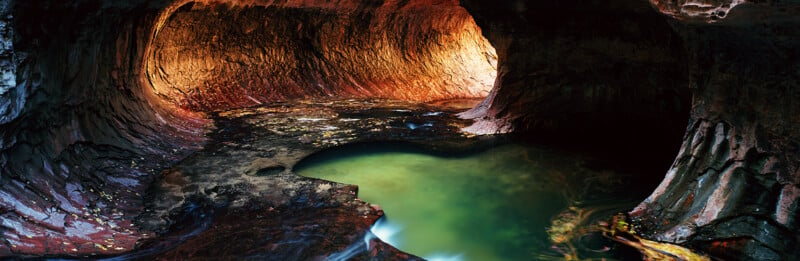
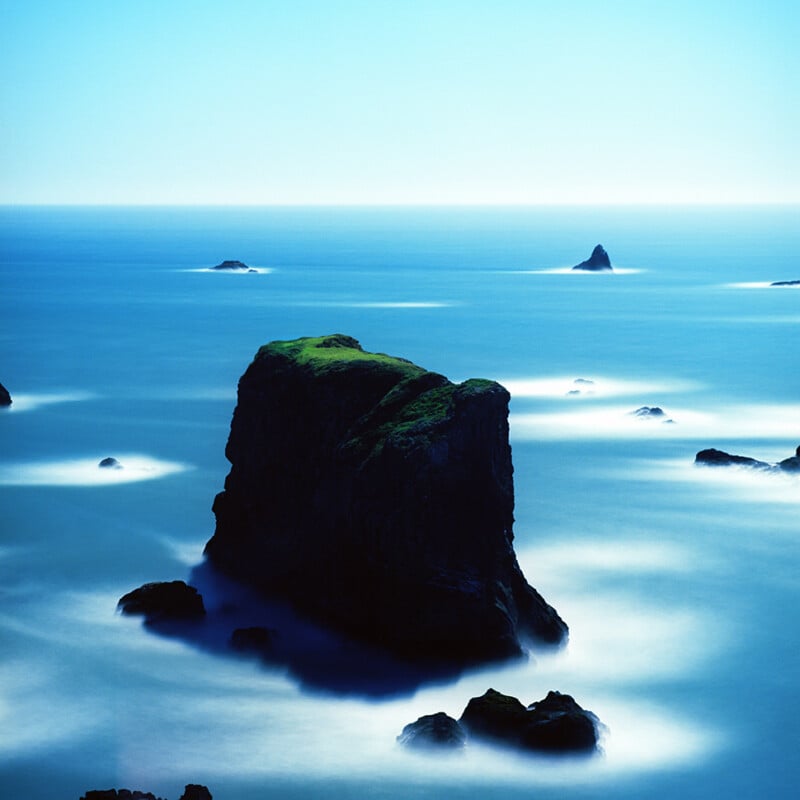
Landscape photographers have largely embraced Ektar 100 due to its aggressive color saturation and punchy contrast. When compared to the muted, skin-tone-friendly latitudes of Kodak Portra, Ektar leans heavily into saturated blues, greens, and reds.

With the chronic scarcity and rising costs of Fuji Velvia transparency film over recent years, Ektar 100 has firmly established itself as the go-to color negative medium for nature and landscape shooters aiming for vibrant, high-impact vistas. It shines particularly bright during the autumn season, where its chemical makeup elevates fall foliage into striking, hyper-vivid hues.
Sharpness and Enlargement Potential
The fine grain of Ektar 100 is not merely an abstract specification; it fundamentally changes what is possible in the darkroom or digital scanning suite. When shooting in medium format (such as 6×7 or 6×9) or large format (4×5 and 8×10), the film yields staggering levels of detail.

Photographers utilizing camera-scanning setups report that even when zooming in to maximum magnification for focus peaking, the grain structure remains virtually invisible. This allows for massive, wall-sized enlargements that retain pristine clarity, smooth tonal gradations, and minimal visual noise.
Low-Speed Versatility: Pinhole and Long Exposures
While low film speeds are frequently discussed only in the context of avoiding grain, an ISO 100 rating unlocks unique creative pathways regarding shutter speeds and exposure times.

- Pinhole Photography: Pinhole cameras rely on extremely small apertures, resulting in inherently slow light transmission. Because instantaneous exposures are impossible with a pinhole setup, photographers must embrace long exposure times. Ektar 100 is widely regarded as a premier choice for pinhole enthusiasts, offering a rare low-speed color option that matches the mechanical constraints of the medium.
- Neutral Density (ND) Filters: Landscape and architectural photographers utilizing ND filters to achieve multi-second or multi-minute exposures benefit greatly from a slow base ISO.
Reciprocity Failure Characteristics
When light levels drop and exposures extend beyond normal meter readings, films suffer from reciprocity failure—a phenomenon where the emulsion becomes less sensitive to light over time, often accompanied by unwanted color shifts.
Kodak’s official data sheets provide clear guidelines for Ektar 100:

- Up to 1 second: No reciprocity correction is required.
- Up to 10 seconds: Corrections remain minimal.
- 30 seconds and beyond: Photographers must compensate by adding an extra stop of exposure (treating a metered 30-second exposure as approximately one full minute).
Compared to transparency films like Fuji Velvia 50—which notoriously suffers from severe reciprocity failure and a prominent green color shift after just a few seconds—Ektar 100 exhibits stable and predictable reciprocity behavior, making it far more forgiving for twilight, night, and heavy-ND long-exposure work.
Official Responses and Industry Reception
Industry professionals, retail institutions, and manufacturing representatives have consistently championed Ektar 100 as a cornerstone of modern film stock preservation. Specialty retailers, such as Portland, Oregon’s renowned Blue Moon Camera and Machine, frequently highlight Ektar as one of their premier inventory heavyweights.

Industry consensus points to Ektar 100 as a vital bridge keeping color negative chemistry commercially viable. While Kodak Alaris continues to navigate global supply chain pressures, raw material costs, and manufacturing complexities, the steady production of Ektar across 35mm, 120, and sheet film formats signals a corporate commitment to supporting the high-end professional and fine-art analog communities.
Implications for the Modern Analog Community
The enduring popularity of Kodak Ektar 100 carries several broader implications for the photographic industry at large:

- Challenging Portraiture Norms: Ektar’s aggressive saturation is a double-edged sword. While phenomenal for landscapes, architecture, and still life, its rendering of human skin tones can occasionally skew ruddy or overly saturated. However, rather than disqualifying it for portraiture, skilled photographers utilize Ektar intentionally—pairing it with subjects featuring striking natural features, such as vibrant red hair or piercing blue eyes, or leveraging it for stylized environmental portraits where color dominance is an artistic asset.
- Filling the Transparency Void: As traditional color transparency (slide) films face uncertain production futures and skyrocketing secondary-market prices, Ektar 100 provides an accessible color-negative alternative that satisfies the craving for punchy, saturated colors without requiring specialized E-6 slide processing chemistry (Ektar is processed using standard C-41 chemicals).
- Sustaining Analog Infrastructure: The continued high demand for specialized stocks like Ektar 100 drives ongoing support for film laboratories, chemical manufacturers, and mechanical camera repair technicians. When photographers invest in fresh rolls of Ektar, they directly contribute to the economic viability of the broader analog ecosystem.
Conclusion: A Definitive Staple for the Camera Bag
Kodak Ektar 100 is far more than a nostalgic nod to the past or a specialized one-trick pony. Through its brilliant color saturation, exceptional sharpness, virtually invisible grain, and dependable long-exposure capabilities, it has earned a permanent, indispensable place in the contemporary film photographer’s toolkit.
Whether capturing the fiery canopy of an autumn forest on a Hasselblad 500C, experimenting with architectural abstracts on a Zero Image pinhole camera, or preparing massive 4×5 enlargements in the darkroom, Ektar 100 consistently delivers breathtaking results. For any photographer dedicated to the color analog medium, experiencing Ektar at least once is a rite of passage—and for most, that first roll marks the beginning of a lifelong creative partnership.
 Asro
Asro  Asep Darmawan
  Nana Wu