For over two decades, Dutch documentary photographer Jan Banning has journeyed into the hidden machinery of global governance. His seminal long-term project, Bureaucratics—first published to international acclaim in 2008 and recently expanded into the newly released volume Bureaucratics Revisited—offers a rare, uncompromising look at the people who wield state authority behind closed doors.
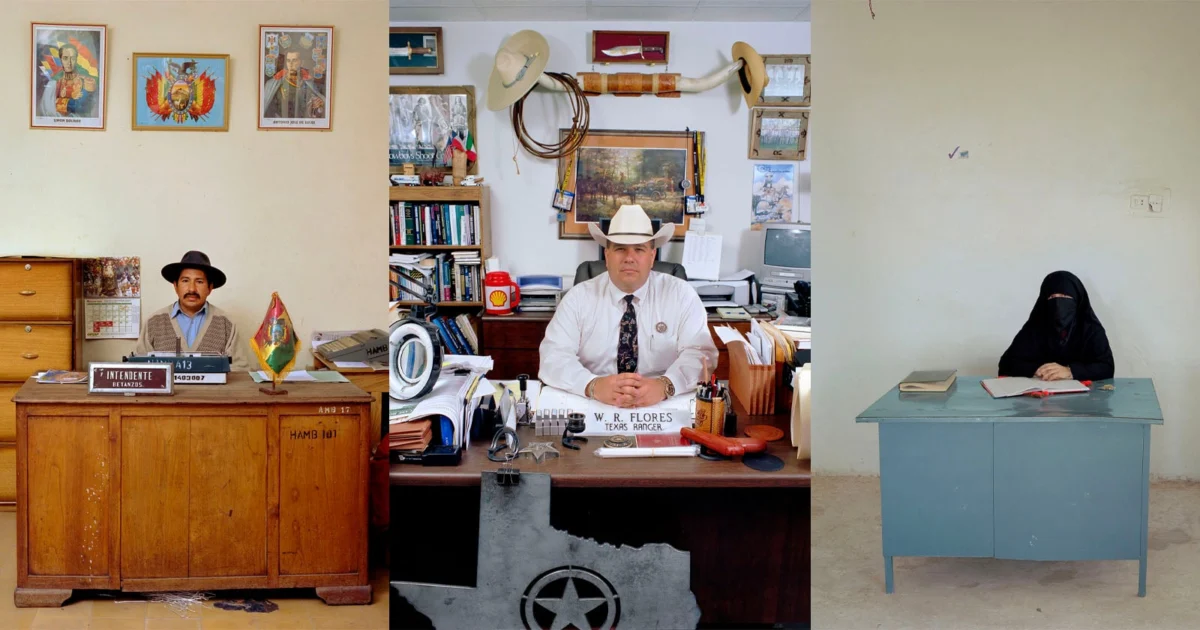
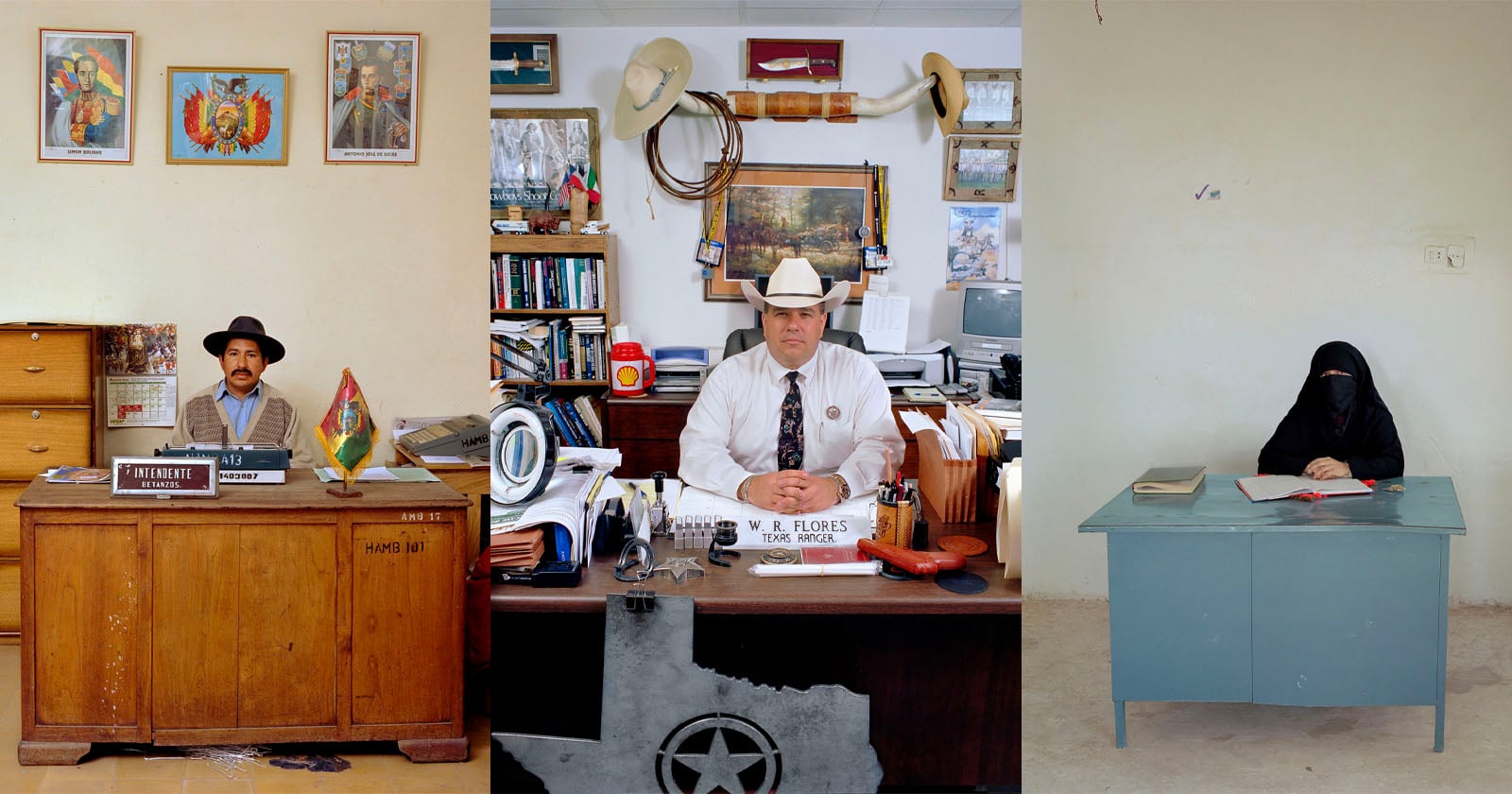
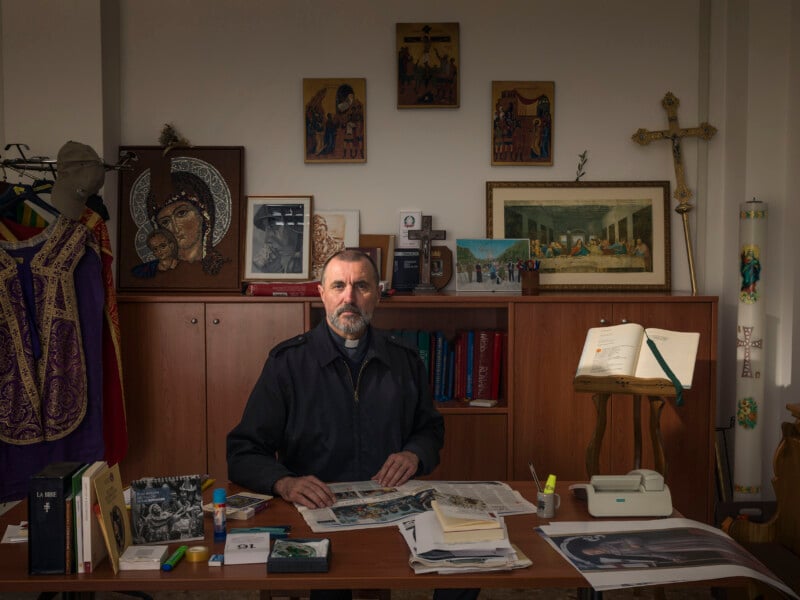
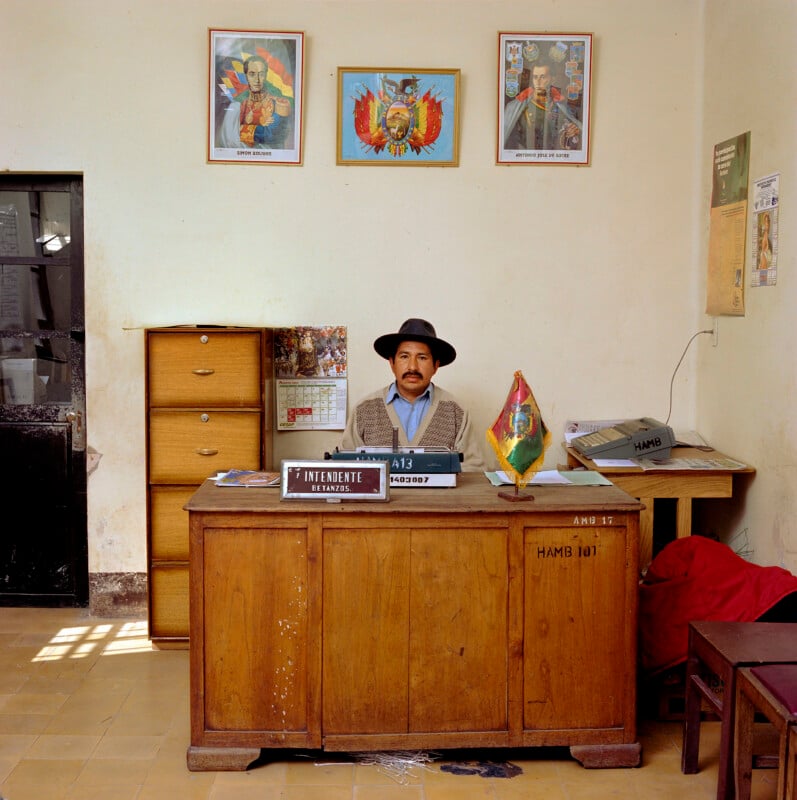
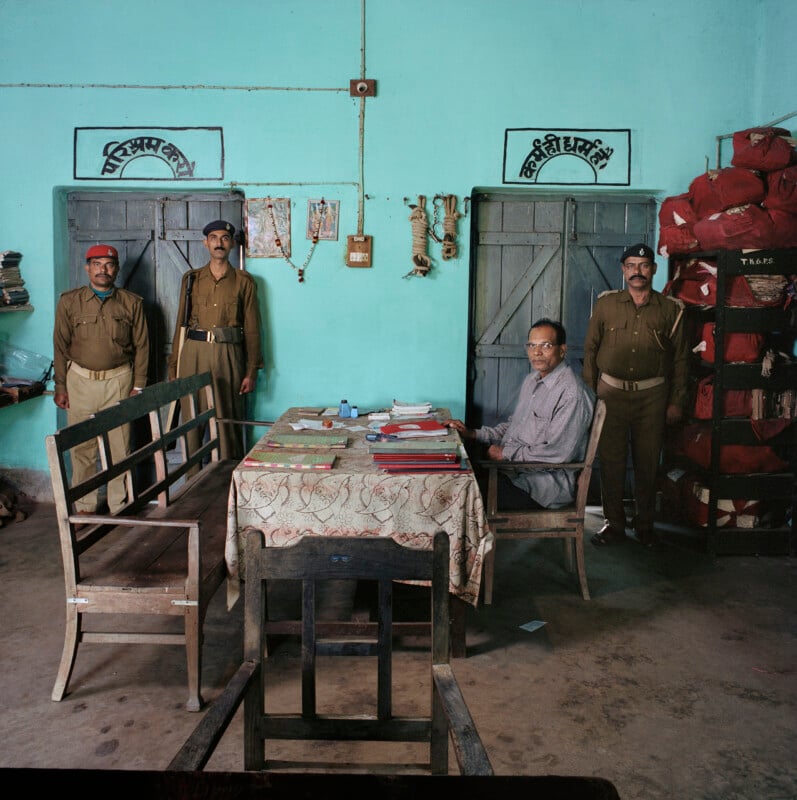
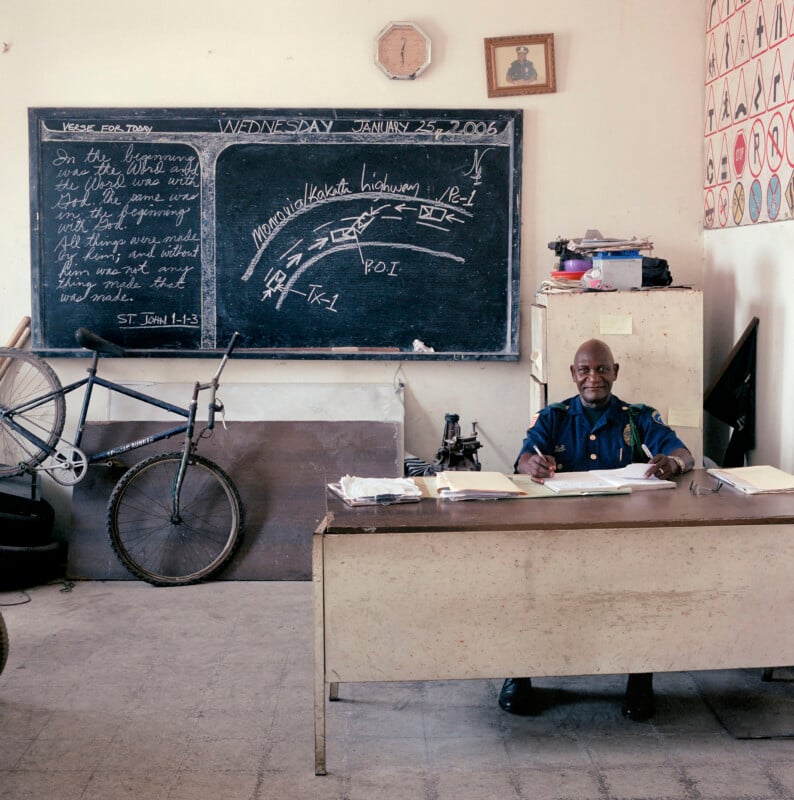
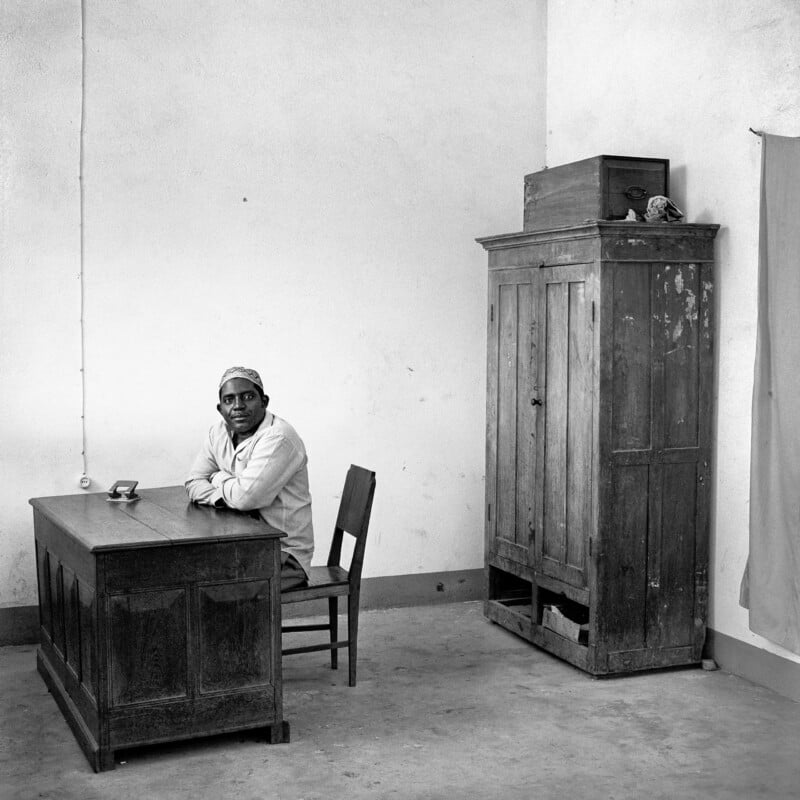
Spanning multiple continents, years of bureaucratic navigation, and an array of cultural landscapes, Banning’s work captures civil servants, police officers, judges, and clerks in their natural habitats: their offices. Defined by a strict methodological formula—square-format frames, deadpan clarity, frontal perspectives, and a camera height aligned precisely with the eye level of an entering citizen—these environmental portraits strip away abstract political theory. Instead, they present bureaucracy as it truly is: profoundly human, structurally absurd, and universally ubiquitous.
The newly released Bureaucratics Revisited dips deeper into Banning’s extensive archival holdings while introducing fresh imagery. The resulting collection operates simultaneously as an anthropological field study and a work of visual poetry. It investigates the subtle, often tense dialogue between the office as a performative stage for state power and the civil servant’s personalized workspace, decorated with family photos, fading calendars, towering stacks of paper files, and regional artifacts.
Chronology: From Concept to Global Archive
The genesis of Bureaucratics dates back to 2002, when Banning first conceptualized a visual survey of state administration. Recognizing that bureaucracy touches every facet of modern human life—from birth certificates to criminal proceedings—yet remains largely invisible to the public eye, the photographer set out to document its physical and human manifestations.
2002–2007: Over a rigorous five-year period, Banning undertook an unprecedented global expedition. Navigating notoriously difficult administrative hurdles, he gained official clearance to photograph public officials across eight diverse countries: India, Yemen, Bolivia, France, Russia (Siberia), Liberia, China, and the Netherlands.
2008: Banning published the original Bureaucratics monograph, which quickly garnered global praise for its deadpan humor, sharp sociological insights, and technical precision.
2010–2013: Banning extended his geographic and thematic scope, traveling to nations such as Uganda and Colombia to further document the intersections of law, order, and institutional archiving.
Present Day: With the release of Bureaucratics Revisited, Banning has integrated previously unseen frames from his extensive archives, providing contemporary audiences with a refreshed perspective on an ongoing global phenomenon. Throughout the project’s evolution, Banning’s technical apparatus shifted in tandem with photographic technology, moving from a Bronica SQ-Ai medium-format film camera to a Fuji GX-680III, and ultimately to a high-resolution Hasselblad H5.
Supporting Data: Behind the Lens and Inside the Office
To understand the scope of Bureaucratics, one must examine the micro-narratives embedded within the individual portraits. Each photograph is accompanied by detailed captions that reveal the stark disparities in resources, responsibilities, and working conditions across the globe:
Siberia, Russia (2004): In the village of Oktyabrsky, police officer Sergej Michailovich Osipchuk (born 1974) serves a local population of roughly 2,000 residents. Despite his jurisdiction covering an entire community, Osipchuk lacks a police car, a personal vehicle, or even a bicycle, performing his duties constrained by geographical isolation and limited infrastructure.
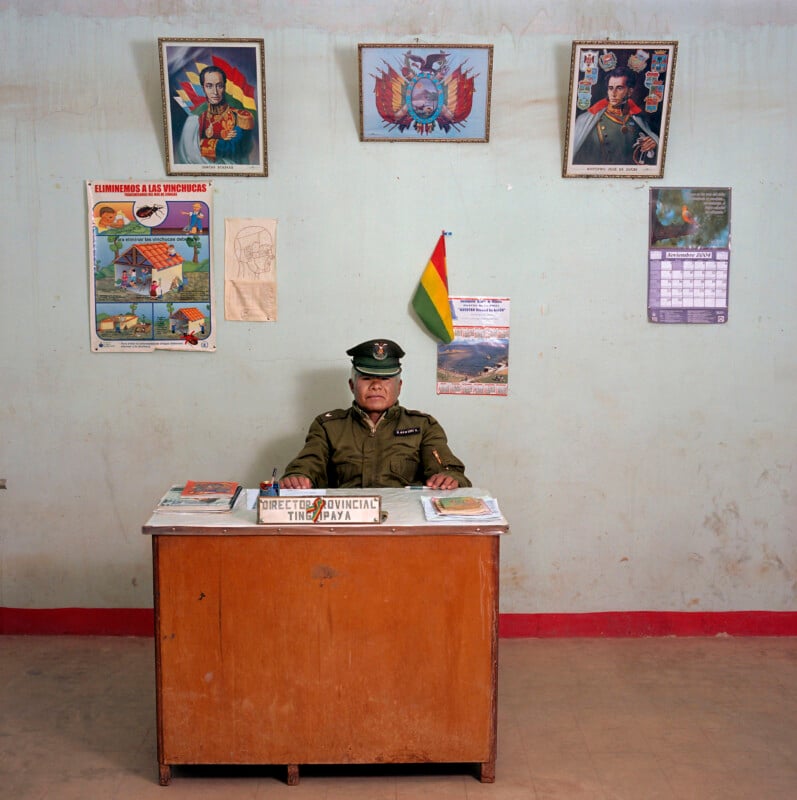
Tinguipaya, Bolivia (2005): Third-class police officer Constantino Aya Viri Castro (born 1950)—formerly a construction worker—operates out of a municipal police station that famously lacks a telephone, a car, or a typewriter. His environment highlights the threadbare reality of rural law enforcement in the Global South.
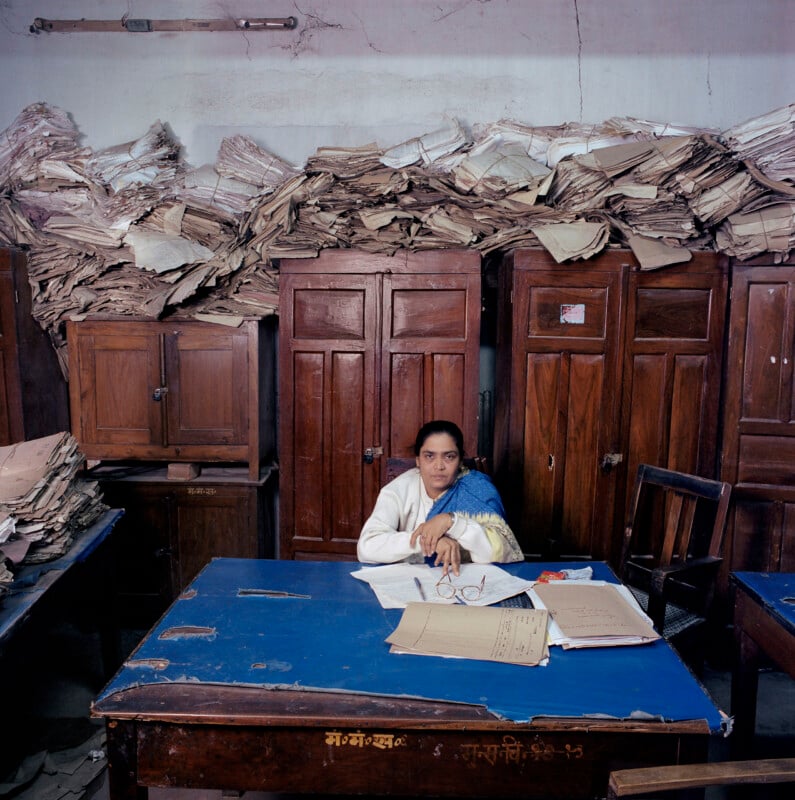
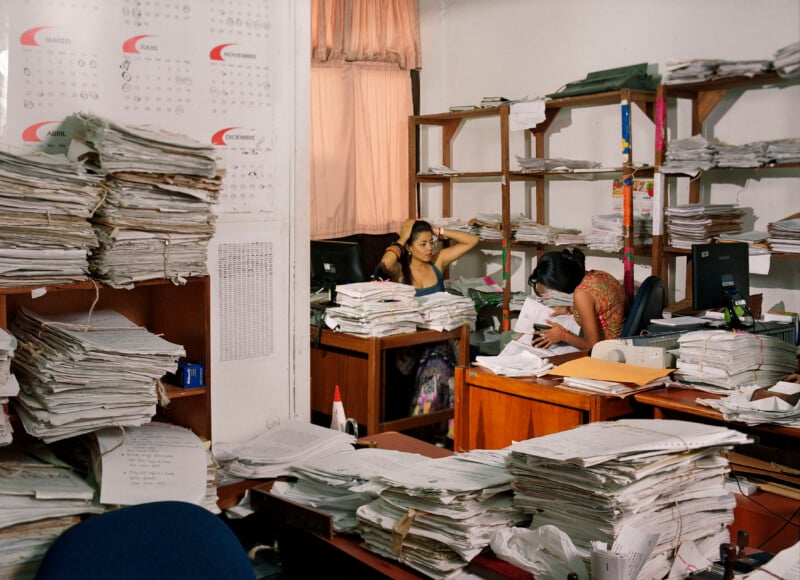
Patna, Bihar, India (2004): Sushma Prasad (born 1962) serves as an assistant clerk at the Cabinet Secretariat of the State of Bihar, a state housing a population of 83 million. Working out of The Old Secretariat, Prasad was hired on "compassionate grounds" following the death of her husband, who worked in the same department until 1997. Her desk is consumed by towering, precarious walls of paper documents and wooden filing cabinets.
Clermont-Ferrand, France (2006): In sharp contrast to the austere or overwhelmed offices of the developing world, French narcotics agent Roger Vacher (born 1957) works in an office decorated with pop-culture markers, including posters of Bob Marley, Bart Simpson, and cannabis-themed imagery, illustrating how individual identity seeps into state-sanctioned spaces in Western Europe.
Jinja, Uganda (2013): Ivan Niwamanya (age 29), a Chief Jailor holding the rank of Principal Officer II at Kirinya Main Prison (Uganda’s second maximum-security facility), oversees a staggering population of 922 inmates (898 convicts and 24 on remand) inside a facility originally engineered to house just 336 people. Beyond administrative detention duties, Niwamanya also functions as an arbiter, settling conflicts that arise among the prisoners.
Official Responses and Curatorial Perspectives
Securing access to government officials and institutional interiors is notoriously difficult. In the book’s foreword, renowned documentary photographer Martin Parr underscores the sheer administrative diplomacy required to bring Bureaucratics to life:
"Receiving permission to shoot portraits of bureaucrats is in itself an achievement, when you consider the countries they decided to visit: India, Yemen, Bolivia and others," Parr writes. "I would not know where or how to start. So they get the go-ahead, and then Banning shoots many portraits, the best of which we see here."
Obtaining clearances involved navigating layers of bureaucracy just to photograph the bureaucrats themselves. Civil service departments, police directorates, ministries of agriculture, and municipal courts had to evaluate and approve requests that risked exposing institutional inefficiencies, dilapidated infrastructure, or, conversely, bureaucratic excess. The resulting cooperation—often granted because officials viewed the documentation through a lens of institutional pride—allowed Banning to capture an unfiltered cross-section of global governance.
Implications: The Invisible Machinery of Modern Society
Jan Banning’s Bureaucratics Revisited transcends mere portraiture, offering profound implications for how citizens perceive state power, globalization, and labor.
1. The Democratization of Authority
By photographing every subject from the exact eye level of a citizen entering an office, Banning deliberately subverts the traditional power dynamic between the state and the individual. The viewer is placed directly in the visitor’s chair. Whether confronting a heavily decorated Texas Ranger (Rudy Flores in Palestine, Texas) or an advisor at a rural education center in Manakhah, Yemen (Nadja Ali Gayt), the viewer is invited to weigh the monumental weight of the institution against the vulnerability of the human being operating it.
2. The Materiality of Paperwork in a Digital Age
Captured primarily across the late 2000s and early 2010s—an era standing on the precipice of global digital transformation—the archives depicted in Bureaucratics Revisited serve as historical monuments to the physical age of paper. Stacks of documents reaching ceilings in Cartagena, Colombia, or the densely packed records room at the Chief Magistrate’s Court on Buganda Road in Kampala, Uganda, illustrate that state power has historically been anchored not in digital clouds, but in heavy, physical pulp. These rooms manifest the memory of the state, stored in crumbling files, ink logs, and overflowing filing cabinets.
3. Bureaucracy as a Universal Equalizer
Ultimately, Banning’s masterwork demonstrates that despite vast cultural, political, and economic differences between nations like China, Liberia, Mozambique, and the United States, the bureaucratic experience remains remarkably uniform. Bureaucracy is the universal language of modern civilization—simultaneously a shield protecting social order and an impersonal labyrinth that can reduce human existence to a stamp, a signature, and a file number. Through Bureaucratics Revisited, Jan Banning ensures that the faces behind the ink and rubber stamps are never entirely forgotten.




 Suro Senen
  Reynand Wu
  Nana Muazin