

In the modern landscape of digital content creation, the philosophy of gear acquisition has shifted dramatically. Where photographers once gladly hauled heavy Pelican cases packed with specialized prime lenses and bulky f/2.8 zooms, a growing cohort of professionals and enthusiasts now prioritize versatility, mobility, and everyday convenience over absolute optical perfection. Having a single, compact optic that covers an expansive ultra-wide field of view—allowing you to capture sweeping landscapes, tight architecture, and spontaneous street scenes without ever unzipping a secondary lens pouch—is rapidly becoming the holy grail of travel and documentary work.
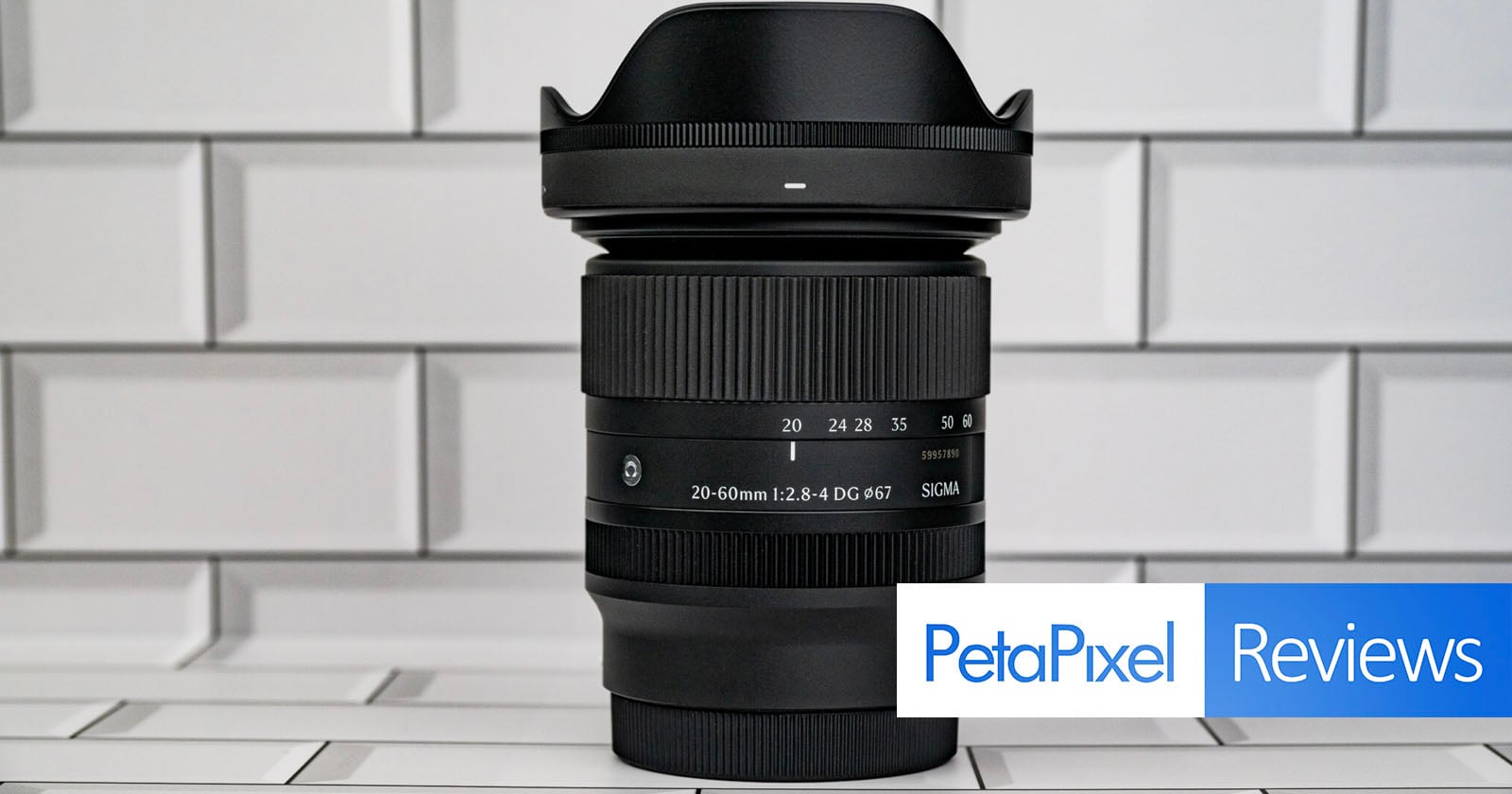
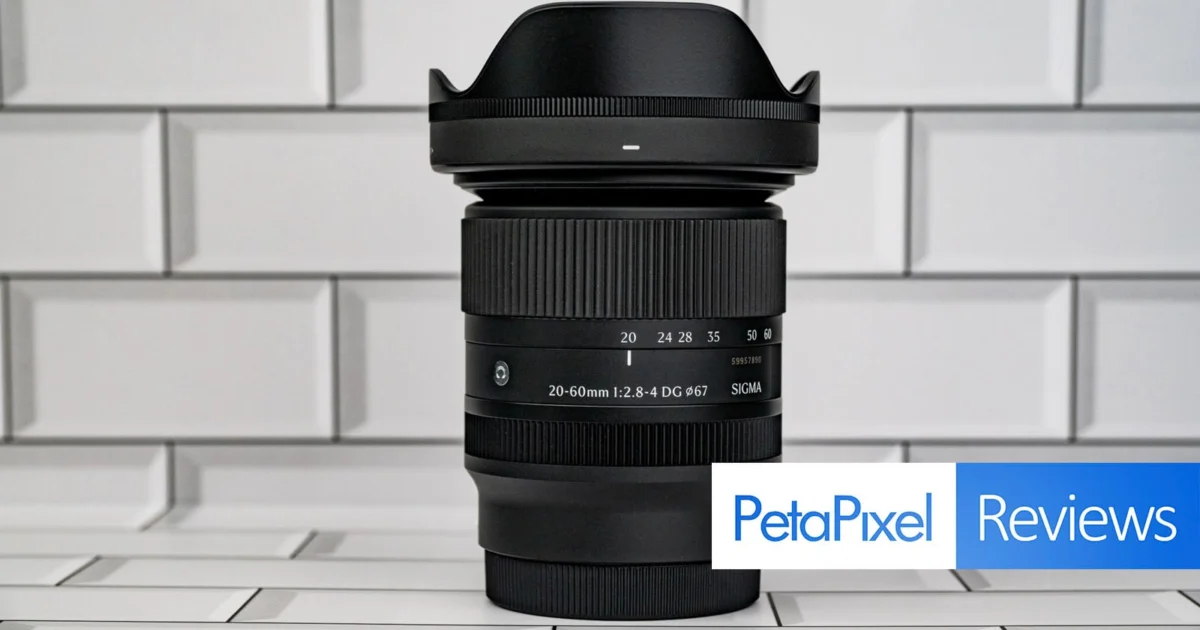
Addressing this exact demand, Sigma has introduced the Sigma 20-60mm f/2.8-4 DG Contemporary, a compelling new zoom lens designed for full-frame mirrorless systems. Priced attractively at $849 and available for both Sony E-mount and Leica/Panasonic/Sigma L-mount users, this lens strikes directly at the heart of the walk-around zoom market. Offering a bright f/2.8 maximum aperture at its ultra-wide 20mm starting point, it enters the arena to challenge established favorites from both Sony and Panasonic.

Main Facts: The Sigma 20-60mm f/2.8-4 DG Contemporary at a Glance
The Sigma 20-60mm f/2.8-4 DG Contemporary is built to bridge the gap between dedicated ultra-wide primes and standard travel zooms, packing substantial capability into a remarkably small footprint.
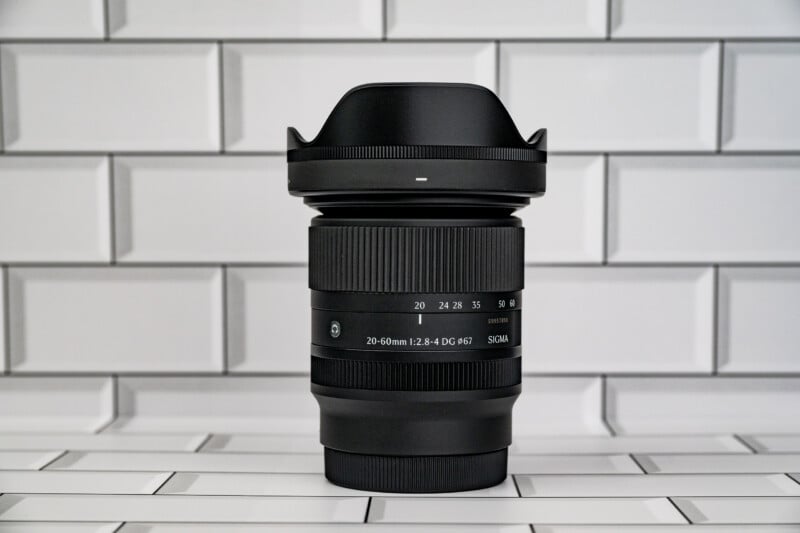
- Focal Length Range: 20mm to 60mm, offering an ideal ultra-wide to standard-wide perspective.
- Aperture Range: Variable f/2.8 at the wide end, stepping down to f/4 at the telephoto end.
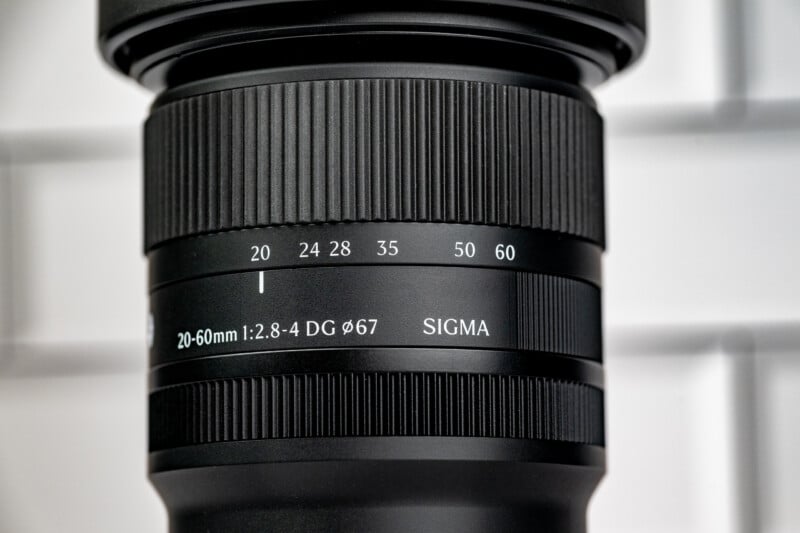
- Weight and Dimensions: Weighs a feather-light 13.2 ounces (375 grams) with a manageable 67mm front filter thread diameter.
- Price: $849 USD (New, available via major retailers like B&H; also circulating on secondary markets like KEH).
- Mount Compatibility: Available for Sony E-mount and Leica/Panasonic/Sigma L-mount systems.
- Autofocus System: Powered by a high-speed linear motor ensuring rapid, quiet acquisition.
- Macro Capabilities: Achieves an impressive 1:2.3 maximum reproduction ratio, optimized around the 35mm focal mark.
Chronology of Development and Field Testing
The genesis of the 20-60mm focal range as a preferred lightweight format began with Panasonic’s kit zoom, but Sigma’s engineering team saw an opportunity to inject professional-grade optical brightness and build quality into the category. Following months of industry speculation, Sigma officially announced the lens ahead of a hands-on preview cycle that culminated in rigorous testing at high-profile industry gatherings, including the Sony Kando event.
Ergonomics, Build, and Physical Design
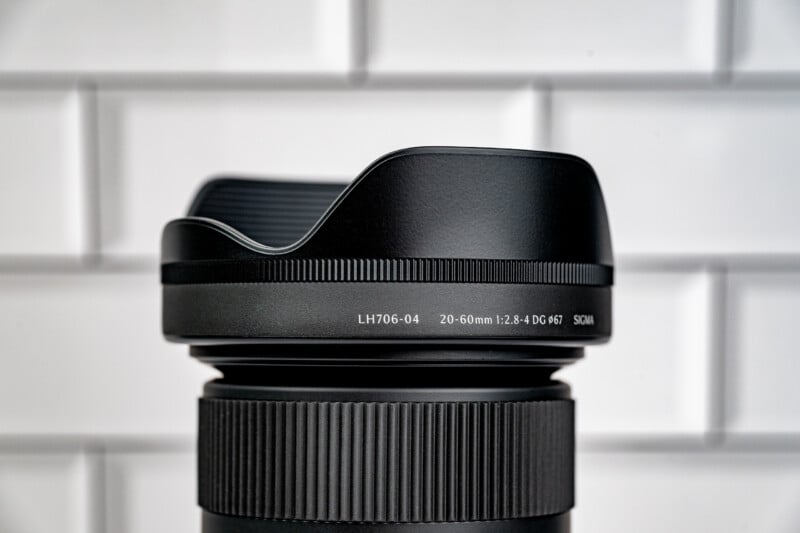
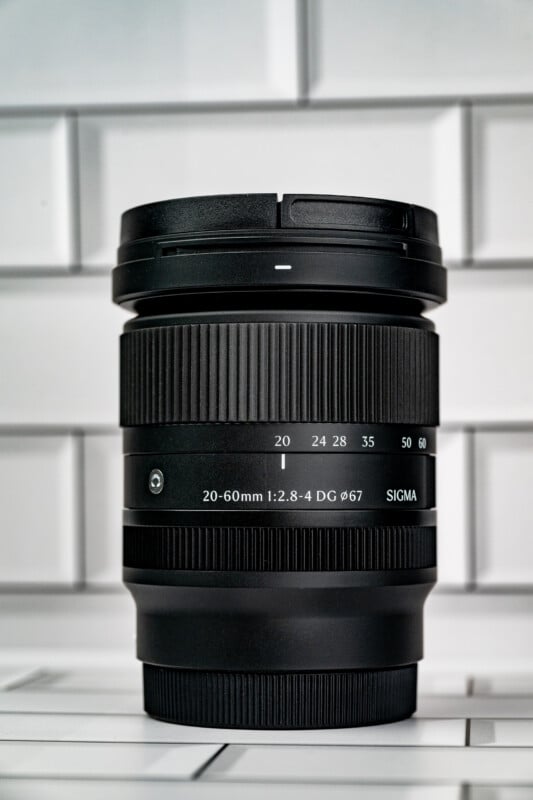
Upon unboxing, the immediate takeaway is how remarkably small and light the lens feels. At just 375 grams, it undercuts several competitors in the weight department while maintaining the robust weather sealing and dust-resistance standards expected from Sigma’s Contemporary product line. The exterior construction features a sleek, minimalist aesthetic. Out of the box, users receive a standard petal-type lens hood that attaches smoothly to the front element.

However, true to the philosophy of ultra-portable design, physical controls on the lens barrel are sparse. You will find a responsive zoom ring and a manual focus ring, but Sigma has omitted a dedicated AF/MF toggle switch to save space and weight. The manual focus ring exhibits a slightly loose, "sloppy" tactile sensation compared to high-end Art-series glass, though it functions reliably in the field. Hidden beneath the sleek exterior is a high-speed linear motor that delivers swift, virtually silent autofocus performance, making it equally adept at tracking sudden movements in photography or locking onto subjects during video recording.
Supporting Data and Optical Performance
Evaluating a variable-aperture hybrid zoom requires a deep dive into its optical characteristics across various focal lengths and lighting conditions. Field tests and laboratory charts paint a detailed picture of where this lens excels and where compromises were made to maintain its compact form factor.

Flare, Ghosting, and Sunstars
Tested extensively at its 20mm ultra-wide setting—where wide-angle optics are typically most vulnerable to stray light—Sigma’s proprietary lens coatings continue to impress. Flare resistance is exceptionally strong; direct light sources introduced into the frame are handled with minimal degradation to overall contrast. When stopping the aperture down aggressively, users may notice minor purple ghosting tracking diagonally across the frame, but this is easily correctable and represents a stellar result for an ultra-wide zoom at this price point. Conversely, sunstars produced by the lens are thoroughly average, lacking the sharp, defined diffraction spikes that landscape purists often look for.
Close-Up and Macro Utility
One of the standout surprises during field evaluation is the lens’s macro capability. Versatile zooms frequently struggle with minimum focus distances, but the Sigma 20-60mm thrives in close-quarters environments. Performing its best macro work near the 35mm focal length, it achieves an impressive 1:2.3 reproduction ratio. This allows photographers to capture striking, detailed close-ups of flora and fauna—such as bumblebees on salvia flowers—infusing the lens with a layer of utility that transcends standard landscape and street shooting.

Bokeh and Aberrations
Bokeh rendering is often the Achilles’ heel of compact, variable-aperture zooms. On the Sigma 20-60mm, background blur tends to lean toward the harsher side. Specular highlights exhibit subtle "onion-ring" texturing due to aspherical element manufacturing, placing the overall bokeh quality firmly in the "average" category—neither offensive nor particularly dreamy. Additionally, minor longitudinal chromatic aberration (LoCA) can be spotted, though it is strictly confined to the 20mm end when shot wide open at f/2.8 and disappears quickly upon stopping down.

Sharpness and Contrast Analysis
Sharpness metrics reveal a very capable optical design:

- 20mm End: Wide open at f/2.8, the lens delivers good central contrast and detail, though extreme corners exhibit noticeable softness. Stopping down by a couple of stops rapidly improves corner sharpness and overall micro-contrast.
- 60mm End: At the telephoto terminus, the lens genuinely impresses. Center sharpness at f/4 is remarkably high, and corner consistency is far superior to its wide-angle performance, establishing it as a genuinely sharp optic throughout the mid-to-telephoto range.
Official Responses and Market Positioning
Sigma’s positioning of the 20-60mm f/2.8-4 DG Contemporary is strategic, aimed squarely at creators looking to maximize light intake without inflating their gear bag. Industry analysts and reviewers have noted that while the lens lacks optical stabilization (relying instead on sensor-shift stabilization built into modern Sony and Panasonic camera bodies), its aggressive pricing and optical brightness create a disruptive value proposition.

Video Performance and Gimbal Integration
From a cinematography standpoint, the lens is exceptionally well-suited for gimbal work and vlogging. The faster f/2.8 aperture at the ultra-wide end provides crucial light-gathering capability in dim interiors or during dusk shoots. Furthermore, zooming through the focal range does not cause a drastic shift in the camera rig’s center of balance, sparing operators from having to recalibrate their gimbals mid-shoot.

The primary caveat for videographers is lens breathing: as you rack focus from near to far, there is a noticeable shift in the perceived field of view. Despite this optical quirk, budding independent filmmakers and digital creators will find the weight savings and aperture profile hard to ignore.

Implications for the Ecosystem: Sony and Panasonic Alternatives
The arrival of the Sigma 20-60mm f/2.8-4 shakes up the competitive hierarchy for both major mirrorless ecosystems it supports.
For Sony E-Mount Users
Sony shooters have long enjoyed the Sony 20-70mm f/4 G lens, a widely praised travel optic. While the Sony offers an extra 10mm on the long end and maintains a constant f/4 aperture, it commands a significantly higher price tag of roughly $1,200 compared to Sigma’s $849 asking price. For photographers willing to trade a touch of telephoto reach in exchange for a brighter f/2.8 aperture at the crucial 20mm setting—and a substantial financial savings—the Sigma presents an extraordinarily attractive alternative.

For L-Mount (Panasonic, Leica, Sigma) Users
Panasonic shooters previously relied on the Panasonic 20-60mm f/3.5-5.6, a popular budget-friendly kit lens. The new Sigma offering outperforms Panasonic’s kit option across nearly every metric: it is significantly faster (letting in substantially more light), boasts superior build quality, and delivers sharper optical results. While the Panasonic option remains cheaper—especially when purchased as part of a camera body bundle—the performance delta easily justifies the step up to Sigma’s glass for serious enthusiasts.

Final Verdict: Should You Buy It?
The Sigma 20-60mm f/2.8-4 DG Contemporary succeeds in its core mission: delivering a versatile, lightweight, and bright ultra-wide zoom solution that eliminates the need to carry multiple lenses.

Pros:

- Excellent lightweight and compact form factor (375g).
- Bright f/2.8 maximum aperture at the 20mm ultra-wide setting.
- Impressive 1:2.3 macro reproduction capability around 35mm.
- Strong flare resistance and reliable autofocus tracking via linear motor.
- Highly competitive $849 price point.
Cons:

- Lack of physical AF/MF switch and slightly loose manual focus ring.
- Average bokeh rendition with visible onion-ring highlights.
- Noticeable focus breathing for dedicated videographers.
- Corner softness at 20mm when wide open at f/2.8.
Ultimately, if you prioritize mobility, low-light capability at the ultra-wide end, and sharp everyday optics without the physical burden of heavy gear, the Sigma 20-60mm f/2.8-4 DG Contemporary is an exceptional addition to either the Sony E-mount or L-mount ecosystem.
 Reynand Wu
  Suro Senen