

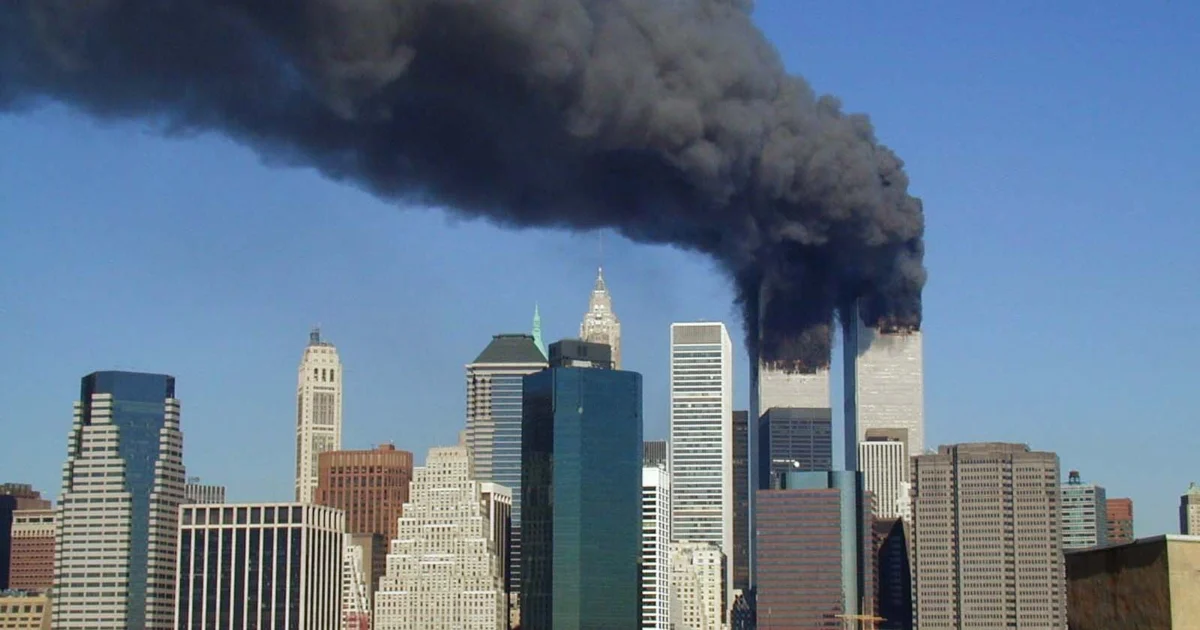
Twenty-five years have passed since the United States suffered the deadliest terrorist attack in modern history, a tragedy that claimed nearly 3,000 lives and left an indelible scar on the global consciousness. Widely regarded as the most photographed event in human history, the attacks of September 11, 2001, catalyzed a profound shift in how catastrophic events are recorded, consumed, and remembered.
Today, as the cumulative death toll continues to rise due to illnesses linked to toxic exposure at Ground Zero, the visual record of that fateful Tuesday remains our most visceral connection to a day that fundamentally altered geopolitics, civil liberties, and the human experience. Yet, behind the iconic frames that defined a generation lies a complex narrative of professional duty, profound trauma, ethical dilemmas, and the ultimate sacrifices made by those behind the lens.
Main Facts: A Coordinated Assault and a Visual Turning Point
On the morning of September 11, 2001, 19 al-Qaeda operatives executed a synchronized hijacking of four commercial airliners. Two aircraft struck the Twin Towers of the World Trade Center in New York City; a third hit the Pentagon in Arlington, Virginia; and a fourth crashed into a rural field in Shanksville, Pennsylvania, following the extraordinary heroics of passengers who revolted against their captors.
The attacks unfolded during a unique technological transition in the history of visual media. Smartphones equipped with ubiquitous cameras were still years away, meaning the public could not instantly document the unfolding horror from every street corner. Digital photography was in its infancy; the vast majority of newsrooms and professional photojournalists still relied on traditional film. Furthermore, real-time video streaming did not exist.
Consequently, the definitive visual record of 9/11 fell largely to professional photojournalists. Armed with film cameras, early digital backs, and professional instincts, these individuals rushed toward ground zero in Manhattan and the burning Pentagon, capturing images that would instantly become historical milestones.
Chronology of a Catastrophe Through the Lens
To understand how the visual narrative of September 11 unfolded, one must trace the timeline of that morning through the eyes of the journalists and witnesses who captured it:
- 8:46 AM ET: American Airlines Flight 11 crashes into the North Tower of the World Trade Center. Photojournalists scattered across Manhattan immediately pivot from routine assignments toward lower Manhattan, recognizing the historic scale of the disaster.
- 9:03 AM ET: United Airlines Flight 175 strikes the South Tower. Getty Images photographer Spencer Platt, watching from his Brooklyn apartment using a digital camera back, captures the horrific impact live.
- 9:37 AM ET: American Airlines Flight 77 hits the Pentagon, where journalists like Michael Lutzky and Juana Arias rush to document the devastation amidst mass confusion and helplessness.
- 9:59 AM ET: The South Tower collapses in a massive cloud of dust and debris. Veteran freelance photojournalist Bill Biggart, having rushed from his Union Square home with his cameras, approaches the collapsing complex alongside emergency responders.
- 10:28 AM ET: The North Tower collapses. Minutes prior, Bill Biggart captures his final frames before losing his life in the catastrophic cloud, becoming the only professional photojournalist killed while covering the attacks.
- Throughout the Day: AP photographer Richard Drew captures a series of images of individuals falling from the burning towers, producing "The Falling Man"—an image that would instantly ignite a fierce, enduring debate over the ethics of documenting human desperation.
- September 11–13: Aboard the International Space Station, Expedition Three Commander Frank L. Culbertson captures haunting photographs of the massive smoke plumes rising from Manhattan, providing a surreal, orbital perspective on a nation under attack.
Supporting Data and Technical Realities
The sheer volume of documentation generated on September 11 is staggering, yet its survival relied heavily on mechanical preservation and harrowing recovery efforts.
- The Casualties: 2,977 direct victims lost their lives on September 11, a number that continues to grow steadily as first responders and downtown residents succumb to 9/11-related cancers and respiratory diseases.
- Bill Biggart’s Recovery: Following his death, Biggart’s body and camera gear were recovered from the rubble. With the help of fellow photographer Chip East, 154 of Biggart’s final film exposures were successfully salvaged from his damaged equipment. These photographs now reside in the permanent collection of the Imperial War Museum in London.
- An Orbital Perspective: NASA’s Frank Culbertson operated from an altitude of approximately 250 miles, using a digital still camera to document the environmental scar left on the New York and New Jersey metropolitan areas from space.
Official Responses and Perspectives: Photographers Bear Witness
For the men and women tasked with recording the day’s atrocities, the line between professional detachment and human empathy was razor-thin.
Yoni Brook, who was a 19-year-old NYU student and summer intern at The Washington Post photo department at the time, reflected on the immense weight of the assignment. "I feel grateful that I was able to contribute to the visual record of the day," Brook recalled. "In my career today as a documentary filmmaker, I often revisit the lessons from this period. I think about how to document tragedy with proximity and sensitivity."
Michael Lutzky, stationed at the Pentagon, described a pervasive sense of helplessness. "I may have stood in that same spot for five hours… There was nothing I could easily see or access. Nothing I could contribute and little to report on. But I knew that I needed to remain. Just in case something happened. Just in case I am the only one still close enough to witness."

His colleague, Juana Arias, noted how the assignment broke the boundary of professional safety. Having covered global conflicts previously, Arias always returned to a safe home. "This time was different," she said, noting the visceral fear and pain etched into the faces of the people around her.
Getty Images photographer Mario Tama recalled the efforts of law enforcement to keep journalists safe. "The NYPD likely saved a lot of lives that day, including my own, by blocking us from getting closer to the base of the towers."
Spencer Platt summarized the emotional vertigo experienced by journalists who were simultaneously reporters and local citizens. "To put a journalist cap on and somehow suppress the civilian, father, husband, and American in you is an impossible task," Platt noted.
Perhaps no single image encapsulates the ethical quagmire of the day better than Richard Drew’s photograph of a falling man. Described by colleagues as "the most famous photo nobody has seen" due to its subsequent withdrawal from mainstream publication following intense public backlash, the image remains deeply polarizing. Drew defended his work years later: "People ask how I could cold-bloodedly photograph someone dying. I never saw it that way. I made a photographic record of someone living the last moments of his life."
Implications: The Lasting Toll on Journalism and Memory
A quarter-century later, the implications of how 9/11 was documented continue to reverberate across journalism, psychology, and cultural memory.
First, the attacks redefined the psychological toll on combat and crisis photojournalists. The normalization of post-traumatic stress disorder (PTSD) support in newsrooms owes much to the reckonings that followed 9/11, as editors and publishers confronted the reality that visual journalists absorb trauma by proxy. Veterans like Richard Drew have openly discussed decades of hyper-vigilance, illustrating that the scars of witnessing such destruction do not fade with time.
Second, the visual legacy of 9/11 established a baseline for how modern mass casualty events are consumed globally. The juxtaposition of iconic media frames with personal narratives transformed abstract geopolitical conflicts into deeply personal human tragedies.
Finally, the ultimate sacrifice paid by professionals like Bill Biggart serves as a solemn reminder of the price of truth and historical record. While digital advancements have since democratized image-making—putting a high-resolution camera in the pocket of nearly every global citizen—the disciplined courage required to stand at the epicenter of catastrophe remains uniquely the domain of the photojournalist.
As the world marks 25 years since the towers fell, the physical ruins of Ground Zero have long been replaced by memorials and new steel. Yet, the frozen moments captured on film and digital sensors in the autumn of 2001 ensure that the human cost of that day will never be forgotten.
 Reynand Wu
  Suro Senen