


By James Feess | Published by The Savvy Backpacker
For decades, landing at a European airport meant engaging in a familiar travel ritual: scrambling to find a kiosk, waiting in long lines, and fumbling with tiny plastic SIM cards just to get basic mobile data. Today, that obsolete process is rapidly vanishing. Thanks to the widespread adoption of embedded electronic SIMs—commonly known as eSIMs—travelers can now connect to major European mobile carriers instantly, right from their smartphones, without ever opening a physical SIM tray.

As digital connectivity becomes non-negotiable for modern travel, understanding how to navigate Europe’s evolving mobile data landscape is essential. From avoiding predatory international roaming fees to choosing between unlimited data and regional carrier networks, this comprehensive guide covers everything you need to know about staying connected abroad.
The Modern Necessity of Mobile Data in Europe
Years ago, relying on sporadic public Wi-Fi hotspots at cafes and train stations was an acceptable way to get by in Europe. Today, trying to navigate the continent without a reliable, high-speed mobile data connection is not only stressful—it is nearly impossible.

Modern European infrastructure has shifted overwhelmingly to digital-first experiences. Essential travel logistics now depend entirely on active mobile data:
- Digital Transit: High-speed rail tickets, metro passes, and boarding passes are almost exclusively digital.
- Navigation and Logistics: Google Maps, real-time public transit trackers, and ridesharing apps like Uber require constant, reliable internet access.
- Dining and Commerce: QR-code restaurant menus are standard across most major cities, and an increasing number of establishments no longer accept cash or require mobile payment apps.
- Communication: Local hotels, Airbnb hosts, and tour operators rely heavily on messaging applications like WhatsApp to coordinate check-ins and schedules.
Relying on "free Wi-Fi" leaves travelers vulnerable to dead zones, security risks, and missed connections. Having a dedicated data plan isn’t a luxury anymore; it is the cornerstone of a smooth international trip.

Chronology of Mobile Connectivity: From Roaming Fees to eSIMs
To understand why eSIM technology has exploded in popularity, it helps to look at how international mobile connectivity has evolved over the past decade:
- The Dark Ages of Roaming (Pre-2017): Travelers relied on their domestic providers (AT&T, Verizon, etc.) and faced staggering international roaming bills, often running into hundreds or thousands of dollars for minimal data usage.
- The Physical SIM Era (2017–2021): Travelers wised up, unlocking their phones and buying local prepaid SIM cards upon arrival in Europe, or ordering physical cards online ahead of time. While cheaper, this required managing tiny plastic cards, keeping track of original SIMs, and dealing with shipping fees.
- The EU Roaming Regulations Milestone: The European Union outlawed intra-EU mobile roaming fees. This meant that purchasing a data plan in one EU member state (like France) legally allowed travelers to use that same data across all other EU nations without penalty.
- The eSIM Revolution (2022–Present): Manufacturers began phasing out physical SIM slots entirely in certain markets (such as US-market iPhone 14 models and newer). Third-party digital retailers and major European telecom giants introduced downloadable, prepaid eSIM plans, streamlining international connectivity into a simple QR code scan.
Supporting Data: Comparing International Roaming vs. Prepaid eSIMs
When planning a trip, many travelers default to their home carrier’s international add-on packages. However, a close look at the numbers reveals why domestic carrier plans are financially unsustainable compared to third-party prepaid eSIMs.
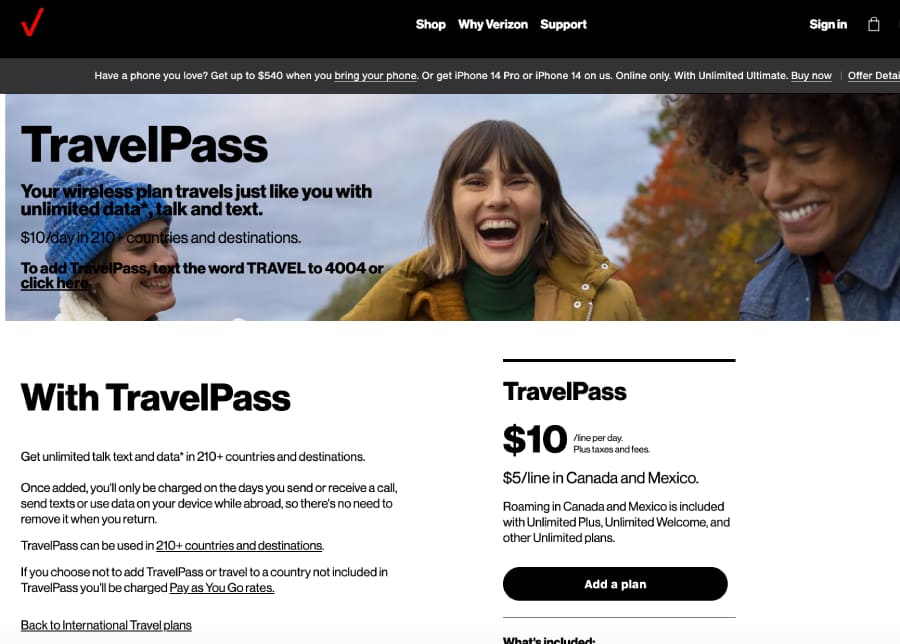
Domestic Carrier International Plans
- AT&T International Day Pass: Costs a flat $10 per day. Over a two-week trip, that adds up to $140 just for data. Alternatively, their monthly Passport plan costs up to $140 for a meager 6GB, with extreme overage fees of $30 per GB thereafter.
- Verizon TravelPass: Also charges $10 per day, but throttles speeds down to sluggish 3G speeds after surpassing 2GB of daily usage.
- T-Mobile: Often advertises "free" international data, but users are relegated to frustratingly slow 2G speeds after hitting a 5GB threshold—making basic tasks like loading Google Maps or checking email painfully slow unless you pay a premium for high-speed add-ons.
Prepaid European eSIM Plans
By contrast, third-party and carrier-backed prepaid eSIM plans operate at a fraction of the cost—typically averaging between $2 to $4 per day, offering vastly superior data allowances and unthrottled 4G/5G speeds.
Top eSIM Providers and Plans for Europe
Because EU regulations eliminate roaming fees within the bloc, any EU-backed data plan works seamlessly across multiple countries (though travelers should note that non-EU members like Switzerland and the UK may require specific policy checks).

Here are the top-rated prepaid eSIM options currently dominating the market:
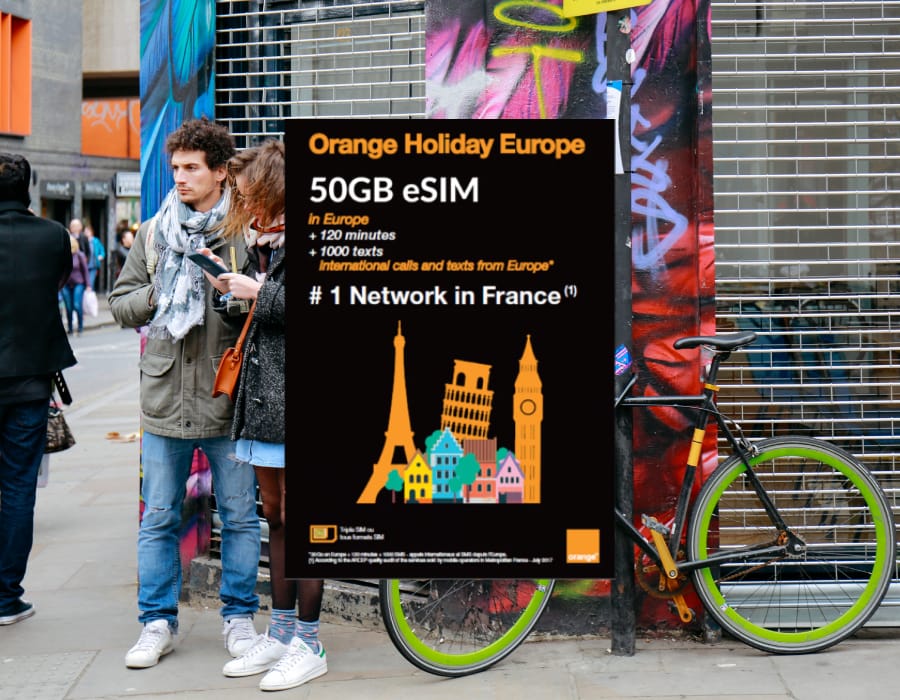
1. Orange Holiday Europe eSIM (50GB / 70GB)
- Cost: ~$59.90 (depending on promotions via SimOptions)
- Duration: 28 days
- Key Features: Massive data pool, excellent network reliability, includes a real French phone number with international voice calling and texts across Europe, and full mobile hotspot tethering support.
- Verdict: The gold standard for heavy data users and those who need traditional voice calling capabilities. (A smaller 30GB / 14-day variant is also available for shorter trips).
2. Holafly Europe eSIM (Unlimited Data)
- Cost: Varies by duration ($2.50 to $5.00 per day)
- Duration: Flexible, ranging from 1 to 90 days
- Key Features: Truly unlimited high-speed data with no throttling caps.
- Verdict: Ideal for travelers who stream video, upload heavy media, or simply hate watching data counters.
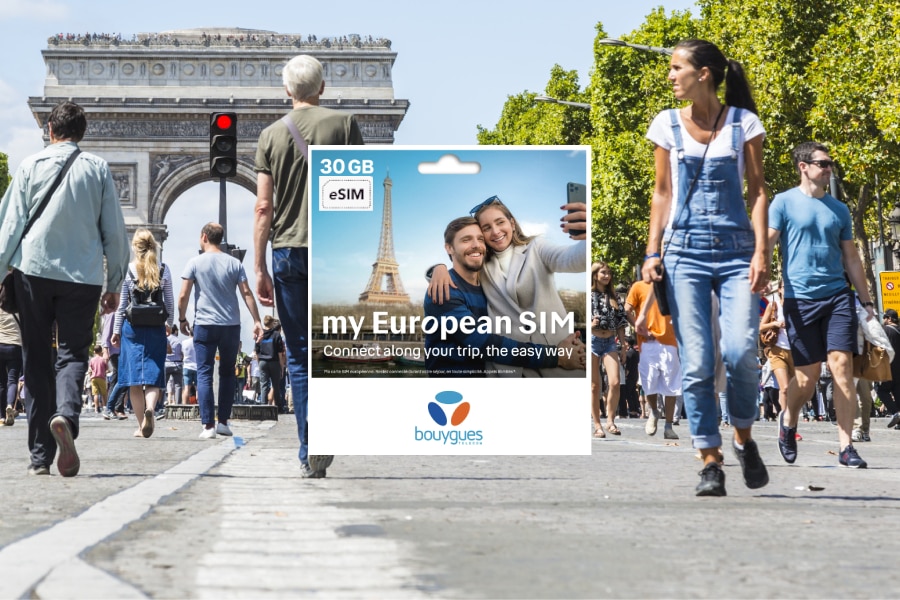
3. Bouygues My European eSIM
- Cost: Competitive tier pricing via SimOptions
- Duration: 30 days
- Key Features: Comes standard with 30GB of high-speed data and unlimited calls within Europe.
- Verdict: A phenomenal mid-tier option backed by a major French telecommunications giant, perfectly tailored for month-long backpacking trips.
4. Orange Holiday Zen eSIM
- Cost: Budget-friendly tier
- Duration: 14 days
- Key Features: Offers 15GB of mobile data along with unlimited calls and texts within Europe, plus limited credit for international calls outside the EU.
- Verdict: Perfect for moderate users who want reliable network coverage without paying for excess data they won’t use.
5. Smart Comfort X eSIM
- Cost: Budget data-only tier
- Duration: Varies
- Key Features: Provides 5GB of data with no traditional voice or text features. It acts as an "international eSIM," routing through local partner networks (like O2 in Germany or Movistar in Spain).
- Verdict: Best suited for light data users on strict budgets who rely solely on apps like WhatsApp or iMessage for communication.
Implications of Going eSIM-Only: What Travelers Must Know
While the transition to eSIM technology brings unprecedented convenience, travelers must navigate a few technical nuances before embarking on their journeys.
1. Device Compatibility and Carrier Locking
Your smartphone must be unlocked by your domestic home carrier before you can install an overseas eSIM. Furthermore, while most iPhones and Android devices manufactured since 2019–2020 support eSIM technology, US-market iPhone 14 and 15 models have entirely removed the physical SIM tray, making dual-eSIM capability mandatory.
2. The Activation Trap
One of the most common mistakes travelers make is activating their eSIM data plan too early—such as a week before departure while still at home. Because validity periods (e.g., 14 or 30 days) begin the exact moment the service is activated, users risk burning through half their plan before even boarding their flight. Rule of thumb: Purchase your plan ahead of time while on reliable Wi-Fi, but hold off on final activation until your plane lands in Europe.

3. Dual-SIM Benefits for Two-Factor Authentication
Keeping your home carrier’s physical SIM active alongside your travel eSIM (via Dual-SIM functionality) is vital. This ensures you continue receiving essential text messages for banking fraud alerts, two-factor authentication (2FA) codes, and flight updates from home without paying extortionate roaming charges for data.
Official Recommendations for Setup
To ensure a seamless transition when traveling to Europe, experts recommend following this simple setup sequence:
- Verify Unlocked Status: Call your domestic mobile provider a week before your trip to ensure your phone isn’t network-locked.
- Purchase in Advance: Buy your prepaid eSIM from reputable retailers (such as SimOptions or Holafly) before leaving home to take advantage of stable Wi-Fi during checkout.
- Save the QR Code: Have the activation QR code open on a desktop computer or printed out so you can easily scan it with your phone’s camera.
- Deploy Offline Utilities: Download offline maps on Google Maps and install WhatsApp before departure to minimize unnecessary data drain once you arrive.
By shifting away from expensive carrier day-passes and cumbersome physical SIM cards, European travelers can now enjoy frictionless, affordable connectivity—leaving them more time to enjoy the journey.
 Dwi Wanna
 Nana
 rifanmuazin
