


For decades, the ritual of touching down at a European airport involved an immediate, frustrating quest: hunting down a kiosk to purchase a physical SIM card. Travelers would anxiously shuffle through lines, fumble with tiny SIM-ejector tools, and hope their phones weren’t locked to a domestic carrier back home.
Today, that archaic routine is rapidly becoming obsolete. The rise of embedded SIM cards—universally known as eSIMs—has transformed how international travelers connect to foreign mobile networks. By utilizing digital profiles built directly into modern smartphones, globetrotters can now land in Paris, Rome, or Berlin and instantly tap into high-speed mobile data without ever swapping a physical chip.

However, transitioning to a digital-first mobile strategy comes with its own set of nuances, quirks, and vendor options. This comprehensive guide explores everything travelers need to know about navigating eSIM data plans in Europe, comparing the top providers, evaluating domestic carrier pitfalls, and offering expert tips for staying connected abroad.
The Main Facts: Why eSIMs Are Reshaping European Travel
At its core, an eSIM is a fully digital replacement for the traditional plastic SIM card. Rather than inserting a physical card into your phone’s tray, you download a digital profile via an app or QR code, instantly connecting your device to a foreign mobile carrier.

The primary catalyst for this shift is convenience and cost-efficiency. Traditional international roaming plans offered by major North American carriers (such as AT&T, Verizon, and T-Mobile) frequently hit consumers with steep daily fees or throttle speeds to glacial 2G connections after meager data thresholds. In contrast, prepaid regional eSIM data plans cost a fraction of the price—often between $2 and $5 per day—while delivering lightning-fast 4G and 5G network speeds.
Furthermore, the modern European landscape practically mandates reliable mobile data. Day-to-day travel functions that were once handled with paper tickets are now exclusively digital. High-speed rail passes, museum entries, Uber and rideshare bookings, QR-code restaurant menus, and real-time public transit schedules all require an active, high-speed internet connection. Relying on sporadic free Wi-Fi hotspots is no longer a viable strategy for a seamless vacation.

Chronology of the Mobile Shift: From Paper Maps to Dual-SIM Realities
The evolution of mobile connectivity for international travelers has moved at a breakneck pace over the last decade:
- The Pre-2018 Era: Travelers relied heavily on exorbitant domestic roaming packages or endured long airport queues to purchase physical local SIM cards, risking the loss of their home SIM cards in the process.
- 2019–2021: Apple and major Android manufacturers widely adopted dual-SIM technology, allowing phones to host one physical SIM alongside early digital eSIM capabilities. Third-party travel data providers began entering the market.
- 2022–2023: The eSIM market exploded with dedicated travel providers like Holafly, SimOptions, and Bouygues offering robust, multi-country European data packages. Notably, Apple removed the physical SIM tray entirely from iPhone 14 and iPhone 15 models sold in the United States, cementing the industry-wide transition toward a purely digital standard.
- 2024 and Beyond: Operating systems like Apple’s iOS 17.4 introduced automated eSIM installation and activation features, streamlining the user experience and lowering the technical barrier to entry for novice travelers.
Supporting Data: Comparing the Top European eSIM Providers
Because the European Union outlawed intra-EU mobile roaming fees years ago, purchasing a prepaid data plan from one EU nation (such as France) allows you to use it seamlessly across other member states (like Italy, Germany, and Spain). However, choosing the right provider depends heavily on your data consumption habits and trip length.
Here is how the leading European eSIM options stack up:
1. Holafly (Best for Unlimited Data)
Holafly is a major Europe-based eSIM provider known for offering unlimited data packages ranging from 1 to 90 days.

- Cost: Approximately $2.50 to $5 per day, depending on the total duration.
- Pros: You never have to worry about running out of data or monitoring your consumption. Excellent speeds and reliable multi-country coverage.
- Cons: Holafly’s standard unlimited plans typically restrict or prohibit heavy mobile hotspot usage, making it ideal primarily for single-device users.
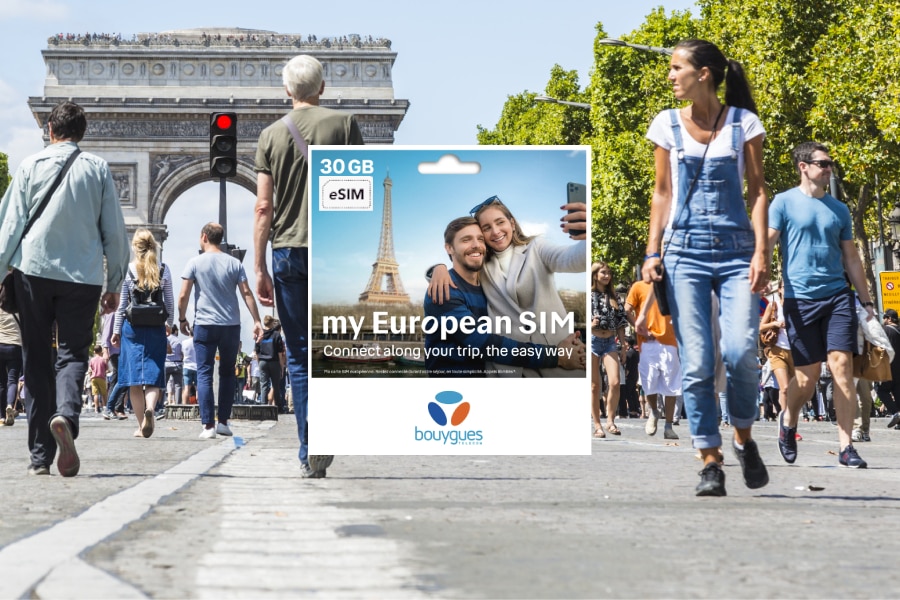
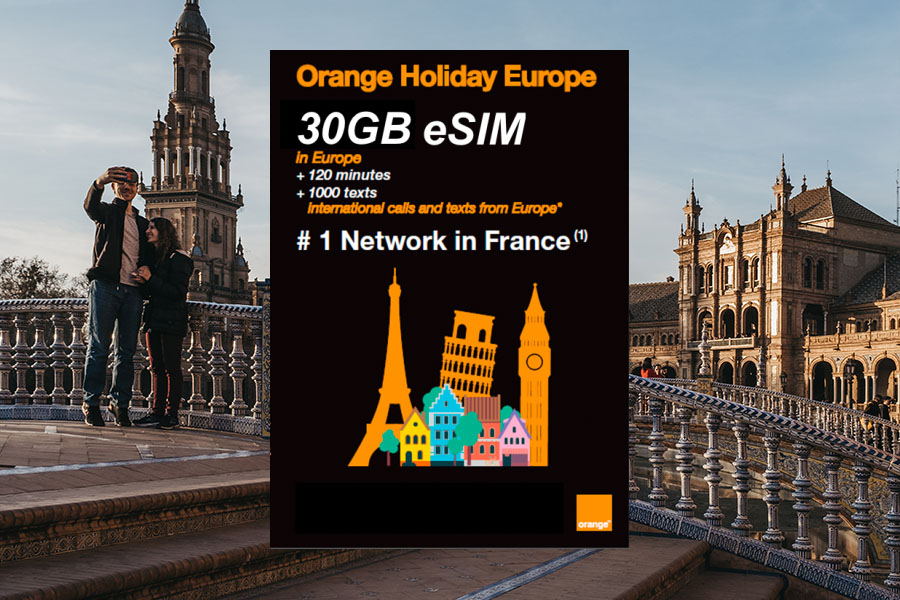
2. Orange Holiday Europe 50GB / 70GB (Best for Heavy Users & Hotspots)
Orange is one of Europe’s largest traditional telecommunications networks. Their flagship tourist eSIM packages are gold standards for performance.
- Cost: Around $59.90 for a 50GB to 70GB allowance (valid for 28 days).
- Pros: Includes a legitimate French phone number with international voice calling and text messaging across Europe. Full mobile hotspotting is permitted, allowing you to share your connection with laptops or travel companions.
- Cons: Higher upfront cost, and shorter-duration variants (like the 14-day 30GB plan) expire quickly after activation.
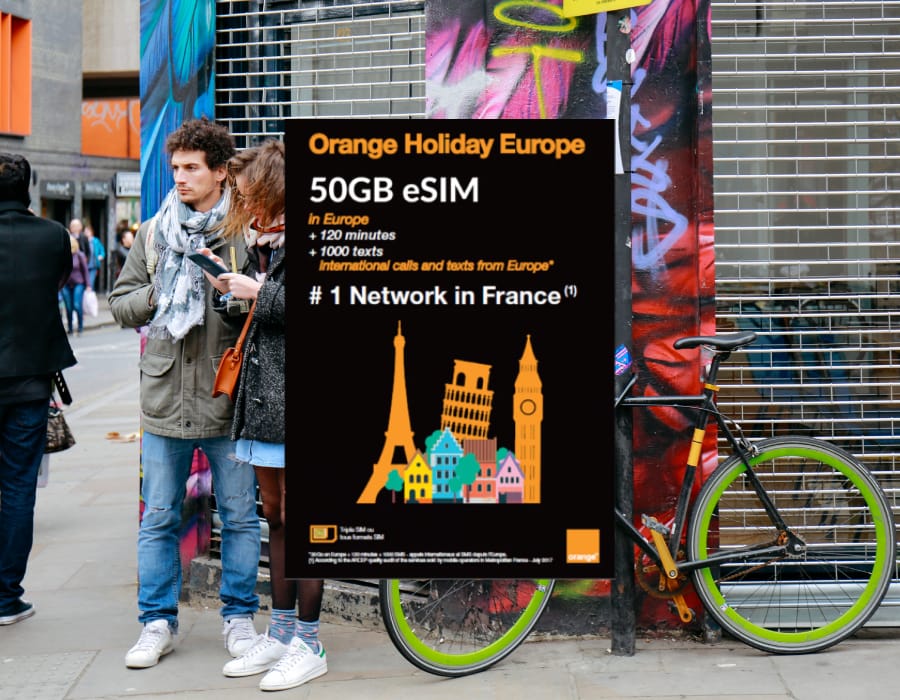
3. Bouygues My European eSIM (Best for Extended Trips)
Another titan of French telecommunications, Bouygues offers a competitive prepaid option designed to rival Orange.
- Cost: Varies by reseller, typically structured around mid-tier pricing.
- Pros: Comes standard with 30GB of data, unlimited calls within Europe, and a 30-day validity window, making it perfect for longer-term backpackers.
- Cons: Data caps apply, meaning heavy streamers will need to monitor usage.
4. Orange Holiday Zen (Best Mid-Tier Option)
For travelers who do not require massive amounts of data, the Zen plan offers a balanced middle ground.
- Cost: Budget-friendly relative to larger data tiers.
- Pros: Includes 15GB of mobile data, unlimited calls and texts within Europe, and limited credit for calls outside the EU. Backed by Orange’s premier network infrastructure.
- Cons: 15GB may feel restrictive for users who frequently upload high-resolution video content.
5. Smart Comfort X eSIM (Best Budget Data-Only Choice)
- Cost: Lowest tier pricing among specialized reseller networks.
- Pros: An affordable, data-only plan offering 5GB of data.
- Cons: Zero traditional voice minutes or text messages included (though internet-based messaging apps like iMessage and WhatsApp function normally). Because it operates as an international eSIM rather than being backed by a single carrier, it relies on partner networks in each country.
Official Industry Responses: Domestic Carriers vs. Third-Party eSIMs
Travelers frequently ask whether they can simply stick with their domestic mobile provider (such as AT&T, Verizon, or T-Mobile) and activate an international day pass. While major carriers heavily market these conveniences, industry data highlights significant financial and operational drawbacks:

- AT&T International Day Pass: Charges a flat $10 per day. Alternatively, their monthly Passport plans cost $70 for just 2GB of data or $140 for 6GB, followed by punishing overage fees of $30 per gigabyte.
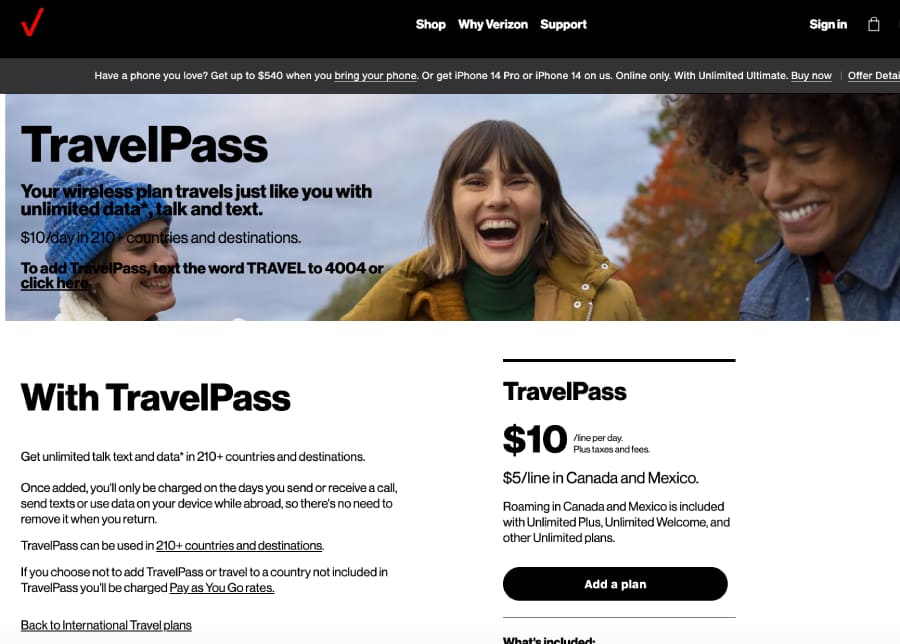
- Verizon TravelPass: Also utilizes a $10 daily fee model, but aggressively throttles users down to sluggish 3G speeds after exhausting 2GB of data in a single day.
- T-Mobile: Frequently offers "free" international data on certain plans, but speed guarantees drop to basic 2G rates after a 5GB total threshold—making tasks like loading Google Maps or checking web-based email frustratingly slow unless you pay a premium for high-speed add-ons.
Independent travel analysts note that utilizing third-party prepaid eSIMs from providers like Orange, Holafly, or SimOptions is often five times cheaper than maintaining a domestic carrier’s international day pass over the course of a multi-week vacation.
Implications and Practical Tips for Your European Trip
Transitioning to an eSIM requires a bit of technical preparation. Keep the following implications and best practices in mind to ensure a friction-free journey:
Ensure Your Phone Is Unlocked
Many domestic carriers lock smartphones to their proprietary networks via software. Before traveling, contact your home carrier to request an official device unlock so your phone can accept foreign network profiles.
Master the Dual-SIM Advantage
One of the greatest benefits of modern smartphones is dual-SIM capability. By keeping your home physical SIM active alongside your European travel eSIM, you can continue receiving vital two-factor authentication (2FA) text messages from your bank or airline, preventing account lockouts while abroad.
Timing Your Activation
Do not fully activate your eSIM data plan while sitting at home before your trip. Most prepaid travel plans operate on a strict validity clock (e.g., 14 to 30 days) that begins the moment the service connects to a network. Install the app and download your profile prior to departure, but complete the final activation steps only after touching down on European soil.
Mind the Regional Exceptions
While the European Union enforces a seamless roaming zone, travelers must remain mindful of geographic outliers. Switzerland and the United Kingdom are not officially bound by EU roaming regulations. While many European eSIMs still cover the UK and Switzerland, some budget data plans explicitly exclude them. Always review the coverage map of your chosen plan before crossing Alpine borders.
Essential Tech Stack for the Road
- Portable Battery Charger: Navigating unfamiliar cities, snapping photos, and running GPS simultaneously drains phone batteries rapidly. Pack a compact portable charger, such as an Anker PowerCore.
- Offline Google Maps: Download regional city maps directly within Google Maps before heading out. GPS functionality continues to work in Airplane Mode without consuming mobile data.
- Download WhatsApp: The vast majority of European small businesses, rental hosts, and locals communicate primarily through WhatsApp, making it an indispensable tool that operates entirely over a data connection.
 Dwi Wanna
 Nana
 Siti Muinah
