

Main Facts
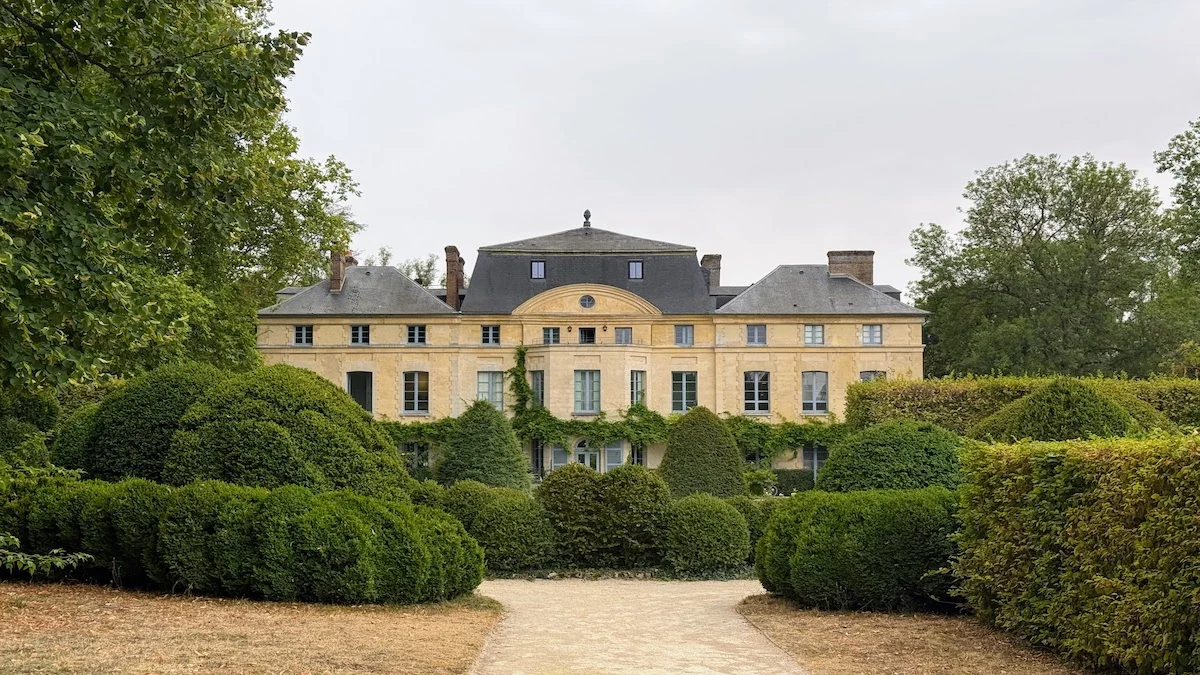
For the discerning traveler seeking the quintessential French getaway, the ideal itinerary demands a tale of two distinct yet complementary worlds: the tranquil French countryside and the timeless, electric energy of Paris. Just an hour’s train ride west of the French capital, near the border of Normandy, lies the ethereal Domaine de Primard. Set across 100 meticulously manicured acres along the winding river Eure in Guainville, this 18th-century chateau served as the private residence of legendary French actress Catherine Deneuve for three decades. Today, under the stewardship of the Fontenille Collection, it operates as an exquisite 40-room five-star retreat and spa.
Meanwhile, back in the heart of the capital, l’Hôtel de Crillon—a Rosewood Hotel overlooking the Place de la Concorde—offers a masterclass in urban aristocratic luxury. At the pinnacle of the property are Les Grands Appartements, a set of ultra-exclusive family suites co-designed by artistic director Aline Asmar d’Amman and the late fashion icon Karl Lagerfeld just years before his passing. Together, Domaine de Primard and Hôtel de Crillon represent the pinnacle of French hospitality, bridging the gap between pastoral romance and palatial urban grandeur.
Chronology
The Evolution of Domaine de Primard
- The 18th Century: The foundational architecture of the estate is established along the picturesque banks of the river Eure, near the Normandy border.
- The Deneuve Era (Late 20th Century): For 30 years, iconic French actress Catherine Deneuve calls the chateau her private home, famously cultivating high boxwood hedges and curating a deeply personal countryside sanctuary.
- The Modern Transition: The estate is acquired by the Fontenille Collection, transforming the private home into a high-end boutique hotel and spa while carefully preserving its horticultural and architectural heritage.
- Present Day: Primard operates as a celebrated sanctuary for Parisians and international foodies alike, recognized officially by the French Ministry of Culture with the prestigious Jardin remarquable label.
The Legacy of Hôtel de Crillon
- 1758–1776: Constructed by architect Ange-Jacques Gabriel at the request of King Louis XV, the grand neoclassical building on the Place de la Concorde takes shape.
- 2013–2017: The historic property undergoes a massive, multi-year renovation, during which visionary designer Karl Lagerfeld and Aline Asmar d’Amman conceptualize Les Grands Appartements.
- Recent Years: The hotel establishes Le Petit Crillon program, cementing its reputation as a uniquely family-friendly luxury destination while maintaining its historical ties to French royalty.
Supporting Data
Domaine de Primard: By the Numbers
- Location: Guainville, France (approximately a one-hour train ride west of Paris).
- Estate Size: 100 well-manicured acres along the river Eure.
- Botanical Wealth: 250 varieties of roses tended to by head gardener Gérard Germaine for 18 years.
- Capacity: 40 beautifully appointed guest rooms and suites.
- Dining & Wellness: Home to the Italian trattoria Ottavio La Tavola, Bistrot Martin, and a world-class Susanne Kaufmann spa.
Hôtel de Crillon, a Rosewood Hotel: By the Numbers
- Suite Size (Les Grands Appartements): 3,606 square feet of living space overlooking the Place de la Concorde.
- Design Pedigree: Co-designed by Karl Lagerfeld and Aline Asmar d’Amman, drawing direct aesthetic inspiration from the Palace of Versailles.
- Architectural Marvels: Features a standing bathtub hewn from a single two-ton block of deep-veined Carrara marble and an authentic 17th-century marble washing fountain relocated directly from Marie Antoinette’s gardens at Versailles.
Official Responses
While traditional corporate statements often mask the soul of a luxury property, the philosophy driving both Domaine de Primard and Hôtel de Crillon speaks volumes through their design choices and guest experiences.

The Fontenille Collection, known for its portfolio of high-end boutique hotels across France, Italy, and Spain, emphasizes the preservation of local heritage combined with understated luxury. At Primard, this is reflected in the active retention of head gardener Gérard Germaine, ensuring that the botanical legacy cultivated during Catherine Deneuve’s residency remains intact. The French Ministry of Culture has officially validated this dedication by awarding the estate its coveted Jardin remarquable status, praising the balance between historical preservation and ecological management.
On the urban front, Rosewood Hotels & Resorts champions a philosophy of "A Sense of Place," ensuring properties deeply reflect their local culture. Representatives for Hôtel de Crillon emphasize that Les Grands Appartements were designed not merely as hotel suites, but as a living bridge to France’s royal history. Through initiatives like Le Petit Crillon, management actively pushes back against the notion that ultra-luxury must be sterile or unwelcoming to children, ensuring that younger guests receive the same level of bespoke care—from monogrammed pillows to custom welcome smoothies—as adult VIPs.
Implications
The pairing of Domaine de Primard and Hôtel de Crillon highlights a broader evolution in ultra-luxury travel: the desire for experiential duality. Modern high-net-worth travelers are increasingly rejecting the rigidity of single-setting vacations. Instead, they seek itineraries that juxtapose the slow, meditative rhythm of the countryside with the culturally rich, fast-paced elegance of the metropolis.

In the countryside, properties like Primard offer a retreat into nature—painting en plein air along the Eure, foraging for tranquility, and interacting with rescue farm animals—which mirrors the impressionist movements born in nearby Giverny. Conversely, urban sanctuaries like the Crillon prove that historic preservation can coexist with modern family travel, democratizing palatial spaces (such as Lagerfeld’s Versailles-inspired suites) for multi-generational enjoyment.
Ultimately, these two properties illustrate that French hospitality is moving away from intimidating formality and toward a more whimsical, deeply personal brand of luxury. Whether it is a daily 4 p.m. bell ringing for afternoon tea in Normandy or a secret dressing room hidden behind a mirrored bookshelf in Paris, the modern luxury traveler is invited not just to observe history, but to comfortably inhabit it.
 Ammar Sabilarrohman
  Iffa Jayyana