

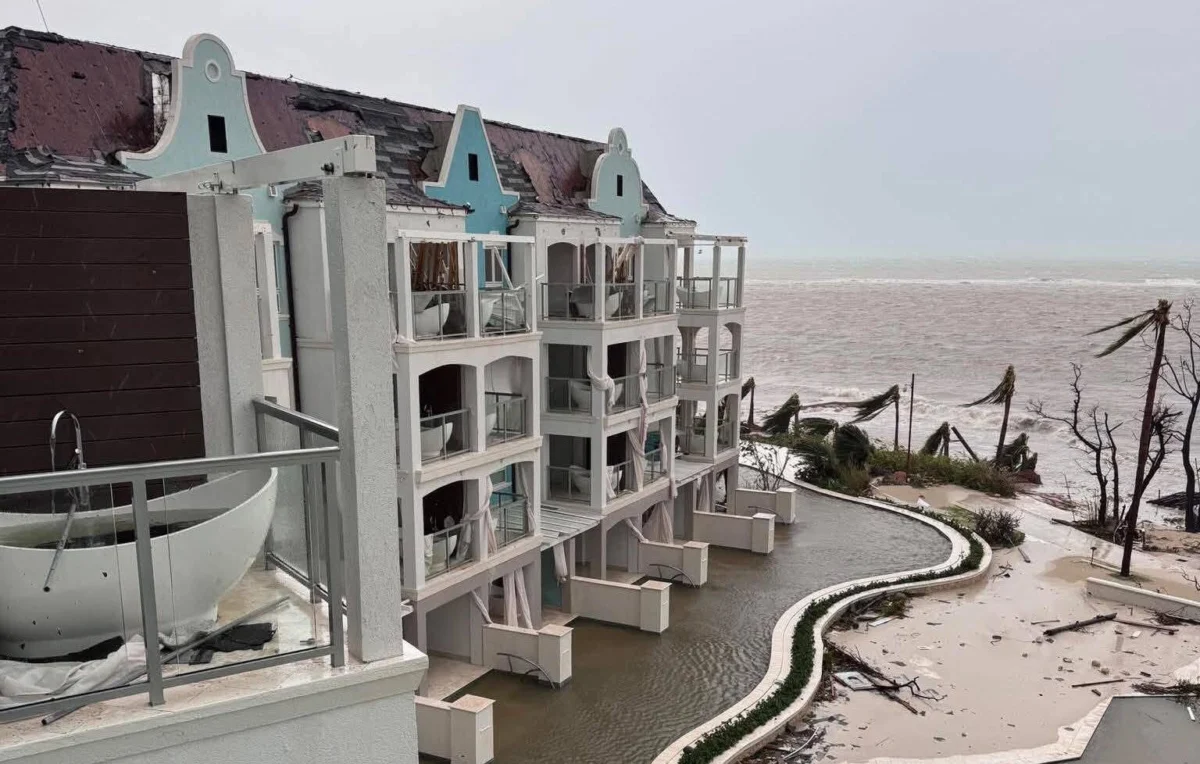
For years, the hospitality industry has treated climate change as a background variable—a boilerplate paragraph buried in the "Risk Factors" section of annual filings, written in vague, defensive legalese. However, as extreme weather events transition from "statistically improbable" to "operational inevitability," the fiscal reality of climate change is moving from the footnotes to the front page.
Host Hotels & Resorts, the largest lodging real estate investment trust (REIT) in the United States, recently shattered this tradition of opaque reporting. In its 2025 year-end filing, the company provided a rare, granular look at the financial toll of climate-driven destruction. By explicitly pricing the damage wrought by Hurricanes Helene and Milton on the iconic Don CeSar in St. Pete Beach, Florida, Host has signaled a new era of transparency—and a daunting new fiscal reality for the global tourism sector.
The Don CeSar: A Case Study in Extreme Weather Exposure
The Don CeSar, affectionately known as the "Pink Palace," is more than a hotel; it is a historic landmark of Florida’s Gulf Coast. Yet, in the eyes of climate scientists and financial analysts alike, it is now a primary case study in asset vulnerability.
When Hurricanes Helene and Milton tore through the Gulf Coast in 2024, the impact was immediate and devastating. While many hospitality firms typically obfuscate storm-related remediation costs by bundling them into general capital expenditure (CapEx) buckets—often masked under the guise of "property improvements" or "routine maintenance"—Host Hotels & Resorts chose a different path.
According to the firm’s 2025 year-end filing, the combined damage caused by Helene and Milton at The Don CeSar reached an estimated $105 million. This figure is not merely a reflection of structural repairs; it represents a profound disruption to the business model. Of that total, 30% was dedicated strictly to remediation—the urgent, unglamorous work of drying out, cleaning, and sanitizing to prevent long-term structural decay.
Chronology of a Crisis: From Landfall to Reopening
The financial data released by Host underscores the timeline of a modern climate crisis. The chronology of the 2024–2025 recovery effort illustrates the sheer duration of business interruption that even high-end, well-capitalized properties face in the wake of intensifying storms.
- September–October 2024: Hurricanes Helene and Milton make landfall in rapid succession. The Don CeSar sustains severe water damage and structural impact. The property is forced to shutter its doors to guests and staff.
- Late 2024: Immediate triage begins. Host Hotels & Resorts initiates large-scale remediation, focusing on water extraction, mold prevention, and structural stabilization.
- Q1 2025: The property remains dark, causing a total loss of revenue for the winter high season, traditionally the most profitable period for Florida Gulf Coast properties.
- Late March 2025: The Don CeSar begins a phased reopening, welcoming back guests while ongoing, less visible renovations continue.
- Q3 2025: The property reaches full operational capacity, with all amenities, including specialized event spaces and outdoor recreational facilities, finally back in service.
This timeline is a sobering reminder that for the hospitality sector, the storm is merely the beginning. The "recovery phase" can easily consume a full fiscal year, impacting not just the physical asset, but the company’s competitive standing in its market.
Supporting Data: The Growing Burden on Capital Expenditures
To understand the macro-economic impact on Host Hotels & Resorts, one must look at the balance sheet. In 2025 alone, Host spent $75 million on hurricane-related restoration and recovery efforts. To put that number into perspective, it represents approximately 11.6% of the company’s total annual capital expenditures.
When a company commits over one-tenth of its entire growth and maintenance budget to disaster recovery, it is inherently sacrificing long-term strategic projects—such as room renovations, tech upgrades, or expansion—to simply maintain the status quo.
The report also highlights the vital role of insurance in mitigating these shocks. Host reported receiving $73 million in insurance payouts related to the 2024 hurricanes. While this provides a critical cushion, it is important to note that these payouts often cover not just physical damage, but also the "business interruption" costs associated with the months of closure. The gap between the $105 million damage estimate and the $73 million in insurance recoveries leaves the company with a significant out-of-pocket deficit—a "climate tax" that investors are beginning to scrutinize with increasing intensity.
Official Responses and Strategic Shifts
In response to the mounting financial pressures, Host Hotels & Resorts has begun to pivot its investment strategy toward climate resilience. The company disclosed that it has dedicated roughly 8% of its total capital expenditure over the six-year period ending December 2025 to "resilience-focused" initiatives.
What does resilience look like for a luxury hotel? It involves moving critical electrical infrastructure to higher floors, installing impact-resistant glass, reinforcing coastal defenses, and upgrading HVAC systems to better handle extreme humidity and salt air erosion.
"The cost of doing business in a changing climate is no longer an abstract concern," noted a spokesperson for the company. "Our strategy is evolving from reactive repair to proactive fortification. We are essentially building for a future where storms are more frequent and more intense than they were in the 20th century."
The company’s executive leadership is currently under pressure from institutional shareholders to provide even greater detail on their climate-adjusted asset valuation models. As investors seek to understand the "true" value of a property located in a hurricane-prone zone, companies like Host are finding that transparency is the only way to retain capital in a volatile environment.
Implications for the Global Hospitality Industry
The disclosure by Host Hotels & Resorts marks a tipping point for the entire lodging sector. If the industry’s largest player is spending over 11% of its CapEx on recovery, smaller operators with fewer resources and less insurance leverage are likely facing an existential threat.
1. The Insurance Crisis
The insurance market is rapidly recalibrating. As storm frequency increases, premiums for coastal properties are skyrocketing. Some insurers are exiting these markets entirely, forcing hotel owners to carry higher deductibles or settle for reduced coverage. This shift will inevitably lead to higher room rates for consumers, as companies attempt to pass on the rising costs of risk management.
2. Geographic Re-evaluation
Institutional investors are beginning to question the long-term viability of coastal resort portfolios. While the "sun and sand" model remains a primary driver of tourism revenue, the risk-adjusted return on investment (ROI) for these assets is declining. We may see a strategic shift toward inland properties or urban centers that offer less exposure to extreme weather, fundamentally altering the geography of luxury hospitality.
3. Regulatory Pressure and ESG Reporting
Regulators, particularly the SEC, are increasingly demanding that companies standardize how they report climate risks. The "boilerplate" era is ending. Moving forward, hospitality firms will be required to treat climate risk as a core financial metric. Failure to do so will likely result in increased cost of capital, as lenders incorporate climate risk into their interest rate calculations.
4. The Resilience Premium
Moving forward, properties that can demonstrate robust climate-resilient architecture will command a "resilience premium." Just as hotels once competed on the luxury of their bedding or the speed of their Wi-Fi, they will soon compete on the reliability of their power grid and the strength of their storm defenses. A property that stays open during a storm—or recovers within days rather than months—will be the new standard of "luxury."
Conclusion: A New Blueprint for the Future
The $105 million price tag attached to the damage at The Don CeSar is more than just an accounting entry; it is a clarion call to the hospitality industry. The era of treating climate change as an external, manageable nuisance is over.
As Host Hotels & Resorts has demonstrated, the path forward requires a dual approach: a commitment to radical transparency regarding the costs of climate events, and a massive, disciplined investment in physical resilience. For the hospitality sector, the next decade will be defined not by who can build the most opulent suites, but by who can build the most durable ones. The Pink Palace may have survived the 2024 hurricanes, but its experience serves as a warning that the climate landscape has permanently changed, and the industry must adapt or risk being washed away by the next tide of volatility.
 Reynand Wu
  Lina Hope
  Basiran