

Published on June 25, 2026
In the azure expanse of the Caribbean, where the rhythm of the tide has long dictated the pace of life, a quiet but profound architectural revolution has reached its zenith. For decades, the region’s allure was rooted in its raw, natural splendor—the emerald canopies of St. Lucia, the blinding white sands of Antigua, and the cooling trade winds of the British Virgin Islands. While nature remains the undisputed protagonist, a new generation of residential masterpieces is shifting the narrative.

These are no longer mere vacation homes; they are "super-villas"—sprawling, multi-million-dollar compounds that blend avant-garde engineering with a deep reverence for the tropical vernacular. From the shadow of the Pitons to the private enclaves of Jumby Bay, these properties are setting a new global benchmark for the "vacation of a lifetime."
Main Facts: The Rise of the Caribbean "Super-Villa"
The current landscape of Caribbean luxury has moved beyond the traditional five-star resort model. High-net-worth individuals (HNWIs) are increasingly bypassing the communal amenities of luxury hotels in favor of total seclusion within "toy-filled" fortresses. This shift has birthed a portfolio of villas that are bigger, bolder, and more technologically advanced than anything previously seen in the archipelago.
Leading this charge is Cape Stout in the British Virgin Islands, a property that epitomizes the "amenity-maximalism" trend. Here, the traditional boundaries of a home are blurred: a professional-grade basketball court seamlessly transforms into a state-of-the-art outdoor cinema at sunset. Meanwhile, at Spice of Life on the private island of Jumby Bay, the interior design rivals that of a metropolitan museum, featuring a curated multi-million-dollar art collection that challenges the notion that island living must be "rustic."

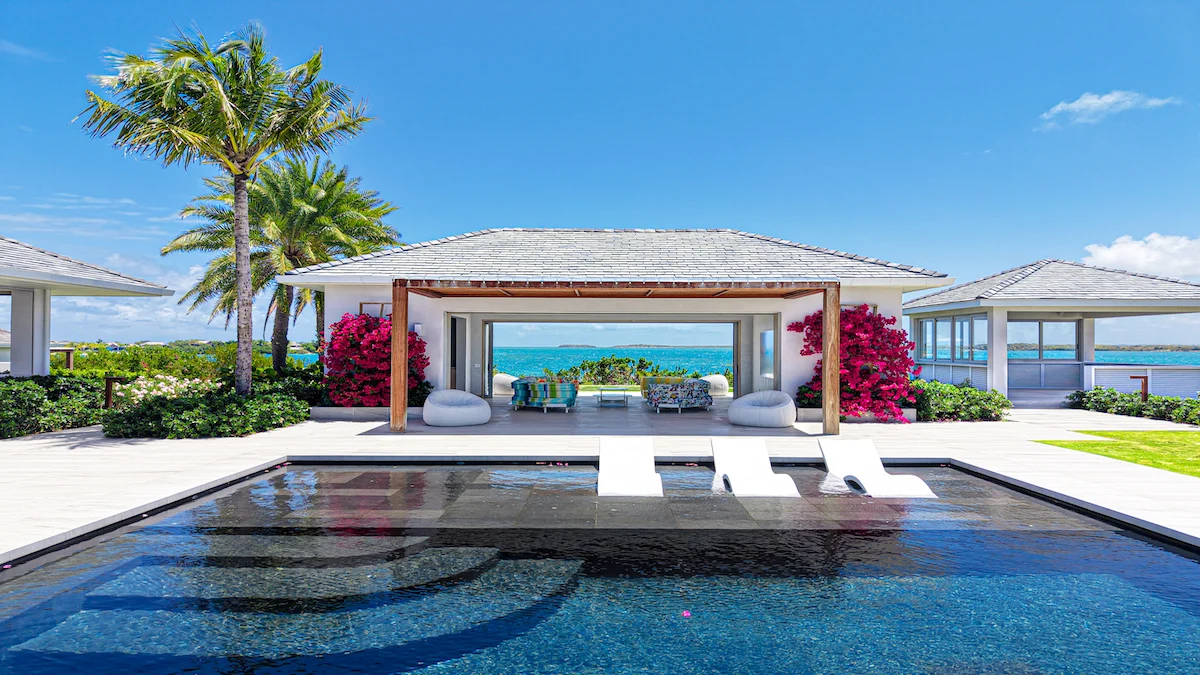
The design philosophy of 2026 focuses on "invisible boundaries." Architects are utilizing specialized hurricane-proof glass that spans thirty feet in height, allowing the lush rainforests and turquoise waters to serve as live wallpaper. These structures are designed to be "A.I.-perfect"—so visually stunning and geometrically precise that they appear digitally rendered, yet they are firmly rooted in the volcanic soil and coral stone of the islands.
Chronology: From Colonial Estates to Digital Masterpieces
The evolution of the Caribbean villa can be categorized into four distinct eras:
- The Colonial Era (1900s–1950s): Architecture was defined by thick stone walls, wrap-around verandas, and jalousie windows designed for passive cooling. These were functional outposts of European influence, emphasizing protection from the elements.
- The Jet-Set Era (1960s–1990s): Following the lead of icons like Lord Glenconner in Mustique and Laurance Rockefeller in St. John, the Caribbean became a playground for the elite. Villas became more whimsical and open, though they remained relatively modest in scale compared to today’s standards.
- The Resort-Integrated Era (2000s–2020): Properties began to align with brands like the Oetker Collection and Aman. Villas became part of a larger ecosystem, offering the privacy of a home with the service of a hotel.
- The Hyper-Luxury Renaissance (2021–Present): Sparked by a global pandemic that prioritized private "bubbles," the demand for self-contained, ultra-luxury estates skyrocketed. Between 2022 and 2026, investment in private villa construction in the Caribbean increased by an estimated 45%, leading to the current crop of "super-villas" that feature private spas, recording studios, and underwater observation decks.
Supporting Data: The Economics of Seclusion
The surge in ultra-luxury villa development is backed by compelling economic indicators. According to luxury real estate reports for the first half of 2026, the Caribbean has seen a 12% year-over-year increase in the rental price of "Iconic Class" villas (properties commanding over $50,000 per night).

- Occupancy Trends: While traditional hotel occupancy has stabilized, private villa bookings for properties with more than six bedrooms have seen a 22% increase in the 2025-2026 season.
- Investment Hubs: St. Lucia and Antigua have emerged as the primary beneficiaries of this trend. St. Lucia’s new "Mountain-Modern" architectural movement has seen property values in the Soufrière region rise by 30% since 2024.
- The "Toy" Factor: Data suggests that villas equipped with unique amenities—such as Cape Stout’s convertible courts or villas offering private submersibles—see a 40% higher re-booking rate than standard luxury properties.
"We are seeing a transition from ‘luxury as a status symbol’ to ‘luxury as an experience-aggregator,’" says Marcus Thorne, a lead analyst for Caribbean Prime Realty. "The modern traveler isn’t just paying for a view; they are paying for a private infrastructure that rivals a small village."
Official Responses: Curating the Impossible
Hospitality giants and architectural firms are pivoting to meet this demand for bespoke, high-end residential experiences.
The Oetker Collection, which manages Jumby Bay Island, has emphasized that the new villas like Coco Beach and Spice of Life are designed to be legacies. "Our owners are no longer looking for a seasonal escape; they are building private sanctuaries that reflect their personal passions—whether that is fine art or professional-grade athletics," a spokesperson for Jumby Bay Island stated. "The goal is to provide a level of service where the ‘impossible’ is the standard."

Architects are also weighing in on the challenges of building these behemoths in ecologically sensitive zones. "The challenge of a project like Cape Stout is balancing the ‘wow factor’ with environmental stewardship," says Elena Rossi of Rossi & Partners, the firm behind several new St. Lucian developments. "We use sustainable materials and solar-integrated glass to ensure that while these villas are ‘bigger and bolder,’ their carbon footprint is smaller than the traditional estates of the past."
Implications: The Future of High-End Tourism
The proliferation of these over-the-top villas carries significant implications for the Caribbean’s socio-economic and environmental landscape.
1. The "Fortress of Solitude" Effect:
As villas become more self-contained, there is a risk of "enclave tourism," where wealthy visitors spend their entire stay—and their capital—within the confines of their private estate. To counter this, many new developments are integrating local "curated experiences," bringing local chefs, artisans, and musicians directly into the villas, ensuring that the economic benefits of luxury tourism permeate the local community.

2. Environmental Stewardship:
The "A.I.-generated" look of these villas is often achieved through high-tech, sustainable materials. The trend toward "Green Luxury" is no longer optional. Future developments are expected to be entirely off-grid, utilizing advanced desalination plants and hydrogen power cells, setting a template for sustainable living that could eventually trickle down to middle-income housing.
3. Architectural Innovation:
The Caribbean is becoming a laboratory for experimental architecture. The need to build structures that can withstand Category 5 hurricanes while maintaining a minimalist, glass-heavy aesthetic is pushing the boundaries of structural engineering. These innovations will likely influence coastal construction globally as sea levels rise and weather patterns become more extreme.
4. The Redefinition of "Over-the-Top":
With basketball courts turning into cinemas and villas housing museum-grade art, the bar for "luxury" continues to move. The next frontier, according to industry insiders, is "Bio-Hacking Suites"—villas equipped with cryotherapy chambers, hyperbaric oxygen tanks, and AI-driven nutritional kitchens.

As we look toward the remainder of 2026 and into 2027, the seven villas highlighted in this report represent more than just opulent vacation spots. They are the vanguards of a new philosophy of living—one where the majesty of the Caribbean nature is not just observed, but harmoniously integrated into a lifestyle of unparalleled technological and artistic sophistication. For those seeking the "vacation of a lifetime," the Caribbean has never been more ready to deliver.
 Ammar Sabilarrohman
  Iffa Jayyana