

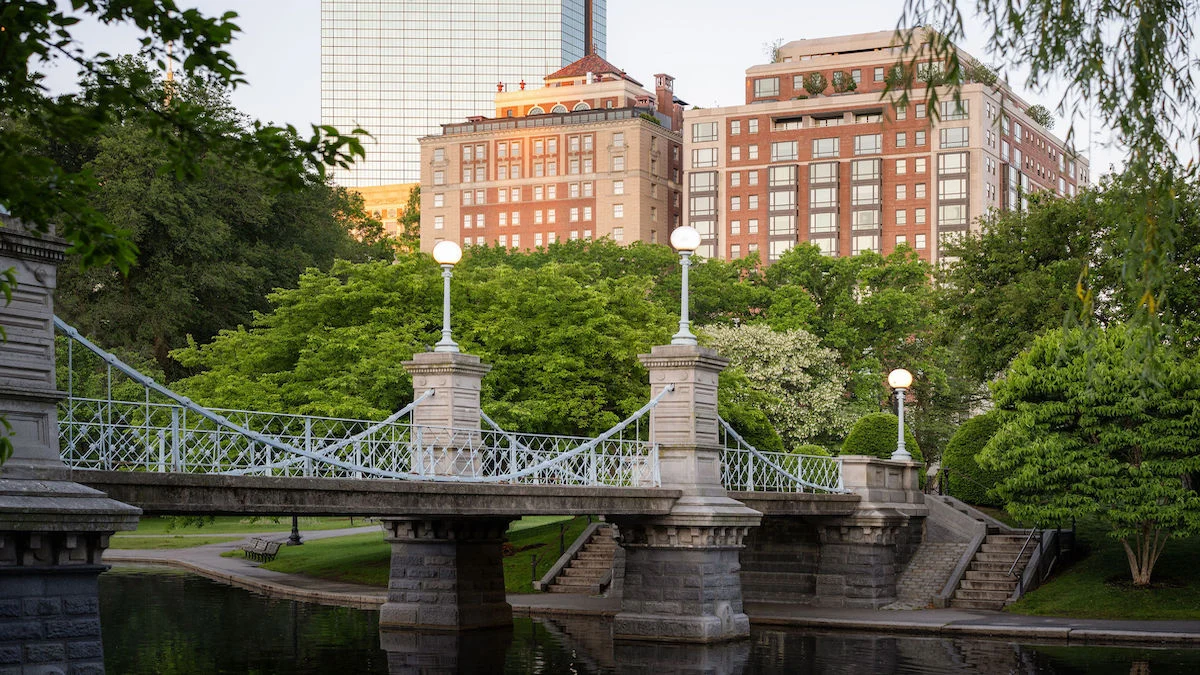
BOSTON — For decades, the city of Boston was defined by its "Old Money" sensibilities—a place of brick row houses, prestigious universities, and a certain reserved, Puritanical approach to wealth. However, as of July 2026, the city has shed its conservative skin to emerge as a global titan of high-end hospitality. With the recent expansion of legendary brands and the debut of groundbreaking residential-style concepts, Boston is no longer playing second fiddle to New York or London. It has become, in every sense, a hotel powerhouse for the ages.
The transformation is punctuated this summer by a flurry of activity. The city’s two Four Seasons properties are unveiling new flagship restaurants and "residential-style" suites designed for ultra-high-net-worth travelers who find themselves staying in the city for months at a time. Meanwhile, the successful integration of the Raffles brand—its first foray into North America—has shifted the center of gravity for the Back Bay neighborhood.

Main Facts: The 2026 Luxury Landscape
The current state of Boston’s luxury market is defined by a "more is more" philosophy. Where other cities have seen a contraction in high-end development, Boston has seen a vertical explosion. The core of this boom is centered on three primary pillars:
- The Multi-Property Dominance: Boston is one of the few cities globally to support two distinct Four Seasons properties, each catering to a different demographic of the elite.
- The Rise of the "Ultra-Boutique": Independent hotels like The Newbury have successfully challenged established global chains by leaning into local heritage and bespoke design.
- Residential Integration: The line between a hotel and a private home has blurred. New suites at the city’s top hotels now include full kitchens, private elevators, and office wings, catering to the "work-from-anywhere" executive class.
As of July 2026, the "Big Ten" hotels in Boston represent an unprecedented concentration of Forbes Five-Star talent, Michelin-aspiring culinary programs, and architectural significance.

Chronology: From the 1927 Ritz to the 2026 Boom
To understand Boston’s current status, one must look at the timeline of its hospitality evolution:
- 1927: The Ritz-Carlton opens on Arlington Street. It sets the standard for American luxury for nearly a century, introducing the concept of a private bath in every room and white-tie service.
- 1985: The Four Seasons Hotel Boston opens overlooking the Public Garden, providing a more modern, yet equally prestigious, alternative to the Ritz.
- 2008: The Mandarin Oriental, Boston, arrives in the Back Bay, bringing Asian-inspired service and a world-class spa to the city.
- 2019–2021: A period of radical change. The original Ritz-Carlton is reimagined as The Newbury Boston, and Four Seasons One Dalton opens as the city’s tallest residential building.
- 2023: Raffles Boston opens its doors, marking the brand’s North American debut and introducing a new level of sky-high luxury to the skyline.
- Summer 2026: The current "Grand Reopening" phase. Both Four Seasons properties unveil their 2026 renovations, including the "Long-Stay Wing" at One Dalton and a new Mediterranean-concept restaurant at the Public Garden location.
Supporting Data: The 10 Best Luxury Hotels in Boston Right Now
To navigate this crowded field, we have curated the ten definitive stays that represent the pinnacle of Bostonian luxury in 2026.

1. The Newbury Boston
The "fashionable independent" mentioned in the source, The Newbury occupies the iconic 1927 building that once housed the Ritz-Carlton. Under the design direction of Ken Fulk, the hotel has become the city’s living room. Its crown jewel is Contessa, the rooftop restaurant by Major Food Group, which remains the most difficult reservation in the city three years after its opening. The 2026 update includes the "Heritage Suites," featuring wood-burning fireplaces and curated libraries.
2. Raffles Boston
A 35-story LEED Gold-certified tower, Raffles has redefined the Back Bay. Its three-story "Sky Lobby" offers panoramic views of the Charles River. The hotel is famous for its butler service—a hallmark of the Raffles brand—which has been adapted for the Boston market to include "academic concierges" who assist guests with navigating the city’s intellectual and medical institutions.

3. Four Seasons Hotel Boston (200 Boylston)
Known as the "Grande Dame" of the Public Garden, this property has successfully modernized while retaining its status as the preferred haunt of the city’s political and old-guard elite. The summer of 2026 marks the opening of Aveline, a new garden-to-table concept that utilizes a rooftop greenhouse.
4. Four Seasons One Dalton Street
The sleek, glass-clad younger sibling. One Dalton focuses on wellness and modern art. Its 2026 expansion includes a dedicated "Wellness Floor" that offers everything from cryotherapy to personalized sleep coaching. It remains the home of Zuma, the world-renowned izakaya-style restaurant.

5. Mandarin Oriental, Boston
Connected to the Prudential Center, the Mandarin remains the gold standard for service. Its spa is the only one in Massachusetts to consistently hold a Forbes Five-Star rating. In 2026, the hotel debuted its "Apartment Suites," which are 3,000-square-foot units designed for stays of 30 days or longer.
6. The Langham, Boston
Housed in the former Federal Reserve Bank, The Langham underwent a $100 million renovation that concluded a few years ago. It blends British elegance with American history. The "Governor’s Council" bar is a masterclass in leather-and-mahogany aesthetics, serving the finest Scotch selection in New England.

7. Encore Boston Harbor
For those seeking scale and spectacle, the Encore brings Wynn-style luxury to the waterfront. With its five-star casino, high-end retail galleria, and a fleet of custom-built water shuttles, it serves as a self-contained resort destination just minutes from downtown.
8. XV Beacon
Located at the top of Beacon Hill, this boutique hotel is the choice for those who value privacy above all else. With only 63 rooms, each featuring a gas fireplace and a curated wine cellar, it feels more like a private club than a hotel.

9. The Liberty Hotel
A triumph of adaptive reuse, the former Charles Street Jail is now a hub of social activity. While its nightlife is legendary, the "Ethereal" wing offers quiet, high-ceilinged luxury for the discerning traveler who appreciates the building’s granite-and-brick architecture.
10. The Whitney Hotel
A hidden gem at the foot of Beacon Hill, The Whitney offers a residential, neighborhood-centric experience. Its 2026 "Secret Garden" program allows guests private access to some of the neighborhood’s most exclusive hidden courtyards.

Official Responses: Insights from the Industry
Hospitality analysts suggest that Boston’s surge is no accident. "We are seeing a massive migration of wealth toward ‘Intellectual Hubs,’" says Marcus Thorne, a senior hospitality consultant at New England Research Group. "Boston is the epicenter of biotech, AI, and higher education. The people coming here aren’t just tourists; they are stakeholders. They demand a hotel that functions as an office, a home, and a social club."
A spokesperson for the Boston Tourism Board commented on the 2026 developments: "The introduction of residential-style suites at the Four Seasons and Mandarin Oriental reflects a permanent shift in travel patterns. Our guests are staying longer—averaging 5.5 days in the luxury segment compared to 2.8 days in 2019. We are no longer a ‘weekend getaway’ city; we are a global destination."

Management at The Newbury also noted that their independence has been their greatest asset. "Being independent allows us to be nimble," a hotel representative stated. "In 2026, luxury isn’t about following a brand manual; it’s about the Joe Thomas-designed exterior reflecting the soul of the Public Garden and providing a service that feels uniquely Bostonian."
Implications: The Future of the "Athens of America"
The "residentialization" of Boston’s hotels has significant implications for the city’s broader economy. As hotels pivot to accommodate long-term stays, they are competing directly with the luxury condo market. This has led to a "service arms race," where high-end residential buildings are now forced to offer hotel-style amenities (24-hour room service, on-site sommeliers) to keep up with the likes of Raffles and One Dalton.

Furthermore, the culinary explosion tied to these hotels has turned Boston into a legitimate "foodie" destination. The arrival of international concepts like Zuma and Contessa has forced local chefs to elevate their game, resulting in a trickledown effect that has improved the dining scene across all price points.
As we look toward the latter half of 2026, the message is clear: Boston has reached a critical mass of luxury. It is a city that respects its 18th-century roots while embracing a 21st-century vision of opulence. For the traveler who demands the best, the question is no longer if they should visit Boston, but rather which of its world-class towers they should call home.
 Ammar Sabilarrohman
  Iffa Jayyana