

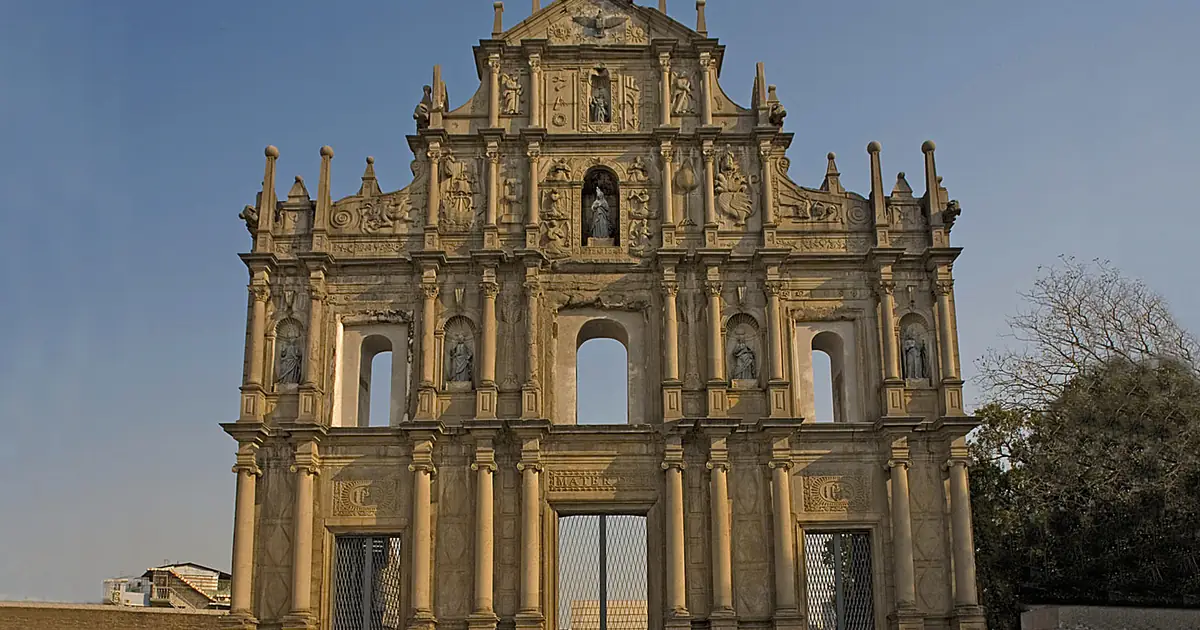
MACAO SAR, CHINA — In an era defined by rapid metropolitan expansion, mounting climate pressures, and unprecedented tourism demands, the stewardship of humanity’s most cherished cultural and natural landmarks has never been more complex. Addressing these compounding vulnerabilities head-on, the World Heritage Institute of Training and Research for the Asia and the Pacific Region (WHITR-AP, China)—operating under the auspices of UNESCO—has officially launched a comprehensive global call for applications.
The prestigious professional development initiative, titled “Asia Pacific Regional Capacity Building on Management for World Heritage Sites – From Theory to Practice,” is scheduled to take place from 6 to 15 December 2026 in the vibrant Special Administrative Region of Macao, China.
Organized jointly by WHITR-AP Shanghai and the Cultural Affairs Bureau of the Government of the Macao Special Administrative Region, this intensive ten-day training program is designed to bridge the persistent gap between theoretical conservation frameworks and the gritty, day-to-day realities of site management. As heritage practitioners across the Asia-Pacific region grapple with the preservation of sites that are simultaneously dynamic living communities and fragile historical archives, the 2026 Macao workshop aims to establish a new benchmark for professional excellence.
Main Facts
The upcoming December 2026 capacity-building initiative is structured to equip mid-career heritage professionals, site managers, conservation architects, and government policy makers with cutting-edge tools and methodologies.
- Event Asia Pacific Regional Capacity Building on Management for World Heritage Sites – From Theory to Practice
- Dates: 6 – 15 December 2026
- Location: Macao Special Administrative Region (SAR), China
- Organizers: WHITR-AP Shanghai (in affiliation with UNESCO) and the Cultural Affairs Bureau of the Government of the Macao SAR
- Application Deadline: 15 September 2026
- Core Focus: Addressing contemporary heritage management crises through advanced frameworks such as the Historic Urban Landscape (HUL) approach, Heritage Impact Assessments (HIAs), participatory community engagement, and disaster risk management.
- Target Audience: Heritage site managers, conservation specialists, urban planners, and administrative authorities hailing from the Asia-Pacific region.
The curriculum moves deliberately beyond conventional lecture-style formats. By leveraging Macao’s unique status as a crossroads of Eastern and Western architectural heritage—exemplified by its historic city center inscribed on the UNESCO World Heritage list in 2005—participants will study a living laboratory of urban conservation. The city’s historic district seamlessly integrates ancient Chinese temples, Catholic fortresses, cobblestone squares, and modern high-density urban infrastructure, making it an ideal pedagogical landscape for modern heritage dilemmas.
Chronology: The Road to the 2026 Macao Initiative
The launch of the December 2026 program is not an isolated event; rather, it represents the culmination of a meticulously planned multi-year institutional strategy aimed at bolstering heritage resilience across the Asia-Pacific.
- November 2022 (Fuzhou/Beijing): Discussions gain momentum regarding the alignment of regional training centers with emerging post-pandemic heritage needs, leading to the conceptualization of updated strategic frameworks for the Asia-Pacific.
- September 2023: UNESCO and its Category 2 Centres officially adopt the Regional Framework Action Plan for Asia and the Pacific (2023–2030), identifying professional training, institutional capacity gaps, and sustainable urban management as urgent regional priorities.
- Late 2024 to Early 2025: WHITR-AP Shanghai engages in preliminary dialogues with the Cultural Affairs Bureau of the Macao SAR Government to explore Macao’s capacity to host a flagship regional training initiative that incorporates urban heritage dynamics.
- November 2025: The UNESCO General Conference and related advisory bodies roll out the World Heritage Capacity-Building Strategy 2025–2035, setting a decade-long roadmap for localized, competency-based heritage education.
- Current Phase (Mid-2026): WHITR-AP formally opens the international call for applications. Eligible candidates across the vast Asia-Pacific region are invited to submit their credentials ahead of the 15 September 2026 deadline.
- December 6–15, 2026 (Upcoming): The ten-day intensive workshop convenes in Macao SAR, featuring immersive modules, site visits, peer-to-peer workshops, and practical application exercises.
- Post-December 2026: Integration of workshop graduates into an active regional alumni network, designed to provide ongoing mentorship and peer support for vulnerable World Heritage properties across the Asia-Pacific.
Supporting Data: The Asia-Pacific Heritage Landscape
To fully understand the urgency driving WHITR-AP and the Macao SAR Government to invest heavily in this capacity-building program, one must examine the broader statistical and environmental context of heritage conservation in the Asia-Pacific region.
The Scale of the Region
The Asia-Pacific region boasts one of the highest concentrations of UNESCO World Heritage properties globally, spanning ancient archaeological complexes, vast natural ecosystems, and complex historic urban centers. However, this high concentration also correlates with unique systemic vulnerabilities:
- Urbanization Rates: The Asia-Pacific region is experiencing the fastest rate of urban expansion in human history. Historic cores are frequently choked by real estate speculation, infrastructure demands, and soaring population densities.
- Climate Vulnerability: According to international disaster monitoring databases, the Asia-Pacific region is disproportionately affected by extreme weather events—including typhoons, severe flooding, landslides, and rising sea levels—which directly threaten structural integrity, cultural landscapes, and biological diversity.
- Tourism Pressures: Prior to and following global travel restrictions, heritage sites in countries such as China, Japan, Vietnam, Cambodia, and Indonesia faced acute over-tourism, straining municipal services and accelerating physical degradation.
Strategic Alignment
The 2026 workshop directly operationalizes two foundational international documents:
- The Regional Framework Action Plan for Asia and the Pacific (2023-2030): This strategic blueprint mandates targeted interventions to improve governance, enhance risk preparedness, and foster community-led conservation across member states.
- The World Heritage Capacity-Building Strategy (2025-2035): This overarching global framework emphasizes localized training ecosystems, moving away from Eurocentric conservation models toward culturally nuanced, context-specific management techniques.
Official Responses and Perspectives
The announcement of the December 2026 program has drawn enthusiastic praise from international conservation bodies, regional authorities, and academic institutions alike.
Speaking on the imperative of modernizing heritage management, a senior representative from WHITR-AP emphasized that traditional conservation methods are no longer sufficient to safeguard sites against contemporary pressures.
"We are living in an era of unprecedented disruption," noted a spokesperson for the institute. "Monuments that stood undisturbed for centuries are now confronting micro-climatic shifts, mass mobility, and frantic urban densification. Through our collaboration with the Macao SAR Government, our goal in December 2026 is not merely to lecture on heritage theory, but to forge a new generation of pragmatic, resilient site managers who can navigate complex regulatory environments, engage local communities, and balance conservation with sustainable development."
The Cultural Affairs Bureau of the Macao SAR Government echoed these sentiments, expressing deep pride in Macao’s selection as the host jurisdiction. Officials highlighted that Macao’s dual identity as a historical trading port and a modern cosmopolitan hub offers invaluable lessons for urban heritage stewardship.
"Macao is living proof that heritage can thrive alongside modern economic vitality," an official from the Cultural Affairs Bureau stated. "Our historic center is not a glass-case museum; it is a breathing, evolving urban ecosystem. By welcoming heritage practitioners from across the Asia-Pacific to Macao this coming December, we are opening our doors to shared learning, mutual problem-solving, and collective commitment to the global World Heritage cause."
International advisory bodies, including the International Centre for the Study of the Preservation and Restoration of Cultural Property (ICCROM) and the International Council on Monuments and Sites (ICOMOS), have also quietly welcomed the initiative, noting that localized capacity building is the single most effective antidote to the systemic shortage of trained heritage professionals in the Global South.
Implications for the Future of World Heritage Conservation
The long-term implications of the “Asia Pacific Regional Capacity Building on Management for World Heritage Sites – From Theory to Practice” extend far beyond the ten days scheduled for December 2026.
1. Shift Toward Proactive Risk Management
For decades, heritage conservation in many developing nations operated on a reactive basis—repairing monuments only after damage had occurred. The Macao workshop places heavy emphasis on proactive methodologies, particularly Heritage Impact Assessments (HIAs) and Historic Urban Landscape (HUL) tools. By training managers to anticipate how infrastructure projects, tourism surges, and climate trends will impact a site before damage manifests, the program aims to shift institutional habits from crisis management to strategic foresight.
2. Strengthening Regional Networks and South-South Cooperation
Heritage conservation challenges do not respect national borders. Issues such as transboundary natural reserves, shared maritime trade routes (such as the Maritime Silk Road), and regional climatic patterns require collaborative cross-border responses. By bringing together practitioners from diverse cultural and linguistic backgrounds into the immersive environment of Macao, the program lays the groundwork for enduring professional networks. Alumni will be better positioned to share technical data, coordinate joint advocacy campaigns, and provide mutual aid during regional crises.
3. Elevating Local Communities as Stewards
A recurring theme in modern heritage discourse is the democratization of conservation. Top-down, exclusionary management policies have frequently alienated local residents, turning living heritage sites into contested spaces. The 2026 curriculum highlights participatory governance models, teaching participants how to integrate indigenous knowledge, local stakeholder interests, and community-based monitoring into official site management plans.
4. Setting the Agenda for the 2025-2035 Decade
As the global conservation community settles into the opening years of the World Heritage Capacity-Building Strategy (2025-2035), early pilot programs like the one in Macao will serve as testing grounds for new pedagogical approaches. Successful modules, digital toolkits, and case studies developed during the December 2026 workshop are expected to be cataloged and disseminated by WHITR-AP to other regional training networks worldwide.
Call to Action and Application Details
Eligible mid-career professionals, conservation architects, academics, and government officials working within the sphere of cultural and natural heritage management across the Asia-Pacific region are strongly encouraged to review the application criteria.
- Application Deadline: 15 September 2026
- Program Dates: 6 – 15 December 2026
- Venue: Macao SAR, China
Comprehensive information regarding eligibility guidelines, required documentation, language proficiencies, and submission procedures can be accessed directly through the official WHITR-AP portal at WHITR-AP Official Announcement.
As the countdown to December 2026 begins, the global heritage community watches Macao with keen anticipation, recognizing that the future of humanity’s shared history depends entirely on the skill, dedication, and preparedness of those tasked with its protection.
 Layla Zulfa
 Pevita Pearce
 Reynand Wu
