

By Editorial Desk
The travel industry in the United Arab Emirates (UAE) is navigating a complex landscape of resilience and caution. Following a period of robust recovery that saw the region emerge from the logistical disruptions caused by the U.S.-Iran conflict earlier this year, the aviation and tourism sectors are once again under scrutiny. Recent escalations in the Houthi-Saudi Arabian conflict have introduced a new variable into the booking patterns of UAE residents, forcing travel agencies and airlines to strike a delicate balance between reassuring customers and managing the realities of regional instability.
While industry executives report that the appetite for outbound travel remains fundamentally intact, there is a palpable "wait-and-see" approach emerging among potential travelers. As the geopolitical situation in the Middle East evolves, stakeholders are closely monitoring how these tensions influence consumer confidence, flight safety perceptions, and the overall stability of the regional aviation hub.
The Chronology of Regional Volatility
To understand the current state of the UAE travel market, one must examine the timeline of events that have defined the past twelve months.
The Q1 Disruption: The U.S.-Iran Conflict
The year began with optimism, but the momentum was abruptly halted in late February. The onset of the U.S.-Iran conflict created an immediate "shock" to the Gulf aviation sector. Airspace restrictions, the rerouting of long-haul flights, and the increased cost of aviation insurance led to a significant dip in regional outbound travel during the first half of the year. Airlines were forced to adjust schedules, and travelers—faced with uncertainty regarding flight paths and potential delays—tended to stay closer to home or postpone long-distance vacations.
The Mid-Year Rebound
By the third quarter, the travel sector had staged a remarkable comeback. As carriers recalibrated their operations and travelers grew accustomed to the "new normal" of regional flight paths, confidence returned. Booking volumes for summer and early autumn travel exceeded previous years’ benchmarks, signaling that the pent-up demand following the Q1 dip remained a potent driver of the market.
The October Escalation: Houthi-Saudi Tensions
The most recent chapter in this narrative began in early October, as hostilities between the Houthis and Saudi Arabia intensified. The launch of targeted strikes has introduced a new, localized layer of anxiety. Unlike the broader regional tensions experienced earlier in the year, the current conflict is perceived as more kinetic and proximate, leading to the current dip in new vacation inquiries reported by industry players.
Supporting Data: The Pulse of the Market
Despite the headlines, the data suggests that the travel sector is far from a collapse. The current situation is characterized by "hesitation" rather than "cancellation."
Analyzing the "Wait-and-See" Phenomenon
According to Rashida Zahid, Vice President of Operations at the prominent UAE travel platform Musafir.com, the last two weeks have marked a subtle pivot in consumer behavior. While the influx of new inquiries has slowed, the conversion rate for pre-existing bookings remains exceptionally high.
"Some people who were planning to book are having a rethink, but those who have made bookings are going ahead," Zahid noted. This distinction is critical for industry analysts: it suggests that while the decision-making process for future travel has lengthened, the commitment of those already invested in travel plans remains firm.
Booking Metrics
Crucially, Musafir.com reports that their total booking volumes are still tracking above the levels recorded during the same period last year. This indicates that even with the current dip, the underlying demand for global connectivity and leisure travel remains structurally strong. The "hesitation" noted by executives appears to be a short-term psychological reaction to news cycles rather than a long-term shift in travel behavior.
Official Responses and Strategic Adjustments
Major industry players and regional authorities are taking a proactive stance to maintain market stability.
The Role of Dubai International Airport (DXB)
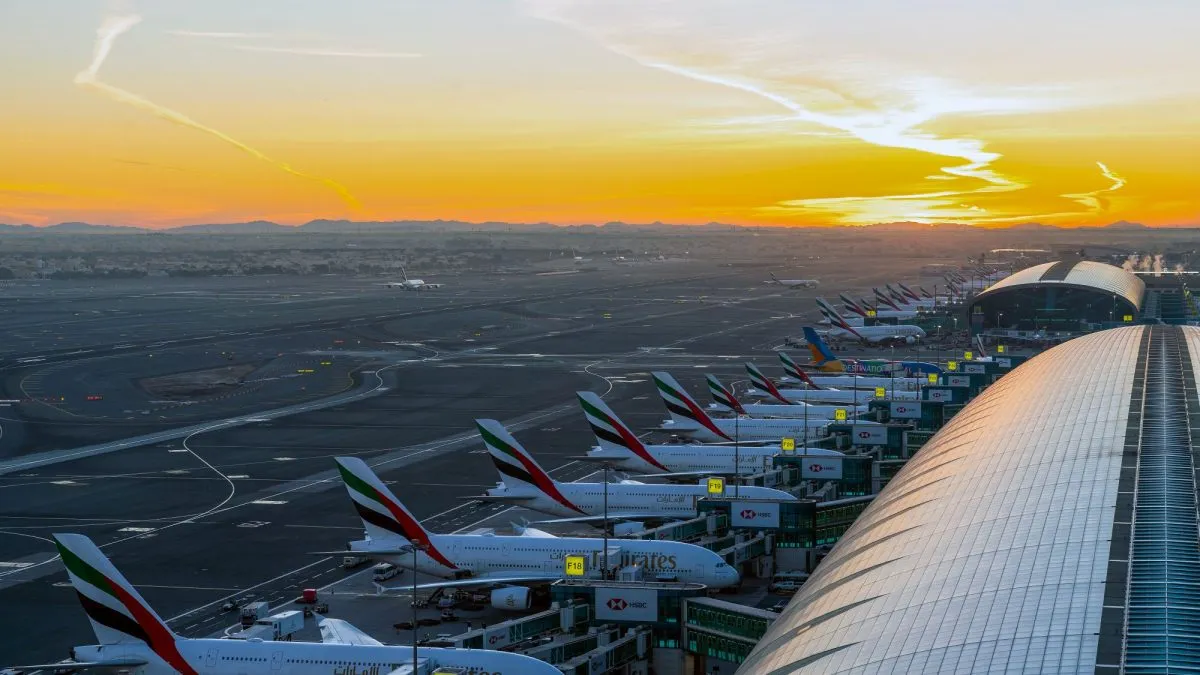
As a global transit hub, Dubai International Airport (DXB) remains at the epicenter of these regional dynamics. Dubai Airports has maintained a focus on operational excellence, ensuring that flight paths are adjusted in real-time to avoid volatile zones. Their official stance has been one of business continuity, emphasizing the resilience of their infrastructure and their commitment to passenger safety.
Industry Vigilance
Travel agencies are increasingly adopting a "consultative" role. By providing real-time updates on airspace safety and offering more flexible booking terms, these platforms are working to mitigate the anxiety of their customers. Industry leaders are focusing on transparent communication, emphasizing that major commercial aviation routes in the Gulf are robustly monitored by international civil aviation authorities.
The Implications: What This Means for the Future
The current state of the UAE travel market raises several long-term questions regarding the resilience of the region’s economy and the future of aviation.
The "Normalization" of Risk
One of the most significant implications of the current climate is the normalization of geopolitical risk among travelers. Gulf residents have shown a high degree of adaptability. After the initial shock of the Q1 conflict, travelers learned how to navigate regional instability. The current trend suggests that as long as the conflict does not directly impact the safety of major commercial corridors or cause systemic airport closures, the travel industry is likely to sustain its growth.
Impact on the Aviation Sector
Airlines are under constant pressure to optimize costs while ensuring safety. The increased cost of insurance and the fuel-intensive nature of rerouting flights mean that ticket prices may remain elevated. This could lead to a bifurcation in the market: travelers with higher disposable income may be less deterred by the premium, while the price-sensitive segment of the market may opt for shorter, domestic, or regional trips.
Economic Resilience
Tourism and transit-related revenue are vital components of the UAE’s non-oil economy. The resilience of the travel sector is not merely a matter of leisure; it is a key performance indicator for the broader national economic strategy. If the current hesitation turns into a prolonged slump, it could impact retail, hospitality, and service-sector revenues. However, given the current data showing that bookings remain above last year’s levels, the consensus among analysts is that the UAE travel sector is well-positioned to weather the current storm.
The Role of Technology in Consumer Confidence
In an era of instant information, the way news is consumed plays a massive role in travel demand. Digital platforms are now tasked with the responsibility of curating information to prevent mass panic. The use of real-time travel alerts and direct communication channels between agencies and travelers has become as important as the flights themselves.
Conclusion: A Resilient Industry
The recent Houthi attacks on Saudi Arabia have undoubtedly cast a shadow over the immediate travel outlook in the UAE, yet the narrative is one of caution, not crisis. The "hesitation" described by industry experts is a rational response to a volatile environment, but it has not translated into a widespread abandonment of travel plans.
As the year draws to a close, the Gulf travel industry finds itself in a state of watchful waiting. The fundamentals—a population with a strong propensity to travel, world-class aviation infrastructure, and an industry that has mastered the art of operational agility—remain intact. While the geopolitical landscape continues to present challenges, the UAE travel market’s ability to sustain booking volumes above last year’s figures suggests a deep-seated confidence in the region’s stability and a refusal to let external tensions derail their global connectivity.
Moving forward, the industry will likely continue to rely on its ability to offer flexibility, transparency, and assurance to its customers. By navigating these complexities with a focus on data and safety, the UAE’s travel sector is proving that it is not just a participant in the global tourism economy, but a robust and resilient leader capable of enduring the ebbs and flows of regional geopolitical tides.
 Iffa Jayyana
 Azzam Bilal Chamdy
 Nana
