

By: Photographic Equipment & Industry News Desk
For decades, the analog photography community has thrived on a delicate balance of nostalgia and technical refinement. While the digital age declared film obsolete at the turn of the century, a stubborn, passionate resurgence has given legacy manufacturers a new lease on life. Among the titans of silver halide, Ilford Photo has remained an unwavering anchor for black-and-white shooters.
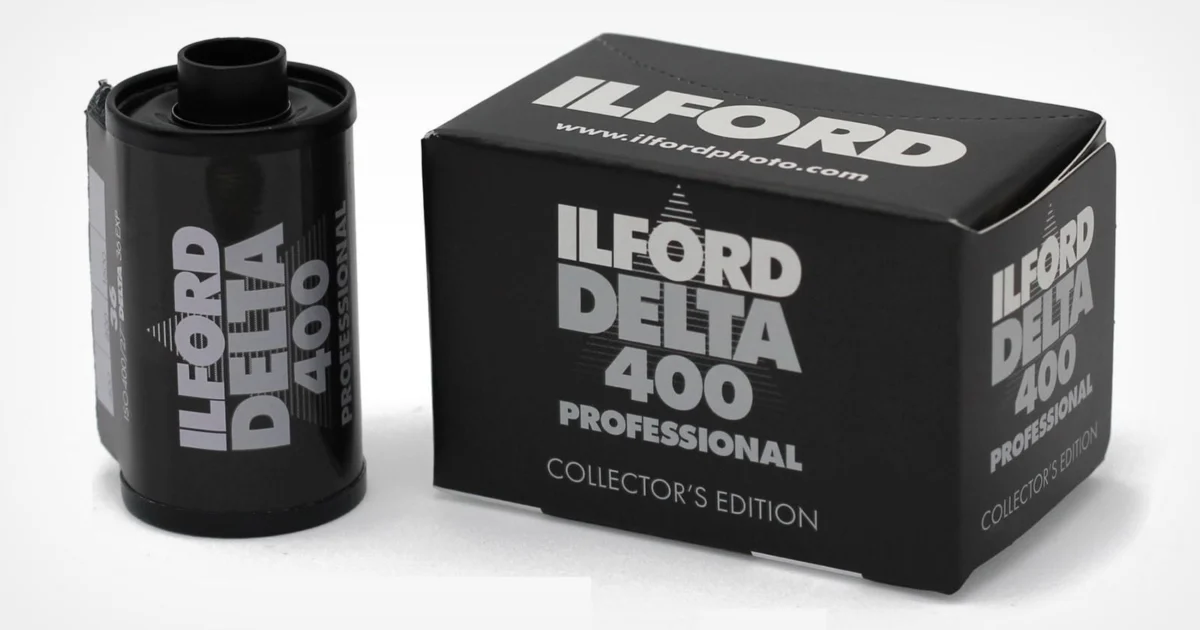
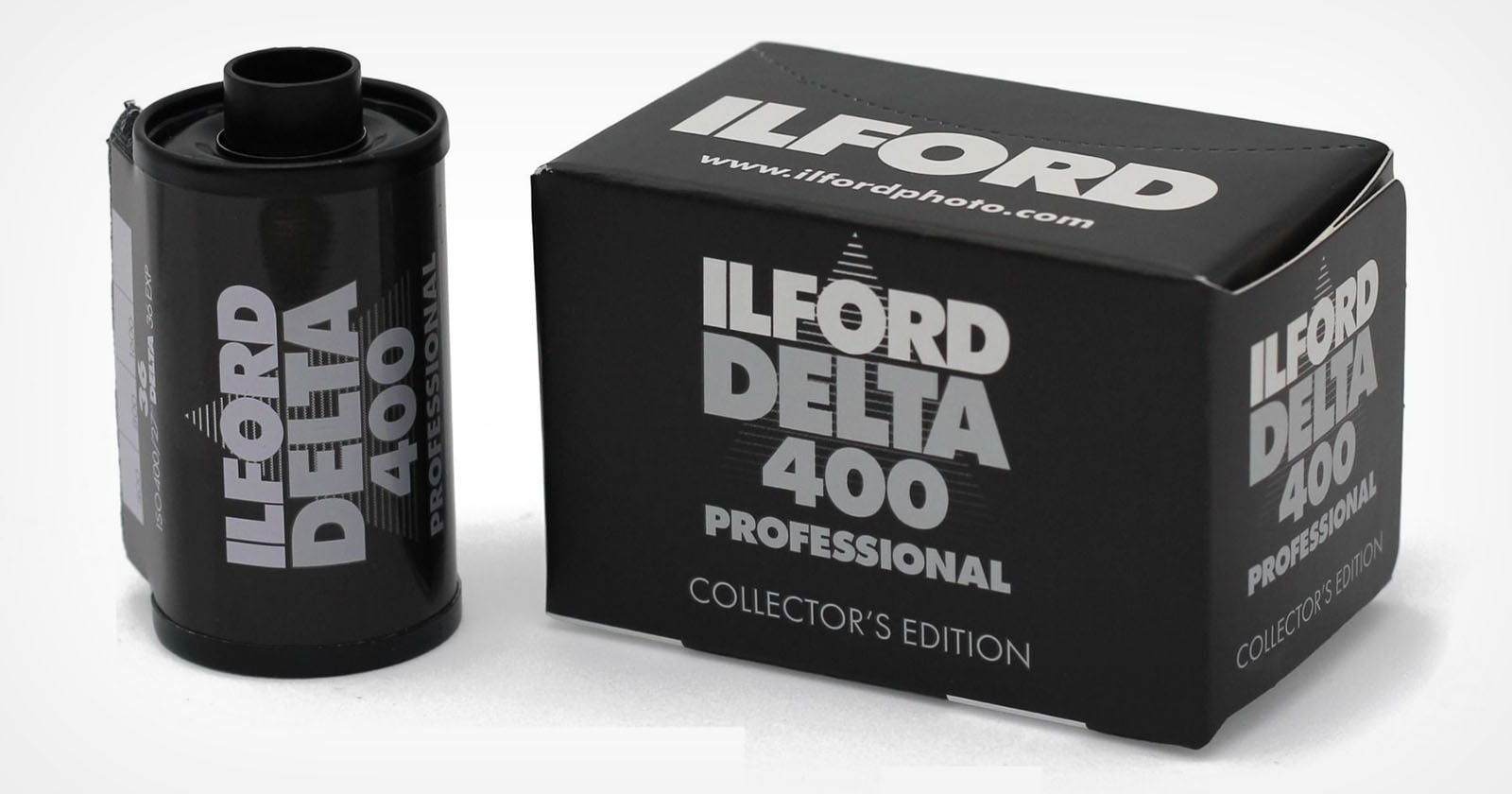
Now, Ilford is shaking up the photography world once again. The company has officially announced the launch of the Ilford Delta 400 Professional Collector’s Edition, a 35mm black-and-white film that promises elevated optical performance packaged in a striking, stealthy all-black cassette and matching carton. However, there is a catch: it is being released strictly as a limited-edition run.
This unexpected drop has immediately sparked intense speculation, excitement, and a scramble among analog enthusiasts worldwide. Far from just a clever marketing gimmick, the Collector’s Edition introduces a fundamental manufacturing shift that could redefine Ilford’s future product catalog—if the market demands it.
Main Facts
At its core, the Ilford Delta 400 Professional Collector’s Edition is a familiar emulsion wrapped in a radically different mechanical package. Retaining the speed, latitude, and processing times of the standard Delta 400 Professional, this new iteration introduces a notable internal upgrade: it is coated onto a clearer roll film base outfitted with advanced anti-halation protection.
- Format: Available exclusively in 135 (35mm) format.
- Pricing: Priced at $15.19 per roll—identical to the standard Delta 400 Professional.
- Packaging: Features a sleek, all-black aesthetic for both the film canister and the outer carton.
- Availability: Strictly limited quantities, available in-store only through authorized Ilford retailers rather than the company’s direct-to-consumer online shop.
- Performance Enhancements: Subtle improvements in dynamic range, shadow detail, scanning behavior, and overall sharpness compared to the standard emulsion.
Despite the enhancements, the real headline is the introduction of a clearer film base equipped with anti-halation backing—a departure from traditional 35mm manufacturing standards at Ilford.
Chronology of a Quiet Revolution
The path to the Collector’s Edition release is as intriguing as the product itself, reflecting a calculated, low-risk approach by a legacy manufacturer testing the modern analog waters.
Phase 1: R&D and Internal Testing
Developing a new film base is no small feat for a chemical and manufacturing facility. While roll film (such as 120 format) and specialized motion picture stocks have long utilized clear bases with anti-halation layers, adapting this architecture for standard 35mm still photography requires overcoming unique logistical and chemical hurdles. Ilford’s engineering team quietly worked on perfecting this formulation, targeting the minor optical drawbacks inherent in standard 35mm gray or amber-tinted acetate bases.
Phase 2: The Stealth Reveal
Rather than organizing a massive global press conference or a sweeping media campaign, Ilford opted for a modern, community-driven rollout. The company quietly updated its product channels and made a splash on social media—most notably through an Instagram announcement that immediately caught the attention of film photographers, gear reviewers, and analog archives.
Phase 3: The Retail Scramble
Simultaneous with the digital announcement, Ilford deployed the stock to its global network of authorized dealers. Eschewing its own e-commerce portal, the company forced buyers to engage directly with local brick-and-mortar camera shops. Within hours of the announcement, phone lines lit up and online enthusiast forums began tracking inventory levels, transforming what could have been a quiet product drop into a high-stakes treasure hunt.
Supporting Data & Technical Breakdown
To understand why the analog community is buzzing about a simple roll of 35mm film, one must look closely at the physics of black-and-white photography.
The Problem with Halation
When light passes through photographic emulsion and strikes the rear base of the film, it can bounce back and scatter. This stray light re-exposes the emulsion adjacent to the original points of light, creating a glowing aura or "halo" around high-contrast edges—a phenomenon known as halation. Traditionally, 35mm films utilize an anti-halation underlayer or a tinted base to absorb this stray light, but compromises are often made to balance manufacturing costs, development compatibility, and scanning efficiency.
The Clear Base Advantage
By shifting to a clearer roll film base with enhanced anti-halation protection, Ilford has targeted two major modern pain points for photographers:
- Digital Scanning: Modern photographers rarely print exclusively in the darkroom; the vast majority scan their negatives using dedicated film scanners or DSLR/mirrorless camera setups. A clearer base reduces unwanted base fog and scattering, translating to cleaner digital scans with punchier contrast and less noise in the highlights.
- Shadow Separation and Sharpness: With less internal light diffusion bouncing around inside the film sandwich, micro-contrast increases. This yields sharper edge definition and richer tonal separation, particularly in dark shadow areas that traditionally muddy up during high-contrast scenes.
Despite these advanced optical traits, Ilford managed to match the speed and standard processing requirements of the legacy Delta 400, meaning photographers do not need to alter their standard development chemistry or times (such as with Ilfotec, ID-11, or Perceptol).
Official Responses and Manufacturer Transparency
One of the most refreshing aspects of the Ilford Delta 400 Collector’s Edition launch has been the brand’s absolute transparency regarding why the film is limited. In an industry where "limited edition" usually translates to inflated prices and artificial scarcity designed to boost profit margins, Ilford’s motivation is remarkably practical.
When queried in the comment section of their official Instagram announcement about why an objectively superior product is being restricted in supply, Ilford answered candidly:
"It’s a test to see what people think and if there’s a market for it."
The manufacturer further elaborated on the economic realities of film production. Producing a film stock with a specialized clear base and complex anti-halation layers is inherently more expensive than churning out standard 35mm stock. If the market reception is overwhelmingly positive—and if the photographers lucky enough to secure a roll validate its performance—Ilford has confirmed they would happily consider bringing the emulsion back as a permanent, regular catalog item.
However, there is a catch tied to that potential future: if integrated into the permanent lineup, the price would "likely be higher than the existing product" to account for the elevated manufacturing and material costs of the specialized base.
Implications for the Analog Industry
The release of the Ilford Delta 400 Professional Collector’s Edition carries significant weight for the broader film photography ecosystem. It serves as a case study in how heritage brands can innovate without alienating their loyal consumer base.
1. Market Validation Through Crowdsourced R&D
By positioning the release as a collector’s test run, Ilford is effectively letting the consumer market shoulder the risk of a new manufacturing process. Instead of investing millions blindly into retooling lines for a permanent new SKU, Ilford is using a limited production run to gauge real-world demand, consumer feedback, and scanning performance across diverse global markets.
2. Pushing the Envelope of Black-and-White Quality
For years, the narrative in black-and-white film has been about keeping classic formulas alive (such as HP5 Plus, Tri-X, and Acros). While emulsions like Ilford Delta and Kodak T-Max introduced modern tabular-grain technology in the 1990s, base technology has largely remained static. Ilford’s willingness to experiment with roll-film base architectures in a 35mm format proves that black-and-white chemistry is not a dead science; it is still capable of evolution.
3. The Brick-and-Retailer Synergy
By intentionally bypassing their own online store and funneling buyers exclusively through authorized dealers, Ilford has provided a much-needed financial boost to brick-and-mortar camera shops. Local camera stores are the lifeblood of the analog community, serving as community hubs, labs, and equipment repositories. Directing eager buyers to physical storefronts helps strengthen the retail network that keeps film alive at street level.
Conclusion: A Critical Moment for Film Shooters
At $15.19 a roll, the Ilford Delta 400 Professional Collector’s Edition is an investment, but for dedicated monochrome shooters, it represents an exciting glimpse into what modern black-and-white film can achieve.
Whether this unique emulsion fades away as a fascinating footnote in Ilford’s storied history or paves the way for a revolutionary new tier of professional films depends entirely on the photography community. If you manage to track down a roll at your local camera shop, shoot it carefully, scan it critically, and let your voice be heard. The future of film may very well depend on it.
 Pevita Pearce
  Reynand Wu
  Suro Senen