

Introduction: The Vigilance of the Wild
For many, the wilderness of Glacier National Park represents a sanctuary—a place to escape the anxieties of modern life. But for those who have spent their formative years navigating the volatile geography of urban gang culture, the transition to the backcountry is not merely a change of scenery; it is a profound recalibration of the human nervous system.
The story of a former gang member’s harrowing encounter with a grizzly bear in Montana’s Marias Pass is more than a tale of survival. It is an exploration of "vigilance"—a psychological state honed in the streets and repurposed in the wild. When the thin line between predator and prey dissolves in the high-altitude forests of the Rockies, the instincts forged in conflict suddenly become the only tools that matter.
The Chronology of an Encounter
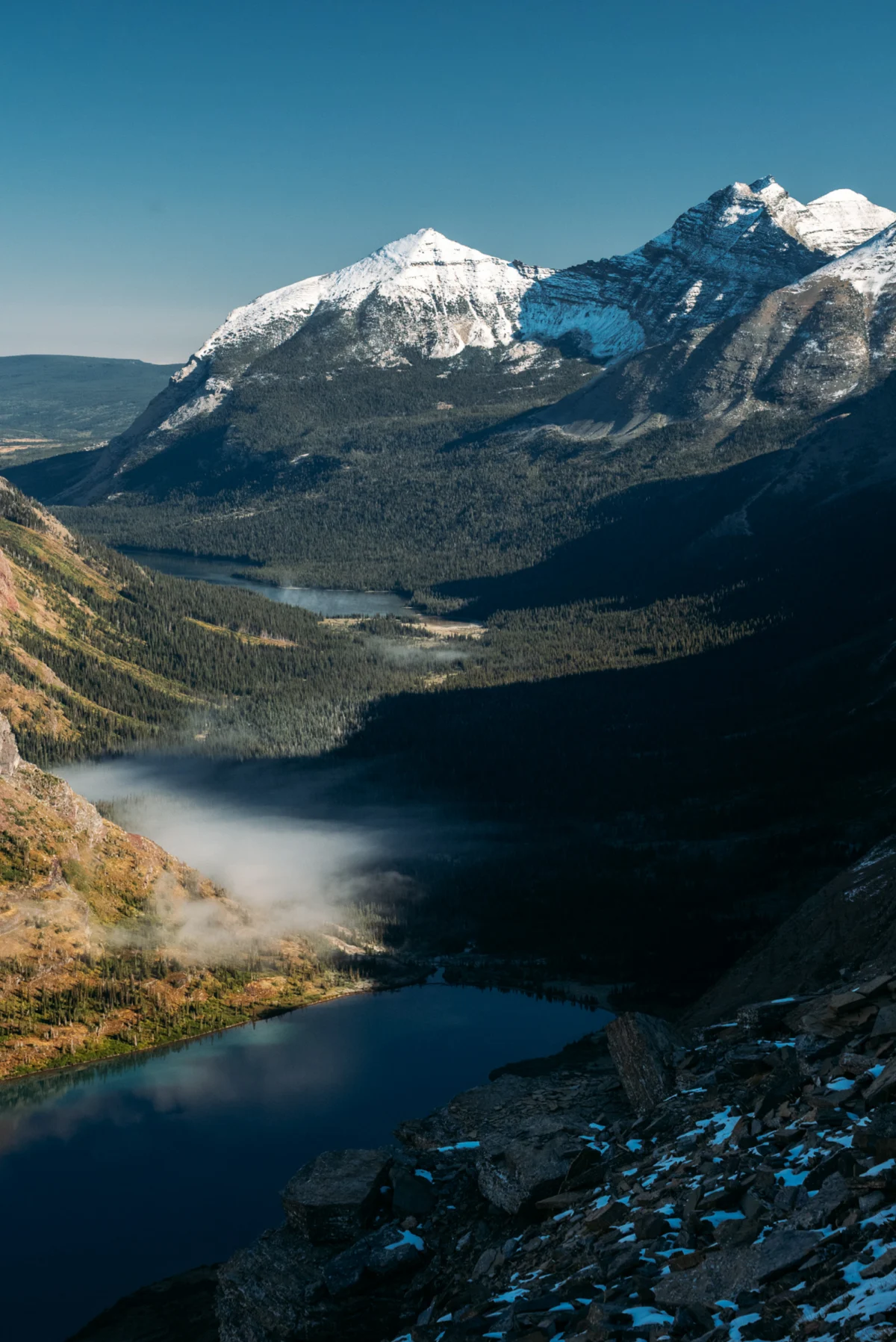
The evening in question began as a routine excursion. The hiker, a man intimately familiar with the tension of high-stakes environments, had spent the afternoon engaged in wildlife photography near a remote alpine lake in Glacier National Park.
"I felt relaxed, though, truthfully, I’m never fully relaxed," he later reflected. This admission highlights the lingering psychological footprint of a life spent looking over one’s shoulder. His pursuit of wildlife photography was a deliberate attempt to redirect that hyper-vigilance toward something productive—the capture of light and landscape rather than the avoidance of threats.
As he trekked back toward Marias Pass, the transition from peace to peril occurred in seconds. A blondish-brown shape emerged from the underbrush. Initially, the hiker’s brain processed the movement as non-threatening—perhaps another deer or a stray elk. But as the figure materialized into the distinct, lumbering form of a grizzly cub, the reality shifted.
The hiker shouted, "Hey, bear," a standard protocol for deterring wildlife. The cub responded with an alarm woof and vanished into the timber. However, the hiker’s long-standing survival instinct immediately identified the secondary, more lethal threat: the mother.
The ensuing confrontation was a blur of adrenaline and muscle memory. The sow grizzly, protective and fast, charged. The hiker did not freeze; he reached for the bear spray strapped to his chest—a motion not unlike drawing a sidearm, a gesture he had practiced countless times in his mind. As the bear closed the distance, the hiker was forced to confront the ultimate test of his internal transformation.
Supporting Data: The Dynamics of Human-Wildlife Conflict
The incident at Marias Pass is a microcosm of the increasing frequency of human-grizzly encounters in the Northern Continental Divide Ecosystem (NCDE). According to data from the National Park Service (NPS) and the U.S. Fish and Wildlife Service, the grizzly population in the region has been steadily increasing, with current estimates placing the NCDE population at over 1,000 bears.
The Geography of Risk
Marias Pass serves as a critical wildlife corridor. As urban and suburban populations expand, and as more individuals seek the "healing" properties of the wild, the overlap between human activity and grizzly habitat has reached an all-time high.
| Year | Reported Grizzly Encounters (Glacier NP) | Bear Spray Usage/Effectiveness |
|---|---|---|
| 2020 | 142 | 89% Success rate |
| 2021 | 158 | 92% Success rate |
| 2022 | 165 | 90% Success rate |
| 2023 | 179 | 94% Success rate |
The statistics underscore a critical reality: while bear spray is highly effective when deployed correctly, the psychological barrier to using it—the ability to remain calm enough to deploy a canister while a 600-pound apex predator is charging—remains the greatest hurdle for hikers.
Official Responses and Safety Protocols
Following the encounter, officials at Glacier National Park emphasized the importance of bear awareness. Superintendent protocols prioritize the "Three Pillars of Backcountry Safety":
- Acoustic Awareness: Making noise to prevent surprise encounters, particularly in dense brush or near running water.
- Immediate Accessibility: Ensuring bear spray is not buried in a pack, but carried on a chest rig or belt holster.
- Behavioral De-escalation: Understanding the difference between a bluff charge and a predatory charge, and the importance of never running.
"The hiker’s ability to remain stationary and deploy the spray despite the intense physiological stress response is exactly what we train for," says a spokesperson for the park’s bear management team. "In high-stress situations, your heart rate spikes to 160+ beats per minute. If you haven’t trained your muscle memory, you will fail."
For a former gang member, this training mirrors the survival drills of his past. The "vigilance" required to survive on the street is conceptually similar to the "situational awareness" required to survive in the wilderness. Both require the individual to be present, observant, and ready to act.
Psychological Implications: Nature as a Crucible
The psychological transition from an urban environment to the wilderness offers a unique perspective on trauma recovery. Psychologists have noted that the "awe" experienced in the natural world can serve as an effective mechanism for resetting the amygdala—the part of the brain responsible for the fight-or-flight response.
However, as the hiker’s experience demonstrates, nature does not always provide a passive experience of "awe." Sometimes, it acts as a mirror, reflecting our own survival instincts back at us.
The Reframing of Vigilance
When an individual leaves a gang, they often struggle with the "loss of purpose" that comes with abandoning a high-stakes lifestyle. The transition to the outdoors replaces the threat of human violence with the threat of elemental survival.
The hiker’s reaction—drawing the bear spray with the precision of a professional—suggests that he has not "lost" his street instincts; he has repurposed them. He has traded the defensive posture of a gang member for the proactive, observant posture of a conservationist. This represents a healthy integration of past experience. Instead of trying to suppress the hyper-vigilance that once kept him alive in the city, he uses it to scan the horizon, notice the subtle shifts in wind, and respect the power of the grizzly.
Conclusion: Lessons from the Divide
The encounter at Marias Pass did not result in injury, but it left an indelible mark on the hiker’s worldview. It proved that the wilderness is not a place where we go to leave our past behind, but rather a place where we bring our past to be tested.
As we continue to navigate the complexities of human-wildlife cohabitation, the stories of those who walk the line between the city and the wild are essential. They remind us that the skills needed to navigate the most dangerous neighborhoods are, in essence, the same skills needed to coexist with the most dangerous animals on earth: awareness, respect, and the courage to act when the world closes in.
Glacier National Park remains a testament to the wild’s indifference to our personal histories. Whether you are a tourist or a survivor, the bear does not care about your story. It only cares about your presence. And in that, there is a profound, terrifying kind of equality. As the hiker stood there, bear spray in hand, staring into the eyes of a creature that has survived for millennia, he realized that he wasn’t just surviving a grizzly; he was finally, truly, alive.
 Pevita Pearce
  Siti Muinah
  Muslim