

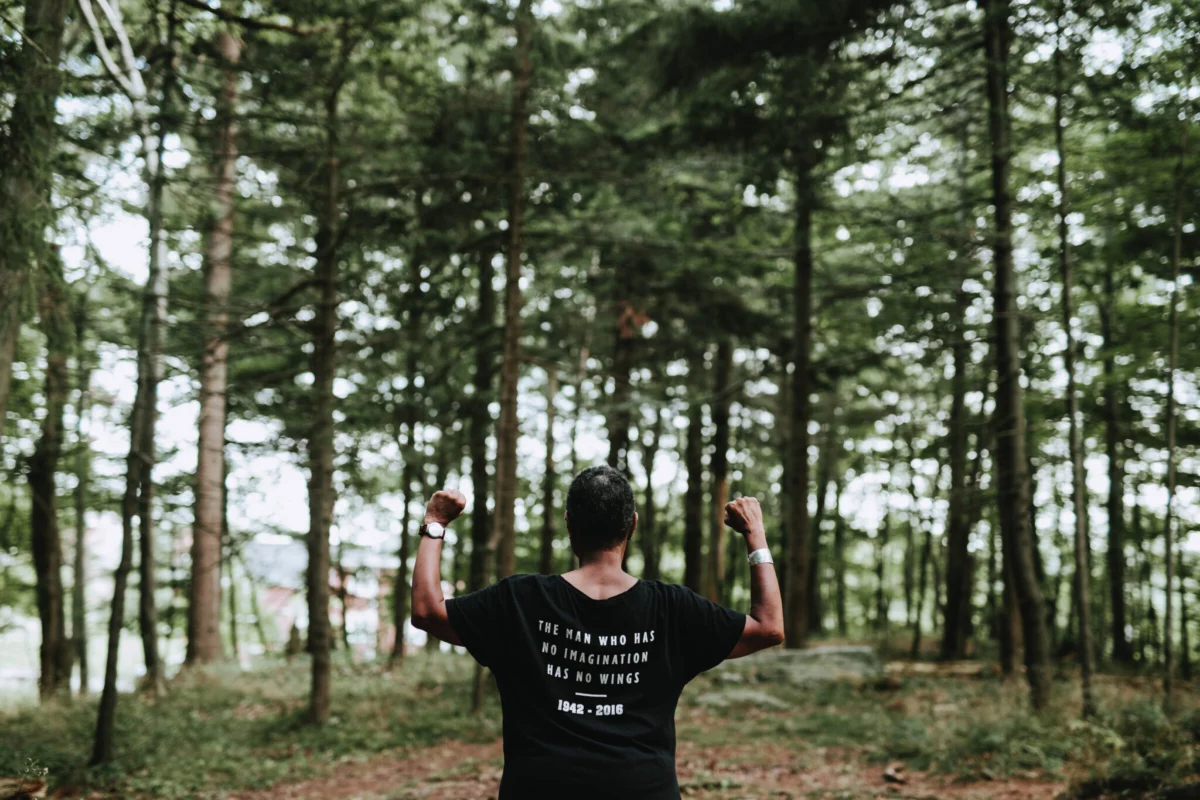
For generations, the narrative of the American wilderness has been framed through a specific lens: a vast, rugged expanse awaiting the intrepid explorer. Yet, for many women of color, this narrative has historically been accompanied by an unspoken, visceral caveat. The roar of the ocean, the towering canopy of the ancient redwoods, and the rhythmic dip of a kayak paddle—experiences often marketed as universal paths to serenity—are frequently complicated by a pervasive, intangible sense of unease.
The question remains: Can a woman of color find true, unburdened peace in the outdoors? For many, the answer is not a simple "yes" or "no," but a complex journey of reconciling personal identity with public spaces that have not always felt welcoming.
The Anatomy of a Silent Fear
Fear, for many outdoor enthusiasts of color, is not necessarily a sudden reaction to a perceived threat; it is often a heartbeat—rhythmic, persistent, and so deeply embedded in the daily experience that it becomes part of the background noise of life. It is the awareness of being "the only one" on the trail, the subconscious scanning of a campsite for signs of hostility, or the lingering memory of being made to feel like an outsider in spaces that ostensibly belong to everyone.
This fear is elusive. It does not always manifest as a direct confrontation, but rather as a weight—a subtle tension that prevents full immersion in the restorative powers of nature. As one writer noted, the fear is so pervasive that it is only when one steps away from the comfort of the familiar and into the wilderness that its presence becomes undeniable.
Chronology: A Journey Toward Reclamation
The realization of this "troubled feeling" often arrives in moments of transition. For many, the catalyst is an invitation to step into spaces that push the boundaries of their comfort zone.
- The Initial Hesitation: The early chapters of this journey are often defined by longing—a desire to interact with the landscape—tempered by the hesitation born of cultural and social conditioning.
- The Catalyst: The turning point frequently occurs in structured environments, such as writing workshops or guided retreats, where the safety of a collective group allows for the dismantling of individual anxieties. The "Flight of the Mind" workshop on the McKenzie River in Oregon serves as a prime example. Held in the foothills of the Cascade Mountains, these spaces provide the necessary scaffolding for women of color to explore their relationship with the natural world.
- The Re-evaluation: As participants engage with the landscape, they begin to differentiate between the environment itself—which is neutral—and the social history of that environment, which has often been exclusionary.
- The Reclamation: The final stage is a conscious choice: to occupy space, to demand access, and to find peace not by ignoring the barriers, but by asserting one’s right to exist within the landscape regardless of them.
Supporting Data: The Landscape of Exclusion
To understand why this fear persists, one must look at the systemic barriers that have historically shaped the outdoor experience.
Demographic Disparities in Outdoor Recreation
Research from organizations such as the Outdoor Foundation consistently highlights that participation in outdoor activities like hiking, camping, and kayaking is disproportionately white. While the reasons are multifaceted—ranging from socioeconomic disparities to geographical access—the psychological factor of "perceived welcome" is a significant, often overlooked, metric.
The History of Public Land
The National Park System and other public lands were born in an era where segregation and exclusion were the norms. When marginalized groups were explicitly barred from or made to feel unwelcome in these spaces, it created a generational legacy of "outdoor trauma." This history is not just a footnote; it is a living memory that informs how families pass down lessons about where it is "safe" to travel.
The Role of Representation
Media representation plays a crucial role in shaping the perception of the outdoors. Historically, outdoor magazines and marketing materials have centered on the white, male explorer. This lack of diverse representation reinforces the notion that the wilderness is not a space for people of color, creating a psychological hurdle that must be overcome before a single step is taken on a trail.
Official Responses and Changing Paradigms
In recent years, there has been a notable shift in how the outdoor industry and governmental agencies approach inclusivity.
Industry Accountability
Outdoor brands and organizations are increasingly acknowledging their role in perpetuating exclusionary narratives. Initiatives aimed at diversifying the outdoors—ranging from scholarship programs for outdoor leadership to inclusive marketing campaigns—are becoming more than just corporate social responsibility (CSR) check-boxes. They are becoming essential components of business survival in a changing demographic landscape.
Governmental Initiatives
The National Park Service (NPS) and various state park systems have begun to invest in programs specifically designed to lower the barrier to entry for urban and minority populations. This includes everything from transportation programs to culturally responsive education that highlights the historical contributions of Black, Indigenous, and People of Color (BIPOC) to the land.
"The goal is to move from invitation to integration," notes a representative from a regional park oversight board. "It is not enough to open the gate; we must ensure that the gate leads to a space where everyone feels the inherent right to belong."
Implications: The Future of the Great Outdoors
The implications of this shift are profound. If the outdoors is to remain a viable resource for the next century, it must reflect the diversity of the population it serves.
1. The Psychological Necessity of Nature
Nature is increasingly recognized as a vital component of mental health. If large swaths of the population remain disconnected from these spaces due to fear or exclusion, the collective health impact is significant. Access to the outdoors must be viewed as a public health imperative, not a luxury.
2. A New Narrative of Ownership
We are witnessing the emergence of a new generation of outdoor leaders—writers, activists, and explorers—who are rewriting the narrative. They are documenting their journeys, sharing their fears, and in doing so, creating a roadmap for others. This is a move toward a more democratic wilderness, one where the "roar of the ocean" is a shared inheritance rather than an exclusionary club.
3. Sustainability through Inclusivity
Environmental stewardship relies on public support. When more people feel a sense of ownership and connection to the land, they are more likely to advocate for its protection. By breaking down the barriers that prevent women of color from finding peace in the wilderness, the movement for environmental conservation gains a powerful, diverse, and energized constituency.
Conclusion: Finding Peace in the Cascade Mountains
The journey of the woman who sits by the McKenzie River, listening to the water while confronting her own fears, is a microcosm of a much larger movement. It is a testament to the resilience of the human spirit and the enduring power of nature to heal, provided we create the conditions for that healing to occur.
Peace in the outdoors is not found by waiting for the fear to vanish entirely. It is found by showing up, by speaking the truth about the barriers that exist, and by refusing to let those barriers dictate the limits of one’s world. Whether in the redwoods of the West or the coastal beaches of the East, the wilderness is beginning to hold space for everyone—a slow, necessary, and vital evolution of the American landscape.
As we move forward, the challenge for the outdoor community is clear: continue to dismantle the structures of fear, amplify the voices of those who have been marginalized, and ensure that when the next generation steps into the wild, they do so with a sense of belonging that is as vast and untamed as the landscape itself.
 Raul Delapena Setiawan
  Pevita Pearce
  Siti Muinah