

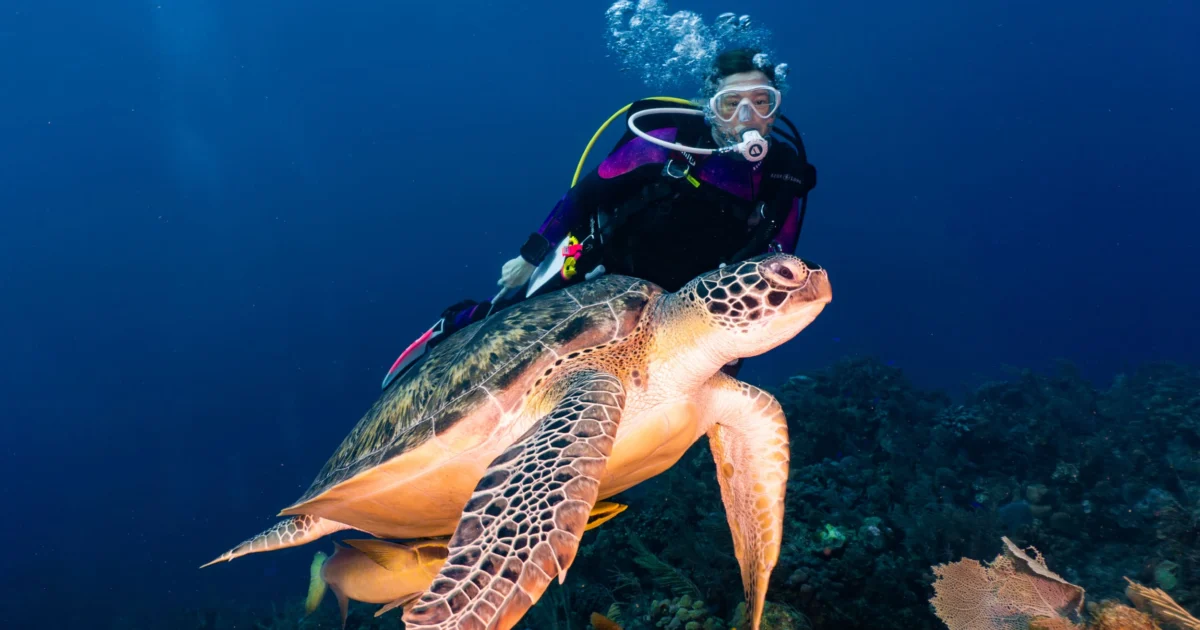
For Robin Reiner, the act of traveling has never been a mere checklist of sights or a pursuit of luxury. Instead, it is a profound philosophy—a way of life that demands engagement, curiosity, and a deep respect for the natural world. As a former science teacher and biologist, Reiner has transitioned from the classroom to the global stage, leveraging her unique background to curate bespoke travel experiences that prioritize exploration, connection, and environmental stewardship.
In an era where the travel industry is often criticized for its environmental impact, Reiner stands out as a bridge between the thrill-seeking adventurer and the conscious, sustainable traveler. Her agency is not just a booking service; it is an educational conduit that transforms a typical vacation into a transformative journey.
The Genesis of a Vision: From Science to Scuba
A Background Rooted in Discovery
Long before she became a fixture in the boutique travel industry, Robin Reiner was rooted in the sciences. Her career trajectory began in the dive industry, where she spent years managing group travel for complex, worldwide scuba diving expeditions. This role was the crucible in which her expertise was forged. Managing logistics for dive groups requires more than just organizational skills; it necessitates an intimate understanding of ocean currents, marine life, and the delicate balance of aquatic ecosystems.
As a biologist, Reiner viewed these environments not just as playgrounds for tourists, but as living, breathing laboratories. She observed firsthand how tourism could either devastate or support local marine conservation efforts. This realization sparked a desire to pivot, moving away from mass-market group travel toward highly personalized, sustainable itineraries that honored both the traveler’s desire for adventure and the destination’s need for preservation.
The Educational Pivot
Her background as a science teacher informs every itinerary she crafts today. Reiner believes that travel is the ultimate classroom. By applying pedagogical principles—assessing the "student’s" (or traveler’s) interests, setting learning objectives, and curating an environment conducive to discovery—she ensures that her clients return home with more than just souvenirs; they return with a deeper understanding of the world around them.
Chronology of a Career: Building a Sustainable Legacy
To understand Reiner’s current success, one must look at the evolutionary steps that defined her career.
- Phase I: The Scientific Foundation: Her early years in academia and biological research established the core values of observation and environmental advocacy.
- Phase II: The Dive Industry Years: A decade-plus of hands-on experience in the scuba industry provided the logistical backbone. She learned the intricacies of international travel, high-stakes group management, and the nuances of eco-sensitive tourism.
- Phase III: The Entrepreneurial Shift: Realizing that the market lacked high-quality, scientifically informed, and environmentally conscious travel planning, Reiner launched her own consultancy.
- Phase IV: The Digital Transformation: Embracing modern tools like Travefy, she streamlined the client experience, ensuring that sustainability could be managed with high-tech efficiency without losing the "human touch."
Supporting Data: The Rise of Sustainable Adventure Travel
The travel industry is currently undergoing a seismic shift. According to recent reports from the World Travel & Tourism Council (WTTC), consumer demand for sustainable tourism has increased by over 60% since 2020. Travelers are no longer satisfied with passive sightseeing; they are seeking "transformative travel."
Reiner’s focus on the Caribbean—specifically Dominica and Costa Rica—is backed by compelling data. Both nations are global leaders in eco-tourism. Costa Rica, for instance, generates over 95% of its electricity from renewable sources and has reversed decades of deforestation. Dominica, known as the "Nature Island," has focused heavily on sustainable blue-economy initiatives.
By centering her practice on these destinations, Reiner aligns her business with the growing movement of "regenerative tourism"—a practice where the traveler leaves the destination better than they found it.
Expert Perspectives: The Art of the Tailored Itinerary
When asked about her specific areas of expertise, Reiner is emphatic: "Scuba and sustainable adventure travel." These are not just niches; they are specialized fields that require a deep network of vetted partners.
The "Family-First" Approach
One of the most challenging aspects of modern travel planning is the multi-generational family trip. Reiner’s philosophy here is democratic. "Ask the children and parents what their favorite activities are to be able to customize," she advises. "Get an idea of what everyone’s ideal is."
This approach mitigates the friction often found in family travel, where parents may want a spa day while children crave high-octane physical activity. By mapping out the "ideal" for each family member, Reiner creates a modular itinerary that balances individual desires with collective experience.
The Technological Edge
Despite her focus on the natural world, Reiner is a proponent of technology as an enabler of connection. She notes, "Travefy makes it easy to let the clients see their itinerary at a glance as well as communicate with you before, during, and after the trip."
Furthermore, her use of Tourism Cares—an organization dedicated to the social and environmental impact of travel—serves as a vetting mechanism. By integrating these tools, she ensures that her clients aren’t just visiting "green" locations in name only, but are supporting businesses that have been vetted for their actual environmental and social impact.
Official Responses and Industry Implications
The implications of Reiner’s model are significant for the broader travel agency landscape. As AI-driven booking platforms become ubiquitous, traditional travel agents are often viewed as obsolete. However, Reiner’s model proves the opposite: the agent of the future is not a clerk, but a curator and an educator.
The Human Element in an Automated World
Industry analysts suggest that the "human touch" is becoming a premium product. As consumers face "choice paralysis" due to the overwhelming amount of travel data available online, the role of an expert advisor like Reiner is to provide curation rather than information.
Her focus on sustainability also aligns with the shifting mandates of international tourism boards. Governments in the Caribbean and Central America are increasingly prioritizing high-value, low-impact travelers. By attracting clients who stay longer, spend locally, and respect natural boundaries, Reiner is acting as an informal diplomat for the regions she promotes.
The Future of Exploration: Why It Matters
As we look toward the future of global tourism, the path forward is increasingly precarious. Climate change, over-tourism, and the degradation of biodiversity pose existential threats to the very destinations people travel to see.
Reiner’s approach provides a blueprint for resilience. By educating her clients about the life cycles of coral reefs or the importance of supporting indigenous-led conservation efforts in Dominica, she is creating a generation of travelers who are also advocates.
A Call to Conscious Travel
For those looking to follow in her footsteps or simply improve their own travel habits, Reiner’s advice is clear: do your research, prioritize sustainability over convenience, and ensure that your travel budget supports local communities.
Her website serves as a living portfolio of her own travels, showing that she "walks the walk." By documenting her experiences, she provides a layer of transparency that is often missing in the commercial travel sector. When a client sees her swimming in the clear waters of Dominica or trekking through the rainforests of Costa Rica, they aren’t just seeing a destination—they are seeing a standard of quality that they can expect for themselves.
Final Thoughts
Travel, at its best, is an act of empathy. It is the ability to step outside one’s own comfort zone and appreciate the complexity of a world that is not our own. Robin Reiner’s career is a testament to the fact that when we travel with intention—with a scientist’s eye for detail and a teacher’s heart for discovery—we don’t just explore the world. We preserve it.
Whether it is through the meticulous planning of a family scuba trip or the strategic selection of eco-conscious partners, Reiner is proving that the future of travel isn’t just about where we go; it’s about how we show up when we get there. Her journey from the classroom to the ocean floor serves as an inspiration for any traveler seeking to find depth in a shallow, fast-paced world. As she continues to bridge the gap between adventure and ethics, Reiner remains a guiding light for those who believe that the best way to see the world is to ensure it lasts for the next generation of explorers.
 Ammar Sabilarrohman
 Muslim
