

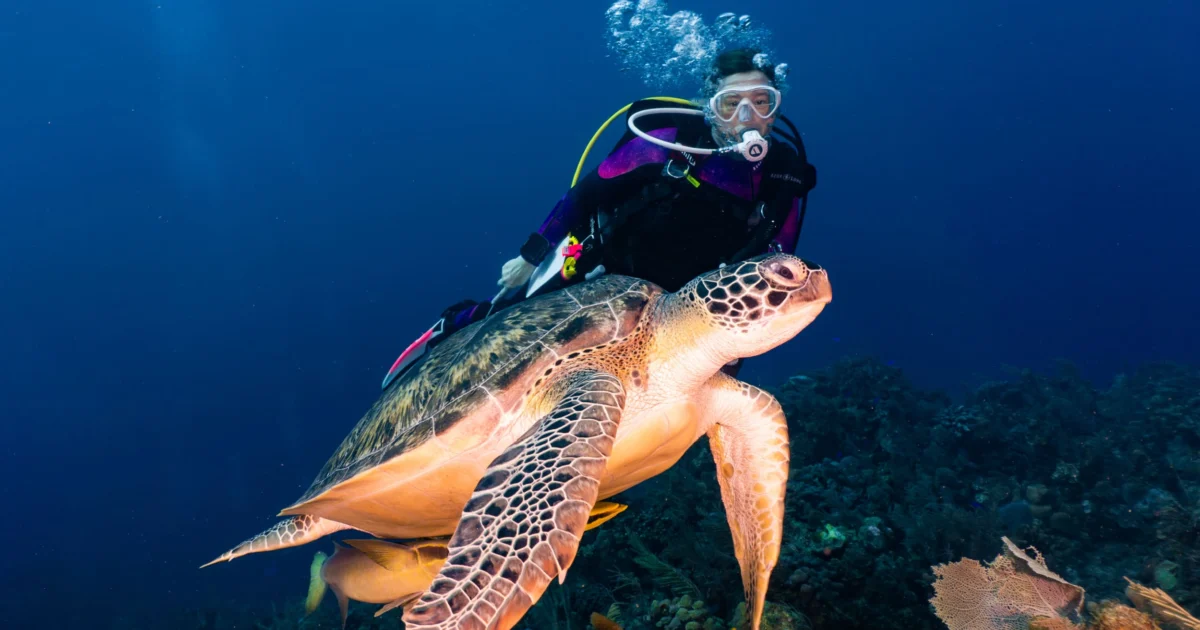
For many, travel is a seasonal indulgence, a brief reprieve from the monotony of the nine-to-five. For Robin Reiner, however, travel is not merely a job—it is a fundamental way of life, an educational philosophy, and a platform for environmental advocacy. By synthesizing a deep-seated background in marine biology and pedagogy with the intricate logistics of high-end travel planning, Reiner has carved out a unique niche in the industry, proving that exploration, when done with intention, can be a transformative force.
The Genesis of an Explorer: A Chronology of Purpose
Robin Reiner’s professional trajectory was never destined for a traditional office setting. Her career began in the trenches of the dive industry, where she spent years orchestrating complex group travel for scuba diving expeditions across the globe. This role required more than just logistical precision; it demanded a deep understanding of marine environments, safety protocols, and the cultural nuances of coastal communities.
Before she was a travel advisor, Reiner was a scientist and a classroom teacher. These roles provided the scaffolding for her current approach to travel. As a biologist, she developed an intimate understanding of fragile ecosystems, and as an educator, she learned how to curate information to maximize engagement and curiosity.
"I wanted to create experiences that allowed travelers to focus on what really matters—exploration, connection, and adventure," Reiner explains. This realization was the catalyst for her transition into crafting bespoke travel experiences. She recognized that the travel industry often prioritized volume over value, and she set out to bridge the gap by integrating marine conservation and experiential learning into every itinerary she builds.
The Intersection of Science and Service: Core Expertise
At the heart of Reiner’s business model is a commitment to sustainable adventure. Unlike traditional travel agents who rely on mass-market tour operators, Reiner approaches each itinerary as a scientific inquiry. Her expertise centers on two primary pillars: scuba diving and sustainable adventure travel.
Scuba Diving as an Educational Tool
For Reiner, a dive trip is not just about the underwater view; it is about literacy in the ocean. She selects destinations where clients can engage with conservation efforts, such as coral reef monitoring or shark tagging programs. This transforms a vacation into a citizen-science project, leaving the traveler with a broader understanding of the blue planet.
Sustainable Adventure Travel
Sustainability in the travel sector is often marred by "greenwashing," but Reiner combats this through rigorous vetting. She leans on organizations like Tourism Cares to identify partners who are not just environmentally conscious, but socially responsible. This means prioritizing local economies, ensuring that tourism dollars support indigenous communities, and minimizing the carbon footprint of every expedition.
The Geographic Focus: Where the Wild Things Are
When asked about the most popular destinations for her clients, Reiner notes that the Caribbean remains a perennial favorite, though with a distinct, rugged twist. Rather than the typical all-inclusive resort experience, she steers her clients toward the "Nature Island" of Dominica or the bio-diverse landscapes of Costa Rica.
Dominica: The Unspoiled Frontier
Dominica, often called the "Nature Island of the Caribbean," is a perfect fit for Reiner’s clientele. It lacks the massive cruise ship terminals and sprawling high-rise hotels of its neighbors, favoring instead lush rainforests, volcanic thermal springs, and some of the best whale-watching opportunities in the Atlantic. For Reiner, it is a classroom where the lesson is biodiversity.
Costa Rica: The Gold Standard of Eco-Tourism
Costa Rica serves as the bedrock of Reiner’s sustainable philosophy. By focusing on lodges that utilize renewable energy and tours that emphasize wildlife protection, she demonstrates that luxury and sustainability are not mutually exclusive. Whether trekking through the cloud forests of Monteverde or diving off the coast of the Osa Peninsula, the focus remains on minimal impact and maximum appreciation.
Orchestrating the Family Dynamic: A Strategy for Success
One of the most complex challenges in the travel industry is balancing the disparate needs of family members. Reiner’s approach to family travel planning is rooted in her pedagogical background: effective communication and inclusive goal-setting.
"Ask the children and parents what their favorite activities are, to be able to customize," Reiner advises. "Get an idea of what everyone’s ideal is."
This methodology moves beyond the "kids’ club" model of family travel. Instead, Reiner designs trips where the family unit is forced to engage with their surroundings together. Whether it is a guided rainforest hike or an intro-to-scuba session in a protected lagoon, the itinerary is designed to create shared narratives—memories that are built on mutual discovery rather than separate, parallel experiences.
The Toolkit of the Modern Advisor: Technology and Transparency
In an era of DIY booking platforms, the value of a travel advisor lies in their ability to provide clarity and security. Reiner utilizes a suite of sophisticated tools to ensure that the traveler is never left in the dark.
- Travefy: This is the cornerstone of her client interaction. Travefy allows for the consolidation of flight details, hotel confirmations, and custom activity schedules into a single, mobile-accessible interface. For the traveler, it provides a "glanceable" itinerary that eliminates the stress of managing paper documents or scattered emails.
- Tourism Cares: This platform serves as a filter for her travel planning. By utilizing their database, she ensures that every vendor she works with meets high standards for sustainability and social responsibility.
- Curated Marketing: Reiner uses her own website as a visual testimony to her work. By showcasing photos from her own explorations, she builds a brand based on personal experience rather than second-hand brochure marketing.
Implications: The Future of Responsible Exploration
The work that Robin Reiner performs has broader implications for the tourism industry at large. As climate change continues to impact fragile marine ecosystems, the role of the travel advisor is evolving from a logistics coordinator to a conservationist gatekeeper.
By educating her clients, Reiner is effectively creating a new class of travelers—individuals who are more mindful of their consumption, more respectful of local customs, and more aware of their environmental footprint. This "educational tourism" is likely to become the standard, rather than the exception, as younger generations demand greater transparency and ethical behavior from the companies they support.
Furthermore, her emphasis on family travel is a strategic investment in the future. By exposing children to the realities of the natural world through guided, sustainable exploration, she is cultivating a generation of advocates. When a child learns to appreciate a healthy reef in Dominica, they are statistically more likely to grow into an adult who supports marine conservation policies.
Conclusion: A Philosophy of Intentionality
Robin Reiner’s journey from the classroom to the ocean floor, and ultimately to the world of bespoke travel design, is a testament to the power of aligning one’s career with one’s values. Her approach is a rebuke to the "tourist trap" culture; it is an invitation to engage with the world in a way that is deep, meaningful, and fundamentally sustainable.
In an increasingly fragmented world, the ability to facilitate genuine connection—between family members, between cultures, and between humans and the environment—is a rare and valuable skill. Through her meticulous planning, her background in science, and her unwavering commitment to the planet, Robin Reiner is not just helping people take trips; she is helping them discover a more profound way to navigate the world.
As travel continues to rebound and expand in the post-pandemic landscape, the lessons provided by Reiner’s model are clear: the most rewarding journeys are those that leave the destination better than we found it, and ourselves permanently changed by the experience. Whether one is a seasoned diver or a family looking for a first international adventure, the blueprint provided by Reiner proves that with the right planning, the world is not just a place to visit—it is a place to understand.
 Ammar Sabilarrohman
 Muslim
 Nila Kartika Wati
