

For decades, the “Golden Route”—the well-trodden path connecting Tokyo, Kyoto, and Osaka—has served as the primary gateway for international visitors to Japan. Yet, just a short distance from this frantic urban energy lies the Setouchi region, a collection of prefectures bordering the Seto Inland Sea that offers a profound, meditative alternative. From the historic, willow-lined canals of Kurashiki to the untamed, misty gorges of the Iya Valley, this region reveals a Japan defined by craftsmanship, contemporary art, and a slower, intentional way of life.
Chronology of an Immersive Journey
The Historic Canals of Kurashiki
The journey begins at Okayama Airport, followed by a 45-minute drive into Kurashiki. Stepping into the Bikan Historical Quarter is akin to entering an Edo-period painting. The area is defined by white-walled merchant warehouses, now repurposed into galleries, boutiques, and cafes. A stay at the Kurashiki Kokusai Hotel sets the cultural tone; its lobby features a towering 1963 woodblock masterpiece by the legendary folk artist Shikō Munakata. A riverboat tour of the district is essential, offering a water-level perspective of the willow-shaded canals that cannot be replicated from the shore.
The Birthplace of Denim and Seto Sea Flavors
A short drive leads to Kojima, the coastal district credited with the birth of Japanese denim. At the Betty Smith Jeans Museum & Village, visitors can engage in the tactile, physically demanding art of jean-making. Utilizing manual press tools to set rivets and buttons, one gains a newfound appreciation for the craftsmanship behind high-end denim. Following this exertion, the local culinary scene—specifically the sawara (Spanish mackerel) menus at Takuzen—highlights the region’s devotion to hyper-local, seasonal sourcing.
The Contemporary Art Archipelago: Naoshima
Crossing from Uno Port to Naoshima via a ferry that feels plucked from a Wes Anderson set, the landscape shifts from historical to avant-garde. Naoshima is the epicenter of Japanese contemporary art. The iconic spotted pumpkins of Yayoi Kusama serve as a welcome mat to an island where Tadao Ando’s concrete architecture harmonizes with the natural landscape. The newly opened Naoshima New Museum of Art and the world-renowned Chichu Art Museum—featuring works by Monet, Turrell, and De Maria—demand a full day of exploration, ideally via electric bicycle.
Takamatsu: Gardens, Sculptors, and Udon
Across the water in Takamatsu lies Ritsurin Garden, a 400-year-old masterpiece of landscape design that rivals the more famous gardens of Kyoto. The garden is a living composition, where every path reveals a new alignment of pine trees and arched bridges. Nearby, the Isamu Noguchi Garden Museum offers a poignant look at the life of the Japanese American sculptor. His studio, left largely as it was upon his death, stands as a testament to the synthesis of Eastern and Western artistic sensibilities. In the city, the Nakano Udon School offers a rare, hands-on lesson in the art of Sanuki udon, including the tradition of kneading the dough with one’s bare feet.
Into the Mist: Iya Valley
The transition from the coast to the Iya Valley marks the most dramatic shift of the trip. As the elevation increases, the modern world falls away, replaced by steep, verdant mountains and traditional thatched-roof farmhouses. Staying at Tougenkyo-Iya—a collection of restored historic dwellings—provides an experience of profound isolation. Here, meals are prepared over an irori hearth, and the only soundtrack is the wind through the valley. Nearby, the Kazurabashi vine bridge and the dramatic rock formations of the Oboke Gorge showcase the raw, untamed natural beauty of Shikoku’s interior.
The Whirlpools and the Island Retreat
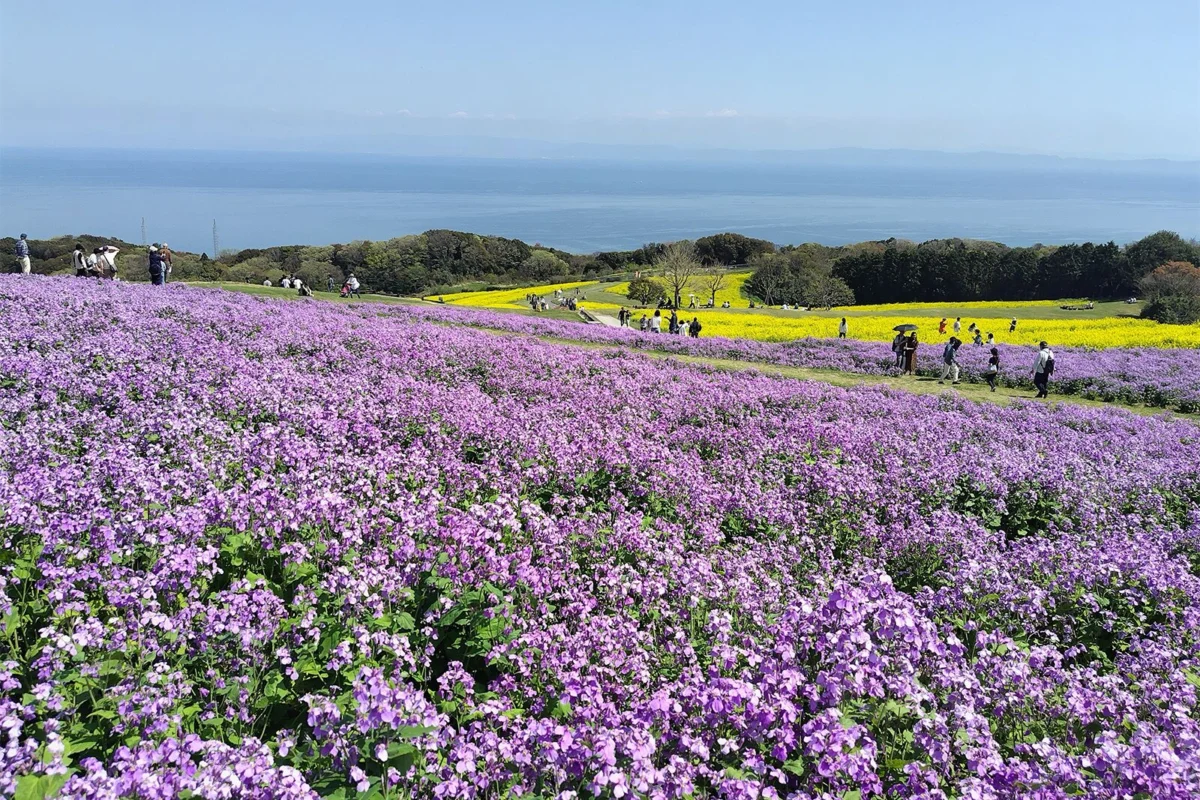
The final leg of the inland exploration involves the Naruto Whirlpools, a tidal phenomenon created by the meeting of the Seto Inland Sea and the Kii Channel. Viewing these currents from the Uzu no Michi walkway requires careful coordination with local tide tables to witness the water at its most violent and beautiful. Following this, the journey concludes on Awaji Island, a peaceful sanctuary featuring sunflower fields at Awaji Hanasajiki and meditative retreats like Zenbo Seinei, before the final return to the neon-lit urbanity of Osaka.
Supporting Data and Cultural Context
The Setouchi region’s appeal is backed by a shift in tourism trends toward “Slow Travel.” Unlike the high-velocity sightseeing of the Golden Route, Setouchi prioritizes:
- Regional Specialization: Each district maintains a unique identity—Kojima for denim, Naoshima for art, and Takamatsu for Udon—preserving local economies through tourism.
- Cultural Preservation: The restoration of traditional farmhouses (like those in Iya Valley) prevents the loss of architectural heritage while providing high-end sustainable lodging.
- Accessibility: Despite its remote feel, the region is well-connected by ferry and expressway, making it accessible to those willing to rent a car or navigate regional transport.
Official Perspectives and Implications
Local tourism boards in Kagawa and Tokushima prefectures have emphasized that the rise of art-focused tourism—led by the Benesse Art Site Naoshima project—has acted as a catalyst for regional revitalization. By leveraging both contemporary art and ancestral traditions, these prefectures are successfully attracting a younger, more international demographic.
The implication for the future of Japanese tourism is clear: the “Golden Route” is no longer the sole definition of a Japanese holiday. There is a growing appetite for the “Deep Japan” experience—one that involves physical engagement (making jeans, kneading noodles, hiking mountains) rather than passive observation. For the traveler, this shift signifies a move toward meaningful, long-term memory creation over the accumulation of quick photo opportunities.
Conclusion: The Contrast of Experiences
As I returned to the electric pulse of Osaka, the contrast was jarring. The silence of the Iya Valley, the meditative scent of matcha in Awaji, and the rhythmic clatter of the loom in Kojima felt like a dream against the neon glare of the city. This journey through the Setouchi region is not merely a vacation; it is a recalibration. It proves that the most rewarding aspects of Japan are not found on the main thoroughfares, but in the quiet, craftsman-led corners that still cherish the beauty of the slow and the handmade.
Quick Reference Guide: Where to Play, Eat, and Stay
- Art & Culture:
- Naoshima New Museum of Art: Contemporary Asian art hub, Honmura.
- Chichu Art Museum: Immersive light and impressionist works, Naoshima.
- Benesse House: An architectural and artistic hotel-museum hybrid.
- Ritsurin Garden: A historic landscape garden in Takamatsu.
- Isamu Noguchi Garden Museum: The preserved studio of a master sculptor.
- Experiences:
- Nakano Udon School: Learn the art of Sanuki udon in Takamatsu.
- Iya Kazurabashi Bridge: A historic, adrenaline-inducing vine suspension bridge.
- Oboke Gorge Sightseeing Boat: Natural rock formations viewed from the water.
- Uzu no Michi: Elevated walkway above the Naruto Whirlpools.
- Lodging:
- Tougenkyo-Iya: Restored centuries-old farmhouses in the remote Iya Valley.
- Kyomisanso Hanajukai: A ryokan overlooking the Seto Inland Sea with private onsens.
- AoAwo Naruto Resort: A coastal resort perfect for proximity to the whirlpools.
 Raul Delapena Setiawan
  Nila Kartika Wati
  Iffa Jayyana