

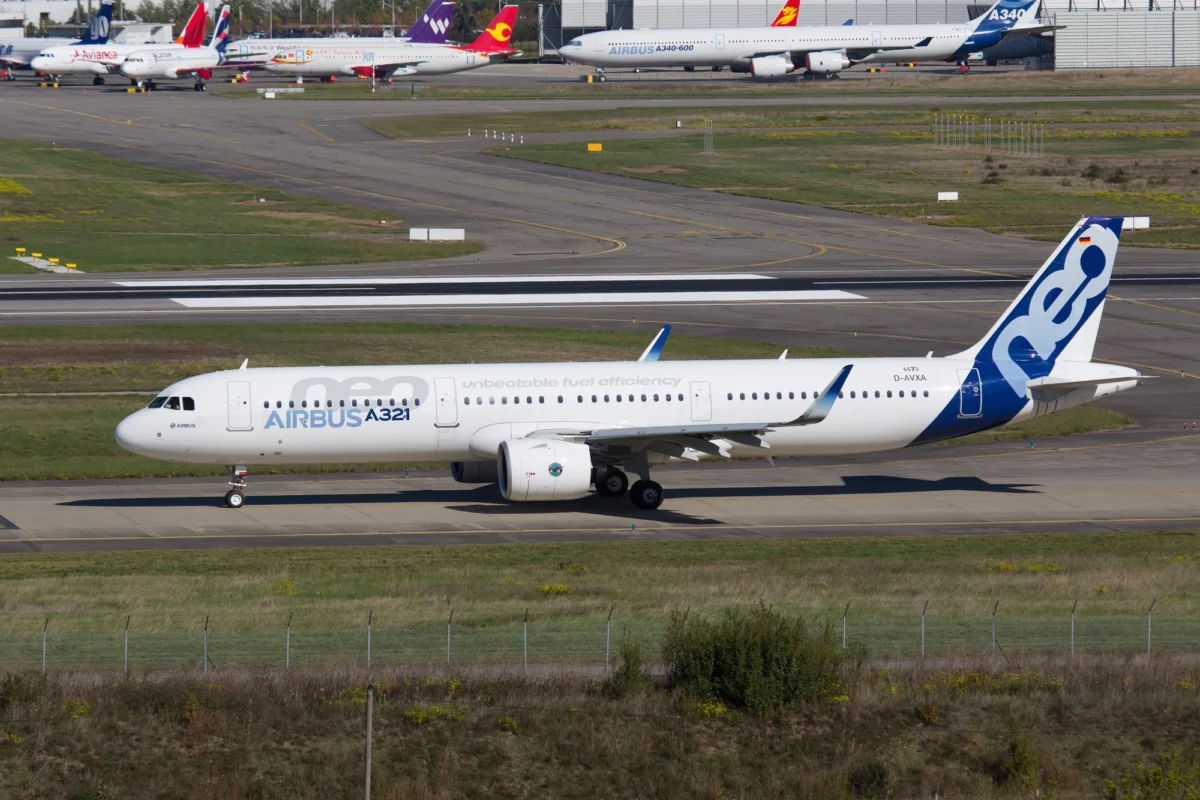
In a move intended to stabilize investor confidence and reassure the global aviation industry, Airbus has formally addressed a newly identified manufacturing quality issue affecting its popular A321neo narrowbody aircraft. The European aerospace giant confirmed that the discrepancy involves surface protection on stringers located in the lower front section of the fuselage. While the scale of the issue is significant—potentially impacting over 500 aircraft—the company has been quick to frame the development as a quality control matter rather than a safety-critical hazard.
This latest challenge arrives at a sensitive juncture for Airbus as it pursues an ambitious production schedule, aiming for a monthly output of 75 aircraft across the A320 family by the end of 2027. Despite the reassurances provided by management, the news triggered a brief market reaction, with Airbus shares dipping more than 1% following the initial disclosure.
The Nature of the Technical Discrepancy
On September 25, 2026, an Airbus spokesperson clarified the nature of the technical fault to AeroTime, noting that the problem was uncovered during "standard rework" procedures. The deviation specifically pertains to the protective coating applied to the stringers—the longitudinal structural components that provide stiffness to the fuselage skin.
According to technical experts, surface protection is vital for long-term corrosion resistance and structural integrity. However, Airbus insists that the structural capacity of the affected aircraft remains within the design envelope. The company stated that the issue has been "identified, contained, and a remedy is available," emphasizing that all newly coated stringers now conform to original manufacturing requirements.
Crucially, the manufacturer highlighted that the remediation process is relatively non-invasive. "The rework doesn’t require any disassembly of the stringers," the spokesperson explained. "Once the rework is applied, the aircraft is considered to be back as if at nominal design." This distinction is essential, as it prevents the need for extensive structural teardowns that would otherwise cripple airline operations and ground large portions of the global fleet.
Chronology of Quality Hurdles
The identification of the A321neo stringer issue follows a series of production-related hurdles that have tested Airbus’s operational resilience throughout 2026.
- Early 2026: Airbus maintains a strong delivery pace, signaling to shareholders that it remains on track to meet its annual target of 870 commercial aircraft.
- June–July 2026: A significant bottleneck emerges regarding the A330neo widebody program. Inspections were mandated following concerns regarding the aircraft’s horizontal tail plane (horizontal stabilizer). The production line essentially ground to a halt; zero A330neo deliveries were recorded during these two months.
- August 2026: Deliveries for the A330neo resumed at a trickle, with a single unit delivered to Starlux Airlines. Reports later emerged via Reuters suggesting that the A330neo issue was linked to the discovery of a tool left within the aircraft’s structure during assembly.
- September 25, 2026: Reports surface regarding the A321neo surface protection deviation. Airbus issues a statement clarifying that the fleet remains safe to fly while outlining a containment plan.
Supporting Data and Production Context
To understand the weight of this development, one must look at the broader context of Airbus’s production capacity. As of late September 2026, Airbus has delivered 475 aircraft year-to-date, showing a marked improvement over the 434 aircraft delivered during the same period in 2025. This 9% increase demonstrates that, despite intermittent quality issues, the underlying production system is operating at a high velocity.
However, the "500-aircraft" figure—reported by The Air Current—serves as a reminder of the sheer scale of the A320 family program. With such a massive footprint in the global narrowbody market, even minor deviations in the supply chain or internal manufacturing processes have an outsized impact on the logistical flow of deliveries.
The company is currently under intense pressure to satisfy a record-breaking order backlog. By 2027, the mandate to reach 75 aircraft per month represents a monumental scaling effort. Every "quality deviation" that requires a pause or a rework sequence threatens to disrupt the rhythm of the Final Assembly Lines (FALs) in Toulouse, Hamburg, Mobile, and Tianjin.
Official Responses and Stakeholder Management
Airbus has adopted a transparent, albeit defensive, posture regarding the A321neo stringer issue. By explicitly labeling the problem a "quality issue not a safety issue," the manufacturer is attempting to prevent regulatory bodies like the European Union Aviation Safety Agency (EASA) and the Federal Aviation Administration (FAA) from issuing Airworthiness Directives (ADs) that could mandate immediate, widespread groundings.
The company’s strategy relies on the fact that the "remedy is available" and that the fix does not require "disassembly." By characterizing the aircraft as "nominal" after the rework, Airbus is effectively telling airlines and lessors that their assets are not being permanently devalued.
Investors, however, remain jittery. The 1% drop in share price reflects the market’s ongoing sensitivity to "production surprises." Over the last two years, the aerospace sector has been plagued by supply chain instability, engine durability issues (such as those affecting the Pratt & Whitney GTF engines), and raw material shortages. When a company as large as Airbus reports an issue that potentially affects half a thousand units, the market interprets it as a sign of potential systemic fatigue within the manufacturing ecosystem.
Implications for the Aviation Sector
1. Delivery Schedules and Backlogs
The primary concern for airline customers is the potential for further delays in aircraft handovers. If Airbus’s quality teams are occupied with re-inspecting and re-coating stringers, it diverts labor and hangar space away from the final stages of aircraft completion. If the remediation process takes longer than anticipated, the goal of 870 deliveries for 2026 may once again become a point of contention during year-end financial reporting.
2. Supply Chain Oversight
The A330neo incident (the "tool in the structure") and the A321neo stringer issue suggest that Airbus is experiencing "growing pains" associated with its aggressive ramp-up. As production rates increase, the pressure on quality inspectors and line workers intensifies. The aviation industry will be watching closely to see if Airbus announces further investments in automated quality control or more stringent oversight of internal manufacturing processes.
3. Airline Operational Planning
For airlines, the focus is on fleet availability. A321neos are the workhorses of short-to-medium-haul international travel. If the rework requires an aircraft to be out of service for a week or more, it could impact seat capacity during upcoming peak travel seasons. However, because Airbus has confirmed that the aircraft "can continue to operate," most carriers will likely schedule the rework during routine maintenance checks, thereby minimizing the impact on their revenue-generating schedules.
Conclusion
The Airbus A321neo remains one of the most successful commercial aircraft designs in history, and the current quality issue—while noteworthy—appears to be a manageable hurdle rather than a catastrophic failure. By proactively addressing the stringer surface protection deviation, Airbus is attempting to maintain the delicate balance between high-volume production and the rigorous safety standards expected of a global aerospace leader.
The coming months will be critical. If Airbus can demonstrate that the rework process is efficient and that the supply chain has returned to a state of stability, the market is likely to view this as a temporary bump in the road. Conversely, should further quality-related delays emerge, the pressure on Airbus leadership to re-evaluate the 75-aircraft-per-month production target may become unavoidable. For now, the message from Toulouse is clear: the production line is moving, the fixes are in place, and the safety of the fleet remains the primary priority.
 Layla Zulfa
 Iffa Jayyana
 rifanmuazin
