

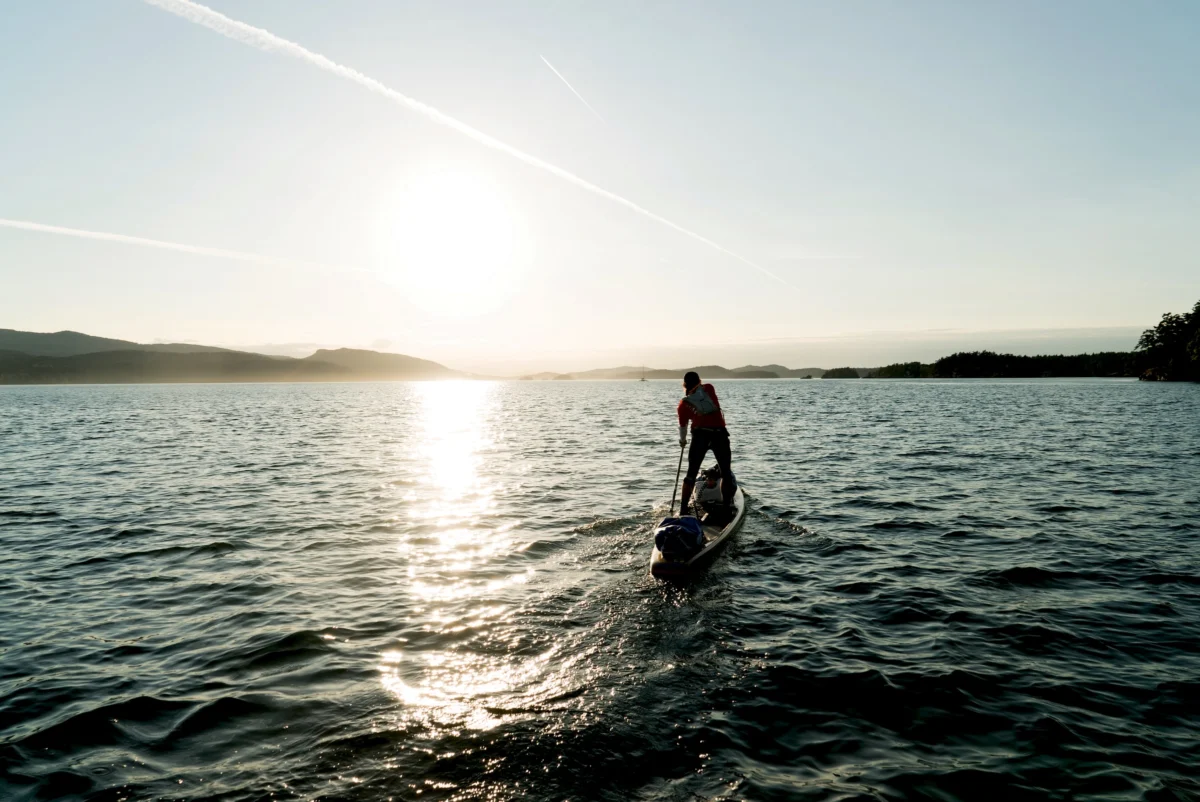
The Race to Alaska (R2AK) is widely considered the ultimate test of human endurance, maritime ingenuity, and sheer, unadulterated madness. Spanning 750 miles of the rugged, frigid, and often treacherous Inside Passage, the race takes participants from the sheltered waters of Port Townsend, Washington, to the bustling fishing port of Ketchikan, Alaska. The catch? No engines, no support crews, and no room for error. Among the eclectic fleet of sailboats, kayaks, and rowing shells that annually tackle this maritime gauntlet, one entry stands out as the definition of "stupid worth doing": the decision to complete the course on a stand-up paddleboard (SUP).
Karl Kruger, a resident of Orcas Island, Washington, etched his name into the annals of adventure history by taking on this brutal journey. His vessel, a custom-reinforced 19-foot Bark SUP, became a symbol of what the R2AK organizers describe as a race that carries a distinct "chance of drowning, being run down by a freighter, or being eaten by a grizzly bear."
The Anatomy of a Maritime Marathon
To understand the scale of Kruger’s endeavor, one must first understand the race itself. The R2AK is not a leisurely coastal cruise. It is a self-supported, non-stop trek through some of the most volatile waters on the planet. The Inside Passage is a complex labyrinth of fjords, narrows, and open-ocean stretches where weather conditions can shift from calm to lethal in minutes.
The race rules are deceptively simple:
- No Motors: Every ounce of momentum must come from wind or muscle.
- Self-Support: No supply drops, no support vessels, and no outside assistance. If you run out of food, you fish or go hungry. If you break a mast or lose a paddle, you repair it yourself or withdraw.
- Safety First (Mostly): While the race is "unsupported," the organizers maintain a watchful eye, though they emphasize that participants are entirely responsible for their own survival.
Kruger’s choice of a 19-foot SUP essentially turned the race into a 750-mile standing plank exercise. Unlike a kayak, where a rower can tuck into a cockpit and seek shelter from the spray, or a sailboat, which offers a degree of protection and speed, the SUP provides zero refuge from the elements.
A Chronology of the Impossible
The Starting Line: Port Townsend
When Kruger arrived at the start in Port Townsend, the local sailing community was skeptical. The R2AK fleet is usually dominated by carbon-fiber trimarans and high-performance skiffs. A man standing on a board with a single paddle looked, to the untrained eye, like a joke. Yet, there was a quiet intensity to Kruger’s preparation. His custom Bark board had been modified with extra volume to carry his dry bags, water, and survival gear, turning the sleek racing craft into a floating pack mule.
The Middle Miles: The Gauntlet of the North
As the race progressed past Vancouver Island, the reality of the open ocean began to set in. The North Pacific is notoriously unforgiving. For a paddler, the primary threats are wind and current. The "Great Bear Rainforest" coastline offers little in the way of safe harbor, and the tidal currents in the narrows can reach speeds that exceed a human’s maximum paddling velocity.
Kruger’s progress was a study in rhythmic discipline. He maintained a pace that allowed him to cover immense distances despite the lack of a sail. While the sailors could blast through open water during favorable winds, Kruger was forced to hug the shore, navigating the eddies and back-currents to preserve his energy. Each night, he would pull his 19-foot board onto a pebble beach, boil water for a dehydrated meal, and sleep for a few hours before the next tide cycle pulled him north.
The Finish: Ketchikan
Crossing the finish line in Ketchikan was not merely a victory of speed; it was a victory of human willpower. When Kruger arrived, he was not greeted by the cheers of a massive stadium, but by the quiet recognition of a maritime community that understood exactly what he had just survived. He had spent weeks exposed to rain, wind, and the psychological weight of total isolation, all while standing upright.
Supporting Data: The Physics of the Paddle
The efficiency of a 19-foot SUP is remarkable, but the caloric expenditure required to maintain a multi-week pace is staggering. To put the effort into perspective:
- Daily Distance: To complete the race in his timeframe, Kruger averaged roughly 30–40 miles per day, depending on current and wind conditions.
- Caloric Burn: Sustained aerobic activity of this nature consumes upwards of 4,000 to 6,000 calories per day. Managing nutrition on a SUP is notoriously difficult, as space is limited to vacuum-sealed bags and high-density protein bars.
- The "Paddle Factor": Unlike rowing, where the legs provide a powerful drive, standing on a SUP requires constant stabilization from the core and stabilizing muscles in the ankles and knees. The physical fatigue is not just cardiovascular; it is skeletal.
Official Perspectives: The R2AK Ethos
The organizers of the R2AK, who famously market the race as "the Iditarod on a boat," have always maintained a tone of dark, self-aware humor. This approach is not a sign of disrespect toward the danger, but rather a coping mechanism for the intensity of the competition.
In their official race communications, they often highlight the most "absurd" entries to showcase the spirit of the event. Kruger’s profile was a favorite. The organizers wrote, "And there is a guy on a paddleboard," a phrase that captured the bewildered admiration of everyone involved. It served as a "kill move" in conversation—the moment you mention a guy on a board, the standard challenges of sailing or rowing suddenly seem trivial.
"The R2AK is a lens through which we view human potential," one organizer noted during a post-race debrief. "When someone like Karl shows up, it forces the rest of the fleet to recalibrate what they think is possible. It’s not just about the boat; it’s about the person’s willingness to suffer for the sake of the challenge."
Implications for the Future of Adventure
The success of Karl Kruger has opened the door for a new generation of extreme endurance athletes. It suggests that the boundaries of "adventure" are rarely defined by the technology we use, but by the psychological capacity to endure discomfort.
The Psychological Component
The primary implication of the R2AK—and specifically the SUP category—is the role of isolation. In modern adventure, we are often tethered to GPS, satellite communication, and social media. The R2AK strips this away, leaving the competitor with only their equipment and their thoughts. For a paddler, this isolation is intensified by the physical position of being upright. One is constantly scanning the horizon, constantly exposed, and constantly in a state of high alert.
Environmental Stewardship
Kruger’s journey also highlights the pristine, yet fragile, nature of the Inside Passage. By traveling at a pace that is essentially that of a marine mammal, the paddler develops an intimate, silent connection with the environment. There is no engine noise to scare away whales, no exhaust to pollute the air, and no wake to erode the sensitive shoreline. It is perhaps the most "leave no trace" form of long-distance exploration currently in existence.
Challenging the Industry
The commercial impact of such feats is also significant. The gear used by Kruger—the custom Bark board, the specialized dry bags, and the lightweight, high-energy nutrition—has seen increased interest from the general public. While few will ever attempt a 750-mile race, the trickle-down effect of "extreme testing" ensures that the gear available to weekend enthusiasts is of higher quality and greater durability than ever before.
Conclusion: The "Stupid" That Matters
The Race to Alaska, and the participants who choose the most difficult path, serve as a necessary reminder that humans are at their best when they are challenged by the impossible. Karl Kruger did not set out to change the world; he set out to see if he could endure 750 miles of cold, wet, and wind on a board barely wider than a bookshelf.
In doing so, he provided a masterclass in persistence. The R2AK organizers are correct: the race is a "stupid worth doing." It is an exercise in stripping away the unnecessary, embracing the risk, and proving that with enough grit, even the most daunting of obstacles can be overcome one paddle stroke at a time. Whether you are sailing a high-tech trimaran or standing on a simple board, the ocean does not care about your gear—it only cares about your resolve. And in that, Kruger proved to be the toughest of them all.
 Raul Delapena Setiawan
  Pevita Pearce
  Siti Muinah