

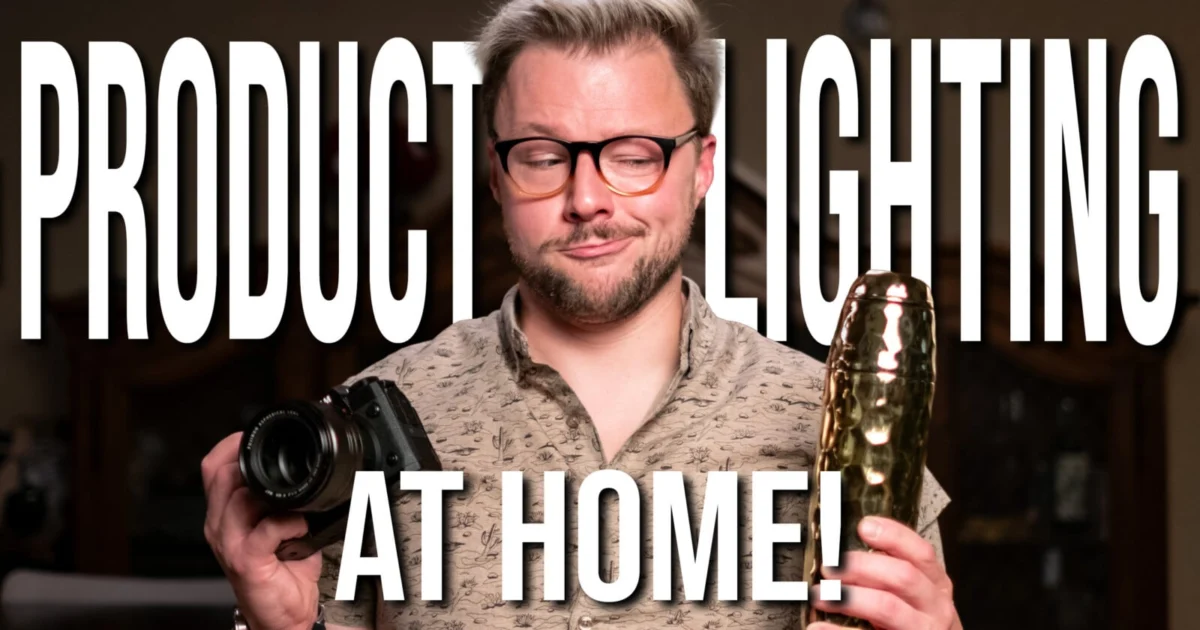
In the world of commercial marketing, product photography and videography have long been viewed as the exclusive domain of sprawling, climate-controlled studios equipped with million-dollar lighting rigs and specialized crews. However, a recent experiment conducted by a content creator—who was tasked with reviewing an unreleased cocktail shaker for a major culinary brand—has challenged this paradigm. Instead of submitting a mundane, text-based survey, the creator transformed their home dining room into a professional-grade production set, proving that technical precision and creative ingenuity can bypass the need for traditional studio space.
This article explores the methodology, technical hurdles, and creative philosophy behind producing a high-end commercial spot within the confines of a residential setting.
The Challenge: Elevating Product Feedback
The project began with a routine request: evaluate a new, high-end cocktail shaker and provide feedback via a corporate survey. For the creator, the standard approach felt insufficient. Recognizing that a product’s aesthetic appeal is its strongest selling point, they opted to demonstrate the shaker’s quality through a cinematic lens.
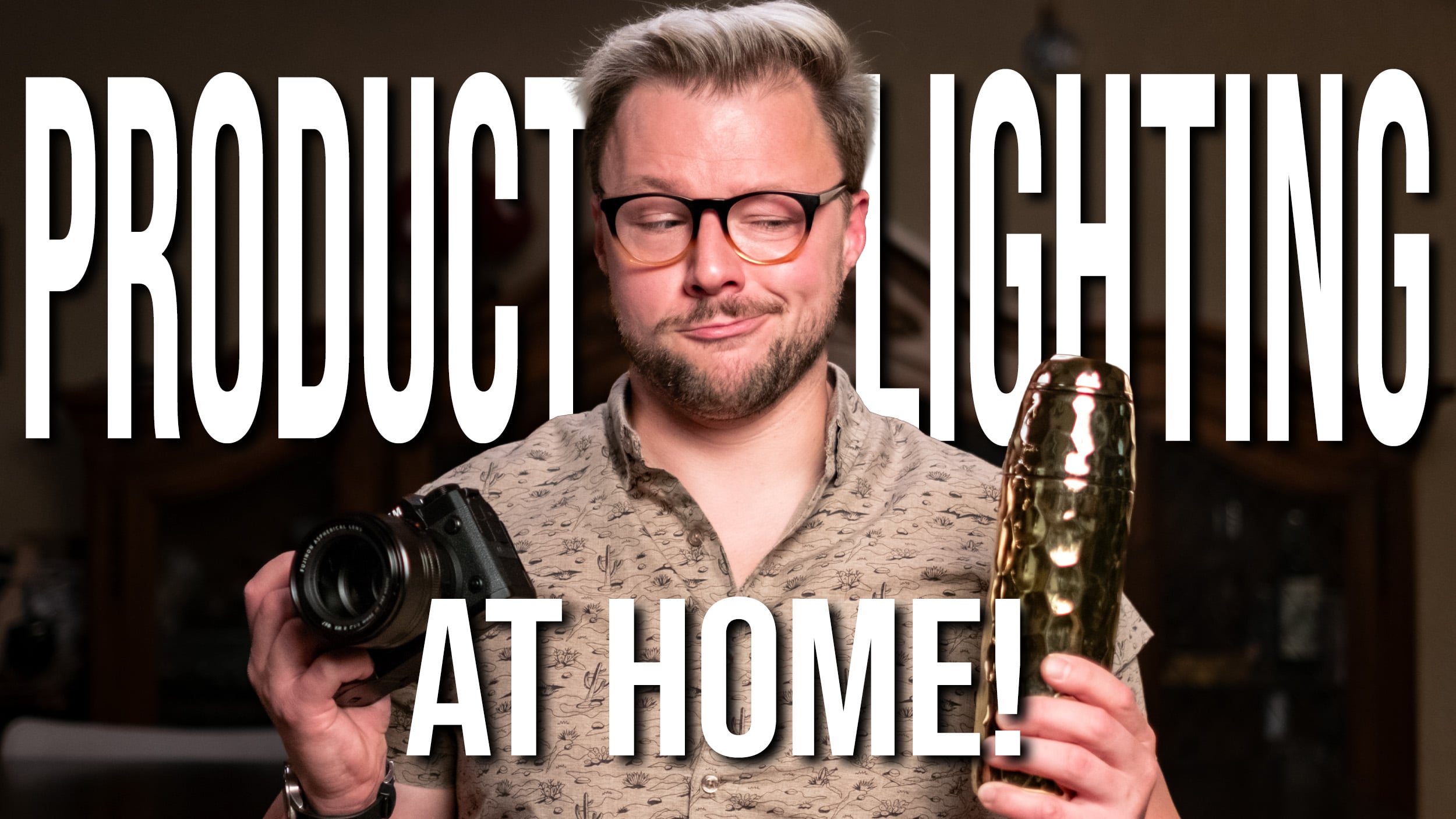
The subject—a sleek, multi-faceted gold cocktail shaker—posed immediate challenges. Its highly reflective surface made it a "lighting nightmare" for an amateur setup. The goal was simple but ambitious: utilize consumer-grade lighting and motion-control rigs to produce a professional-tier promo video that would highlight the product’s design language without the aid of professional studio infrastructure.
Chronology of the Shoot: From Blackout to Final Cut
The production process was characterized by a systematic approach to environmental control and tactical cinematography.
Phase 1: Environmental Control (The Blackout)
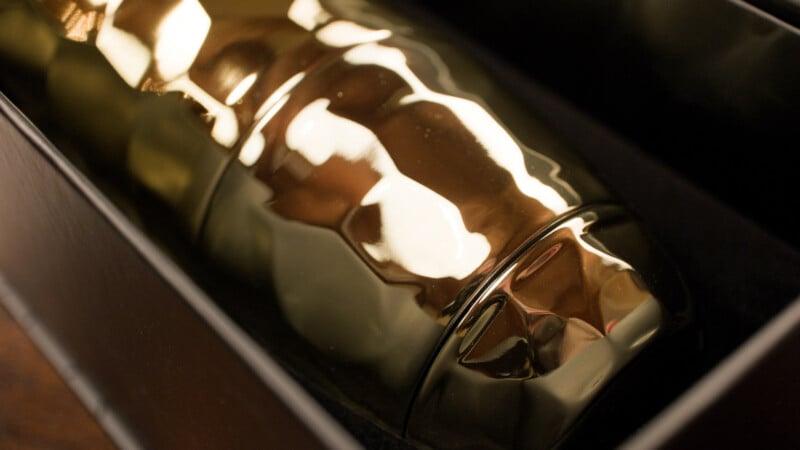
The primary obstacle was ambient light. Working in a residential dining room during daylight hours required a "Plan B" approach. By sealing windows with heavy blackout curtains and minimizing light leakage, the creator achieved a dark enough environment for artificial light to dictate the scene. This control was vital not only for exposure but for color temperature consistency. By balancing the scene at 2,700 to 2,900 Kelvin, the creator complemented the warm tones of the room and the gold finish of the shaker, creating a cohesive, premium look.
Phase 2: Orchestrating the Lighting Array
Lighting a reflective, metallic object requires more than just raw power; it requires precision. The setup relied on a three-point lighting configuration:
- The Key Light: An Aputure 600 Bicolor LED fitted with a medium dome softbox. A grid was attached to the light to restrict spill and focus the illumination specifically on the product area.
- Edge Lighting: Two Nanlite 150 units were utilized to provide separation between the dark background and the reflective shaker. These lights were also fitted with grids—one using a small circular dome and the other a narrow Godox softbox—to ensure the light hit only the edges of the shaker, accentuating its metallic facets.
Phase 3: Implementing Dynamic Motion
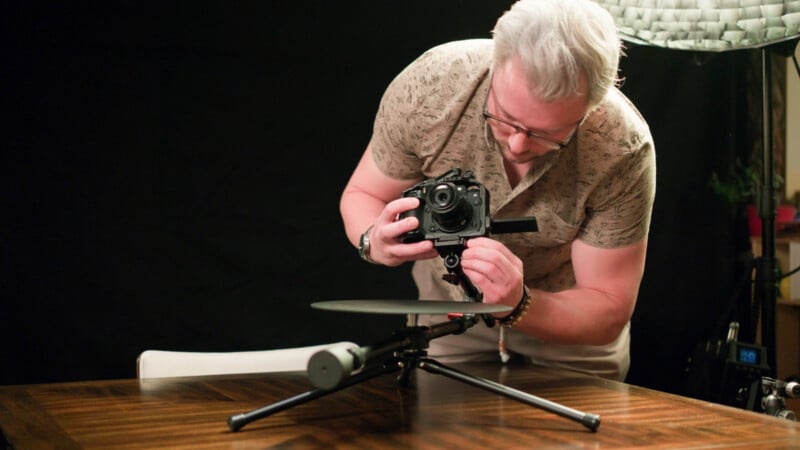
Static shots are rarely enough for commercial product work. To inject energy into the footage, the creator moved beyond a standard tripod.
- The Turntable Technique: By placing the shaker on a small, motorized turntable, the creator captured smooth, orbital shots that showcased the way the gold facets caught the light from different angles.
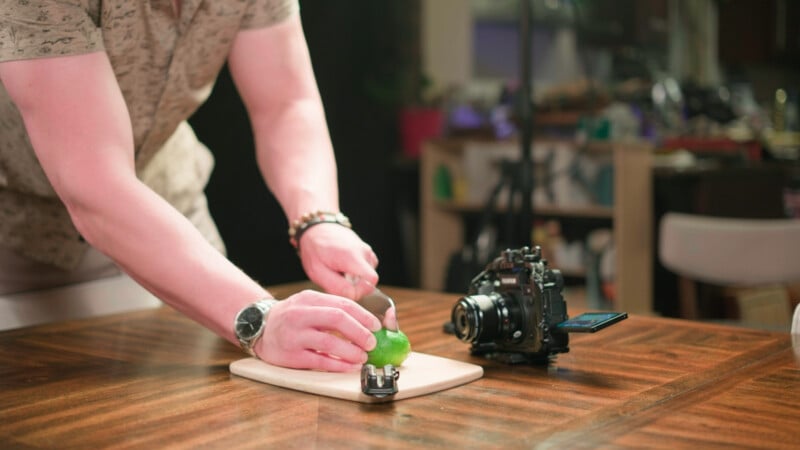
- Macro Precision: Using a tripod for stability, the team captured tight, manual-focus shots of citrus slicing and the pouring of ingredients.
- The Slider Innovation: Perhaps the most clever technique involved the use of a motorized 30-inch slider. To create the illusion of a camera tracking a razor blade as it cut through packaging, the camera was kept stationary while the product moved on the slider. This inverse motion created a dynamic, high-speed aesthetic that is rarely achieved in home setups.
Technical Specifications and Equipment Logic
The equipment list for this shoot highlights a trend in modern content creation: the democratization of high-quality tools. By combining high-end LED panels with modest, consumer-accessible motion tools, the creator achieved results that rival professional commercial houses.
| Equipment Type | Model/Component | Purpose |
|---|---|---|
| Key Light | Aputure 600 Bicolor | Main illumination |
| Edge Lights | Nanlite 150 (x2) | Defining silhouette |
| Light Modifiers | Grids & Domes | Controlling light spill |
| Motion | 30-inch Motorized Slider | Dynamic camera movement |
| Accessory | Small Turntable | Orbital product rotation |
The decision to shoot in 120 frames per second (fps) was a strategic choice for post-production. High frame rates allowed the creator to introduce fluid, super-slow-motion sequences in the final edit, emphasizing the liquid physics of the cocktail and the intricate detail of the hardware.
Official Responses and Industry Context
While the culinary brand in question has not yet released the product to the public, the creator’s approach has caught the attention of production professionals. Industry experts note that the "bedroom studio" movement is gaining traction. As brands pivot toward social-media-first marketing, they are increasingly valuing "authentic" or "home-grown" aesthetics over the sterile, hyper-polished look of traditional agency work.
One industry analyst noted, "When a creator takes the time to build a lighting rig, they are essentially doing the agency’s job for them. It creates a level of trust with the consumer because the imagery looks aspirational yet accessible."
Implications for Future Creators
The success of this project carries significant implications for the future of product marketing and independent filmmaking.
1. The Death of the "Artificial Limit"
The core lesson of this experiment is that technical constraints—lack of space, lack of a budget, or lack of professional equipment—are often secondary to the creator’s ability to manipulate light and movement. The "blackout" strategy demonstrates that environmental limitations can be overcome with basic planning and hardware.
2. The Power of "In-Camera" Effects
Rather than relying on CGI or heavy post-production, the creator used mechanical tricks (like moving the object on a slider instead of moving the camera) to achieve complex visual results. This "in-camera" approach is becoming a hallmark of high-quality independent content, as it maintains the realism and tactile nature of the product.
3. Redefining Professionalism
The boundary between a hobbyist and a professional is becoming increasingly porous. Professionalism in 2026 is no longer defined by the square footage of one’s studio, but by the level of control a creator exerts over their environment. Whether it is managing color temperature or mastering the physics of light on reflective surfaces, the principles of professional cinematography remain universal.
Conclusion: The Call to Create
The takeaway for any aspiring videographer is simple: stop waiting for the perfect environment. Whether you are reviewing a cocktail shaker, a tech gadget, or a piece of apparel, the tools you currently possess are likely sufficient to create something remarkable.
By prioritizing controlled lighting and intentional camera movement, any space—even a cramped dining room—can be transformed into a stage for high-end production. The "moral of the story," as the creator puts it, is to reject the limitations imposed by gear-envy. Instead, lean into the constraints, solve the lighting puzzles, and challenge yourself to find new ways to frame the world around you. In the modern era, the best studio is the one you are willing to build for yourself.
 Pevita Pearce
  Lina Hope
  Reynand Wu