

In a strategic maneuver that underscores the shifting landscape of the vacation ownership industry, Travel + Leisure Co. (TNL) has signaled a definitive pivot toward aggressive inorganic growth. On Wednesday, the industry giant finalized its acquisition of Yes! Vacations and simultaneously inked a definitive agreement to purchase Spinnaker Resorts. The dual transaction, valued at $343 million in upfront cash with an additional $10 million in performance-based incentives, represents one of the most significant consolidation moves in the timeshare sector in recent years.
By absorbing these two players, Travel + Leisure is not merely expanding its footprint; it is executing a masterclass in market capture. In an era where rising interest rates, labor shortages, and complex zoning regulations make the "greenfield" development of new resorts an increasingly arduous task, Travel + Leisure has opted to bypass the construction phase entirely. Instead, it is acquiring existing, high-performing inventory in prime, supply-constrained markets.
The Core Facts: A $353 Million Expansion
The announcement confirms that Travel + Leisure has successfully added 23 resorts to its already massive portfolio, which now spans more than 280 properties globally.
The deal is bifurcated into two distinct components:
- Yes! Vacations: This acquisition closed on Wednesday, bringing seven luxury properties in Maui, Hawaii, into the Travel + Leisure fold.
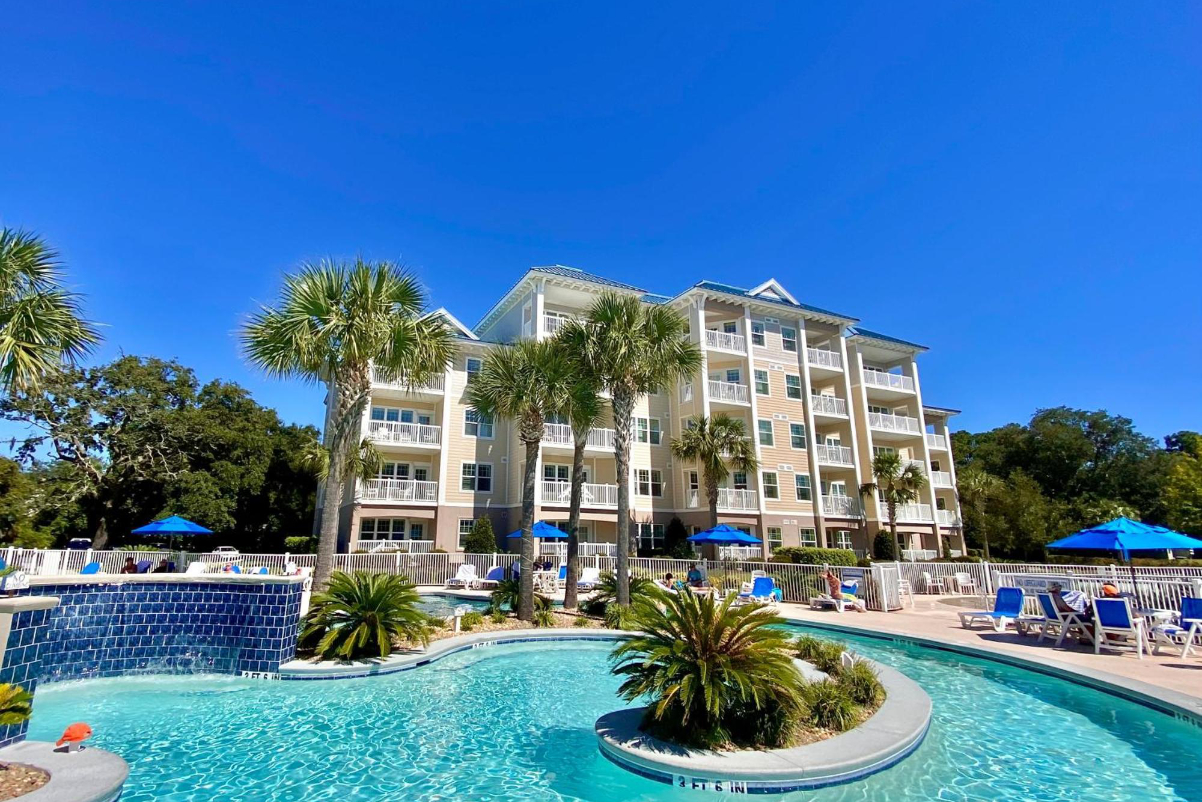
- Spinnaker Resorts: A definitive agreement has been signed to acquire the portfolio, which includes significant assets in Hilton Head, South Carolina, and other key vacation destinations.
The total consideration of $353 million ($343 million upfront plus $10 million in potential earn-outs) is structured to provide immediate accretive value to the company’s bottom line. By integrating these resorts into the Wyndham Destinations platform—the core timeshare business of Travel + Leisure—the company expects to leverage its massive marketing engine to convert existing owners and attract new ones, effectively weaponizing its existing scale to drive higher occupancy and yield.
Chronology of the Acquisition Strategy
The path to this week’s announcement did not occur in a vacuum. It is the result of a multi-year strategy aimed at de-risking the company’s growth profile.
- Early 2023: Travel + Leisure signaled to investors that while organic growth remained a priority, the "build vs. buy" calculus was shifting. Executives noted that the time-to-market for new developments had ballooned due to environmental permitting and labor inflation.
- Late 2023: Internal task forces at Travel + Leisure began identifying mid-sized timeshare operators with high-quality, "trophy" assets in markets where new construction was virtually impossible due to land scarcity.
- Q1 2024: Negotiations with Yes! Vacations and Spinnaker Resorts accelerated. The goal was to secure assets that aligned with the company’s "Club Wyndham" brand standards while minimizing the integration risk.
- Wednesday, May 2024: The deal was finalized and made public, marking the largest expansion of the company’s resort network in the post-pandemic recovery era.
Supporting Data: The Economics of Scale
To understand why Travel + Leisure spent over a third of a billion dollars, one must look at the macro-economic pressures facing the vacation ownership industry.
The Difficulty of New Development
Building a resort in a destination like Maui is a multi-year, multi-million dollar odyssey. Between the "Coastal Commission" hurdles in Hawaii and the high cost of debt financing for new construction, the "cost-to-build" has outpaced the "cost-to-acquire" for many players. Data from the American Resort Development Association (ARDA) suggests that the average cost of developing a new resort unit has risen by roughly 22% since 2020.
Inventory Density
Travel + Leisure currently manages over 280 resorts. By adding these 23 properties, they are not just increasing their total unit count by approximately 8%; they are increasing their density in high-demand markets. In the timeshare model, density is everything. A larger concentration of resorts in a specific geographic cluster allows for more efficient staffing, centralized housekeeping, and better cross-selling opportunities for the company’s loyalty programs.
The Conversion Engine
The timeshare business model relies heavily on "sales and marketing efficiency." Converting a first-time buyer is notoriously expensive. However, by acquiring Yes! Vacations and Spinnaker, Travel + Leisure inherits a database of thousands of existing owners who are already conditioned to the timeshare lifestyle. This is the "secret" mentioned by industry analysts: it is infinitely cheaper to sell a new vacation package to an existing owner than it is to cold-call a prospect.
Official Responses and Corporate Sentiment
In statements released alongside the acquisition, Travel + Leisure executives emphasized the "synergistic fit" of the portfolios.
"Our strategy is focused on high-quality growth in markets that our members love," said a spokesperson for Travel + Leisure. "By acquiring assets in Maui and Hilton Head, we are securing inventory that is essentially irreplaceable. We aren’t just buying buildings; we are buying access to some of the most sought-after vacation real estate in the world."
The leadership at Spinnaker Resorts echoed this sentiment, noting that the merger allows their owners to benefit from the massive scale and technological infrastructure of a global travel giant. "Joining Travel + Leisure provides our owners with access to a global exchange network, enhanced digital tools, and a level of service that was previously unattainable at our scale," a Spinnaker representative noted.
Wall Street analysts have largely reacted with cautious optimism. While the upfront cash outlay is significant, the consensus is that the deal will be "accretive to cash flow" within the first 18 months of operation, provided the integration of the properties into the Wyndham system proceeds without operational friction.
Implications: What This Means for the Industry
The acquisition of Yes! Vacations and Spinnaker Resorts serves as a bellwether for the future of the vacation ownership sector. Several key implications emerge from this move:
1. The Death of the "Independent" Operator
Mid-sized, independent timeshare developers are increasingly finding themselves in a squeeze. With the costs of digital marketing, regulatory compliance, and technological investment rising, the barrier to entry—and survival—has never been higher. We should expect further consolidation, where "big fish" like Travel + Leisure, Marriott Vacations Worldwide, and Hilton Grand Vacations systematically absorb smaller players.
2. Market Scarcity as a Moat
By controlling the existing inventory in prime locations, Travel + Leisure is creating an "economic moat." If a competitor wants to enter the Maui market, they will find the available land is already owned or zoned for other uses. By buying the inventory now, Travel + Leisure is effectively locking out future competition in these specific geographies.
3. The "Experience" Pivot
The timeshare industry has been moving away from the traditional "fixed-week" model toward a points-based, experiential model. By integrating these new properties, Travel + Leisure is expanding its "Club Wyndham" offerings, allowing members to trade their points for a wider variety of experiences. This flexibility is essential for attracting younger demographics, such as Millennials and Gen Z, who prioritize experiential travel over static, location-bound ownership.
4. Regulatory Resilience
Timeshare companies operate under intense regulatory scrutiny. Large, publicly traded companies like Travel + Leisure have the legal and compliance infrastructure to navigate these waters more effectively than smaller, family-owned resorts. As consumer protection laws become more stringent, consolidation provides a safer harbor for both the business and the consumer.
Conclusion: A Calculated Bet on the Future of Leisure
The $353 million deal is more than just an expansion of assets; it is a declaration of intent. Travel + Leisure is positioning itself as the ultimate consolidator in an industry that is rapidly moving toward a winner-take-all dynamic. By prioritizing existing inventory over new construction, they have mitigated the risks of development while maximizing their immediate competitive advantage.
For the owners of the newly acquired resorts, the transition will likely bring a shift toward a more standardized, tech-forward experience. For the industry at large, the message is clear: the era of the small, boutique timeshare developer is waning. The future belongs to those with the capital to consolidate, the scale to optimize, and the inventory to satisfy the evolving demands of the modern traveler.
As Travel + Leisure begins the process of rebranding these 23 properties, all eyes will be on whether they can maintain the "boutique" appeal that made these resorts successful in the first place, or if they will be subsumed into the larger, corporate identity of the Wyndham ecosystem. Regardless, the company has successfully secured its position as the dominant player in the vacation ownership space, ensuring that for the foreseeable future, they will remain the gatekeeper to some of the most exclusive vacation destinations on the planet.
 Reynand Wu
  Lina Hope