

Introduction: The Philosophy of Friction
As the calendar turned to 2026, a quiet but profound shift occurred in the editorial offices of Adventure Journal. Stephen Casimiro, the publication’s founder and editor, issued a challenge that resonated far beyond the pages of his magazine: the mandate to embrace "The Year of Doing Hard Things."
In an era defined by convenience, algorithmic comfort, and the ease of digital escapism, Casimiro’s proposition serves as a necessary intervention. It is not merely a call to physical exertion or endurance athletics, but a philosophical inquiry into the nature of human potential. How do we carve out space for significant challenges when our lives are already crowded with the mundane obligations of modern existence?
The Main Facts: Defining the Challenge
The genesis of this movement was a personal list of ambitious goals—a roster of monthly challenges that, in their original iteration, promised a year of grueling transformation. However, as Casimiro quickly discovered, there is a fundamental tension between the aspirational self and the logistical reality of a life anchored by professional, familial, and social commitments.
The initial impulse was to attempt a "major hard thing" every month. Upon reflection, however, the impracticality of this schedule became evident. Casimiro notes, "I am not a professional athlete, and I don’t have the portfolio, time, or resources to turn my life over to full-time adventure-seeking."
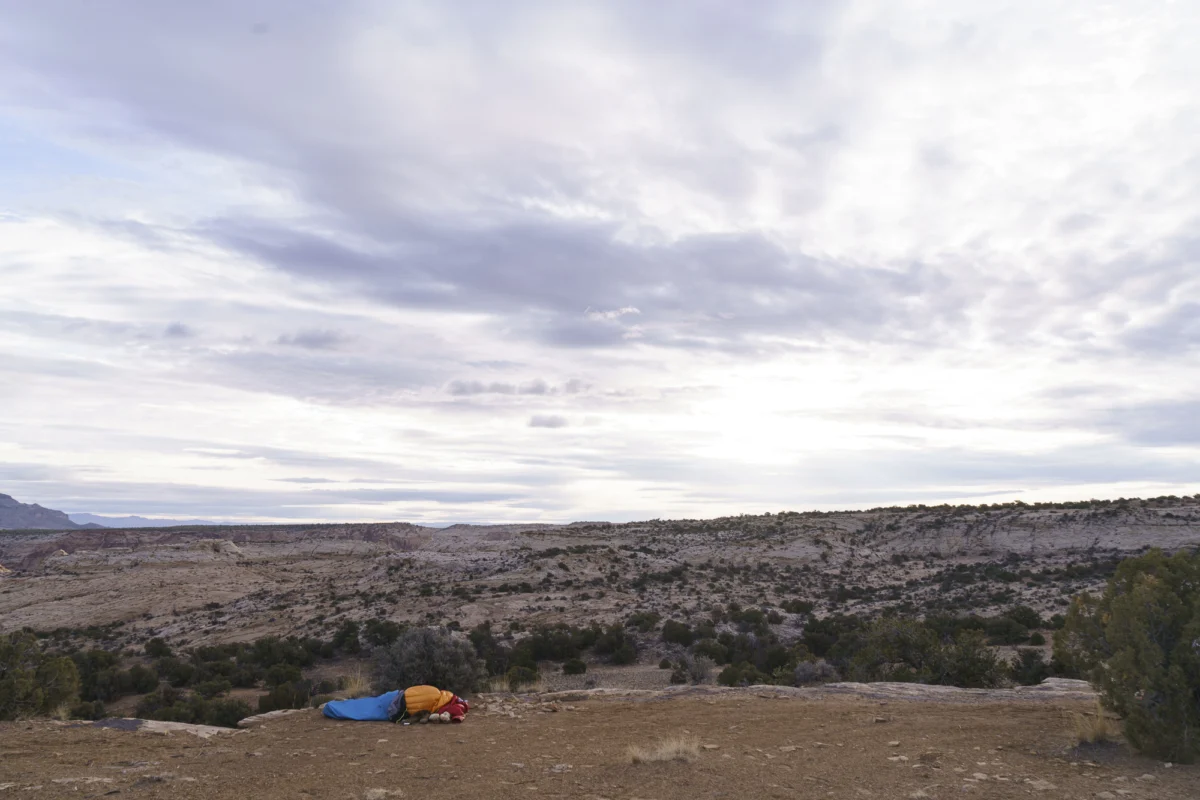
This realization prompted a pivot. The goal was not to abandon the spirit of "hard things," but to redefine them in a way that is both sustainable and deeply meaningful. The chosen anchor for 2026 became: sleeping outside for at least 100 nights. While some might dismiss this as recreational, for the average person with a career and a household, it represents a radical commitment to environmental immersion that requires consistent effort, logistics, and a departure from the comfort of the indoors.
Chronology: From Ambition to Execution
The process of defining this year’s mission followed a three-act structure:
- The Ideation Phase (Fall 2025): The brainstorming session yielded a list of high-intensity physical and exploratory goals. The intent was to push the boundaries of physical endurance and mental fortitude.
- The Reality Check (Late 2025): The mapping of existing commitments—the "must-dos" of professional and personal life—revealed a hard truth: time is a finite resource. This phase was characterized by the painful pruning of the original list to ensure that whatever replaced it could actually be achieved.
- The Commitment Phase (January 2026): By setting a quantifiable goal (100 nights outside), the project transitioned from a vague intention to a measurable challenge. This target necessitates a year-long strategy, requiring the participant to adapt to changing weather, varied geography, and the unpredictable rhythms of daily life.
Supporting Data: The Psychology of "Hard Things"
Why is the concept of "doing hard things" so psychologically resonant? Behavioral science suggests that we often suffer from "inertia"—the tendency to stay in a state of comfort until an external force acts upon us.
Casimiro’s approach addresses this directly. He argues that the most difficult aspect of any endeavor is not the perseverance required to finish, but the initial act of overcoming the resistance to starting. By choosing a goal that is both challenging and inherently enjoyable (sleeping outside), he creates a positive feedback loop.
Data on habit formation suggests that "micro-adventures"—small, intentional acts of disruption—are more effective at creating long-term lifestyle changes than once-a-year extreme expeditions. Sleeping outside 100 times in a year (roughly twice a week) requires a level of planning that forces one to be present in their environment, effectively acting as a form of mindfulness training that lasts for 365 days.
Official Responses and Reflections
In discussions regarding this initiative, the feedback from peers and partners has been mixed but illuminating. One significant point of contention raised by Casimiro’s wife was the distinction between "hard" and "fun."
"My wife points out this is more fun than hard," Casimiro admitted. This highlights a crucial distinction in the pursuit of personal growth: the best "hard things" are those that align with our deepest values. If a challenge is only hard and lacks intrinsic reward, the probability of attrition is high. If it is both challenging and rewarding, it becomes a lifestyle.
Furthermore, the initiative has already begun to yield unexpected dividends. In the first month of 2026, the act of committing to this goal has naturally led to social expansion, including new hiking partnerships. The "hard thing" has served as a catalyst for community, proving that personal growth is rarely a solitary endeavor.
Implications: A Call to Intentionality
The broader implications of the "Year of Doing Hard Things" are significant for the reader. We are frequently told that we are defined by our achievements, but Casimiro suggests that we are actually defined by our intentions.
1. The Death of Convenience
Modern life is optimized to remove friction. We have food delivered, entertainment streamed, and climate control in our homes. While these innovations provide comfort, they also atrophy our ability to navigate the world. By choosing to sleep outside, one invites a small amount of "necessary discomfort," which strengthens resilience and recalibrates our relationship with nature.
2. The Prioritization of Time
The most important part of this exercise is the audit of one’s schedule. By identifying what we are "already committed to," we see where our time actually goes. Most people find that they are spending their energy on things that do not align with their core values. The "hard thing" acts as a filter, pushing the non-essential to the periphery.
3. The One-Go-Round Philosophy
Casimiro’s concluding sentiment is a sobering reminder: "As far as I know, we only get one go-round, at least in these bodies." The urgency behind this mission is not derived from a desire for accolades or public recognition, but from the finite nature of life itself. The question is not "Can I do this?" but rather "Will I choose to do this before the time is gone?"
Conclusion: Toward a Harder, Better Year
The "Year of Doing Hard Things" is an invitation to strip away the excess of the modern experience. It is not a call for everyone to sleep outside 100 nights, but rather a call for everyone to identify their own "100 nights."
Whether your hard thing is learning a new language, training for a marathon, or simply committing to a daily practice of solitude or service, the value lies in the friction. It lies in the struggle against inertia. It lies in the decision to stop drifting and start steering.
As we move through 2026, the lessons from the Adventure Journal experiment suggest that the most meaningful path is rarely the path of least resistance. By embracing the hard, we do not just accomplish tasks; we expand our capacity for life. The challenge is open—what will your hard thing be this year? The only way to find out is to start today.
 Raul Delapena Setiawan
  Pevita Pearce
  Siti Muinah