

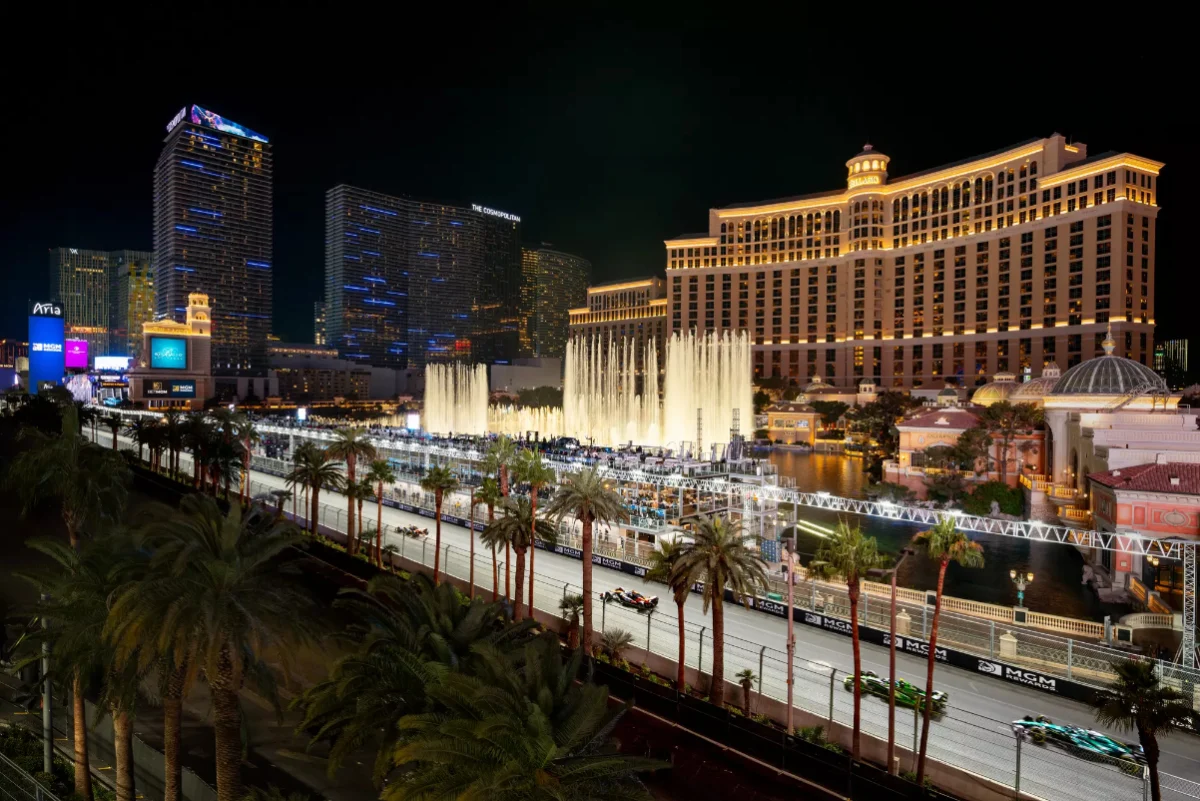
The glittering neon of the Las Vegas Strip, long considered a barometer for the American consumer’s discretionary spending, has flickered with uncertainty in recent months. MGM Resorts International, the hospitality titan that commands a staggering 40% of the hotel inventory on the iconic Las Vegas Boulevard, recently signaled a notable cooling in demand. According to the company’s latest quarterly earnings disclosure, the summer season—typically a period of peak profitability—was marred by macroeconomic pressures that kept travelers at home and prompted a rare, if temporary, dip in the city’s robust momentum.
As inflationary pressures continue to reshape the travel landscape, the situation at MGM highlights a growing disconnect between high-end resort aspirations and the practical budget constraints of the average American tourist.
Main Facts: The Summer Cooling
MGM Resorts’ latest financial reporting paints a sobering picture of the third quarter. While the Las Vegas Strip has enjoyed a post-pandemic renaissance defined by record room rates and high occupancy, that trajectory encountered significant turbulence between July and September.
The primary culprit, according to company leadership, was the rising cost of travel logistics. As the price of both aviation fuel and gasoline surged, the "all-in" cost of a Las Vegas getaway climbed beyond the threshold of many domestic travelers. Because MGM operates such a vast portfolio of properties—ranging from the ultra-luxury Bellagio and Aria to the high-volume Excalibur and Luxor—it acts as a bellwether for the broader market. When the mid-tier and budget-conscious consumer feels the pinch of high airfares, the impact ripples across the entire MGM ecosystem, forcing the company to confront a reality where room demand is no longer guaranteed by sheer brand recognition alone.
Chronology of the Downturn
The deterioration of performance was not instantaneous but rather a progressive decline throughout the third quarter of the fiscal year.
- July: The quarter began with what CFO Jonathan Halkyard described as "roughly flat" room rates compared to the previous year. While this wasn’t a decline, it signaled an end to the rapid, double-digit growth seen in previous post-pandemic quarters.
- August: As the summer peak reached its midpoint, the impact of rising transportation costs began to manifest more clearly in booking data. The "wallet share" of the average visitor was increasingly diverted toward transportation, leaving less room for the high-margin room rates that MGM had grown accustomed to charging.
- September: The decline deepened, with occupancy and average daily rates (ADR) both softening as the economic headwinds intensified. This period marked the nadir of the quarter, as the combination of high gas prices and elevated flight costs created a "perfect storm" that discouraged short-haul drive-in traffic and long-haul air travelers alike.
- October: As the quarter closed, management noted a subtle, yet encouraging, easing of these pressures. Early indicators suggested that the acute sensitivity to transportation costs began to stabilize, providing a glimmer of hope that the slump was a seasonal anomaly rather than a structural shift in the Las Vegas model.
Supporting Data: The Cost of Discretionary Travel
To understand why MGM struggled, one must look at the math of the modern traveler. For a family planning a three-day weekend in Las Vegas, the room rate is only one component of the total cost. When a round-trip flight increases by 20% and the price of a gallon of gasoline climbs, the "total cost of ownership" for a vacation spikes.
MGM’s data confirms that their guests are highly sensitive to these external factors. Because a significant portion of MGM’s Las Vegas traffic relies on regional drive-in markets (such as Southern California) and domestic air travel, the company is uniquely exposed to fluctuations in energy prices.
While MGM did not release granular occupancy percentages for every property, the overall trend was clear: the "velocity of demand" slowed. Revenue per Available Room (RevPAR)—a key metric in the hospitality industry—stagnated as the company faced a choice: either slash rates to drive volume or maintain pricing discipline and risk lower occupancy. By and large, the company held its pricing strategy, leading to the reported softening in visitation.
Official Responses: The Leadership Perspective
During the Wednesday earnings call, MGM Resorts CEO Bill Hornbuckle was blunt about the challenges facing the firm. He identified the macroeconomic environment as the primary adversary in an otherwise healthy operational environment.
"We’re going to need relief on fuel, gas, and airline pricing," Hornbuckle stated, acknowledging that while the casino floors remained relatively stable, the rooms division—the anchor of the resort experience—was under pressure.
CFO Jonathan Halkyard echoed these sentiments, providing the analytical context for the slide. He emphasized that the company’s operations are fundamentally sound, noting that demand for high-end gaming and luxury suites remained resilient. The weakness was primarily concentrated in the leisure segment, where the "price-conscious" traveler was most likely to postpone their trip or opt for a closer, less expensive destination.
Management also stressed that the company is taking steps to mitigate these effects. By adjusting marketing spend and focusing on "high-value" guests who are less sensitive to airline pricing, MGM is attempting to insulate its bottom line from the volatility of the retail travel market.
Implications for the Future of Las Vegas
The struggle MGM faced this summer carries significant implications for the broader travel and tourism industry.
1. The Sensitivity of the "Drive-In" Market
Las Vegas is not just a destination; it is an engine for the Western U.S. economy. When gas prices rise, the "drive-in" visitor from Los Angeles, Phoenix, and Salt Lake City changes their behavior. If these visitors decide that the cost of driving to Las Vegas has become prohibitive, the impact on mid-tier resorts is immediate. This shift suggests that regional tourism hubs must continue to innovate their value propositions to compete with localized "staycation" options.
2. Airline Pricing and Destination Health
The dependence of Las Vegas on air travel has never been more apparent. As airlines grapple with their own labor and fuel cost challenges, they have passed these costs directly to the consumer. For a resort operator like MGM, the high price of a ticket is effectively a "tax" on their room rates. If the airline industry maintains current pricing levels, Las Vegas may need to pivot its marketing to emphasize the value of the "total package" to convince travelers that the journey is worth the expense.
3. Pricing Discipline vs. Occupancy
The MGM earnings report poses a strategic question for the entire Strip: Is it better to lower room rates to fill hotels, or to maintain high rates and accept lower occupancy? Historically, MGM has chosen the latter, believing that the "Las Vegas brand" should not be diluted by excessive discounting. However, the third-quarter results suggest that there is a limit to this strategy. If transportation costs remain elevated, operators may be forced to choose between lower margins or a more aggressive promotional strategy to keep the Strip buzzing.
4. A New Economic Reality
Finally, the situation reflects a shift in the post-pandemic consumer mindset. The "revenge travel" boom, which saw consumers spending with abandon regardless of price, has largely faded. We have entered a period of "rational consumption," where travelers are meticulously calculating the cost-benefit analysis of their vacations.
Conclusion: Looking Ahead
While the third quarter was undoubtedly a challenge for MGM Resorts, the company remains the dominant force in the Las Vegas market. The easing of pressures noted in October suggests that the market possesses an inherent resilience. As the industry looks toward the upcoming holiday season and early 2027, the focus will remain on the intersection of consumer sentiment and the cost of travel.
For MGM, the path forward involves a delicate balancing act. By managing its massive room inventory with greater precision and relying on its robust high-end gaming segment to offset leisure travel volatility, the company is well-positioned to weather these macroeconomic storms. However, the summer of 2026 will be remembered as a crucial turning point—a reminder that even the most iconic resorts in the world are not immune to the fundamental laws of energy prices and the economic health of the traveling public.
As Bill Hornbuckle and his team look toward the future, the message is clear: the house may always win, but the house also needs the guests to arrive—and in an era of high-cost travel, ensuring those guests can afford the journey is the new priority.
 Neng Nana
 Reynand Wu
 Sagoh
