

MEXICO CITY — Two decades ago, the culinary landscape of Mexico’s sprawling capital was defined by tradition, neighborhood fondas, and family-run eateries. When chef Enrique Olvera dared to open a white-tablecloth establishment named Pujol in 2000, his vision was as revolutionary as it was risky: to elevate humble, deeply rooted Mexican flavors and laborious sauces, such as traditional mole, with the uncompromising precision and rigor of fine dining.
At the time, there was nothing else quite like it in the city. Fast forward to the present day, and Pujol’s enduring legacy is written across the entire cultural fabric of Mexico City. The restaurant has transcended its physical boundaries, collecting international accolades, securing a coveted spot in the top ten of the World’s 50 Best Restaurants, and earning two Michelin stars following the Michelin Guide’s official launch in the capital. Relocating from its original intimate space in Polanco to a sleek, contemporary glass-fronted dining room overlooking a tranquil, plant-filled patio, Pujol proved that Mexican gastronomy could command the global stage.
Yet, Pujol was merely the vanguard. The restaurant didn’t just alter how international travelers perceived Mexican cuisine; it helped anchor the city into an entirely new golden era of art, design, hospitality, and luxury retail. Today, Mexico City stands undisputed as one of the most vibrant, dynamic, and visited urban centers in Latin America.
Chronology of a Cultural Renaissance
The transformation of Mexico City from a misunderstood megalopolis into an international hub of sophistication did not happen overnight. Its evolution is marked by a series of foundational milestones that shifted global perception:
- 2000: Chef Enrique Olvera opens Pujol in the Polanco neighborhood, establishing a new paradigm for contemporary Mexican fine dining and proving the viability of high-end domestic gastronomy.
- 2002–2010: A nascent wave of creative entrepreneurs begins reclaiming historic neighborhoods like Roma and Condesa, laying the groundwork for a burgeoning arts and café culture.
- 2015–2020: The city gains traction on international travel itineraries. Culinary heavyweights like Gabriela Cámara’s Contramar and Olvera’s evolving concepts turn the city into a global culinary pilgrimage site. Major international collectors begin paying closer attention to the local art scene.
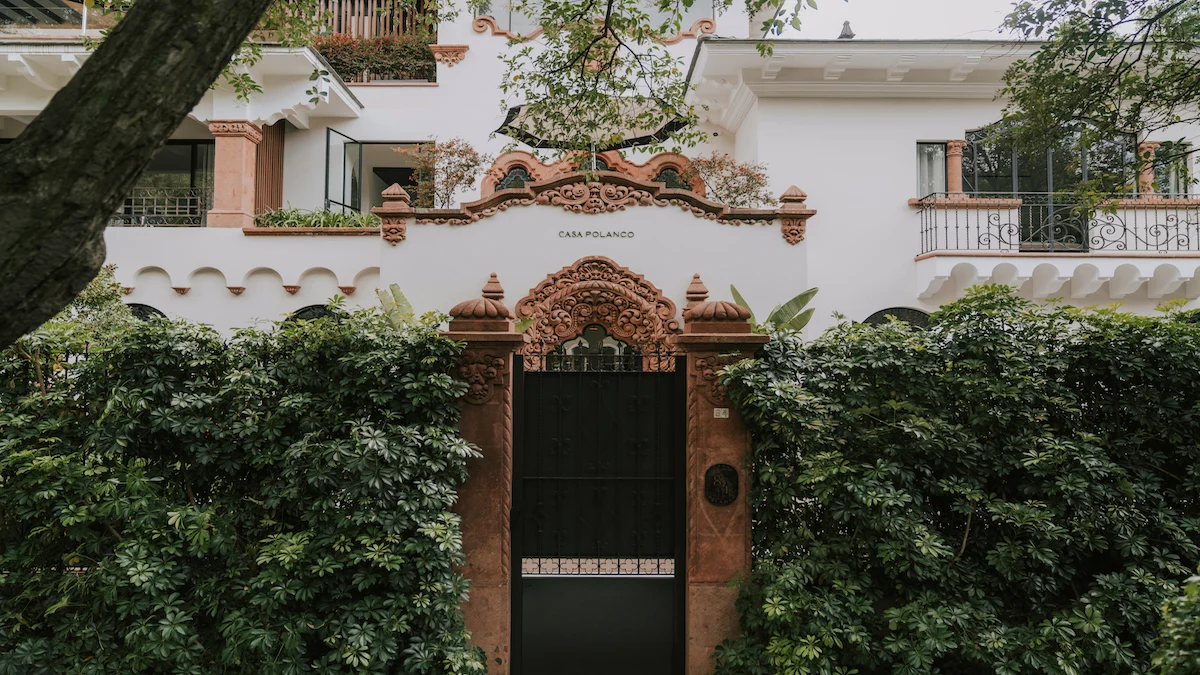
- 2022: The contemporary art space LagoAlgo opens, and Casa Polanco breathes new life into a historic 1940s mansion, signaling the arrival of a sophisticated, hyper-local boutique hotel sector.
- 2023: High-end design gallery Masa establishes permanent roots, and global luxury houses like Cartier launch major cultural exhibitions, such as Cartier Design: A Living Legacy at Museo Jumex.
- 2024: The Michelin Guide officially launches in Mexico City, cementing the capital’s status as a serious global gastronomy destination. Tourism numbers surge, with hotel stays reaching historic highs.
- 2025–Present: Luxury hospitality expands further with the opening of Relais & Châteaux property El Cortés. High-end retail flourishes with homegrown concepts like Montserrat Messeguer, Lengua, and LVMH Prize finalist Patricio Campillo opening flagship spaces.
Supporting Data: The Numbers Driving the Boom
The anecdotal buzz surrounding Mexico City’s meteoric rise is strongly backed by hard economic and tourism data.
According to recent municipal and regional tourism reports, approximately 15.5 million tourists stayed in Mexico City hotels by the close of 2025—representing a robust nearly 5 percent increase compared to 2024. This massive influx of capital has transformed the local economy, fueling job creation and business expansion.

Consider the trajectory of Niddo, an all-day dining brand co-owned by Eduardo Plaschinski and his mother, Karen Plaschinski. Over an eight-year span, the business scaled dramatically from a tight-knit team of 15 employees to a workforce of 100 spanning six distinct locations across the city.
Simultaneously, the luxury retail and goods sector is experiencing unprecedented acceleration. Catalina Marín, a Mexico City-based analyst at the global trend forecasting authority WGSN, projects that the local luxury market will grow by an impressive 5 percent annually over the next five years. This growth is driven not just by affluent foreigners, but by a rapidly expanding domestic class of high-net-worth buyers with an appetite for high-end, culturally resonant goods.
Official Responses and Industry Perspectives
The rapid escalation of Mexico City into a premier luxury destination has been closely monitored by the professionals orchestrating high-end experiences on the ground.
Eduardo Plaschinski recalls a vastly different era when expanding a hospitality brand would have been practically impossible due to lingering safety concerns and a skewed international reputation.
“People were always scared of coming [to Mexico City]. It used to have a bad reputation,” Plaschinski notes.
Reflecting on the city’s current renaissance, he adds with a sense of poetic justice:

“Mexico City has become such a hot spot, art and culture-wise… Simply put, the city deserves it.”
Mónica Quintero, co-founder of the Mexico City-based luxury concierge service Odysya, has witnessed firsthand how traveler demographics have shifted. Catering primarily to ultra-high-net-worth (UHNW) individuals seeking bespoke access to art and gastronomy, Quintero notes a distinct pivot away from traditional beach resorts.
“They used to go to Los Cabos, but now these UHNW individuals are looking for local experiences in Mexico City,” explains Quintero. “When they go to Punta Mita or Los Cabos, it’s like going to the U.S. Now they are willing to look for something unique. There are now restaurants in Mexico City that are the same quality as any city in the world.”
WGSN analyst Catalina Marín points out that international luxury brands are increasingly altering their strategies to honor local narratives rather than imposing a generic global footprint.
“We are seeing a lot of these synergies between local events and these designers, to connect in a different way with the history of Mexican traditions,” Marín explains. “There are brands entering the market that need to offer a cultural view to connect with the local market. For an international visitor, they are super surprised when they see a window from an international brand where they have this local artist or connection.”
Implications: A New Era of Luxury, Culture, and Challenges
The transformation of Mexico City into a premier global metropolis carries profound implications for travelers, residents, and the global luxury market alike.

The Evolution of Luxury Hospitality and Retail
No longer defined merely by legacy international brands and standard five-star chain properties, the city’s hospitality sector has pivoted toward hyper-localized luxury. Properties like Casa Polanco—situated in a restored 1940s mansion opposite Lincoln Park—and El Cortés—a 15-room Relais & Châteaux retreat in the tree-lined Roma neighborhood helmed by hotelier Carlos Zaragoza—offer guests an intimate synthesis of high design, historical architecture, and personal art collections.
Retail has similarly evolved. While foreign luxury powerhouses like Carolina Herrera, Tiffany & Co., and Cartier stage high-profile activations and museum retrospectives (such as Cartier’s three-month stint at Museo Jumex), homegrown talent is capturing global attention. Artisanal western-wear brand Montserrat Messeguer now counts pop icons like Dua Lipa among its clientele. Meanwhile, high-end jewelry concept Lengua and the flagship boutique of LVMH Prize finalist Patricio Campillo in the Juárez neighborhood demonstrate that local creators are setting the agenda.
Cultural Magnetism Beyond the Plate
Art and design have become just as powerful a draw as gastronomy. With institutions like the world-class Museo Nacional de Antropología anchoring a deep historical appreciation, contemporary spaces are rapidly multiplying. Galleries such as Masa (established in 2023) and LagoAlgo (opened in 2022) cater to an incoming wave of international art collectors. Furthermore, premier annual events like the Zona Maco art fair every February continue to pull affluent crowds from the United States, Europe, and beyond.
The Double-Edged Sword of Success
Yet, this rapid ascension is not without its complications. The very influx of international visitors, digital nomads, and affluent expatriates that drives economic opportunity has also introduced significant friction. Rapid gentrification, skyrocketing housing costs, and rising local living expenses have sparked legitimate community concerns over displacement and affordability.
Balancing the economic windfall of global tourism with the preservation of local community integrity remains one of the capital’s most pressing challenges. As Mónica Quintero notes, the sheer variety of cultural offerings—from fashion to avant-garde design boutiques and independent galleries—ensures that the city offers endless discovery.
For the modern luxury traveler, Mexico City is no longer a brief layover on the way to a coastal resort, nor is it visited for a single restaurant reservation. It is an epicenter of culture, a crucible of culinary innovation, and a vibrant, living canvas that has rightfully reclaimed its place at the apex of the global stage.
 Sagoh
 Azzam Bilal Chamdy
 Evan Lee Salim
